














Texas Border Business




By Roberto Hugo González | Texas Border Business
WESLACO, Texas — Mayor Adrian Gonzalez said Weslaco’s long-term flood control strategy depends on close coordination with county, state and regional agencies because stormwater does not stop at municipal boundaries.
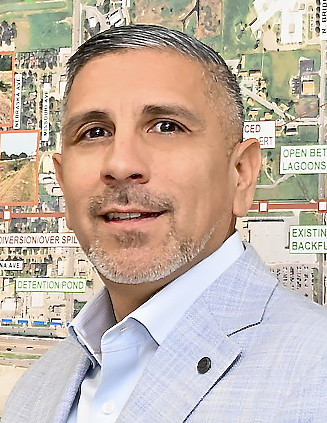
In an exclusive interview, Gonzalez said the city has strengthened partnerships with Hidalgo County Precinct 1, Hidalgo County Drainage District No. 1 and Irrigation District No. 9 to improve the movement of stormwater through canals, ditches and regional drainage systems.




According to the mayor, those agencies are working together to clean drainage channels, widen sections where necessary and improve the flow of water leaving the city during major rain events.
“We cannot do this alone,” Gonzalez said, explaining that Weslaco’s drainage network is connected to larger regional systems that require coordination among multiple governmental entities.
The mayor said the city also works closely with the Texas Department of Transportation because several of Weslaco’s major transportation corridors, including Texas Boulevard (Old U.S. 83) and Interstate 2 frontage roads, are maintained by TxDOT.
He said drainage improvements along those corridors require cooperation between the city and the state agency.
According to Gonzalez, TxDOT officials, including the agency’s chief engineer from Austin and regional representatives, have visited Weslaco to review drainage conditions and discuss potential solutions.
The mayor said those meetings are part of an ongoing effort to ensure that city drainage projects complement improvements being planned by state and regional agencies.
Gonzalez also explained that Weslaco faces geographic challenges that distinguish it from many neighboring communities.
He said the city is located in a relatively low, flat area and receives runoff from higher-elevation communities, including McAllen and Mission. As water flows south and east through the regional drainage network, Weslaco must manage not only rainfall that falls within the city but also runoff originating elsewhere.
Because of those conditions, Gonzalez said gravity-driven drainage systems remain essential to protecting neighborhoods during heavy storms.
He noted that residents often become concerned when streets temporarily fill with water during intense rainfall. However, the mayor said the city’s primary objective is preventing floodwaters from entering homes.
According to Gonzalez, storms producing seven to 10 inches of rain within a short period can exceed the immediate carrying capacity of streets and drainage channels, making temporary street flooding unavoidable until water moves through the system.
“The goal is to keep the water out of houses,” he said.
Gonzalez said continued investment in drainage infrastructure, combined with stronger regional coordination, will help Weslaco improve flood protection while preparing for future growth and increasingly severe weather events.
He said rebuilding the city’s infrastructure requires cooperation among local, county and state agencies, with each contributing to a regional strategy designed to improve drainage throughout the Rio Grande Valley.
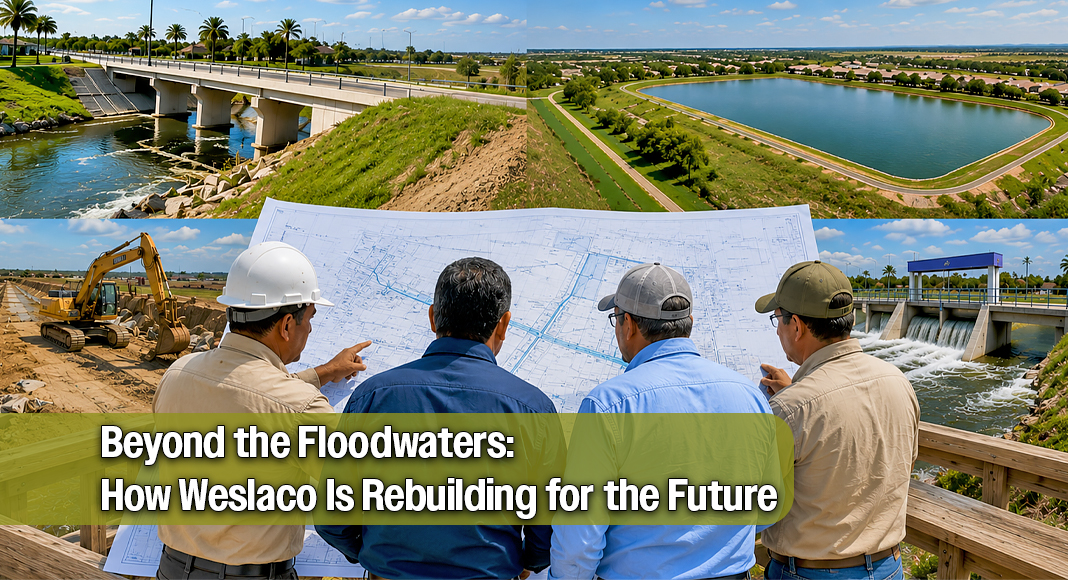
This article is Part 6 of Beyond the Floodwaters, a Texas Border Business special report examining how Weslaco is rebuilding its infrastructure, strengthening regional partnerships and preparing for long-term growth through exclusive interviews with Mayor Adrian Gonzalez.
See related stories: