















Texas Border Business




By Roberto Hugo González / Texas Border Business
WESLACO, Texas — Mayor Adrian Gonzalez said his administration has made drainage and infrastructure the city’s top priority, launching a long-term strategy to replace decades of temporary flood-control measures with engineered solutions designed to protect residents and support future growth.
In an exclusive interview, Gonzalez said Weslaco’s drainage system was built for a much smaller city and for less severe storms than those experienced today.



“Our recent flooding issues stem from decades-old infrastructure,” Gonzalez said, adding that many projects completed in previous years were intended as temporary fixes rather than permanent solutions.
Since taking office two and a half years ago, Gonzalez said he has treated the mayor’s position as a full-time responsibility, focusing on identifying the city’s most vulnerable drainage areas and developing projects designed to provide long-term protection.
The mayor said Weslaco has changed significantly over the years as farmland has been replaced by streets, parking lots and commercial development, increasing the amount of stormwater runoff entering the city’s drainage system.
To address future growth, the city imposed a temporary moratorium on new development early in Gonzalez’s administration while updating building requirements. He said new developments are now required to include retention or detention ponds that temporarily store stormwater before releasing it into the city’s drainage network.
According to Gonzalez, Weslaco’s original drainage system was designed to handle storms expected every 15 to 20 years. The city is now planning projects capable of accommodating storms with recurrence intervals of 50 to 100 years.
The mayor said infrastructure planning extends beyond drainage. He noted that the city’s wastewater treatment plant had already exceeded 65% of its capacity, prompting efforts to secure funding and expand the facility to support future residential and commercial growth.
Gonzalez said the city is replacing short-term responses with engineering studies that identify the most effective long-term improvements before construction begins.
“We have to design projects that will last 15 to 20 years or longer,” he said, explaining that the city is prioritizing permanent infrastructure over temporary repairs.
The mayor estimated that fully addressing Weslaco’s drainage needs would require more than $100 million, making it necessary to prioritize projects in neighborhoods that have experienced repeated flooding.
He said the city has hired 19 engineering firms specializing in civil engineering, water, wastewater, traffic, and mechanical, electrical, and plumbing systems to prepare projects that are ready for construction and eligible for state and federal funding opportunities.
Gonzalez said his administration is committed to building infrastructure that supports both public safety and economic development while preparing Weslaco for continued population growth.
He acknowledged that solving every drainage problem will take time but said the city’s approach is centered on planning, engineering and responsible investment rather than temporary solutions.
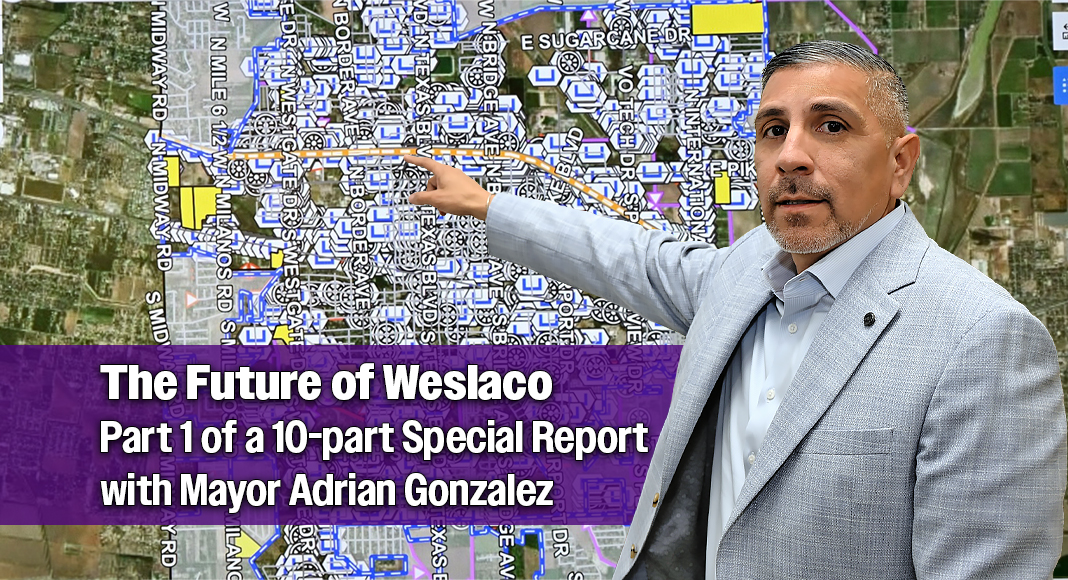
This article is the first installment of The Future of Weslaco, a 10-part Texas Border Business special report examining the city’s long-term strategy for drainage improvements, infrastructure investment, economic development and community growth through exclusive interviews with Mayor Adrian Gonzalez.
See related stories: