

















Texas Border Business



By Roberto Hugo González / Texas Border Business
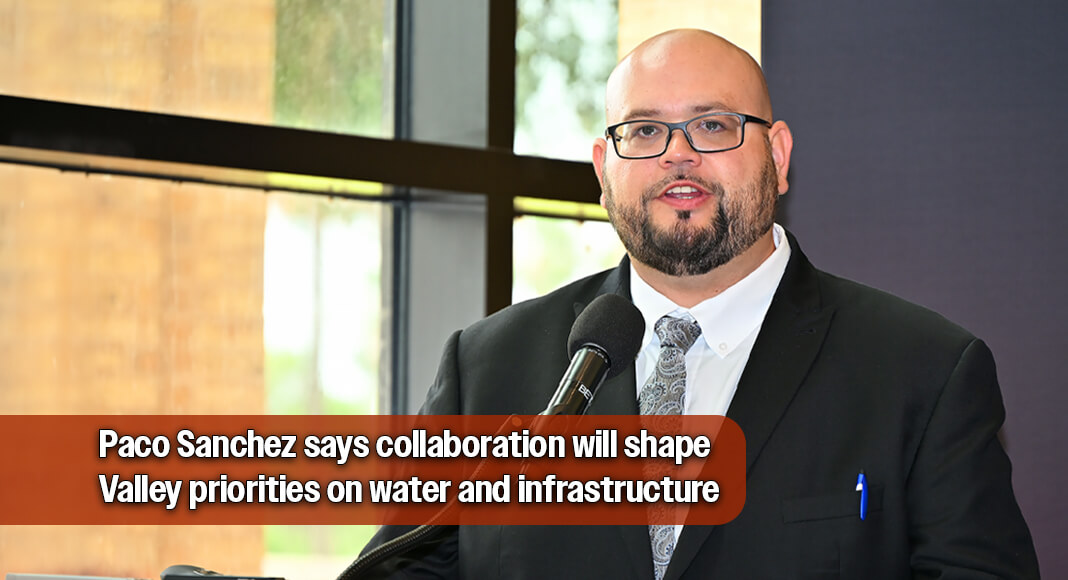
BROWNSVILLE, Texas — Rio Grande Valley Partnership President and CEO Paco Sanchez said regional collaboration will be central to addressing water challenges in the Rio Grande Valley during remarks at the RGV Connect Water Forum held April 15, 2026, at Texas Southmost College.
Sanchez opened the event by describing RGV Connect as a platform to bring together business leaders, elected officials, and community stakeholders to identify regional priorities and shape advocacy efforts in Austin and Washington, D.C.



“RGV Connect is the tool that the Partnership is going to use to discuss our region’s priorities, gather community and stakeholder input, and develop our legislative strategy for Austin and D.C.,” Sanchez said.
He said water remains one of the most pressing issues facing South Texas and emphasized the need for a regional approach to planning and policy.
“Water’s not an isolated resource. What happens upstream impacts those downstream and vice versa,” Sanchez said. “It’s a truly regional issue that really requires a regional plan to address.”
Sanchez highlighted recent state efforts to expand water funding, including Senate Bill 7, House Bill 500, and a constitutional amendment approved by voters to support long-term water projects through the Texas Water Development Board. He also referenced local appropriations for water infrastructure, including projects in Alamo and Peñitas, and regional efforts discussed during the forum.
The event brought together representatives from government, utilities, agriculture, and economic development to discuss drought, water supply, conservation, and infrastructure needs across the Valley.

Brian Jones, Texas Farm Bureau state director for District 13, said agriculture continues to face significant pressure from water shortages. He pointed to the closure of the Rio Grande Valley Sugar Mill in 2024 as a major economic loss.
“The sugar mill and the sugar industry are not coming back,” Jones said, describing it as “a permanent loss of 500 jobs” and “a hundred-million-dollar annual industry.”
Jones said limited water supplies are also affecting citrus and vegetable production, forcing growers to adjust planting decisions and shift toward crops that require less water.
Sanchez said the RGV Connect series is designed to move discussions beyond individual communities and focus on shared regional priorities. Each forum is hosted in a different part of the Rio Grande Valley and focuses on a specific issue affecting the region.
“We want to make sure that we highlight our individual cities, entities, because the work that they do feeds into everything here in the Rio Grande Valley,” Sanchez said.
He said comments and recommendations gathered during the forums will help shape the Rio Grande Valley Partnership’s legislative agenda and advocacy efforts for upcoming sessions in Austin and meetings with federal officials in Washington.
The RGV Connect Water Forum was one of several planned discussions focused on regional priorities, including higher education, workforce development, healthcare, and economic growth.
See related stories: