















Texas Border Business




By Roberto Hugo González / Texas Border Business
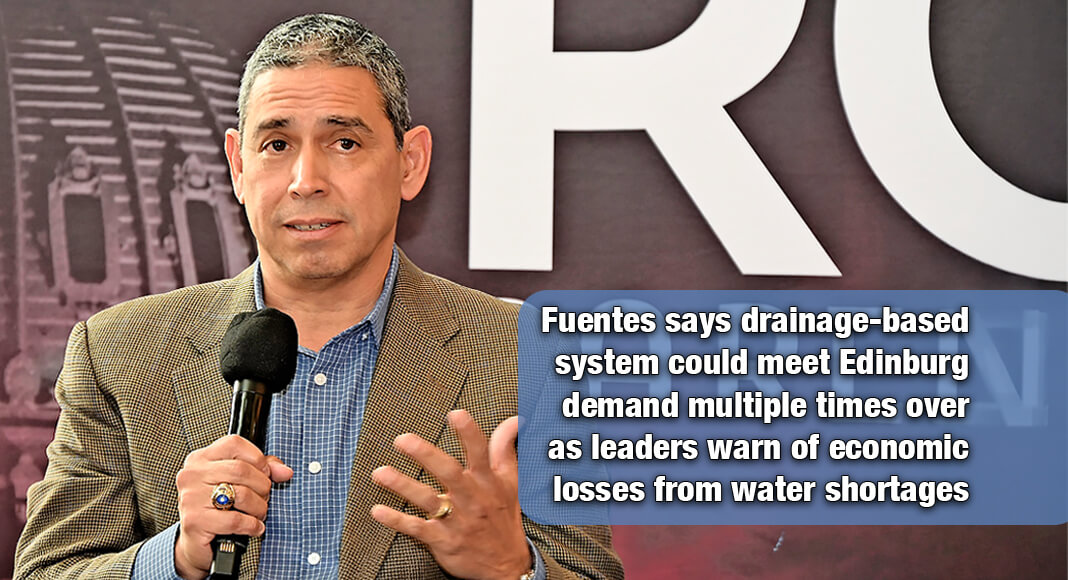
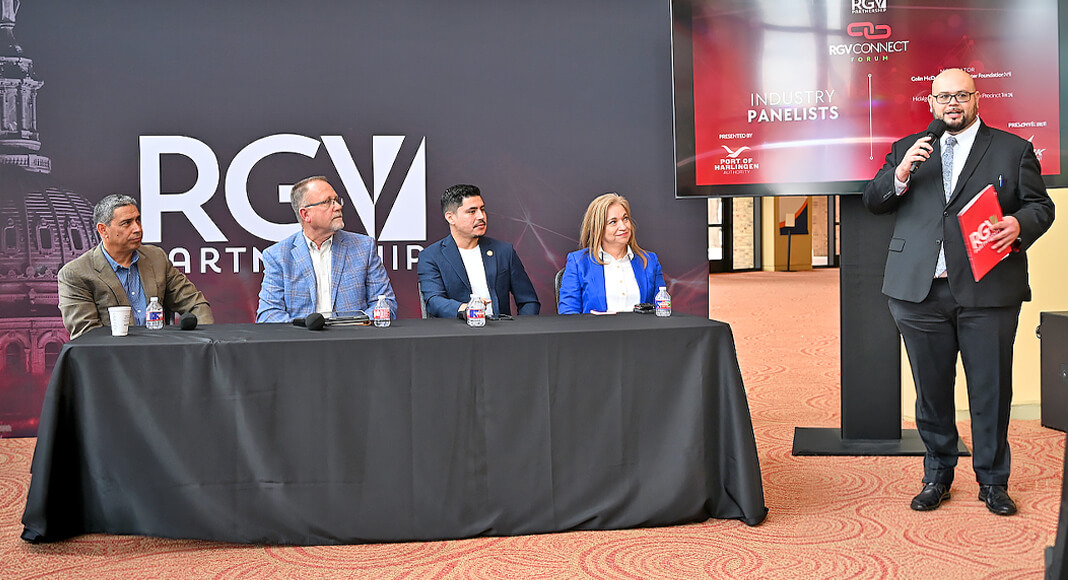
At the RGV Connect Water Forum in Brownsville, Hidalgo County Commissioner David Fuentes said a county-led water reclamation project could significantly expand the Rio Grande Valley’s water supply while addressing flood control and regional demand.
Fuentes said the project, based on capturing and treating runoff from drainage systems, has the potential to produce water at a scale that exceeds the needs of individual cities. “Because of the acre-feet of water that we’re allowed to sell under TCEQ, we could provide the city of Edinburg, I think, four times the amount of water they would need in a single year,” Fuentes said.



He described the effort as the first drainage district project in Texas approved to treat captured runoff to reverse osmosis standards for end-user consumption. Fuentes said the system could eventually produce up to 18 million gallons per day, even during drought conditions, serving tens of thousands of residents.
Fuentes also linked the project’s potential to the loss of a major agricultural employer in the region. “Had we had a project like this, who knows? We might have been able to save the sugar mill,” he said, noting that one of the planned facilities is located “not even five miles away” from where the Rio Grande Valley sugar mill operated.
Texas Farm Bureau State Director Brian Jones said the sugar mill closed in February 2024, resulting in “a permanent loss of 500 jobs” and the disappearance of “a hundred million dollar annual industry.” He added that the impact of water shortages extends beyond a single facility. Jones cited a 2023 study that estimated direct annual economic losses at $495 million, with total annual losses reaching $990 million.
Fuentes said the reclamation project is designed to serve multiple purposes, combining flood mitigation with water supply. He said drainage infrastructure, detention ponds, and retention systems can capture water that would otherwise be lost while protecting communities from flooding. “We’re creating a dual-purpose facility here of flood mitigation, protection of life and property, as well as helping provide that water that’s necessary,” he said.
He added that the project required legislative changes because drainage districts are not traditional water providers. Fuentes said lawmakers enabled the district to operate as a wholesale water supplier and qualify for state funding programs, helping move the project forward.
Fuentes said Hidalgo County secured $15 million in grant funding during the most recent legislative session and had already committed about $30 million through bonds. He said the first phase, including a treatment plant and distribution system, could cost about $75 million, with additional funding being pursued to reduce the burden on taxpayers.
Looking ahead, Fuentes said the region needs stronger coordination among cities, irrigation districts, and other entities. “We all want more water and better access to it,” he said. “There has to be some commonality about how we’re pushing to just get water for all of us.”
Paco Sanchez, president and CEO of the Rio Grande Valley Partnership, said the RGV Connect forum is designed to align leaders around shared priorities and guide policy discussions. He said water remains one of the most urgent issues facing the region and requires coordinated action. “Water’s not an isolated resource,” Sanchez said. “What happens upstream impacts those downstream and vice versa.”
See related story: