




















Texas Border Business
By Roberto Hugo González / Texas Border Business
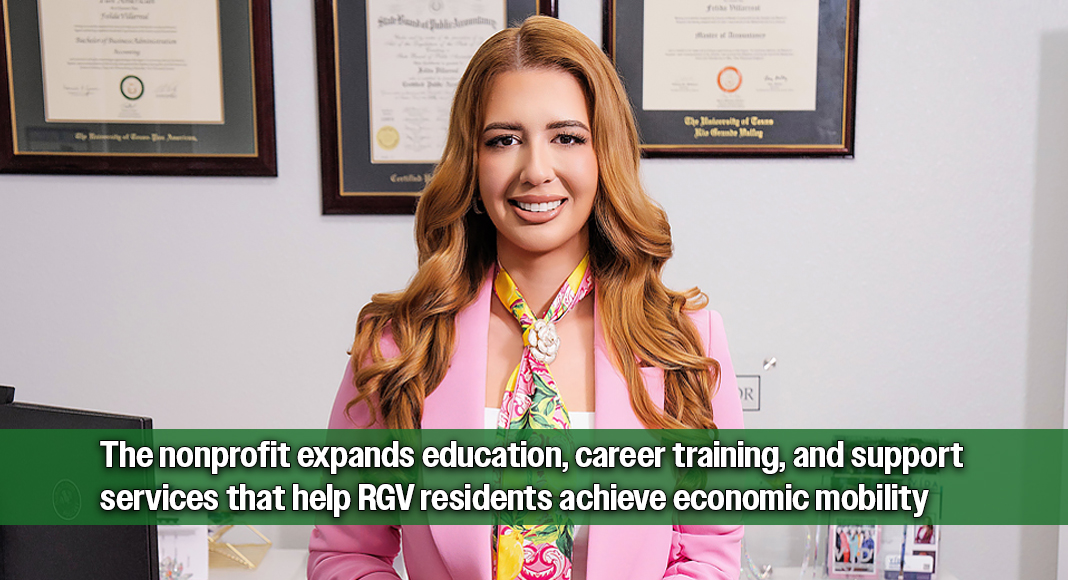
MCALLEN, Texas — When Felida Villarreal became president and chief executive officer of Valley Initiative for Development and Advancement (VIDA) in 2022 at age 27, she assumed the leadership of one of South Texas’ most established workforce development nonprofits— and the scrutiny that often accompanies young executives.




Rather than answer skeptics directly, Villarreal relied on the principles that had shaped her life since childhood: education, financial discipline, and preparation.
“I focused on listening, learning, and showing through results that age doesn’t define capability,” Villarreal said. “I may have new ideas and a vision for where we’re going but connecting with your team and honoring the work that came before you are just as important.”
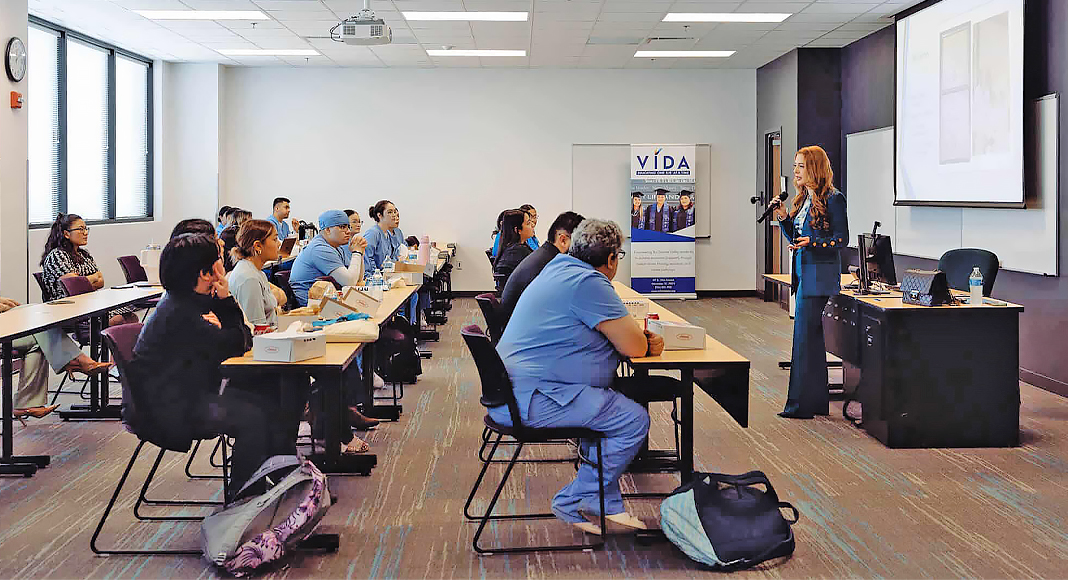
Those principles have guided both her career and VIDA’s mission of helping Rio Grande Valley residents overcome financial and personal barriers to education and employment.
Villarreal’s path began while she was still a student at Sharyland High School, where she simultaneously enrolled in college courses and earned between 50 and 60 college credit hours before graduating. By age 20, she had completed her bachelor’s degree.
“Taking college courses while I was still in high school opened my eyes to what I could achieve,” she said. “It showed me that I didn’t have to follow the traditional path and that I could reach my goals faster than I thought.”
She credits her grandfather, Helio Rolando Villarreal, with steering her toward accounting.
“If you can become a CPA, you can be anything— an accounting firm owner, an organization’s CFO, or CEO,” he told her. The advice convinced Villarreal that accounting could become a pathway to leadership rather than simply a profession.
After college, she joined Telemundo 40 as a financial analyst, gaining experience in the NBCUniversal and Comcast corporate environment.
“I learned early on that accounting is the language of business,” she said. Although she valued the corporate experience, Villarreal said she wanted to use those skills to strengthen her community.
“I came to understand that a successful nonprofit has to be run like a business,” she said. That opportunity came in 2020 when then-Executive Director Priscilla Dinn Alvarez hired her as VIDA’s director of finance. Villarreal advanced to deputy executive director before succeeding Alvarez as president and CEO in 2022.
She credits Alvarez with teaching her one lesson she still follows. “Don’t be afraid to ask— the worst that can happen is you get a no,” Villarreal said.
Today, Villarreal leads a staff of 24 employees, including several who have served VIDA for more than 25 years. She describes herself as a lifelong learner who values the experience of longtime employees while encouraging innovation and new partnerships.
Founded in 1995, VIDA helps adults in Hidalgo, Cameron, Starr and Willacy counties complete college and workforce training that leads to careers capable of supporting families. Participants receive assistance with tuition, transportation and childcare, along with weekly counseling and case management designed to help them remain in school until graduation. “Financial assistance can help you pay for school, but counseling and case management help you actually finish,” Villarreal said.
She said the Rio Grande Valley faces challenges that extend well beyond the cost of tuition. Roughly one-third of the region’s population lives in poverty, and many students struggle with childcare, transportation, family responsibilities,or multiple jobs while pursuing an education.
“Our local colleges are doing excellent work,” Villarreal said. “The challenge isn’t the quality of education— it’scompletion rates.”
VIDA partners with South Texas College, The University of Texas Rio Grande Valley, Texas State Technical College,and Texas Southmost College, helping students complete nursing, allied health, technical and degree programs by removing barriers that often force them to leave school. Healthcare remains one of the organization’s highest priorities. “We need more bilingual, culturally competent healthcare workers to serve our community,” Villarreal said, pointing to continued demand for nurses, patient care technicians, radiologic technicians and other allied health professionals.
VIDA also works with employers to identify careers that offer long-term economic mobility in manufacturing, logistics, information technology, finance, and business services. Preparing participants for a changing workforce increasingly includes artificial intelligence. “AI and emerging technologies are changing almost every job, not just tech jobs,” Villarreal said.
Through partnerships with UnidosUS and Verizon/EdX, participants can earn online certificates from institutions including Harvard University, Columbia University and Rice University in computer science, artificial intelligence, leadership and other workforce skills. One participant’s experience demonstrates how those opportunities can reshape a career.
After setbacks in a respiratory therapy program, a justice-impacted young man enrolled in VIDA’s Digital Stackable Credentials program and completed Harvard University’s CS50 courses in computer science and artificial intelligence with Python. He later secured an information technology position paying $24 an hour. “I found myself in the interview answering questions using industry terminology and referencing things I had learned in the training,” he told VIDA.
“People are not defined by their worst mistakes,” Villarreal said. “Our job is to create pathways that make that possible.”
VIDA measures those outcomes through both participant stories and performance data. According to Villarreal, an economic impact analysis by The University of Texas Rio Grande Valley found every dollar invested in VIDA generates $15.69 for the regional economy. The organization reported a 98% participant persistence rate and an 83% graduation rate in 2025. Graduates increased average hourly earnings from about $13.43 before entering VIDA to $27.75 after completing training, while average annual earnings exceeded $57,000. For Villarreal, those numbers represent more than organizational success.
“When we help one person complete their education and secure a good job, we’re not just changing that individual’s life— we’re changing the trajectory for their entire family,” she said. She believes workforce development is central to the Valley’s future, creating opportunities that allow talented residents to build careers without leaving the region.
“I didn’t leave for school, and I didn’t leave to build my career,” Villarreal said. “I earned my education here, built my professional life here, and now I have the privilege of leading an organization that’s transforming lives in the community I love.”
Looking ahead, Villarreal hopes to expand VIDA’s reach while preserving the individualized counseling that has become the organization’s hallmark. She also wants to strengthen employer partnerships, invest in technology, and eventually replicate VIDA’s model in other Texas communities facing similar workforce challenges. Ultimately, she said, success is measured by the opportunities created for others.
“The most important message is this: You belong here, and you can do this,” Villarreal said. “If you’re ready to invest in your education and your future, VIDA will walk alongside you every step of the way.”
See related story: