












Texas Border Business



By Roberto Hugo González / Texas Border Business
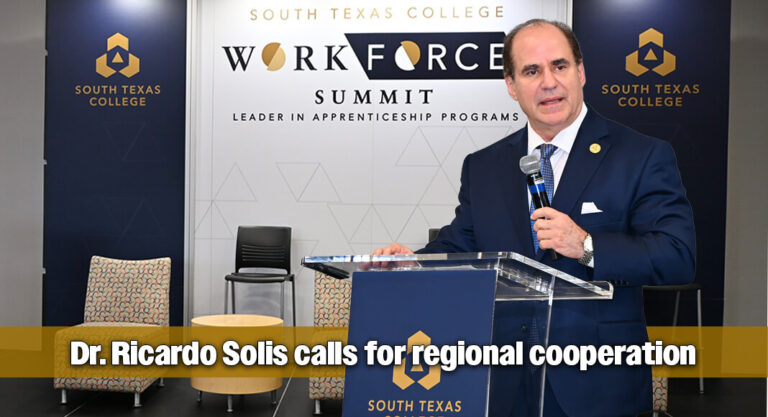
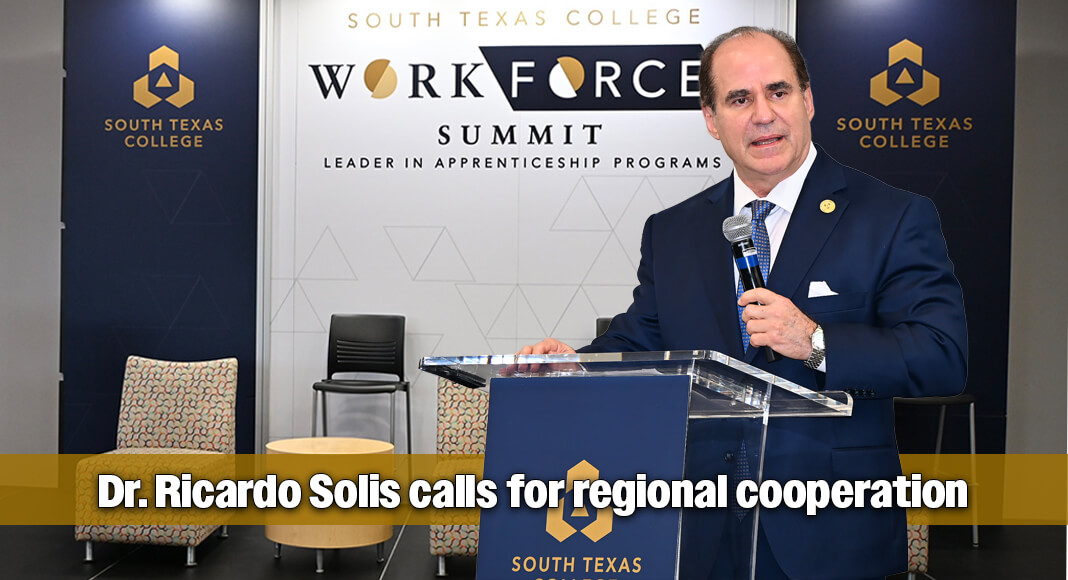
McALLEN, Texas – South Texas College President Dr. Ricardo Solis urged business leaders, educators, and government officials to work together to prepare South Texas residents for an economy increasingly influenced by artificial intelligence, automation, and emerging technologies.
Addressing participants at the college’s 6th annual Workforce Summit, Solis said technological advances are changing the qualifications employers seek and creating new demands for educational institutions.



“The economic future of South Texas will depend, in large measure, on the talent we develop today,” Solis said.
He told representatives from business, industry, education, economic development and local communities that the region must focus on the abilities workers will need as technology changes their occupations.
“The challenge before us is no longer simply a shortage of workers. It is a skills challenge,” he said.
Solis addressed concerns about artificial intelligence replacing employees, offering a different perspective on how the technology could affect employment.
“We often hear that AI is going to replace people. I’m not convinced of that. But I do believe that people who know how to use AI will have an advantage over those who do not,” he said.
His remarks emphasized preparing people to use new technologies rather than treating technological advances solely as threats to employment.
Solis said South Texas College’s educational mission extends beyond helping students obtain their first jobs. The institution also seeks to provide opportunities for career advancement, economic mobility, and lifelong learning.
Achieving those objectives requires direct communication between colleges and employers, he explained.
“We need employers at the table, telling us not only what skills they need today, but what they will need tomorrow,” Solis said.
He also encouraged educators to adopt innovative approaches that respond to changes in industry requirements.
For economic development leaders, Solis emphasized the connection between education, business investment and regional competitiveness.
“We need leaders across this region who understand that workforce development and economic development are not separate conversations,” he said.
“They are the same conversation.”
According to Solis, effective cooperation can help South Texas attract investment, expand employment opportunities and strengthen families.
He encouraged participants to use the summit to exchange ideas openly and identify actions that educational institutions, businesses and community organizations can pursue together.
Solis also reminded attendees that preparing residents for employment involves more than teaching technical skills. Education, he said, should provide opportunities for personal advancement and greater economic security.
“Because ultimately, workforce development is not simply about filling jobs,” he said.
“It is about developing human potential.”
In closing, Solis thanked participating leaders for their involvement and expressed appreciation for their continued partnership with South Texas College.
He concluded by reaffirming his belief in South Texas’s potential and its residents.