














Texas Border Business



Texas Border Business
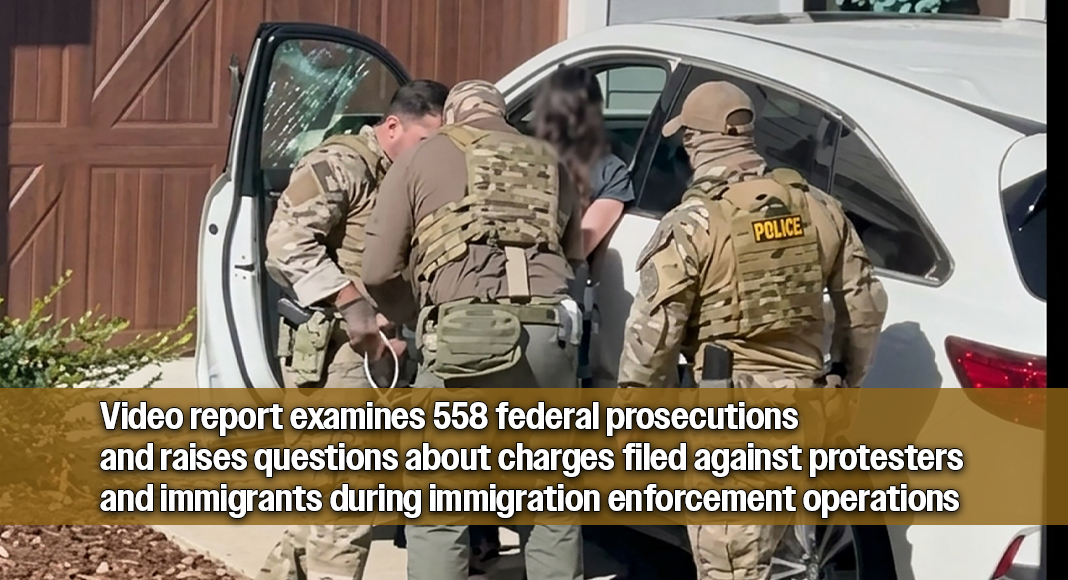
A New York Times investigation presented in a short video published on the newspaper’s official Facebook page found that 213 of 558 immigration-related federal criminal cases examined during President Donald Trump’s second term ended in dismissals or acquittals.
The video, titled “How Criminal Cases Against ICE Protesters Are Crumbling,” features investigative reporter Danny Hakim explaining the findings, including court outcomes and video evidence from immigration enforcement encounters across the United States.



The investigation examined prosecutions under 18 U.S.C. 111, a federal law prohibiting assaults on federal officers and forcibly interfering with their official duties.
According to the Times, the findings contrast with the Justice Department’s overall criminal prosecution success rate, which exceeds 90%.
One case involved two women arrested November 17, 2025, in Charlotte, North Carolina, after protesting the presence of immigration enforcement agents.
Watch the Facebook video below:
Home security footage captured their arrests. One federal agent announced, “You impeded 18 U.S.C. 111.”
Hakim reported that prosecutors never produced evidence establishing that either woman assaulted or forcibly impeded federal officers. The charges were subsequently dropped.
The investigation also reviewed recordings of encounters between federal agents and civilians.
“What we saw by reviewing these videos, is that sometimes it was the officers who were the first to get physical,” Hakim said.
Body-camera footage from Laredo, Texas, dated July 27, 2025, was presented as one example of officers initiating physical contact.
In Minneapolis, footage from January 7, 2026, showed Quentin Williams, a special education assistant, raising his arms as federal agents approached. Officers tackled him, and he was subsequently charged under the same statute.
Another case involved Josefina Gabriel-Lopez in Biloxi, Mississippi, on May 20, 2025. Accused of assaulting a federal officer, she argued that the officer had initiated physical contact. A jury acquitted her.
The Times found that prosecutors did not allege injuries to federal officers in more than 100 cases. In at least seven cases involving accusations that protesters or immigrants injured officers, evidence indicated the officers had caused their own injuries.
Of the 558 cases reviewed, approximately 100 remained pending, while more than 240 resulted in guilty outcomes.
Hakim said those convicted were overwhelmingly immigrants, often facing deportation, who could have faced greater difficulties contesting federal charges.
The Department of Homeland Security and Department of Justice defended their enforcement and prosecution practices when contacted by the Times, according to the investigation.
Hakim said video evidence in some cases showed defendants engaging in activities that appeared protected under the First Amendment.
The investigation concluded that the findings raised concerns about traditional federal prosecutorial standards and whether assault-related charges were being used to support more aggressive immigration enforcement arrests.