
















Texas Border Business




Texas Border Business
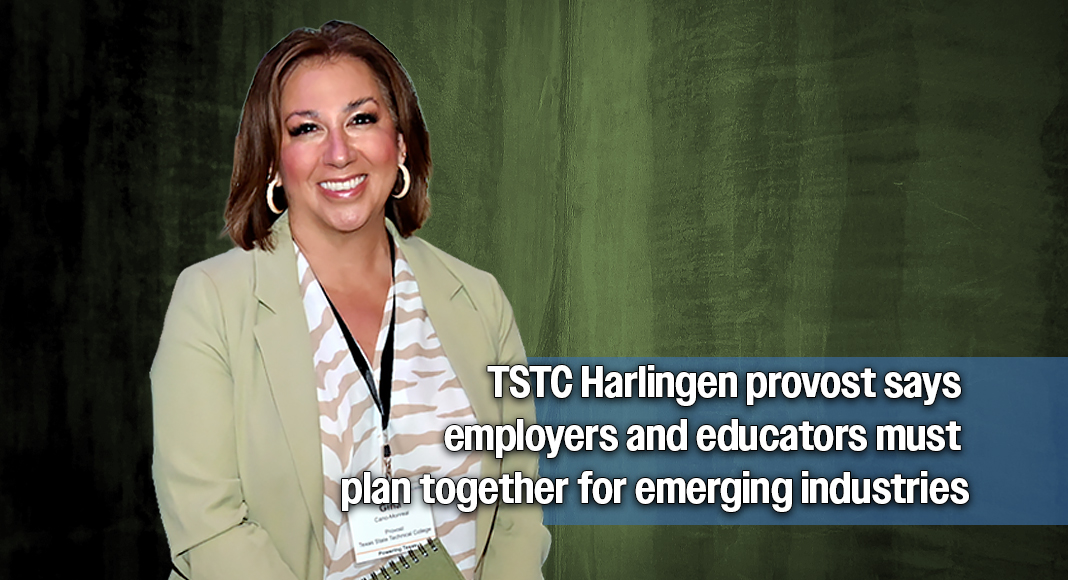
HARLINGEN, Texas — Dr. Gina Cano-Monreal, provost of Texas State Technical College Harlingen, said South Texas educational institutions must work closely with employers and with each other to prepare workers for the large industrial projects expanding across the Rio Grande Valley.
Cano-Monreal spoke during the Human Capital and Workforce panel at the Powering Texas & Regional Growth Infrastructure + Workforce Exchange, hosted Aug. 13 by the Institute for Leadership in Capital Projects Rio Grande Valley Chapter and the Harlingen Economic Development Corporation.



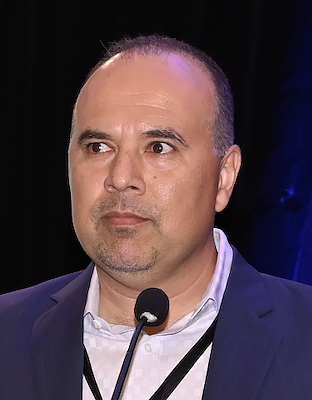
Jose Delgado, vice president of the I-LinCP RGV Chapter, said workforce readiness is one of the central questions companies consider before investing in the region.
“Whenever you have a company that is ready to invest billions of dollars in a region, they ask the hard questions,” Delgado said. “Do you have reliable power? Can you guarantee water security? Do you have the trained workforce? Are your leaders coordinated?”
Dr. Cano-Monreal said TSTC’s mission can be summarized as placing more Texans in well-paying jobs. She said accomplishing that requires continuous communication between technical educators and employers rather than relying only on periodic advisory meetings.
“The work that is done every day at TSTC, and this is largely by our program team leads, is to really work closely with industry partners,” Dr. Cano-Monreal said.
She said the strongest partnerships allow employers to communicate their expected workforce needs 18 to 24 months in advance. That gives colleges time to identify required skills and competencies, estimate how many workers they’ll need, and prepare instructors, facilities, and training programs.
Dr. Cano-Monreal pointed to TSTC’s relationship with Bechtel, the construction contractor for NextDecade’s Rio Grande LNG project, as an example of the type of employer collaboration needed to prepare students for major industrial projects.
She said workforce training doesn’t always require a lengthy academic program. In some cases, workers may already have foundational skills and need only accelerated training to qualify for new positions.
“Maybe it’s just a short-term upskilling that we can do through accelerated training to get our workforce ready,” she said.
Dr. Cano-Monreal said the scale of current and anticipated projects means no single educational institution can supply the entire workforce.
“It isn’t just how an entity like TSTC can fulfill that,” she said. “It’s going to have to be a combination of TSTC, TSC, STC, UTRGV. How are all of these entities going to come together?”
She said companies considering the Rio Grande Valley are ultimately interested in whether the region as a whole can deliver the workers they need, rather than which institution provides the training.
“It really is, what can the region provide?” Dr. Cano-Monreal said. “They don’t really care who is providing it. It’s, can the whole region come together to produce this for us?”
TSTC operates 11 campuses across Texas, with programs varying according to the workforce needs of each area. Cano-Monreal said the Harlingen campus primarily serves commuter students from the region and adjusts its program mix as employer demand changes.
Looking ahead, she said educational institutions, businesses and economic development organizations should begin introducing students and their families to emerging careers before those industries reach full operation.
“Start making those intentional relationships and partnerships so that we get students interested in what’s to come here early — them and their parents — because they don’t know what they don’t know,” Dr. Cano-Monreal said.
See related story: