
















Texas Border Business




By Texas Border Business
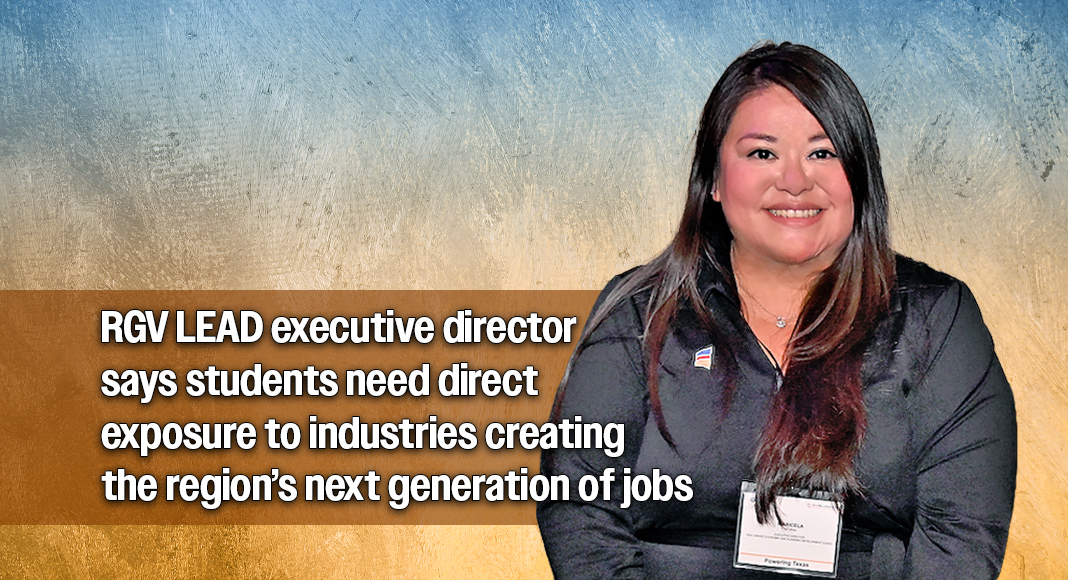
HARLINGEN, Texas — Maricela “Mari” De León, executive director of RGV LEAD, called on Rio Grande Valley employers to give students direct exposure to the workplace as the region prepares for expanding demand in advanced manufacturing, engineering, cybersecurity and other industries.
De León spoke Aug. 13 during the Human Capital and Workforce panel at the Powering Texas & Regional Growth Infrastructure + Workforce Exchange, hosted by the Institute for Leadership in Capital Projects RGV Chapter and the Harlingen Economic Development Corporation.





Rafael Vela, CEO of Workforce Solutions Cameron and moderator of the panel, said the Valley has produced a substantial pool of educated workers but historically lacked enough industries to retain many of them.
“Our success depends on how we prepare, attract and, most importantly, retain that workforce needed for this unprecedented growth that we’re experiencing right now,” Vela said.
De León said RGV LEAD, which has worked in the region for more than three decades, focuses on connecting academic development with economic development. The organization works with school districts, educators and employers to give students firsthand exposure to careers before they enter the workforce.
She said many students choose career fields during high school without fully understanding what those jobs involve.
“They know what it reads on a paper, but they don’t know exactly what that will deliver upon graduation,” De León said.
RGV LEAD is addressing that gap by working directly with employers to provide students with onsite experiences that extend beyond traditional internships and apprenticeships, she said.
De León said the organization is developing workforce pipeline initiatives around needs identified by employers. Those efforts include fields ranging from architecture and construction to engineering, advanced manufacturing, information technology and cybersecurity.
The Valley already has a significant pipeline of potential workers, she said. During the previous academic year, RGV LEAD worked within a service area representing more than 69,000 students, while approximately 16,000 students graduate annually across the region.
De León urged employers not to think of workforce development solely in terms of colleges and universities. High school students enrolled in career and technical education programs are already identifying fields they intend to pursue and can become part of the region’s future workforce.
Her message to businesses was straightforward.
“Open your doors to our students so they can gain that experience,” De León said. “It’s not about what I am going to get out of it. What you’re going to get out of it is the investment you’re putting into it.”
She also pointed to the importance of partnerships with economic development organizations and school districts. RGV LEAD began the new academic year with signed agreements from 12 regional school districts and a goal of reaching 34, she said.
De León said smaller districts can struggle to provide students with industry exposure on their own. RGV LEAD seeks to connect those schools with businesses willing to provide opportunities.
“What is the need? Their need is our students need to gain firsthand experience,” she said. “The only way that they’re able to do that is people like you.”
As major investments reshape the Valley’s economy, De León said employers, educators and economic development organizations have an opportunity to build the workforce pipeline together.
“All I’m asking is give us a chance to give students an opportunity to experience what they would not have been able to do on their own,” she said.
See related stories: