
















Texas Border Business




By Roberto Hugo González / Texas Border Business
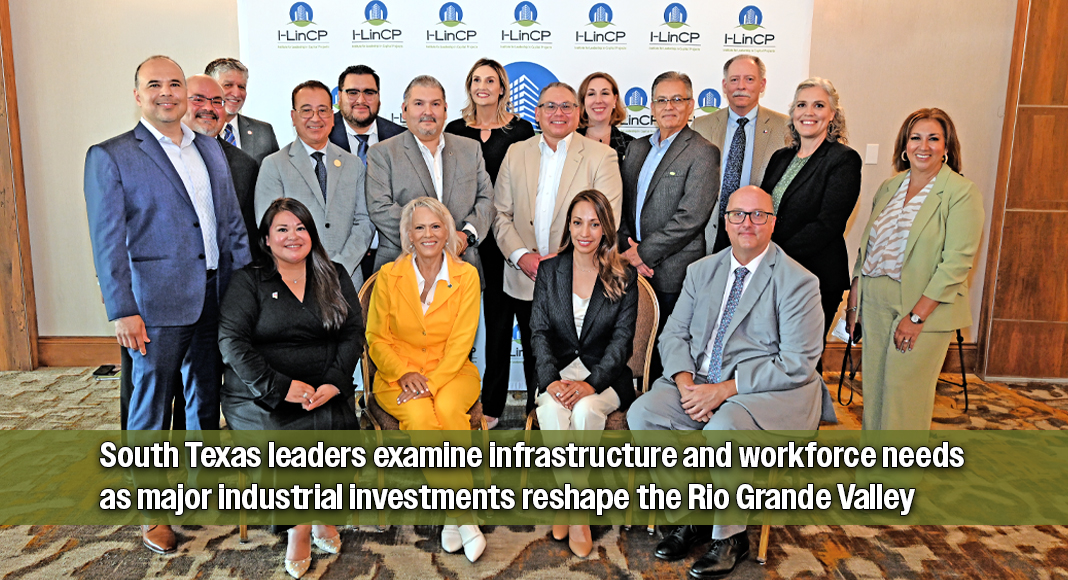
HARLINGEN, Texas — Harlingen Economic Development Corporation co-sponsored the “Powering Texas & Regional Growth: Infrastructure + Workforce Exchange,” bringing together utility, economic development, education and industry leaders to examine whether South Texas has the power, water and workforce needed for expanding industrial investment.
Harlingen EDC and I-LinCAP, Institute for Leadership in Capital Projects, worked together to plan and execute the event, bringing the program to fruition as a regional forum connecting infrastructure, workforce, education and industry leaders.



The event featured Mike Hoke of the Public Utility Commission of Texas and two panels. Beverly Loftus of Harlingen EDC moderated the capital projects and infrastructure discussion, while Rafael Vela of Workforce Solutions Cameron moderated the workforce panel.
Harlingen Mayor Norma Sepúlveda said collaboration among cities, economic development organizations, utilities, educational institutions and private industry is critical as the Rio Grande Valley competes for major investments.
Hoke said Texas has about 1,400 generation units within ERCOT and about 55,000 miles of major transmission lines. He said rising electricity demand and regional advocacy have led to additional transmission projects for the Valley, with some already energized and others under construction.
During the infrastructure panel, Loftus cited Saronic Technologies’ $3.2 billion defense manufacturing investment at the Port of Brownsville, SpaceX expansion and LNG projects as examples of industrial growth increasing demand for power, water and workers.
Jerry Briones said Brownsville’s growing defense and aerospace sectors have benefited from a regional workforce. He said SpaceX has more than 6,000 employees and is moving toward 8,000 by year-end, while suppliers are also expanding in the area.
Dale Fowler of AEP Texas said the Rio Grande Valley Improvement Project represents more than $1 billion in investment and includes about 190 miles of 345-kilovolt transmission infrastructure. He said additional projects will be needed to accommodate continued large-load growth.
Javier Martinez of Brownsville Public Utilities Board said utilities are receiving electricity requests ranging from 150 megawatts to 1 gigawatt. Supply-chain constraints add to the challenge, with transformers taking about two years to obtain and substations about three, he said. Brownsville PUB is also modernizing older substations to prepare for future demand.
Albert Escobedo of RGV Desal said water security has become an economic development issue because major investors want assurances that supplies will remain available for decades. He said Gulf desalination could provide a drought-resistant source alongside Rio Grande water, conservation, reuse and groundwater. Escobedo called for a regional water and power infrastructure master plan.
The workforce panel focused on preparing local residents for new industrial jobs.
Andrea Figueroa Benton of NextDecade said more than 6,000 workers are employed at the Rio Grande LNG construction site, and more than 70% come from within a 100-mile radius in the Valley. She said the project has also brought home workers who previously left the region for similar jobs.
Dr. Gina Cano-Monreal, provost of TSTC Harlingen, said TSTC works with industry 18 to 24 months ahead to identify required skills and prepare facilities, faculty and training programs. She said meeting projected employment demand will require coordination among technical schools, colleges and universities throughout the region.
Maricela “Mari” De León of RGV LEAD said the organization connects high school programs with workforce needs through career exposure, internships and apprenticeships. She said RGV LEAD served more than 69,000 students during the last academic year.
Vela closed by pointing to the scale of opportunities emerging in the Valley.
“There’s a great deal of reason why you all should leave today feeling hopeful about a really bright future, because there are things in front of us that we’ve never, ever seen before,” Vela said.
See related story: