
















Texas Border Business




By Roberto Hugo González / Texas Border Business
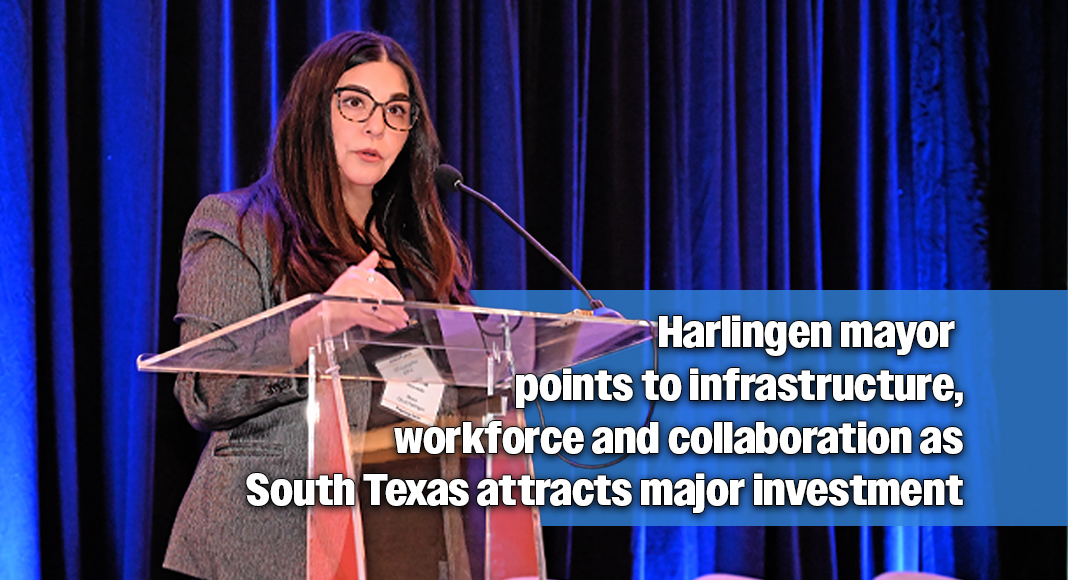
HARLINGEN, Texas — Harlingen Mayor Norma Sepúlveda said cooperation among cities, economic development organizations, utilities, educational institutions and private industry will be essential for the Rio Grande Valley to capitalize on major investments reshaping South Texas.
Sepúlveda delivered opening remarks during the “Powering Texas & Regional Growth: Infrastructure + Workforce Exchange,” held Aug. 13 at the Harlingen Convention Center. The event was organized through a collaboration between I-LinCP and the Harlingen Economic Development Corporation and brought together regional leaders to discuss infrastructure, utilities, workforce development and economic growth.




Sepúlveda said the Valley is at an important point in its economic development as billions of dollars in investments in LNG, aerospace and advanced manufacturing create jobs and new opportunities. At the same time, she said that growth requires communities to address fundamental questions involving electricity, water, workforce readiness and regional coordination.
The mayor emphasized that infrastructure and workforce development cannot be treated separately. She said both are necessary to support sustainable growth and strengthen the Valley’s ability to compete for large industrial projects.
The event’s program reflected those issues. Organizers said the forum was intended to examine power capacity, water availability, utility readiness and capital planning, along with the region’s ability to develop a workforce aligned with employers in energy, manufacturing, aerospace and LNG-related industries.
Dale Fowler of AEP Texas addressed the scale of the challenge, saying the utility has invested more than $1 billion in the Rio Grande Valley Improvement Project, including about 190 miles of 345-kilovolt transmission infrastructure. Fowler said additional infrastructure will be required as major industrial electricity loads continue to emerge.
“Alignment,” Fowler said when asked to identify a key priority for the next 12 to 24 months, calling for coordination among local and state leaders and regulators as Texas continues to grow.
Sepúlveda’s remarks placed those developments within a broader regional effort. She pointed to collaboration among municipalities, economic development organizations, utilities, schools and businesses as a foundation for competing for investment while preparing residents for the jobs being created.
The discussion also addressed water security, transmission capacity and the need to prepare students for industrial careers. Speakers said the Valley increasingly functions as a regional economy in which workers, infrastructure and major projects cross individual city and county boundaries.
Rafael Vela of Workforce Solutions Cameron closed the workforce discussion by pointing to opportunities emerging after years when many Valley residents left the region to pursue careers elsewhere.
“There’s a great deal of reason why you all should leave today feeling hopeful about a really bright future, because there are things in front of us that we’ve never, ever seen before,” Vela said.
See related story: