















Texas Border Business




Texas Border Business
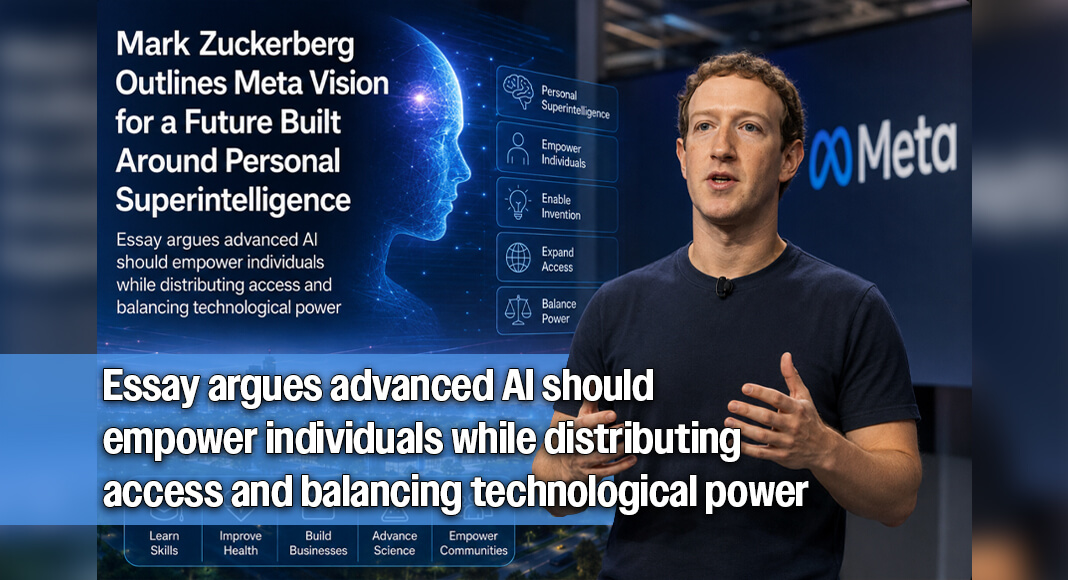
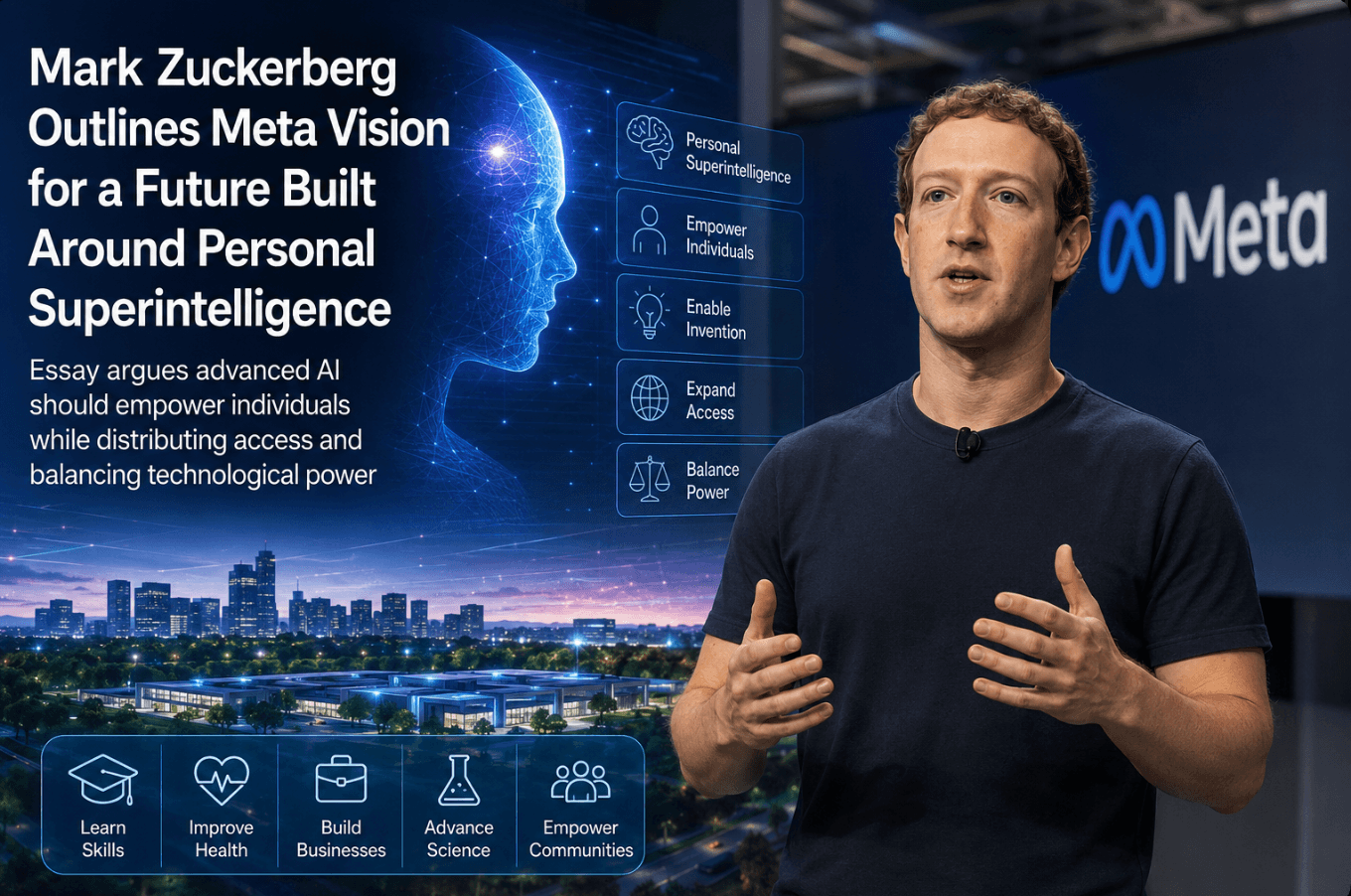
Meta CEO Mark Zuckerberg outlined a vision for artificial intelligence in an Aug. 10 essay, arguing that personal superintelligence should be widely available rather than concentrated among a small number of companies, governments or institutions.
“The defining questions of our age are who will have access to superintelligence and what will we direct it towards,” Zuckerberg wrote. “Will it be centralized and restricted to a few institutions, or will it be a tool that empowers everyone?”



In “The Path to a Positive AI Future,” Zuckerberg said Meta’s approach is based on individual empowerment, invention and a balance of power. He argued that distributing advanced AI broadly could give individuals greater ability to create businesses, learn skills, improve their health and contribute to scientific discoveries.
“We believe that delivering superintelligence to everyone is the way to answer this question,” he wrote.
Meta plans to develop personal AI agents designed to understand users and their goals and assist with health, careers, finances, household management, relationships and other activities. Zuckerberg said the agents would include privacy and security protections and work across devices, including AI-enabled glasses.
The company also envisions personalized AI tutors capable of helping people learn academic subjects, languages, job skills and hobbies. Zuckerberg said AI could accelerate scientific research, including biological discoveries and development of new drugs.
Meta intends to offer free versions of its superintelligence tools accessible to billions of people, while users seeking additional computing capacity could pay for greater access.
Zuckerberg also addressed concerns that AI could displace workers. He argued that the economic outcome will depend partly on whether AI is primarily used for automation or to increase people’s ability to create products, businesses and services.
“Invention, not automation, will be the greatest contribution of superintelligence,” Zuckerberg wrote.
The essay also addressed the infrastructure needed to support AI. Zuckerberg said communities hosting Meta data centers should benefit through jobs, investments in schools and public services, and efforts to prevent higher local energy costs.
Meta is launching a Future Is For Everyone Fund to support communities where it operates. Zuckerberg also cited America’s Workforce Academy, which Meta created to provide free skilled-trades training in areas where it is building data centers.
Zuckerberg addressed risks involving cybersecurity, biological threats, surveillance and the possibility of humans losing control of advanced AI. He proposed closer cooperation between frontier AI developers and the U.S. government, including providing officials early access to developing models to help identify security risks.
On privacy, Zuckerberg said Meta plans a fully private mode for personal AI agents in which even Meta would be unable to access users’ information.
He also called for continued U.S. leadership in AI and reaffirmed Meta’s support for open-source models.
Zuckerberg said Meta is implementing governance in which its independent board of directors will approve safety criteria for model releases and review compliance.
“I do not think it is in my, Meta’s, or the world’s best interests for me or anyone else to be a sole decision-maker on how superintelligence is deployed,” he wrote.
The complete essay, “The Path to a Positive AI Future,” dated Aug. 10, 2026, is available at meta.com.