













Texas Border Business




Texas Border Business
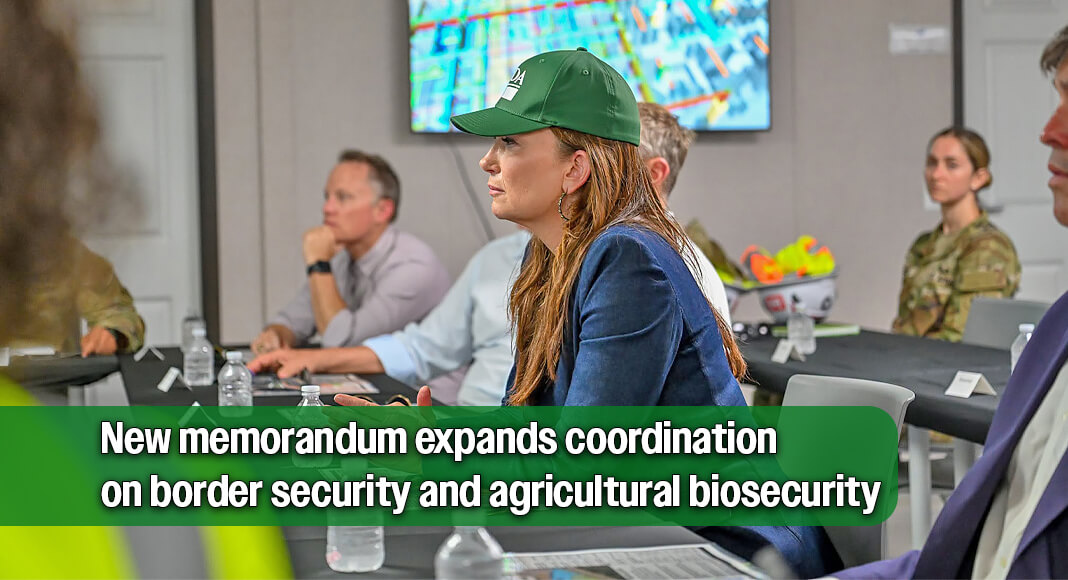
WASHINGTON, D.C. — U.S. Secretary of Agriculture Brooke L. Rollins announced a new Memorandum of Understanding (MOU) between the U.S. Department of Agriculture (USDA) and the U.S. Department of Homeland Security (DHS) during a visit to Moore Air Base in Texas on Aug. 10. The agreement is intended to strengthen federal coordination to protect the nation’s food, agriculture and veterinary systems from emerging threats, including the New World screwworm (NWS).
U.S. Customs and Border Protection Commissioner Rodney Scott represented U.S. Secretary of Homeland Security Markwayne Mullin at the event.



“The United States has the strongest food and agriculture system in the world,” Rollins said. “This new agreement builds upon the National Farm Security Action Plan in partnership with DHS. The MOU further aligns our animal health mission with DHS’s border, security, and inspection authorities, so we are better positioned to detect, assess, and respond to agricultural threats like New World screwworm. Together, we can move faster and more effectively to better support and protect America’s animals, people, and agricultural resources.”
According to USDA, the agreement establishes a framework for closer collaboration between the two departments through unified threat detection, enhanced information sharing, coordinated operational readiness and expanded research efforts. The agencies will use technologies including artificial intelligence and unmanned aircraft systems to improve screening, detection and interdiction at and between ports of entry and within border enforcement zones.
The memorandum also provides for real-time biosurveillance and information sharing, coordinated response protocols, joint training and capacity building, and expanded research partnerships, including collaboration with DHS Centers of Excellence to develop advanced screening, detection and mitigation technologies for New World screwworm and other emerging animal and plant threats.
“Safeguarding American agriculture from threats abroad starts at our border,” Mullin said. “Proud to work alongside Secretary Rollins as we fight to protect our farmers, ranchers, and livestock.”
USDA said federal, state, tribal and local partners, along with industry stakeholders, contributed to developing the agreement by providing operational expertise and practical guidance for response planning. The departments said they will continue refining response tools, strengthening coordination and updating the memorandum as preparedness activities and industry practices evolve.
According to USDA, the agreement also supports efforts to combat the estimated 800,000 head of cattle smuggled annually from Central America into Mexico, representing approximately $320 million in illicit trade. USDA said illegally transported livestock can bypass sanitary inspections and traceability systems, increasing the risk that diseased or unmonitored animals could threaten regional biosecurity and undermine progress toward eradicating New World screwworm.
The department said it will continue working with Mexico to ensure that only fully documented and legally compliant cattle enter approved U.S. ports of entry while strengthening compliance with USDA import requirements and New World screwworm safeguards.
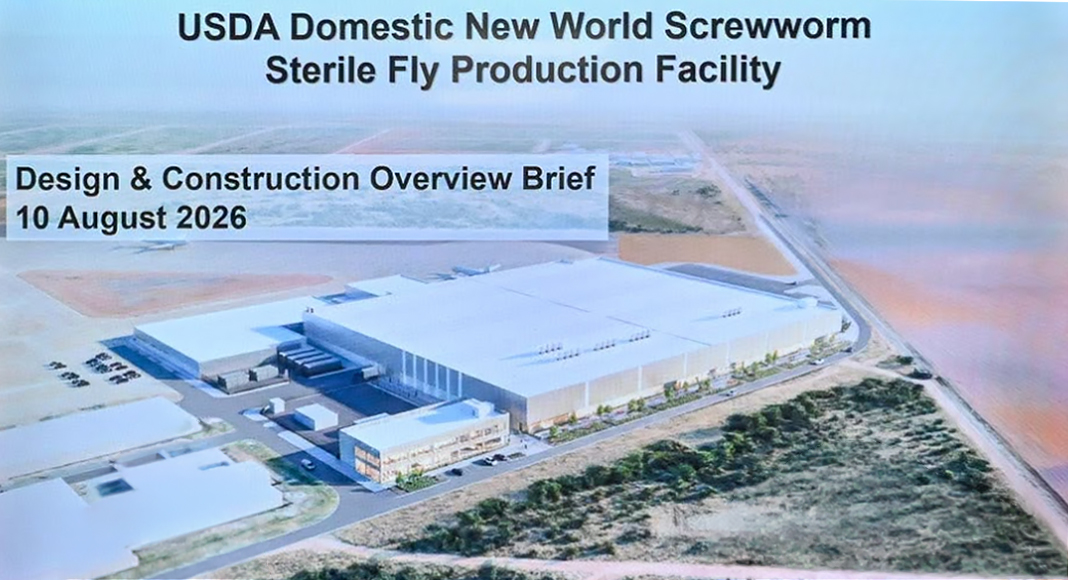
USDA also reported that sterile fly production at Moore Air Base is ahead of schedule, supporting ongoing efforts to prevent the spread of New World screwworm into the United States.