














Texas Border Business





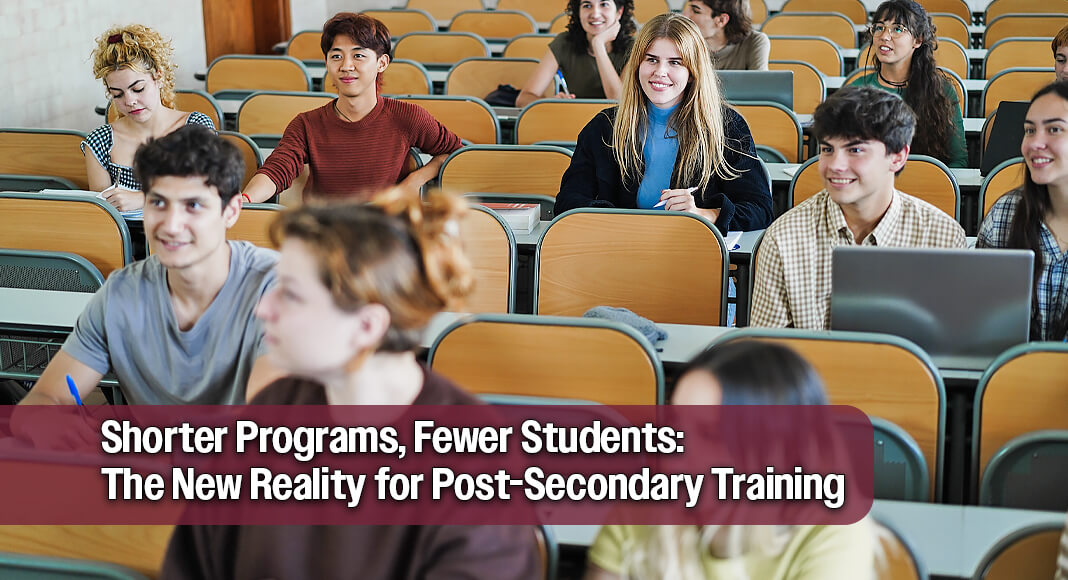
Notable shifts with profound implications are underway in higher education and other post-secondary training across the country. More students are choosing less time-consuming (and, hence, less expensive) options, demographic trends are decreasing the numbers of potential students in many regions, and international enrollment is falling precipitously. Institutions are facing myriad pressures, and some will no doubt need to adapt to remain viable. Let’s explore the big-picture trends.
Although overall college admissions are up slightly in the most recent data, the pattern is mixed. Community colleges have seen strong growth, particularly in undergraduate certificates. The logic from a student’s perspective is often quite compelling, with a relatively brief amount of time required to gain credentials and a better job. With shortages in many occupations, ranging from skilled trades to medical technicians, certificates and associate degrees can lead to lucrative professions in an efficient manner.
For some students, the high cost of a four-year degree is out of reach without substantial student loans, which can have serious implications for financial wellbeing (particularly if they are obtained while in preparation for lower-paying jobs). Four-year degrees have long been the gold standard for lifetime earnings and opportunities, but, in a changing world, they are no longer as appealing for many potential students.



Large public universities offering extensive degree programs, research, and amenities such as athletics are likely to prove resilient, and those located in growing states such as Texas will fare better. Smaller regional institutions also have a vital role to play, particularly in keeping costs down, offering desirable programs, and working with the regional industrial base to tailor degrees to high-demand occupations. In some parts of the country, however, it will be more difficult, and the most vulnerable are smaller private institutions without a clear advantage in reputation, location, student life, endowment, or some other compelling attribute.
The overarching demographic trend happening at the same time is simply that the number of people in traditional college age ranges is declining in most parts of the country. This phenomenon reflects both the declining birth rates that began after 2007 and the recent reduction in foreign students. Even though Texas has a younger population than many parts of the country, total enrollment in public schools dropped for the first time last year. The rapid dropoff in international students (many of whom pay high tuition rates) only worsens the situation.
Times are changing, and post-secondary programs must respond to the needs of students to maintain enrollment and financial stability. A well-prepared workforce will enhance the state’s growth potential, and a well-prepared individual will have better job opportunities. The evolution of post-secondary education to meet the emerging needs of both students and employers is critical. Stay safe!
_________________
Dr. M. Ray Perryman is President and Chief Executive Officer of The Perryman Group (www.perrymangroup.com), which has served the needs of more than 3,000 clients over the past four decades.