

















Texas Border Business



BROWNSVILLE, Texas— The Brownsville City Commission approved the first reading of two ordinances establishing a municipal drainage utility system and a dedicated drainage utility fee, moving both measures forward for additional consideration, including a second reading and public hearing, scheduled for October 7, before final action.
Ordinance No. 2026-1824 establishes the framework for a municipal drainage utility system, including drainage services, billing, exemptions, drainage charges and an appeal process. Ordinance No. 2026-1825 establishes the drainage utility fee and provides for applicable exemptions and credits.
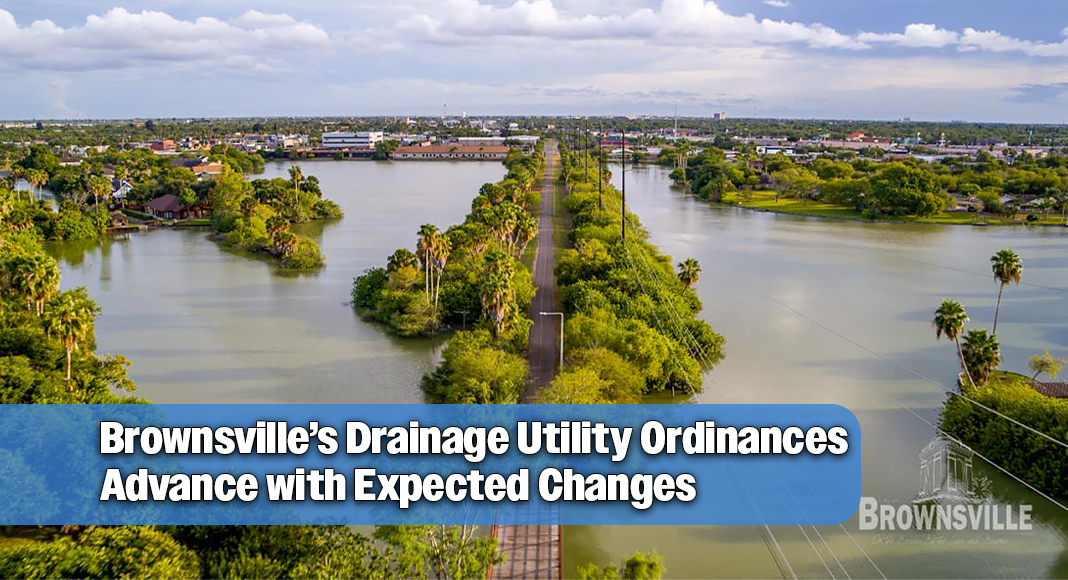
The proposed system will create a dedicated, long-term funding source for Brownsville’s stormwater infrastructure, including drainage channels, storm drains, resacas, detention areas and other facilities that help manage stormwater runoff.




The proposal would replace the existing $6.25 monthly Resaca Fee with a broader stormwater utility fee projected to generate approximately $6.2 million annually after exemptions. Funding would support drainage maintenance, flood-reduction projects, erosion control, water-quality improvements, resaca maintenance, and future infrastructure needs. Exemptions would include tax-exempt religious institutions, eligible public and charter schools, closed cemeteries, and City- and County-owned properties.
“This is about building a more resilient Brownsville and making sure we have the resources necessary to maintain and improve the drainage systems our community depends on,” said Alan Guard, ICMA-CM, CGFO, Brownsville City Manager. “We expect this approach to help us address flooding concerns more proactively, maintain our resacas and drainage infrastructure, and better prepare for future growth. At the same time, this is an important decision for our residents and businesses, and the City Commission will continue listening to all perspectives and considering community feedback before making a final decision.”
Under the proposed fee structure, approximately 90% of residential properties would continue paying $6.25 per month, while the smallest 10% of residential properties, those with less than 1,490 square feet of impervious area, would pay $3 per month. The Commission may consider adding a third Tier to this fee structure.
For non-residential properties, the proposed fee is based on the amount of impervious surface on the property, including rooftops, parking lots, sidewalks and other paved areas. The recommended rate is $6.25 per Equivalent Residential Unit, or ERU, per month, with one ERU representing 3,600 square feet of impervious area. This approach is designed to more closely align the fee with a property’s contribution to stormwater runoff.
If ultimately approved, the City and Brownsville Public Utilities Board will begin billing preparations with implementation of the stormwater utility fee anticipated in the first quarter of 2027.