As the nation celebrates Military Appreciation Month this May, the Red Cross honors the sacrifices of the military community, and the countless individuals who dedicate their time and expertise to supporting service members, veterans, their families and caregivers through the Red Cross. Courtesy image. Bgd for illustration purposes
Texas Border Business
American Red Cross
For over 140 years, American service members, veterans, their families and caregivers have counted on the American Red Cross to help prepare for, cope with, and respond to the challenges of military service, both in the U.S. and abroad. Today, unique Red Cross programs and services that care for the humanitarian needs of the military community are spearheaded by employees and volunteers, many of whom are military connected themselves.
Courtesy image
As the nation celebrates Military Appreciation Month this May, the Red Cross honors the sacrifices of the military community, and the countless individuals who dedicate their time and expertise to supporting service members, veterans, their families and caregivers through the Red Cross.
Through every phase of duty, service members and their families face a unique, sometimes daunting set of challenges. From the first day of enlistment to life after service, Red Cross team members are committed to providing a continuum of care.
Through the Hero Care Network, the Red Cross connects service members, veterans and their families to free and confidential assistance any day, any time. This includes briefings for new enlistees, emergency communication messages, financial assistance, critical community services and more.
The Red Cross maintains a global presence on hundreds of military installations and deployment sites – including 150 overseas locations – allowing staff and volunteers to provide in-person support for troops and their families, such as relaying emergency messages, teaching lifesaving skills, facilitating respite and wellness activities, and providing volunteer opportunities.
The Red Cross aims to improve the health and wellness of people in the military community through programs that focus on the whole health of each person, including behavioral health workshops, hospital and clinic support programs, the provision of care, comfort and therapy items, and a global network for caregivers to increase connection, hope and well-being.
This month, the Red Cross is inviting people around the country to turn their appreciation into action. To view volunteer and career opportunities, visit redcross.org or contact your local Red Cross chapter to learn about open positions.
A 39-year-old Mexican national has pleaded guilty to four offenses related to a human smuggling event that occurred earlier this year. Image for illustration purposes
Texas Border Business
U.S. Attorney’s Office, Southern District of Texas
BROWNSVILLE, Texas – A 39-year-old Mexican national has pleaded guilty to four offenses related to a human smuggling event that occurred earlier this year.
Alejandro Ramirez-Carranza, Matamoros, Tamaulipas, Mexico, admitted to transporting and bringing an alien into the United States as well as illegal reentry and being an alien in possession of a firearm. Mexican citizen Issac Azuara-Vasquez, 39, entered his plea April 10 to the same smuggling-related charges as well as selling a firearm to Ramirez-Carranza, an illegal alien.
On Feb. 12, authorities were conducting surveillance in an area notorious for alien, drug and weapon smuggling and heard a boat in the Rio Grande River coming in from Mexico. After hearing an individual in Spanish telling people to run, law enforcement witnessed a truck driving toward the river. It stopped by the river’s edge, and several individuals ran out of the brush and began climbing into the truck bed.
Azuara-Vasquez was driving and had brought an AR-15 type firearm to the scene. Ramirez-Carranza was standing by the vehicle, then retrieved the firearm and began running toward the back of the truck. He ignored multiple commands to stop and drop the weapon.
The investigation revealed Ramirez-Carranza was the river guide and had conspired with Azuara-Vasquez to transport and smuggle the individuals found in the truck bed. One indicated Ramirez-Carranza brought him across the Rio Grande River by boat and that his relatives were paying for him to be smuggled into the United States.
Ramirez-Carranza has felony convictions for unauthorized use of a motor vehicle and illegal reentry after deportation. He was last removed from the United States in September 2009.
“The only thing worse than engaging in human smuggling is bringing along a weapon to facilitate your operation,” said Ganjei. “The rifle was there for a reason, and fortunately the scheme was interdicted before the firearm could be used against an innocent landowner or a law enforcement officer.”
U.S. District Judge Rolando Olvera will impose sentencing for Azuara-Vasquez and Ramirez-Carranza July 2 and July 30, respectively. At those times, both men face up to 10 years in prison for the transportation charge and for bringing an alien into the United States as well as a maximum of 15 years for each of their respective firearms offenses. Ramirez-Carranza faces another 10 years for illegal reentry. All convictions also carry potential fines of up to $250,000.
Both have been and will remain in custody pending sentencing.
Customs and Border Protection conducted the investigation with the assistance of the FBI and the Cameron County Sheriff’s Office. Assistant U.S. Attorney Angel Castro prosecuted the case.
This case is part of Operation Take Back America, a nationwide initiative that marshals the full resources of the Department of Justice to repel the invasion of illegal immigration, achieve the total elimination of cartels and transnational criminal organizations and protect our communities from the perpetrators of violent crime. Operation Take Back America streamlines efforts and resources from the Department’s Organized Crime Drug Enforcement Task Forces and Project Safe Neighborhood.
Acting United States Attorney Margaret Leachman for the Western District of Texas announced that federal prosecutors in the district filed 316 new immigration and immigration-related criminal cases from May 2 through May 8. Image for illustration purposes
Texas Border Business
U.S. Attorney’s Office, Western District of Texas
SAN ANTONIO – Acting United States Attorney Margaret Leachman for the Western District of Texas announced that federal prosecutors in the district filed 316 new immigration and immigration-related criminal cases from May 2 through May 8.
Among the new cases, Cirilo Delgado-Alderete, Dilan Karim Valenzuela-Baca,and Antelmo Eligio Ramirez-Bernardo were arrested at an alleged stash house in Anthony, New Mexico. According to an affidavit, U.S. Border Patrol and Homeland Security Investigations agents observed three vehicles that had been identified as being used to smuggle illegal aliens to Albuquerque, New Mexico, parked at the residence. When agents questioned Ramirez-Bernardo, a Guatemalan national, they allegedly discovered he possessed a key to the residence on his keychain. Agents then located 25 individuals inside the residence who admitted to being citizens of Mexico, Peru, Honduras, Guatemala, Dominican Republic, and Pakistan without documentation to be in the U.S. Two of the individuals, Delgado-Alderete and Valenzuela-Baca, were identified as alleged stash house caretakes and drivers to harbor and transport the illegal aliens. Delgado-Alderete, Valenzuela-Baca, and Ramirez-Bernardo are charged with one count of conspiracy to transport illegal aliens and one count of conspiracy to harbor illegal aliens. The drivers allegedly picked up aliens in El Paso before transporting them to New Mexico.
Mexican national Erasmo Soto-Aguilar and Cesar Jared Garcia-Raucho, a U.S. citizen, were charged with statutes related to harboring illegal aliens after agents arrested them outside an alleged stash house in El Paso. A criminal complaint alleges that Soto-Aguilar had been involved in multiple smuggling schemes in which he coordinated pick-up drivers to meet and exchange illegal aliens. The complaint also alleges that Garcia-Raucho admitted to working as an illegal alien caretaker.
Leonel Sotelo-Santillan, a Mexican national, was arrested after allegedly entering a National Defense Area near El Paso illegally on May 2. Sotelo-Santillan is a convicted felon with two 2015 convictions for domestic abuse battery and theft in Louisiana, as well as a felony conviction in June 2024 for illegal re-entry. He has two prior removals, the last one being Dec. 28, 2024.
In San Antonio, Mexican national Joandel De Jesus Tierrablanca-Tellez aka Joandel Tierras Blanca was arrested after law enforcement officers allegedly observed him sell four firearms to a buyer in New Braunfels. Homeland Security Investigations had previously learned the firearms were to be sold and trafficked to Mexico for a predetermined amount of U.S. currency. A search of Tierrablanca-Tellez’s vehicle allegedly revealed his Mexican passport and an additional firearm along with .223 caliber and .308 caliber ammunition. Tierrablanca-Tellez is charged with one count of illegal alien in possession of a firearm and, if convicted, faces up to 15 years in federal prison.
Alejandro Mata-Zavala, also a Mexican national, was arrested during a traffic stop in Guadalupe County on May 6. An Immigration and Customs Enforcement (ICE)/Enforcement Removal Operations (ERO) immigration history inquiry determined Mata-Zavala had been convicted in April 2021 for conspiracy to transport illegal aliens, was sentenced to 24 months in federal prison, and was removed from the U.S. to Mexico on or about June 2, 2022. He’s currently charged with one count of illegal re-entry and faces up to 20 years in federal prison, if convicted.
USBP agents arrested Mexican national Tomas Medina-Martinez near Brackettville on May 1. Medina-Martinez is a two-time convicted felon with three prior removals from the U.S., the most recent being Feb. 12. Mexican national Mauro Morales-Lopezwas also arrested by USBP on May 1 near Eagle Pass. Morales-Lopez was deported Nov. 12, 2024 through Atlanta, Georgia following multiple violent misdemeanor convictions for family violence.
On May 5, Mexican national Sergio De La Cruz-Ruiz was arrested near Brackettville for being illegally present in the U.S. His criminal record includes nine deportations and multiple felony convictions. De La Cruz-Ruiz was also convicted in January 2024 for assault on a family member. His latest removal was April 18 through Harlingen.
Jorge Luis Benavides-Alvarado, a Mexican national, was encountered by federal law enforcement at the Williamson County Jail and charged with illegal re-entry. He was convicted for possession of a dangerous drug in Georgetown on May 7. In 2017, Benavides-Alvarado was convicted for aggravated robbery in Dallas. He was removed from the U.S. July 26, 2019. Also encountered at the Williamson County Jail, Mexican national Agustin Ruiz-Vazquez was convicted May 7 for assault causing bodily injury. Federally charged with illegal re-entry, Ruiz-Vazquez was previously removed from the U.S. July 10, 2014, two years after being convicted of injury to a child in Austin.
And in Midland, Salvadoran national Edenilzon Hernandez was encountered at the Ector County Detention Center in Odessa, where he was being held for indecency with child sexual contact. Now facing a federal illegal re-entry charge, Hernandez has three prior removals and a criminal history that includes convictions for burglary of a habitation, assault on a public servant and an additional assault charge.
These cases were referred or supported by federal law enforcement partners, including Homeland Security Investigations (HSI), Immigration and Customs Enforcement’s Enforcement and Removal Operations (ICE ERO), U.S. Border Patrol, the Drug Enforcement Administration (DEA), the Federal Bureau of Investigation (FBI), the U.S. Marshals Service (USMS), and the Bureau of Alcohol, Tobacco, Firearms and Explosives (ATF), with additional assistance from state and local law enforcement partners.
The U.S. Attorney’s Office for the Western District of Texas comprises 68 counties located in the central and western areas of Texas, encompasses nearly 93,000 square miles and an estimated population of 7.6 million people. The district includes three of the five largest cities in Texas—San Antonio, Austin and El Paso—and shares 660 miles of common border with the Republic of Mexico.
These cases are part of Operation Take Back America, a nationwide initiative that marshals the full resources of the Department of Justice to repel the invasion of illegal immigration, achieve the total elimination of cartels and transnational criminal organizations (TCOs), and protect our communities from the perpetrators of violent crime. Operation Take Back America streamlines efforts and resources from the Department’s Organized Crime Drug Enforcement Task Forces (OCDETFs) and Project Safe Neighborhood (PSN).
Indictments and criminal complaints are merely allegations and all defendants are presumed innocent until proven guilty beyond a reasonable doubt in a court of law.
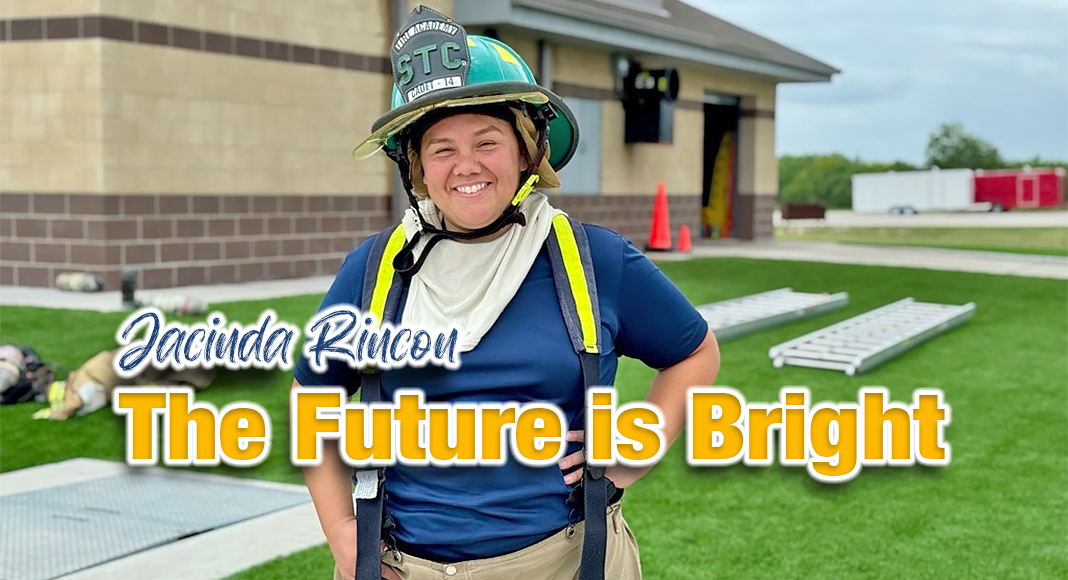
STC graduate Jacinda Rincon is now one step closer to becoming a certified firefighter and fulfilling her dream of a stable future for herself and her two young daughters. STC image
Texas Border Business
By Selene Rodriguez
As the oldest recruit in her cohort, South Texas College Fire Academy graduate Jacinda Rincon knew she had no more time to waste.
At 34 years old, just under the fire academy, fire service age limit of 35, she’s now graduating with her Basic Firefighter Certification from STC, bringing her one step closer to kickstart a career and fulfilling her dream of a stable future for herself and her two young daughters.
“I never had what you’d call a professional career, but after becoming a mom, I knew I had to do something, not just for myself, but for my kids,” she said. “My daughters are 3 and 2 years old, and I take pride in knowing they’re going to grow up seeing me do this and everything I’ve accomplished. I want them to understand what it means to work hard for something.”
Rincon had always dreamed of playing a meaningful role in her hometown of Roma.
After graduating from Roma High School in 2009, she earned an associate degree in Criminal Justice from STC in 2012. But, disinterested in the field, she then began exploring other options and worked various retail jobs, including long nights as an overnight stocker, to make ends meet.
It wasn’t until last year, when she began volunteering with the Roma Fire Department, that she discovered a new calling and a renewed sense of purpose.
“Every time I’ve had the chance to help someone, it’s one of the best feelings,” she said. “Knowing you’re there when someone’s in need and you’re able to help gives you such a warm feeling. I feel really proud of what I’m doing and excited for what’s to come.”
After volunteering for a few months, Rincon made the decision to join STC’s Fire Academy and for the past 16 weeks, she has traveled more than an hour each day to train at STC’s Regional Center for Public Safety Excellence in Pharr.
Among students much younger than her, Rincon has faced numerous challenges and undergone rigorous training that pushed her to her mental and physical limits, but all in pursuit of a greater purpose.
“I’m literally always the last one to finish our drills because everyone in the academy is so much younger than me, they do everything so quickly, like it’s nothing,” she said. “Most of them are 18 or in their early 20s, so it’s hard to keep up sometimes. I do get bummed out, but I push through.”
Despite the age gap, Rincon found her greatest motivation in the younger cadets around her, whose constant encouragement helped her push through.
She also credits her success to the guidance and wisdom of her instructors, together, they gave her the strength to keep going when she felt like giving up.
“More than half the time during this program, I thought about quitting, but my fellow cadets wouldn’t let me. They kept telling me, ‘You can do this,’ their support meant a lot to me,” she shared. “And our instructors, they’ve been just as incredible. They’re wise, informative and very detailed. We’ve even had a few volunteer instructors come in from places like Pharr and Edinburg, and every single one of them has been great at what they do. I truly look up to them.”
With a job secured at the Roma Fire Department once she passes her certification exam with the Texas Commission on Fire Protection (TCFP) in the coming weeks, Rincon is eager to give back, protecting the community she grew up in and the one her daughters will grow up in, too.
“What’s really gotten me here is the support of my mom. Without her help with my daughters, I wouldn’t have been able to do any of this. She’s been by my side every step of the way, encouraging me to go for it so I could get on my feet and build a better future,” she said. “I’m also incredibly thankful to STC and the Roma Fire Department for the opportunities I’ve been given. I’m excited to now be part of something that truly makes a difference.”
To support more aspiring firefighters from Starr County, such as Rincon, STC recently announced the launch of a new fire academy at its Starr County Campus in Rio Grande City, set to begin this fall. For more information, visit southtexascollege.edu/academics/fire-science/ or call 956-872-4208.
Pictured are: Dylan Kim of Health Professions, Andres Loa of Health Professions, Joaquin Zamarripa of Medical Professions, Anthony Roa of Medical Professions, Sean Nievera of Science Academy, Stefan Sy of Science Academy, Joseph Martinez of Virtual Academy, Joselynn Ramirez of Virtual Academy, Lizt Fontirroche of World Scholars, and Angelina Villalobos of World Scholars. Images courtesy of STISD
Texas Border Business
MERCEDES, Texas – High school graduation ceremonies for South Texas Independent School District (STISD) begin onThursday, May 22, with the celebration of the inaugural graduating class of STISD Virtual Academy, the district’s only all-virtual school.
Virtual Academy’s graduation will be held on Thursday, May 22, at 7:00 p.m., at the STISD Central Administration BuildingTeaching & Learning Center, located at 7001 E. Expressway 83 in Mercedes.
The remaining graduation ceremonies will take place May 23-24 at the Bert Ogden Arena, located at 4900 S I-69 C in Edinburg. The following are the dates and times for those ceremonies:
STISD World Scholars (Edinburg): Friday, May 23, at 7:00 p.m.
STISD Medical Professions (Olmito): Saturday, May 24, at 10:00 a.m.
STISD Health Professions (Mercedes): Saturday, May 24, at 1:00 p.m.
STISD Science Academy (Mercedes): Saturday, May 24, at 4:00 p.m.
STISD also proudly announces the 2025 valedictorians and salutatorians for the district’s high schools, including South Texas ISD Health Professions (Health Professions) in Mercedes; South Texas ISD Medical Professions (Medical Professions) in Olmito; South Texas ISD Science Academy (Science Academy) in Mercedes; South Texas ISD Virtual Academy (Virtual Academy), the district’s all-virtual middle and high school; and South Texas ISD World Scholars (World Scholars) in Edinburg.
The STISD valedictorians are Dylan Kim of Health Professions, Joaquin Zamarripa of Medical Professions, Sean Nievera of ScienceAcademy, Joseph Martinez of Virtual Academy, and Lizt Fontirroche of World Scholars.
Kim of Mission will attend Rice University in Houston, Texas, in the fall, where he will major in bio sciences.
Zamarripa of Brownsville will attend Georgetown University in Washington, D.C., where he will major in human sciences.
Nievera of Brownsville will attend The University of Texas at Austin, where he will pursue a degree in electrical and computer engineering.
Martinez of Mission will attend Texas A&M University in College Station, where he will major in economics.
Fontirroche of McAllen will attend The University of Texas at Austin, where she will major in biochemistry.
The STISD salutatorians are Andres Loa of Health Professions, Anthony Roa of Medical Professions, Stefan Sy of Science Academy, Joselynn Ramirez of Virtual Academy, and Angelina Villalobos of World Scholars.
Loa of Weslaco will attend Texas A&M University, where he will study biomedical engineering. Roa of Harlingen will attend Rice University, where he will pursue a degree in neuroscience.
Sy of Pharr will attend The Wharton School of the University of Pennsylvania – Huntsman Program to major in business and international studies.
Ramirez of Weslaco will attend The University of Texas Rio Grande Valley to major in nursing.
Villalobos of Rancho Viejo will attend Amherst College in Amherst, Massachusetts, where she will major in English & law, jurisprudence and social thought.
STISD is comprised of four magnet high schools – South Texas ISD Health Professions, South Texas ISD Medical Professions, South Texas ISD Science Academy, and South Texas ISD World Scholars– as well as two middle schools – South Texas ISD Preparatory Academy and South Texas ISD Rising Scholars Academy – and one virtual campus that includes middle and high school – South Texas ISD Virtual Academy. All campuses are tuition-free and serve students from Cameron, Hidalgo and Willacy Counties. For more information, visit www.stisd.net.
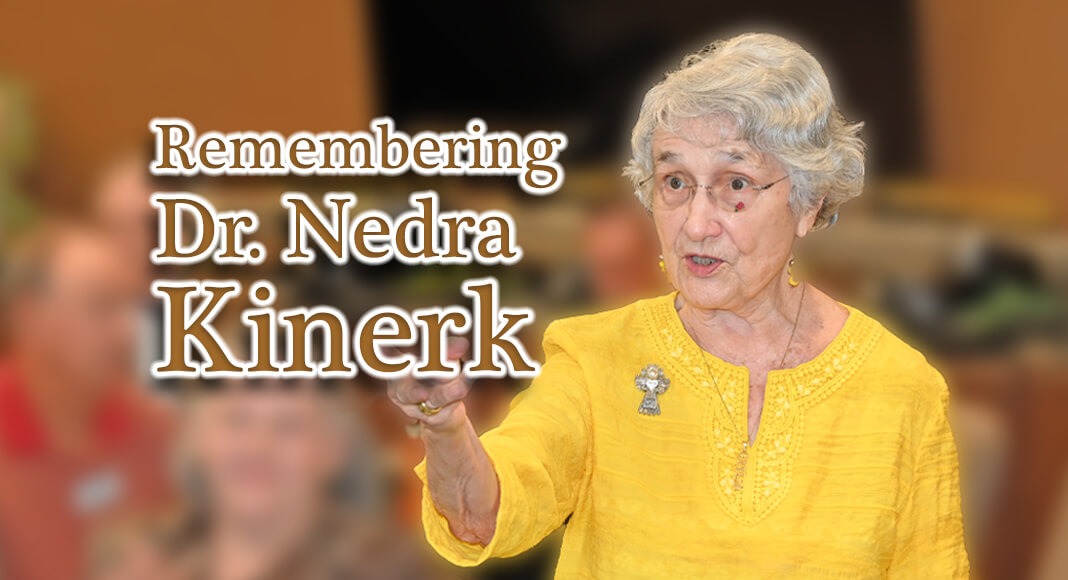
Dr. Nedra Kay Swart Kinerk, Ed.D. File photo by Roberto Hugo González
Texas Border Business
Texas Border Business
Pioneer educator, civic leader, and community advocate leaves behind a profound impact on McAllen and beyond.
Dr. Nedra Kay Swart Kinerk, Ed.D., passed away peacefully at the age of 92 on May 13, 2025, in her home in McAllen, Texas, following a nine-month battle with cancer. Known for her unrelenting commitment to education, civil service, and civic betterment, Dr. Kinerk leaves behind an enduring legacy that spans decades and reaches far beyond the Rio Grande Valley.
Born on June 30, 1932, in Frankton, Indiana, Dr. Kinerk grew up in a household devoted to education. Her parents and older sister were teachers, which influenced her career path. After graduating from Ball State Teachers College in 1955 with a B.S. in Education, she began teaching in the Anderson Township schools of Indiana. She went on to earn a master’s degree in 1962 and later a doctorate in education from Indiana University in 1970. Her doctoral dissertation focused on the effect of videotaping on student teachers—a pioneering topic at the time.
Her career in education included serving as a professor and later top administrator at Indiana University’s Kokomo campus, where she was recognized for her leadership and innovative teaching methods. In 1973, she was appointed as a commissioner on the Indiana Civil Rights Commission, a position she held for 13 years under governors from both political parties—a testament to her fairness and professionalism.
In 1987, then-Governor Robert D. Orr named her a “Sagamore of the Wabash,” one of Indiana’s highest civilian honors. She and her husband, Robert Kinerk, moved to South Texas in the late 1980s, eventually settling in McAllen. What began as a retirement relocation quickly evolved into a second career of community service and civic engagement.
Dr. Kinerk immersed herself in the cultural, educational, and civic life of the Rio Grande Valley. She co-founded Futuro McAllen in 1999, an organization that later became Futuro RGV, dedicated to nonpartisan civic improvement in Hidalgo County. She played a central role in establishing the McAllen Heritage Center and organizing the McAllen Centennial celebration in 2004. She also helped create PalmFest (now Fiesta de Palmas), a major folklife festival in the region.
Over the years, Dr. Kinerk served on numerous boards and commissions, including those related to traffic, parks, elections, zoning, the arts, and city planning. She was a consistent presence in community meetings and often served as the bridge between local governments and grassroots civic organizations. Her leadership earned her accolades, including the McAllen Chamber of Commerce Volunteer of the Year (2014), the Planning Advocate Award from the Texas APA (2001), and numerous other honors. In 2020, the city of McAllen established the Nedra Kinerk Citizenship Award in her name.
Her role as a co-founder of the McAllen Heritage Center remains one of her most cherished legacies. Her vision and tenacity helped transform the project from a centennial celebration into a permanent historical institution. Even into her 90s, she continued to advocate for civic education and the preservation of history.
Dr. Kinerk was a great friend of Texas Border Business and frequently collaborated on initiatives supporting transparency, leadership, and civic pride. Her presence in community functions, interviews, and feature articles made her a recognizable and respected figure in the media landscape of South Texas. She championed values aligned with the publication’s mission and supported platforms that elevated public service and youth leadership.
Beyond her civic roles, she was remembered as a welcoming and inclusive person who made lasting friendships across faiths and cultures. Members of the First Christian Church in McAllen described her as someone who met every newcomer with a handshake and genuine interest. She embraced diversity and openness in all aspects of her life and work.
Her community recognized her contributions through official proclamations and honors. In 2025, the State of Texas issued a resolution in her honor. The McAllen City Commission declared February 24 as “Nedra Kinerk Day,” and she was publicly celebrated at a ceremony where she danced joyfully to ABBA’s “Dancing Queen” with city officials—an image emblematic of her spirited and optimistic nature.
Dr. Kinerk is survived by three children, six grandchildren, and six great-grandchildren. She was preceded in death by her husband of 59 years, Robert Kinerk, and their eldest daughter, Cheryl. Her funeral service is scheduled for Sunday, May 19, 2025, at Kreidler Funeral Home in McAllen. Donations in her memory may be made to the McAllen Heritage Center.
Her absence will be deeply felt in every sector she touched—from education and civil rights to the arts, culture, and public planning. Dr. Nedra Kinerk was not only a leader but a builder of bridges, ideas, and hope. Her contributions have indelibly shaped McAllen and the South Texas region, and she will be profoundly missed by all who had the privilege of knowing and working with her.
A humble servant of faith and reform, Pope Francis redefined papal leadership through compassion, simplicity, and a deep commitment to justice and dialogue. Image FB. Photo by Catholic Church England and Wales, under CC BY-NC-ND 2.0, via Flickr
Texas Border Business
In this deeply human and historically rich account, Texas Border Business invites readers to reflect on the extraordinary life of Jorge Mario Bergoglio— known to the world as Pope Francis. Born into a working-class immigrant family in Buenos Aires in 1936, his journey from humble beginnings to the head of the Roman Catholic Church is remarkable and resonant. This special Exclusive feature chronicles the events that shaped his early life and priesthood and the enduring values of compassion and justice that defined his papacy.
From teaching literature and philosophy in Argentina to navigating the dark years of the Dirty War in Argentina, Bergoglio’s spiritual path was forged in both intellect and service. As a Jesuit, a bishop, and eventually a cardinal, his quiet defiance of Church privilege stood out. Living modestly and avoiding luxury, he earned the respect of many, long before ascending to the papacy. When he became Pope Francis in 2013, the world witnessed the arrival of a leader who would prioritize the poor, confront institutional failures, and promote dialogue among nations and religions.
His tenure was far from ceremonial. Pope Francis challenged long-standing norms, spoke boldly on climate change, reformed Vatican finances, and initiated a more inclusive model of Church governance through synodality. He embraced the modern world without abandoning the faith’s traditions, walking a path that often provoked both admiration and debate. Despite health setbacks in later years, his resolve remained unshaken, and his voice continued to echo globally— calling for peace, justice, and mercy until his final days.
This article captures the final chapter of a profoundly influential pontificate with reverence and clarity. It also traces the moments that defined Pope Francis as a shepherd of reform, a pilgrim of mercy, and a man of humility. For those who seek to understand the full measure of his legacy— from his first vows as a Jesuit to his final rest in Rome— this in-depth tribute offers both insight and inspiration.
We invite you to turn the page and accompany us through the life, faith, and final journey of Pope Francis, a leader whose message of mercy resonated far beyond the walls of the Vatican.
A factual account of the path of the 266th pope of the Roman Catholic Church, from Buenos Aires to the Vatican and through the closing years of his papacy
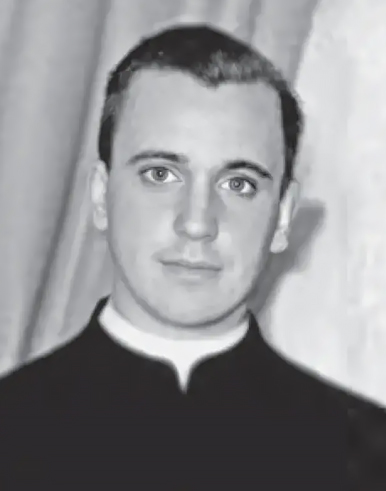
A young Jorge Mario Bergoglio at an Argentine seminary in the 1950s, quietly preparing for a lifetime of faith, service, and leadership as the future Pope Francis. Photo in the Public Domain
Jorge Mario Bergoglio was born on December 17, 1936, in Buenos Aires, Argentina, to Italian immigrants Mario José Bergoglio and Regina María Sivori. He was the eldest of five children. His father worked as an accountant for the railways, and the family belonged to the working-class Catholic population in Argentina.
Jorge Mario Bergoglio grew up in the Flores neighborhood of Buenos Aires and attended public schools. He studied at the Escuela Técnica Industrial N° 27 Hipólito Yrigoyen, where he earned a chemical technician’s diploma. After graduation, he worked briefly in a food laboratory. He later recalled doing other jobs, including working as a janitor and briefly as a nightclub bouncer.
In 1958, Bergoglio entered the Society of Jesus (Jesuits), a Catholic religious order known for its commitment to education, missionary work, and social justice. He studied humanities in Santiago, Chile, then returned to Argentina, earning a licentiate in philosophy at Colegio Máximo de San José in San Miguel. Afterward, he taught literature and psychology at Jesuit schools, including Colegio de la Inmaculada in Santa Fe and Colegio del Salvador in Buenos Aires. From 1967 to 1970, he studied theology at Colegio Máximo in San Miguel in preparation for the priesthood.
Bergoglio was ordained a priest on December 13, 1969, by Archbishop Ramón José Castellano. He made his final vows in the Society of Jesus in 1973 and was named the provincial superior of the Jesuits in Argentina, a position he held until 1979. During this time, Argentina was entering a period of political turmoil, including the Dirty War (1976–1983), during which thousands of people were disappeared by the military regime. Bergoglio’s actions during this period have been scrutinized, although no conclusive evidence of wrongdoing exists.
Surrounded by a sea of the faithful, Pope Francis extends a humble wave— reaching hearts across the world with a message of hope, unity, and mercy. Image FB. Photo by Catholic Church England and Wales, under CC BY-NC-ND 2.0, via Flickr
In 1986, Bergoglio traveled to Germany to begin work on a doctoral dissertation at the Sankt Georgen Graduate School of Philosophy and Theology in Frankfurt. Although he conducted research there, he did not complete the dissertation. After returning to Argentina, he served as a spiritual director and confessor at the Jesuit community in Córdoba, a period he later described as personal reflection and humility.
In 1992, Pope John Paul II appointed him auxiliary bishop of Buenos Aires, and he was consecrated as a bishop on June 27, 1992. In 1997, he was named coadjutor archbishop of Buenos Aires, giving him the right of succession. He became archbishop upon the death of Cardinal Antonio Quarracino in 1998.
As archbishop, Bergoglio focused on pastoral care and humility. He avoided the trappings of wealth, choosing to live in a small apartment instead of the episcopal palace, cooking his meals, and using public transportation. In 2001, Pope John Paul II elevated him to the College of Cardinals. As cardinal, he served on several Vatican congregations and councils and was known for his dedication to social justice and the poor.
On March 13, 2013, after the resignation of Pope Benedict XVI, the papal conclave elected Bergoglio as the 266th pope of the Roman Catholic Church. He chose the name Francis in honor of Saint Francis of Assisi, marking the first time a pope had taken that name. He was also the first Jesuit pope, the first from the Americas, and the first non-European pope in over 1,200 years.
At the start of his papacy, Pope Francis focused on simplicity, reform, and reaching out to others. He spoke of wanting a “poor Church for the poor,” and often emphasized God’s mercy and the importance of compassion over judgment. He worked to reform the Roman Curia, which is the central administration of the Catholic Church that helps the pope run Church affairs. He also pushed for greater financial transparency in the Vatican. In response to the Church’s sexual abuse crisis, he created commissions to investigate and address the issue, though the impact of these efforts varied depending on the region.
Francis strongly emphasized environmental protection, authoring the 2015 encyclical Laudato Si’, which addressed climate change’s moral and spiritual dimensions and ecological degradation. In it, he called for urgent global action to care for the Earth, describing it as “our common home.”
On matters of interfaith dialogue, Pope Francis met with leaders of various religious traditions, including Islam, Judaism, and Eastern Orthodox Christianity. He visited the Holy Land, Turkey, the United Arab Emirates, Iraq, and other countries to foster dialogue and mutual understanding among religions. His meeting with Patriarch Kirill of the Russian Orthodox Church in 2016 was the first between a pope and a Russian patriarch in nearly 1,000 years.
Pope Francis also addressed many important issues in today’s world. He spoke out against economic inequality, defended the rights of refugees, and called for peace and dialogue in areas affected by conflict. While upholding traditional Catholic teachings, he encouraged Church leaders to be more understanding and flexible when helping people with complicated personal situations. In 2016, he released Amoris Laetitia (“The Joy of Love”), which focused on family life and relationships. In it, he said that divorced and remarried Catholics could, in some instances, be welcomed back to receive the sacraments after careful personal and pastoral guidance. This approach emphasized compassion and careful decision-making rather than a one-size-fits-all rule.
Pope Francis held numerous synods (Church councils) throughout his papacy, including those focused on the family, young people, and the Amazon region. The 2019 Amazon Synod addressed ecological concerns, indigenous rights, and the shortage of clergy in remote areas. The synodal process became a hallmark of his leadership style, emphasizing consultation and dialogue within the global Church.
Health concerns began to surface during the later years of his pontificate. In 2021, Pope Francis underwent surgery to remove part of his colon due to diverticulitis. He experienced ongoing mobility issues, often using a wheelchair for public appearances starting in 2022. Despite this, he continued his international travel and maintained an active schedule of audiences, masses, and official visits.
Pope Francis repeatedly addressed the sexual abuse crisis, meeting with survivors, publicly apologizing, and implementing new reporting and accountability procedures, including the 2019 Vos estis lux mundi directive. “Vos estis lux mundi is a Latin phrase that translates to “You are the light of the world.” It is taken from the Gospel of Matthew 5:14 in the New Testament.
While progress was acknowledged in some quarters, criticism remained regarding implementation, particularly in various national contexts.
Pope Francis changed how the Vatican manages its money to make things more open and responsible. He created the Secretariat for the Economy, led by Cardinal George Pell, to keep track of the Church’s finances and budgets. In 2020, he introduced a major document called Praedicate Evangelium (“Preach the Gospel”), which took effect in 2022. This new set of rules reorganized how the Vatican works. It focused on spreading the message of the Gospel, serving others, and giving more responsibility to local Church leaders instead of keeping all decisions in Rome.
As Pope Francis entered the second decade of his leadership, he continued to stress the importance of synodality—meaning a Church that listens to its people and moves forward together. In 2021, he launched a multi-year Synod on Synodality, which involved gathering input from bishops, priests, religious, and laypeople around the world. The goal was to reflect on how the Church makes decisions and connects with its members.
In his final years, Pope Francis faced mounting physical challenges but remained mentally alert and spiritually active. He appointed cardinals from diverse regions, signaling a global and inclusive Church. His consistent decisions impacted the composition of future conclaves. By the end of his papacy, he had appointed the majority of voting-age cardinals.
On the international stage, Pope Francis continued to issue appeals for peace in conflict areas, including Ukraine, the Middle East, and parts of Africa. He used diplomatic channels and public messages to advocate for humanitarian efforts and interreligious coexistence.
Pope Francis’s death marked the end of a historic and transformative papacy. He died in Vatican City after a prolonged period of declining health. The Vatican’s official announcement provided the date and time of his passing and outlined his funeral and burial plans. As per tradition, a novendiale— a nine-day period of mourning and liturgical rites— wasobserved.
After Pope Francis died, the sede vacante period— when the papal seat is empty— began. The College of Cardinals gathered to prepare for choosing the next pope. Leaders from around the world, including religious figures and heads of state, honored him for promoting inclusion, caring for the environment, and making changes in the Catholic Church.
Pope Francis was buried on Saturday, April 26, 2025, following his funeral Mass held at 10:00 AM local time in St. Peter’s Square, Vatican City. In accordance with his wishes, he was laid to rest in the Basilica of Santa Maria Maggiore in Rome, becoming the first pope in over a century not to be interred in St. Peter’s Basilica. This decision reflected his devotion to the Virgin Mary and his desire for a simpler burial.
Jorge Mario Bergoglio’s life as Pope Francis is one of the significant firsts and substantial reforms. His legacy includes a papacy marked by global outreach, institutional change, and a continuous emphasis on mercy, pastoral care, and dialogue.
Researched and written by the Texas Border Business team. May Pope Francis rest in peace.
Arrayed on a table are 15 weapons and 24 magazines seized by CBP officers at Del Rio Port of Entry during an outbound inspection. USCBP image
Texas Border Business
DEL RIO, Texas – U.S. Customs and Border Protection Office of Field Operations officers conducting outbound operations at Del Rio Port of Entry seized a significant quantity of weapons and magazines over the weekend.
“Our frontline officers continue to do exceptional work as they maintain a strict vigilance,” said Port Director Liliana Flores, Del Rio Port of Entry. “A combination of officer experience, advanced technology, and tireless effort by our officers all contributed to the realization of this significant weapons seizure.”
On Sunday, May 11, CBP officers assigned to the Del Rio International Bridge were conducting outbound operations when they selected a 2013 Ford E-350 van traveling to Mexico for inspection. The vehicle and utility trailer it was pulling were referred for a nonintrusive inspection system scan and canine examination. Upon further physical inspection of the vehicle and trailer, CBP officers discovered 15 weapons and 24 magazines hidden within commodities inside the vehicle.
The weapons and magazines were seized by CBP. Homeland Security Investigations special agents initiated a criminal investigation into the seizure.
This week, temperatures will soar across the state, and the Texas Department of Public Safety (DPS) is urging Texans to take precautions to stay safe. Photo: Texas DPS
Texas Border Business
AUSTIN – This week, temperatures will soar across the state, and the Texas Department of Public Safety (DPS) is urging Texans to take precautions to stay safe. Taking simple steps now can help protect you and your loved ones this week and beyond.
SUMMER HEAT FAST FACTS:
Rapid Temperature Rise: On a 90-degree day, the temperature inside a vehicle can rise above 130 degrees in less than 30 minutes.
Vulnerable Populations: Children are particularly susceptible to heat-related illness, as their bodies heat up three to five times faster than the average adult.
Heatstroke Symptoms: Warning signs for heatstroke include headache, fainting, lack of sweating, rapid pulse and confusion. In cases of heatstroke, immediate medical attention is crucial.
Notice Pavement Temperature: On an 85-degree day, asphalt surfaces can reach up to 140 degrees. When surfaces are just 125 degrees, people and pets can burn their feet within 60 seconds of contact.
SUMMER SAFETY TIPS:
Stay Hydrated: Drink plenty of water throughout the day—hydration is key before going outdoors.
Avoid Excessive Amounts of Alcohol and Caffeine: Alcohol and caffeine are diuretics and can lead to dehydration. It’s best to avoid too much of either one, especially when spending time in the heat.
Limit Outdoor Activities:Try to avoid strenuous outdoor activities during the hottest parts of the day—typically between 10 a.m. and 4 p.m.
Never Leave Children or Pets Unattended:Even for a short period, leaving children or pets alone in a vehicle when it’s hot can be fatal. Always take them with you, no matter how short the errand.
Act Quickly: If you see a child alone in a car, call 9-1-1 immediately. Quick intervention can save their life.
If you or a loved one is in need of relief from the summer heat, the Texas Division of Emergency Management (TDEM) provides a map of cooling centers that are open and operated by local officials. Texans can find their nearest cooling center here.
Summer is also the time when people hit the road for summer vacation. Before you head out, make sure your vehicle is in good condition, well-stocked and you’re prepared.
VEHICLE SAFETY TIPS:
Battery: Extreme heat can damage your vehicle’s battery, making it harder to hold a charge and produce power.
Engine: When the engine is too hot, fuel can’t circulate well, making it difficult to start.
Tires: Temperature changes can affect tire pressure, which can lead to uneven wear and shorten the life of a tire. The heat can also cause the air inside your tires to expand, leading to blowouts.
Wiper Blades: After a cold winter and spring rain, windshield wiper blades may need to be replaced. Rubber is vulnerable to extreme heat – so it’s a good idea to check for signs of wear and tear. If they aren’t in top condition, change them out before you go.
Air Conditioning: High summer temperatures can add extra stress to your vehicle’s air conditioning system. Changing your air filter and checking your refrigerant can help ensure the air conditioner makes it through the summer.
Emergency Kit: Breakdowns happen, so it’s best to be prepared. Having an emergency kit in your car can help. The number one item is a cell phone battery charger to allow you to call for help. Other top items include a flashlight, jumper cables, a first aid kit, water and non-perishable food.
To get ahead of any problems, schedule a visit with a mechanic to make sure your vehicle is road trip-ready. Find additional summer heat safety tips at Extreme Heat (texasready.gov). Remember, by following all these tips, we can do our part to ensure everyone enjoys a safe summer season.