














Texas Border Business


By Texas Border Business
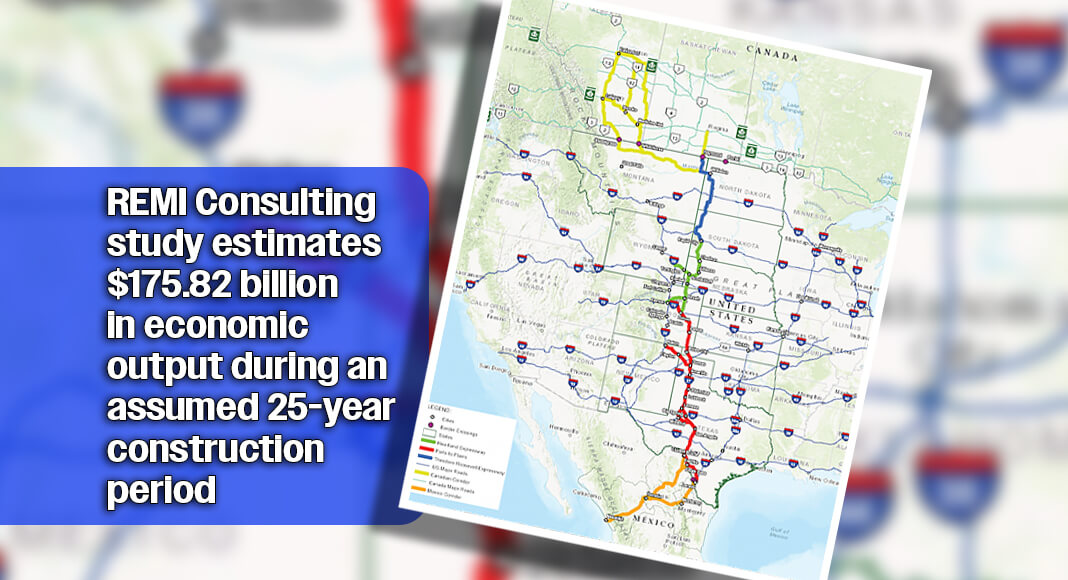
The development of Future Interstate 27 and the Ports-to-Plains Interstate corridor could support an average of 34,519 jobs annually across nine states during construction, according to an October 2026 economic impact study prepared by REMI Consulting.
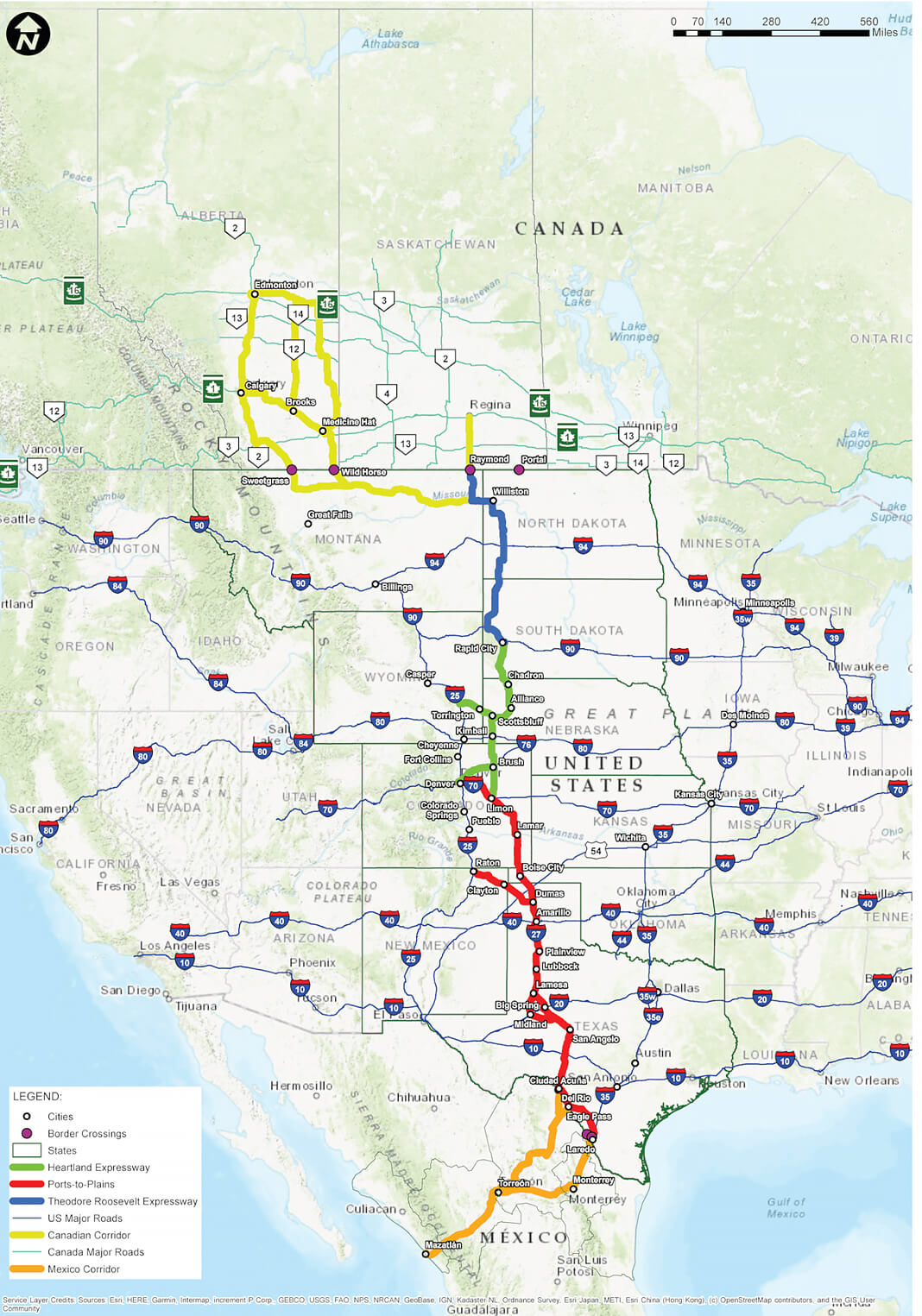
The study examines a 2,049-mile transportation corridor spanning Colorado, Montana, Nebraska, New Mexico, North Dakota, Oklahoma, South Dakota, Texas and Wyoming.


According to the report, construction spending would generate economic activity beyond highway contractors, including suppliers, equipment manufacturers, engineering firms, and other businesses.
The Ports-to-Plains Alliance is presenting the findings as part of a series examining the corridor’s potential economic contributions. Additional releases will provide state-specific estimates and their implications for businesses, workers and communities.
The analysis assumes construction investment would be distributed evenly over 25 years, creating demand for labor, materials, equipment, and professional services throughout the project.
Over that period, REMI estimates cumulative economic output of $175.82 billion, gross domestic product of $97.82 billion, and 862,982 job-years of employment.
The study also projects $8.15 billion in state and local tax revenue and $17.51 billion in federal tax revenue.
A job-year represents one job supported for one year. Consequently, the cumulative employment figure does not represent an equivalent number of individual workers or permanent positions.
The employment estimates include positions supported across the economy, not just those directly involved in highway construction.
Potentially affected businesses include construction material suppliers, transportation companies, equipment providers, lodging establishments, restaurants, retailers, and professional service firms.
The report identifies workforce preparation and coordination with local businesses as important considerations for communities along the proposed corridor.
Construction schedules would depend on funding availability, engineering requirements, environmental reviews and procurement decisions. Actual investment and employment levels could therefore differ from the study’s annual averages.
The analysis recommends coordinating highway development with local access improvements, utility readiness and workforce training programs.
Such planning could help communities prepare for construction activity while ensuring that supporting infrastructure and available workers meet project requirements.
The study also distinguishes construction-related economic activity from the potential long-term effects of improved transportation connections.
Construction creates demand for workers, materials, and services while projects are underway. Improved mobility, by comparison, can affect transportation costs and the movement of goods after highway improvements are completed.
REMI evaluates those continuing transportation effects separately from its construction estimates.
The findings provide a modeled assessment of economic activity associated with developing the corridor rather than a confirmed construction schedule or guarantee of future employment.
All monetary figures are expressed in constant 2025 dollars, excluding the effects of future inflation.
The Ports-to-Plains Alliance plans to release additional findings examining how the estimated economic effects would be distributed among the nine states.
Those reports will provide further information about the potential role of corridor development in regional transportation and economic activity.