For Arturo Martinez and his son David Austin Martinez, their journey to earning Automotive Technology Certificates from South Texas College was about turning challenges into opportunities and proving that success can come at any age, under any circumstance. STC image
Texas Border Business
By Veronica Salinas
For Arturo Martinez and his son David Austin Martinez, their journey to earning Automotive Technology Certificates from South Texas College was about turning challenges into opportunities and proving that success can come at any age, under any circumstance.
David began his college journey independently in 2020. However, the shift to online learning during the COVID-19 pandemic proved challenging.
“I took a break during the COVID-19 pandemic because I could not do online school,” David explained. “Once I decided to start up again, he wanted to join me.”
That “he” was David’s father, who enrolled in the same program to support his son who is on the autism spectrum and learn a new trade himself at 53-years-old.
“My main reason for enrolling in college was to help my son,” Arturo said. “He was having a difficult time transitioning and I didn’t want him to give up. I was scared, but I had to show him that anything is possible and autism shouldn’t stop him from pursuing a college certificate or degree. He is capable of anything just like anyone else. Yes, it took us longer to finish, but we did it and we did it together.”
They both pursued certificates in automotive technology and attended the same classes after Arturo got out of work. The journey was not easy, but their bond and commitment carried them through.
“We leaned on each other for support,” Arturo said. “We studied together and worked on our own vehicle when things needed fixing. When we didn’t understand things, David would ask questions to our professors.”
David’s determination, paired with his father’s unwavering support, kept him moving forward.
“At first, I started on my own, and my journey wasn’t easy,” David said. “He decided to join me because I felt like quitting many times and he wasn’t going to let me be a quitter. This shared experience has meant a lot. It has shown me that I am capable of anything even if it takes me a little while longer to accomplish.”
The experience was equally meaningful for Arturo.
“It’s been a journey, but I had a blast,” he said. “The best part was working on cars together and walking across the stage side-by-side at graduation.”
Their academic milestone did not come without its sacrifices. Arturo juggled full-time work, classes and family responsibilities, often getting home late at night. One of the hardest parts was missing his daughter’s extracurricular events.
“It was an adjustment for everyone, especially one of my daughters who also has autism,” he said. “There were nights I didn’t get home until 9:30 p.m., but I was determined to show David and my other children that it’s never too late to go after your goals. We studied together and leaned on each other for support every step of the way. I was determined to prove to my children that hard work and sacrifice pay off.”
With their certificates in hand, Arturo and David plan to look for work in the automotive field, with hopes of one day opening a small mechanic shop together.
Arturo encourages other parents to consider taking the leap and going back to school, no matter the age or circumstance.
“It’s never too late. If you’ve never attended college or want to go back to pursue something that will benefit you and your family, go for it. It will all be worth it and they’ll see it’s never too late to chase something better.”
David credits his father for helping him believe in himself and considers him his greatest inspiration and advocate.
“The one thing I’ve learned from my dad is to never give up and keep following my dreams. Thank you for everything you did to help me succeed. Even though I have autism, anything is possible—not just for me, but for everyone else.”
This father-son duo not only earned a certificate, but they’ve also created a powerful legacy of love, resilience and shared purpose.
Governor Greg Abbott announced that NTxBio (“NTx”) will establish a biomanufacturing facility in Plano. The project will create over 170 new jobs and more than $31 million in capital investment. A Texas Enterprise Fund (TEF) grant of $1,479,000 has been extended to NTx. Logo: Public Domain. Bgd for illustration purposes
Texas Border Business
AUSTIN – Governor Greg Abbott announced that NTxBio (“NTx”) will establish a biomanufacturing facility in Plano. The project will create over 170 new jobs and more than $31 million in capital investment. A Texas Enterprise Fund (TEF) grant of $1,479,000 has been extended to NTx.
“Texas is the epicenter for groundbreaking, life-saving medical research and home to thousands of biotech and life science firms,” said Governor Abbott. “This $31 million investment by NTx establishing a biomanufacturing facility in Plano will create over 170 new, good-paying jobs for Texans in our skilled and growing life sciences workforce. I congratulate NTx on their leading efforts to advancing the healthcare industry in Texas with their next generation biomanufacturing solutions. Working together, we will keep Texas on the cutting edge of biotech research and development and save more lives.”
NTx was founded in 2015 and manufactures pharmaceutical-grade raw materials for use in development of RNA and protein therapeutics.
On May 12, 2025, at approximately 11:30 p.m., Border Patrol Agents from the McAllen Station Riverine Unit were patrolling near the Bentsen State Park area in Mission, Texas when they observed several individuals making landfall on the U.S. side from Mexico. USCBP Flickr Public image for illustration purposes
Texas Border Business
EDINBURG, Texas– The United States Coast Guard and Border Patrol agents collaborated to safely rescue two individuals attempting to swim across the dangerous currents of the Rio Grande.
On May 12, 2025, at approximately 11:30 p.m., Border Patrol Agents from the McAllen Station Riverine Unit were patrolling near the Bentsen State Park area in Mission, Texas when they observed several individuals making landfall on the U.S. side from Mexico. As agents responded to the area, two individuals attempted to flee by entering the Rio Grande, where they encountered difficulty navigating the treacherous waters.
United States Coast Guard Maritime Safety and Security Team (MSST) Houston, which was assisting with border security operations, quickly deployed their specialized water rescue capabilities and were able to retrieve the struggling swimmers and safely brought them aboard, preventing a potential drowning situation.
After the rescue, the individuals were evaluated for medical concerns. All declined medical assistance. The individuals, along with three others apprehended in the same area, were determined to be in the United States illegally and were transported to the Rio Grande Valley Central Processing Center.
The successful operation involved multiple units including McAllen Border Patrol Station agents, CBP Air and Marine Operations, and United States Coast Guard MSST Houston demonstrates the effective interagency cooperation that enhances both border security and life-saving capabilities along the southwest border.
“Our Border Patrol agents exemplify bravery and selflessness in the face of danger. Recently, two illegal aliens were rescued from the Rio Grande, a testament to the dedication and courage of our agents who risk their own safety to save lives. While our primary responsibility is securing the border, we remain committed to protecting human life, no matter the circumstances.”, stated RGV Sector Chief Patrol Agent Gloria I. Chavez.
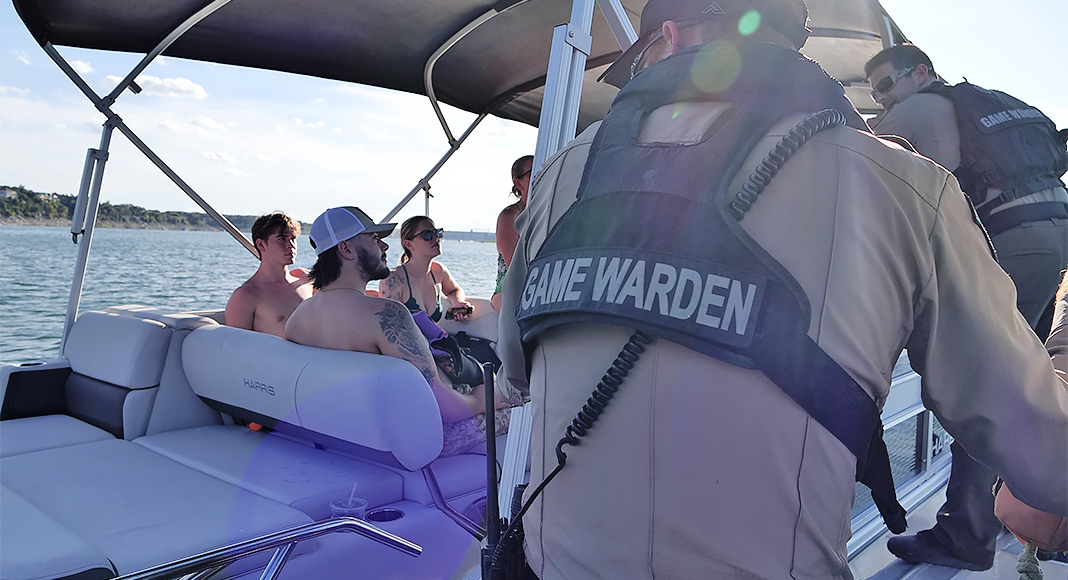
In 2024, Texas reported 169 boating incidents, with 24 water fatalities – 22 of those victims were not wearing life jackets. In addition, 78 boating incidents resulted in injuries affecting 100 people. Image Courtesy of TPWD
With about 1.7 million surface acres of freshwater inland lakes, 4 million surface acres of saltwater and 191,000 miles of rivers and streams statewide, Texas offers opportunities for boating, fishing and water recreation.
In 2024, Texas reported 169 boating incidents, with 24 water fatalities – 22 of those victims were not wearing life jackets. In addition, 78 boating incidents resulted in injuries affecting 100 people.
Image courtesy of TPWD
“These incidents aren’t just statistics, they represent real people and real families forever changed by moments that could have been prevented,” said Cody Jones, TPWD assistant commander for marine enforcement. “Taking simple precautions, like wearing a life jacket, can be the key to making it home safely. It’s a small step that can have a life-saving impact.”
Texas is home to nearly 560,000 registered recreational boats, along with an estimated 359,000 unregistered vessels such as kayaks, paddleboards and small sailboats under 14 feet. With summer approaching, waterways will be crowded and safety should be a priority for everyone.
Safety tips to keep in mind:
Always wear a life jacket; it’s the law for kids under 13.
Use your boat’s ignition safety switch; it’s the law.
Never boat under the influence of alcohol.
Don’t overload your vessel.
Maintain a safe speed and keep a proper lookout.
Be cautious in low water or near submerged objects.
Take a certified boater education course.
Leave a float plan with someone you trust.
Exercise special caution on personal watercraft.
Avoid saltwater if you have open wounds as vibrio bacteria occur naturally in Texas coastal waters.
“National Safe Boating Week is more than a campaign—it’s a reminder that fun on the water starts with responsibility,” said Jones. “Whether you’re paddling a kayak or operating a larger vessel, your actions affect everyone around you.”
As Texans head to the water this holiday weekend, Texas Game Wardens will be there not just to patrol, but to partner with the public in promoting safe and enjoyable experiences for all. Together, by making smart choices and looking out for one another, we can help ensure that every outing ends with everyone returning home safely.
About Texas Game WardensTexas Game Wardens, within the Law Enforcement Division of TPWD, are responsible for enforcing laws related to the conservation and management of natural resources and public safety through community-based law enforcement. Their mission is to provide hunting, fishing and outdoor recreation opportunities for the use and enjoyment of present and future generations. Additionally, they play a crucial role in search and rescue operations during natural disasters, exemplifying their commitment to protecting both the environment and the people of Texas.If you witness a wildlife violation in progress, please call 1-800-792-GAME (4263) immediately and report it to Operation Game Thief (OGT), Texas’ Wildlife Crime-Stoppers Program. Dispatchers are available 24/7. Reports can be made anonymously, and tipsters may be eligible for rewards up to $1,000 for information leading to a conviction.
U.S. Senators John Cornyn (R-TX), Ted Cruz (R-TX), and Ben Ray Luján (D-NM) and Congressman Tony Gonzales (TX-23) today introduced the Strengthening Tactics to Obstruct the Population of Screwworms (STOP Screwworms) Act, which wouldauthorize funds for and direct the U.S. Department of Agriculture (USDA) to begin construction on a new sterile fly production facility to combat the growing New World screwworm (NWS) outbreak that threatens to wreak havoc on the American cattle industry. Images: USDA. Bgd for illustration purposes
Texas Border Business
Senator John Cornyn
WASHINGTON – U.S. Senators John Cornyn (R-TX), Ted Cruz (R-TX), and Ben Ray Luján (D-NM) and Congressman Tony Gonzales (TX-23) today introduced the Strengthening Tactics to Obstruct the Population of Screwworms (STOP Screwworms) Act, which wouldauthorize funds for and direct the U.S. Department of Agriculture (USDA) to begin construction on a new sterile fly production facility to combat the growing New World screwworm (NWS) outbreak that threatens to wreak havoc on the American cattle industry:
“Combatting the destructive New World screwworm is vital to protecting our cattle, Texas producers, and the American livestock industry as a whole,” said Sen. Cornyn. “I am proud to lead this legislation to create a new facility dedicated to pushing these pests away from our border and will continue to work with Secretary Rollins and agriculture leaders across the state to ensure our farmers, ranchers, and producers have the resources they need.”
“Texas agriculture and livestock are a core part of the Texas economy, and they feed America and the world,” said Sen. Cruz. “I’m working daily with Secretary Rollins, Texas authorities, and my colleagues in Congress to safeguard Texas from threats including the New World Screwworm, and pushing Mexico to implement their commitments to eradication. This bill will advance those efforts, and Congress should pass it.”
“Given the current screwworm outbreak, Congress must take immediate action to help protect New Mexico’s cattle and livestock from this growing threat,” said Sen. Luján. “This bipartisan legislation will fund a new sterile fly facility to help stop the spread of the destructive New World screwworm and protect New Mexico’s 1.4 million cattle and calves. This is a critical investment that supports over 10,000 cattle farms and ranches in New Mexico, saves the U.S. livestock industry nearly $1 billion each year, and helps prevent an outbreak in the U.S.”
“Ag producers across America are sounding the alarm—the New World Screwworm is making a comeback, and our livestock industry is in real danger. We need to fully eradicate this pest before it’s too late,” said Rep. Gonzales. “The STOP Screwworms Act provides dedicated resources to do just that. By authorizing the construction of a new sterile fly facility in the United States, we reduce our dependence on Latin American partners for eradication efforts and take matters into our own hands.”
Additional cosponsors of this legislation include Sens. Martin Heinrich (D-NM) and Cindy Hyde-Smith (R-MS).
Background:
The New World screwworm (NWS) is a parasitic fly whose larvae feed on livestock, wildlife, and in rare cases, humans, and populations are moving toward the United States at an alarming rate. They can cause serious damage to their host, including death. This week, the USDA announced the suspension of live cattle, horse, and bison imports through the southern border in response to the growing spread of the NWS and recent outbreaks in Mexico.
This new facility would produce sterile male screwworm flies that would be released into infested areas to help combat the growth of the screwworm population. The sterile fly technique was instrumental in eradicating NWS from the United States in the 1960s and from Mexico in the ‘90s, as sterile male flies can outcompete local populations and effectively wipe out an entire generation of screwworms in a given area.
This legislation is endorsed by the American Farm Bureau Federation, the Texas Farm Bureau, the Texas Cattle Feeders Association, the Texas and Southwestern Cattle Raisers Association, and the South Texans’ Property Rights Association.
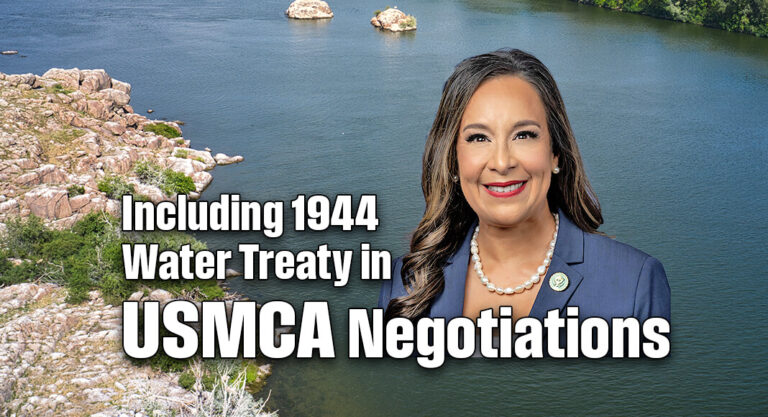
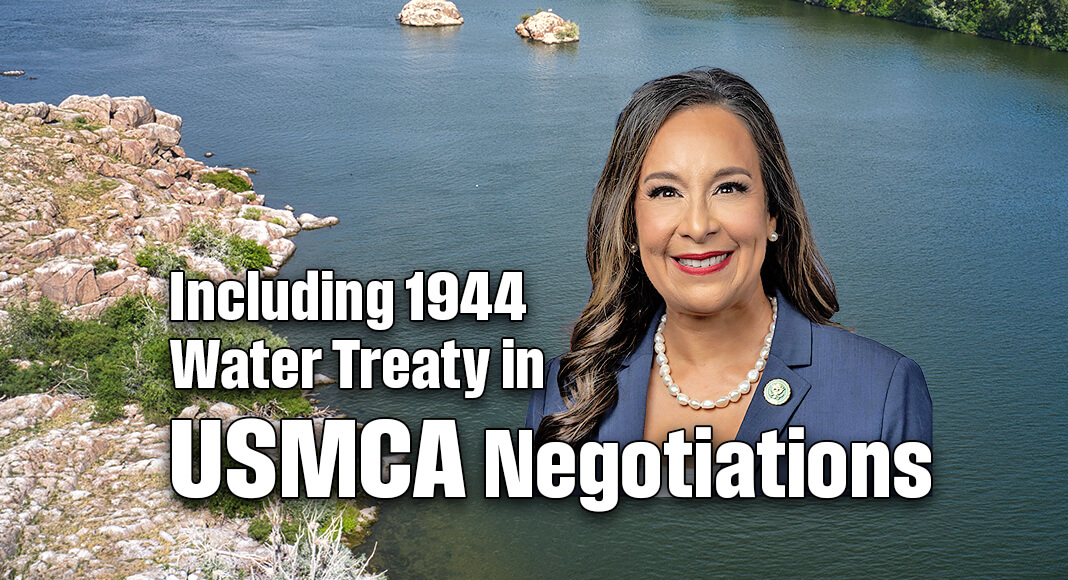
Congresswoman Monica De La Cruz (TX-15) sent a letter to U.S. Trade Representative Jamieson Greer urging the Office of the United States Trade Representative (USTR) to include the 1944 Water Treaty in the framework of the United States-Mexico-Canada Agreement (USMCA) during the negotiation process. Image for illustration purposes
Texas Border Business
WASHINGTON, DC – Congresswoman Monica De La Cruz (TX-15) sent a letter to U.S. Trade Representative Jamieson Greer urging the Office of the United States Trade Representative (USTR) to include the 1944 Water Treaty in the framework of the United States-Mexico-Canada Agreement (USMCA) during the negotiation process. The proposed integration of the Treaty into the USMCA will strengthen enforcement to ensure the Mexican Government complies with its annual water delivery obligations.
In the letter, De La Cruz writes:
“Dear Ambassador Greer,
I write to you today regarding the upcoming joint review of the United States-Mexico-Canada Agreement (USMCA). I strongly urge you, on behalf of South Texas and its farmers, to prioritize the inclusion of the 1944 Water Treaty within the USMCA framework during this review process.
For decades, South Texas agricultural producers have faced significant challenges due to Mexico’s inconsistent, and often insufficient, water deliveries under the 1944 Water Treaty. These shortfalls create severe economic hardships, threaten agricultural livelihoods, and undermine the region’s overall water security. The lack of effective enforcement mechanisms within the existing treaty has exacerbated these problems.
Integrating the 1944 Water Treaty into the USMCA, whether through a side letter or other appropriate means, would provide a crucial opportunity to strengthen enforcement, predictability, and ensure Mexico’s compliance with its water delivery obligations. The USMCA’s dispute resolution mechanisms could offer a more robust framework for addressing water-related disputes and holding Mexico accountable.
Specifically, I request that your office explore options to:
Establish clear and predictable water deliveries, and enforceable water delivery schedules within the USMCA framework.
Develop a transparent monitoring and reporting system to track water deliveries and identify potential violations.
Utilize the USMCA’s dispute settlement procedures to address instances of non-compliance.
Explore the potential for economic sanctions or other trade-related measures in cases of persistent non-compliance.
The inclusion of the 1944 Water Treaty in USMCA is not simply a matter of agricultural productivity; it is a matter of economic stability, national food security, food price stability, and regional security. By incorporating this critical treaty into the USMCA, we can ensure that South Texas farmers receive the reliable water deliveries they are entitled to, fostering a more stable and predictable environment for agricultural production.
I appreciate your attention to this vital issue and look forward to working with you to achieve a favorable outcome for South Texas.
The U.S. House Agriculture Committee is scheduled to markup its reconciliation bill, which requires $230 billion in spending cuts. Bill language released yesterday shows that the committee plans to hit that target through devastating cuts to the SNAP program. Image for illustration purposes
Texas Border Business
TEXAS – The U.S. House Agriculture Committee is scheduled to markup its reconciliation bill, which requires $230 billion in spending cuts. Bill language released yesterday shows that the committee plans to hit that target through devastating cuts to the SNAP program, which would increase food insecurity and take food away from hungry Americans by decreasing grocery benefits and kicking people off the program.
“Families in the Rio Grande Valley will feel these cuts the most. SNAP is a lifeline for families, especially in rural and underserved communities where access to affordable food is already limited. These proposed cuts would not only take food off the table but also dismantle local economies and destabilize Texan households during hard times.”
Libby Saenz, CEO of the Food Bank of the Rio Grande Valley.
“Our food bank network is gravely concerned about the impact these debilitating cuts will have in our state,” said Celia Cole, CEO of Feeding Texas, the state association of food banks. “Families across Texas are already struggling to find affordable food and healthcare, pay their rent, and put gas in the car. From seniors living on fixed incomes, to veterans unable to find work, to families with children juggling a tight budget, too many Texans are hurting. If passed, this $230 billion cut would be the largest rollback of food assistance in our nation’s history at a time when one in six Texas households already struggle to put food on the table.”
The bill released yesterday includes changes that would:
● limit future adjustments to the Thrifty Food Plan, depressing benefit levels and making it harder for families to afford groceries for years to come.
● subject more seniors (up to age 65) and more parents (for children as young as 7) to the harsh three-month time limit by requiring that they document 20 hours of work per week in order to receive benefits.
● make refugees ineligible for SNAP, denying them a basic need and hampering their successful integration into society; and
● require states to pay anywhere from 5% to 25% of SNAP benefit amounts and increase the state share of administrative costs from 50% to 75%, which would hobble the program’s ability to meet increased need during times of natural disaster and economic crisis.
Together, these measures would lead to a decrease in benefit levels, fewer people eligible for food assistance, and a significant reduction in the number of people participating in the program.
“The proposed SNAP cuts are of an unprecedented scale that food banks could never compensate for,” said Theresa Mangapora, Brazos Valley Food Bank Executive Director and Feeding Texas Board Chair. “Over the past year, food banks have witnessed a demand for food assistance that we have not seen since the height of the pandemic. If these cuts move forward, many more Texans will face hunger, and the most vulnerable among us—children, seniors, veterans, and working families just trying to get by—will bear the brunt of this hardship.”
The most devastating aspect of the proposal is a state cost-share plan that could require Texas to pay anywhere from 5% to 25% of the food benefits and increase the state’s administrative costs from 50% to 75%, or make cuts to the program to account for that amount. In FY2024, states issued nearly $94 billion for SNAP food benefits, including $7.2 billion in Texas. If this policy were to go into effect now, Feeding Texas estimates that Texas would be responsible for covering around $1.08 billion per year in food benefits. Using FY2023 SNAP administrative costs, Feeding Texas estimates that an increase from 50% to 75% would cost the state an additional $87 million per year. That comes out to $1.167 billion a year or nearly $2.334 billion per biennium that the Texas Legislature would have to front in order to keep the program whole.
States must balance their budgets annually, so any additional costs would require increasing revenue by raising taxes or cutting other programs. There is no guarantee that Texas would be able to make up this funding gap every year in perpetuity or that state legislators would be willing to allocate such a large portion of the state budget to cover SNAP benefits, which have always been covered by the federal government. State legislators could be forced to make unpopular decisions and take away some or all of people’s food assistance, leaving many low-income households unable to afford groceries.
“SNAP is not just an anti-hunger program. It is an economic program designed to combat recessions by stabilizing family budgets, food retailers, and the farm economy alike,” Cole said. “Offloading the cost of SNAP onto states would fundamentally alter the structure of the program, undermine its stabilizing effect, and erode its ability to guarantee a basic need during natural and economic disasters. At times when Americans are most likely to need SNAP, states would be least equipped to pay for the increase in need. This is why it’s so important for the benefits to remain federally funded. It’s not fair to ask state legislatures struggling during tough economic times to make up the gap or take the blame for increasing hunger.”
According to theUSDA, SNAP is a key countercyclical government assistance program. As an entitlement program with means-tested benefits, SNAP provides more aid to low-income households during economic downturns and less during expansions, acting as an automatic economic stabilizer. Historically, SNAP spending and participation rates rise and fall in sync with unemployment and poverty rates.
Rising prices and slower economic growth have led JP Morgan analysts topredict a 60% chance of a recession within the year.
Nearly 900,000 additional people could be pushed into poverty during a recession by the SNAP cost-sharing plan,according to the Urban Institute.
“Now is not the time to take food away from seniors, children, veterans, and working families. For over 50 years, SNAP has helped American families put food on the table during tough times,” Cole said. “If this plan moves forward, hundreds of thousands of Americans could be pushed into poverty and face hunger. By lowering benefit amounts, kicking people off the program, and expecting states to empty their coffers, Congress would be effectively turning its back on Americans when they are most vulnerable. This is a pivotal moment for our country, for our elected leaders, and for everyone who shares the belief that no person should go hungry. We must all come together to prevent this harm.”
Food Bank of the Rio Grande Valley
“Families in the Rio Grande Valley will feel these cuts the most,” said Libby Saenz, CEO of the Food Bank of the Rio Grande Valley. “SNAP is a lifeline for families, especially in rural and underserved communities where access to affordable food is already limited. These proposed cuts would not only take food off the table but also dismantle local economies and destabilize Texan households during hard times.”
Counties served: Cameron, Hidalgo, and Willacy
The Feeding Texas network is made up of 20 food banks, over 3,000 local partners, most of them faith-based, and countless volunteers. Together with our staff,our partners, and our volunteers, we call on members of the House Agriculture Committee and all members of the U.S. House to reject these proposed SNAP cuts, including the disastrous state cost-share plan.
Food banks across the state provided the following statements:
Brazos Valley Food Bank
“Though food banks are accustomed to managing crises and disasters that push our limits, these SNAP cuts cannot be made up by charity,” said Theresa Mangapora, Brazos Valley Food Bank Executive Director and Feeding Texas Board Chair. “For every meal that food banks provide, SNAP provides nine. At a time when we are facing heightened need and fewer resources, food banks will not be able to do ten times more to fill the gap, and people will suffer.”
Counties served: Brazos, Burleson, Grimes, Madison, Robertson, and Washington
Central Texas Food Bank
“The Central Texas Food Bank knows that reductions to SNAP result in increased reliance on our services,” said Sari Vatske, President and CEO of the Central Texas Food Bank. “When families can’t adequately supplement their household food budgets through federal nutrition programs like SNAP, they turn to food banks. Food banks alone cannot respond to increases in food insecurity without the support of our federal partners. It’s critical that lawmakers continue to fund SNAP and bolster commodity programs like TEFAP to ensure that families and food banks can withstand a fluctuating economic landscape.”
Counties served: Bastrop, Bell, Blanco, Burnet, Caldwell, Coryell, Falls, Fayette, Freestone, Gillespie, Hays, Lampasas, Lee, Limestone, Llano, Mclennan, Milam, Mills, San Saba, Travis, and Williamson
Coastal Bend Food Bank
“Cutting SNAP benefits would be devastating for our neighbors in the Coastal Bend. This program is a vital lifeline for families, seniors, veterans, and children—those most vulnerable to hunger,” said Bea Hanson, Executive Director of the Coastal Bend Food Bank. “At the Coastal Bend Food Bank, we’ve seen how SNAP helps fill the gap and sustain those in need. Reducing this support would deeply impact our neighbors, causing greater hardship for those already struggling to make ends meet. We urge policymakers to reconsider these cuts and stand with the communities who rely on SNAP to survive. Protecting this program means protecting people.”
Counties served: Aransas, Bee, Brooks, Duval, Jim Wells, Kenedy, Kleberg, Live Oak, Mcmullen, Nueces, and San Patricio
East Texas Food Bank
“Proposed cuts to SNAP will only worsen food insecurity in our region, which already experiences a higher level of food insecurity than the state average,” said David Emerson, CEO of the East Texas Food Bank. “SNAP plays an essential role in supporting vulnerable communities, especially in rural areas like East Texas. Any reduction in this vital program will place even greater strain on those already facing hardship, and it will hurt the economic stability of our entire region. When families are forced to cut back on food, they spend less in local businesses, affecting the broader economy and slowing recovery. We urge policymakers to prioritize solutions to hunger that protect and strengthen SNAP, ensuring no one is forced to choose between food and other basic needs.”
Counties served: Anderson, Angelina, Bowie, Camp, Cass, Cherokee, Franklin, Gregg, Harrison, Henderson, Houston, Leon, Marion, Morris, Nacogdoches, Panola, Rains, Red River, Rusk, San Augustine, Shelby, Smith, Titus, Upshur, Van Zandt, and Wood
El Pasoans Fighting Hunger Food Bank
“At El Pasoans Fighting Hunger, we witness firsthand how essential SNAP is for our neighbors,” said Susan Gooddell, CEO of El Pasoans Fighting Hunger Food Bank. “Working families, veterans, seniors, and children depend on this support to get through difficult times. These proposed cuts would place an overwhelming burden on communities already stretched thin and force impossible choices no one should have to make. While food banks remain committed to doing everything we can, we cannot replace the scale or impact of federal food assistance. We urge Congress to reject this plan and reaffirm its commitment to ensuring that no American goes hungry. Not today. Not tomorrow. Together, we must protect SNAP.”
Counties served: Culberson, El Paso, and Hudspeth
Food Bank of the Golden Crescent
“If enacted, these changes would have devastating consequences for families in our 11-county service area—reducing access to critical nutrition support, forcing more seniors to choose between work and food, and undermining our ability to respond during crises,” said Robin Cadle, CEO of the Food Bank of the Golden Crescent. “At a time when hunger is already rising, this would push even more of our neighbors into food insecurity.”
“The SNAP program has remained a tried and tested form of food assistance for years,” said Brandon Forrest, CEO of the Food Bank of West Central Texas. “At a time of great need, $230 billion in cuts and a fundamental change in funding will place undue hardship on seniors, veterans, and families in Texas who are already struggling to make ends meet.”
Counties served: Brown, Callahan, Coleman, Comanche, Eastland, Fisher, Jones, Mitchell, Nolan, Runnels, Shackelford, Stephens, and Taylor
Galveston County Food Bank
“SNAP is a critical component of our nation’s fight against hunger,” said Donnie VanAckeren, President and CEO of the Galveston County Food Bank. “It ensures that working families, seniors, and children have consistent access to nutritious food, while also easing the burden on food banks and stimulating local economies through support of neighborhood retailers. At the Galveston County Food Bank, we rely heavily on the generosity of donors and community partners to meet growing needs. Any further reductions to SNAP would place an even greater strain on already limited resources, making it harder to serve our neighbors facing food insecurity.”
Counties served: Galveston
High Plains Food Bank
“SNAP is a vital safeguard in helping prevent food insecurity,” said Zack Wilson, Executive Director of High Plains Food Bank. “High Plains Food Bank relies on a collaboration of food distribution and SNAP and our neighbors need all the resources they can receive to make ends meet with increased costs in food, fuel, utilities, and insurance. Proposed cuts to the SNAP program would result in more of our families and seniors seeking assistance in the Texas Panhandle.”
“Cuts to SNAP will not just hurt those in deep need, they will also impact hard-working, middle-class families who are already stretched thin trying to make ends meet,” said Brian Greene, President and CEO of Houston Food Bank. “For decades now, SNAP has been the most powerful tool America has to support families facing hunger while also assisting our farmers. SNAP has a greater return on investment than any other – these dollars not only supplement food budgets, they are spent and reinvested back into local economies, provide exponentially more meals than a food bank alone, and ensure consistent nutrition to beneficiaries. Food banks are united in our plea to protect SNAP.”
Counties served: Austin, Brazos, Burleson, Chambers, Fort Bend, Galveston, Grimes, Harris, Liberty, Madison, Montgomery, Waller, Washington, Robertson, San Jacinto, Trinity
Montgomery County Food Bank
“Montgomery County is one of the fastest growing counties in the U.S., and we’ve seen the need for food assistance grow with it,” said Kristine Marlow, President and CEO of Montgomery County Food Bank. “Prioritizing the support of hunger relief programs helps families struggling to afford the very basic need of nutritious food, while also reducing the strain on food banks that are already stretched thin.”
Counties served: Montgomery
North Texas Food Bank
“Every day in our community, nearly 700,000 of our neighbors face hunger, and heartbreakingly, almost a third of them are children,” said Trisha Cunningham, President and CEO of North Texas Food Bank. “About half of those we serve are eligible for SNAP, a program that offers dignity, hope, and a path to stability for those needing food assistance. Cuts to SNAP would deeply harm families who are already struggling to make ends meet. This program is not just a lifeline for individuals — it’s an investment in the strength and well-being of our entire community. When that lifeline is weakened, local food banks like the North Texas Food Bank are called to do more with less, but we simply cannot fill a gap that large alone. These potential cuts risk unraveling the already fragile support systems so many depend on — and that’s something none of us should accept.”
“As food banks we operate with fiscal efficiencies so I appreciate the efforts to balance a budget,” said Eric Cooper, CEO of San Antonio Food Bank. “I just pray Congress will value the importance of a balanced meal. The Supplemental Nutrition Assistance Program (SNAP) helps to balance meals in households where children are hungry or a senior is needing to take their medicine with a meal.”
“We need to keep working to reduce waste and abuse in Medicaid and SNAP, but these cuts are a bad idea,” said Dina Jeffries, CEO of South Plains Food Bank. “Taking away affordable health care and food from working families, senior citizens, children, and veterans in the South Plains is detrimental to the communities we serve. Texans continue to struggle with high food and medical costs and now is not the time to cut these life-saving programs. South Plains Food Bank stands united with other Texas food banks because we know when food insecurity decreases, communities begin to thrive.”
“SNAP plays a vital role in ensuring that our most vulnerable community members, including low-income families with children, the elderly, and individuals with disabilities, have access to nutritious food, and any cuts to this program could severely jeopardize their long-term health and well-being,” said Alma Boubel, CEO of South Texas Food Bank. “We are deeply concerned that food insecure individuals in our service area, particularly the elderly, cannot withstand any further reductions to this program.”
Counties served: Dimmit, Jim Hogg, Kinney, Maverick, Starr, Val Verde, Webb, and Zapata
Southeast Texas Food Bank
“We are deeply concerned here in Southeast Texas with Congress’s proposed budget cuts, especially within SNAP benefits,” said Harvey Zernial, President & CEO of Southeast Texas Food Bank. “Our area – with already higher averages for food insecurity in Texas (19.6% overall but highest child food insecurity in the nation at 29.8%) and unemployment (4th highest area) coupled with lower household incomes (20K below state average) – will struggle to make ends meet for their families. With the cuts already made to some of the food programs, the demand for food resources will continue to rise. There would be no way possible for the food banks to fill the gaps created by a $230 billion cut to SNAP funding, the largest food supplement program.”
“SNAP is a proven part of our national strategy to reduce hunger. It helps keep groceries on the table for working families, older adults, and children, while easing pressure on food banks and supporting local retailers—especially in our rural communities,” said Julie Butner, President and CEO of Tarrant Area Food Bank. “Much of our hunger relief work depends on support from donors and neighbors; additional reductions would further strain already limited local resources.”
Counties served: Bosque, Cooke, Denton, Erath, Hamilton, Hill, Hood, Johnson, Palo Pinto, Parker, Somervell, Tarrant, and Wise
West Texas Food Bank
“The West Texas Food Bank serves some of the most rural counties in the state, and rural Texans already struggle to access affordable and nutritious food,” said Libby Stephens, CEO of West Texas Food Bank. “Food banks cannot be expected to make up for cuts of this magnitude to federal food assistance programs.”
“The proposed SNAP cuts will dramatically impact children, families, and seniors on fixed incomes who already struggle with hunger by taking away access to food and placing an insurmountable burden on states and already stretched social service networks,” said David O’Neil, CEO of Wichita Falls Area Food Bank.
Counties served: Archer, Baylor, Clay, Foard, Haskell, Jack, Knox, Montague, Throckmorton, Wichita, Wilbarger, and Young
Amazon today announced plans to expand its operational investments in Texas with a new 62,000-square-foot delivery station in Brownsville, located at 1910 FM 511. Launch plans for the facility are in the very early stages, with construction starting earlier this month. Image: Todd Van Hoosear, CC BY-SA 2.0 https://creativecommons.org/licenses/by-sa/2.0, via Wikimedia Commons
Texas Border Business
BROWNSVILLE, Texas – Amazon today announced plans to expand its operational investments in Texas with a new 62,000-square-foot delivery station in Brownsville, located at 1910 FM 511. Launch plans for the facility are in the very early stages, with construction starting earlier this month.
“This delivery station will allow us to better serve customers in Brownsville and the surrounding area,” said Jessica Breaux, senior manager of economic development for Amazon. “We’re
grateful for our partnership with the City of Brownsville and the Greater Brownsville Incentives Corporation and look forward to sharing more details about this facility in the future.”
Delivery stations power the last mile of Amazon’s order process and help speed up deliveries. Packages are shipped to a delivery station from neighboring Amazon Fulfillment and Sortation Centers, loaded into delivery vehicles and delivered to customers.
“This is not just good news—it’s a clear signal of where we’re headed,” said Gilberto Salinas, Chief Executive Officer of GBIC. “Brownsville is emerging as a destination of choice for global companies seeking access, infrastructure, and a workforce ready to grow with them. GBIC’s role in this project reflects our commitment to creating the right conditions for transformative investment. We’re proud to have supported this opportunity, through strategic coordination and long-term planning.”
“Amazon’s decision to expand in Brownsville reinforces what we’ve long known, our City is an economic powerhouse in South Texas,” said John Cowen, Jr., Brownsville City Mayor. “This new delivery station represents more than just jobs and infrastructure. It’s about opportunity,
access, and momentum. We’re proud to welcome Amazon and look forward to the positive impact this investment will bring to Brownsville and the surrounding communities.”
Since 2010, Amazon has created more than 86,000 full- and part-time jobs in Texas and invested more than $70 billion across the state, including infrastructure and compensation to our
employees. These investments have contributed an additional $81 billion to the Texas economy and have helped create more than 171,000 indirect jobs on top of Amazon’s direct hires—from jobs in construction and logistics to professional services. In addition, more than 39,000 independent sellers—most of which are small and medium sized businesses—in Texas are selling to customers in Amazon’s store, creating thousands of additional jobs across the state.Image: Todd Van H
In yet another predictable blink in the unsustainable trade saga, tariffs on goods from China (that will be largely paid by US businesses and consumers) were slashed from 145% to 30% for a 90-day period. Image for illustration purposes
Texas Border Business
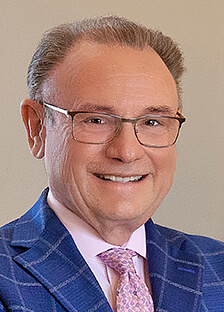
Dr. M. Ray Perryman, President and Chief Executive Officer of The Perryman Group. Courtesy Image
In yet another predictable blink in the unsustainable trade saga, tariffs on goods from China (that will be largely paid by US businesses and consumers) were slashed from 145% to 30% for a 90-day period. This move is purportedly a pause before the levy returns to the former level of 145% if no agreement is reached. Maintaining a tariff of that level on an ongoing basis is not remotely feasible, and the stakes are high.
The market response to the reduction was strong and immediate. All major market indices soared, erasing much of the tariff-related losses. It should be noted, however, that markets are reacting more than usual to individual decisions due to the heightened uncertainty, and tariffs remain at levels above those that were observed in the 1930s despite decades of movement toward both freer trade and US economic dominance. Any signs that we are moving somewhat more toward normalcy are likely to be warmly received.
Other markets also had predictable responses. Oil prices rose significantly (though not to levels observed a few months ago), as many analysts who feared a lengthy global recession had their concerns tamped down to some extent. Because oil demand ultimately depends on economic conditions, prices rose from recent lows with the more favorable outlook (which is good news for Texas as the nation’s top producer, although current levels remain close to breakeven levels).
Gold is considered a safe haven, and dialing down the trade war (and resulting uncertainty and inflation fears) caused prices of the metal to fall. Yields on US treasurys, another safe haven asset, were also up as investors sold them to switch back into other types of investments. The dollar strengthened. These movements, taken together, suggest that markets are now betting that we will get to a more stable and responsible global trade policy soon (let’s hope so).
This is not to say that the current situation is a good thing; it’s just a step in the right direction. We estimate that the cost to the US economy of sustained 30% tariffs on imports from China would include $173.3 billion in annual gross product each year and almost 1.4 million jobs when multiplier effects are considered. While large and impossible to maintain, these totals pale in comparison to those associated with the 145% levels, as the empty docks at major West Coast ports make readily apparent.
The ongoing negotiations between the US and China (and other countries) are crucial to ongoing expansion in the country and, indeed, the world. The clock is rapidly ticking on the time that we have to stop engaging in a policy that centuries of history and basic math demonstrate is counterproductive. Stay safe!
___________________
Dr. M. Ray Perryman is President and Chief Executive Officer of The Perryman Group (www.perrymangroup.com), which has served the needs of over 3,000 clients over the past four decades.
A federal grand jury in Austin returned an indictment today charging an Austin man, who was employed as a fifth grade teacher in the city, with two counts related to his alleged receipt and possession of child pornography. Image for illustration purposes
Texas Border Business
U.S. Attorney’s Office, Western District of Texas
AUSTIN, Texas – A federal grand jury in Austin returned an indictment today charging an Austin man, who was employed as a fifth grade teacher in the city, with two counts related to his alleged receipt and possession of child pornography.
According to an affidavit filed in the court documents, Carl David Innmon, 50, allegedly downloaded multiple batches of downloads via BitTorrent between Dec. 29, 2024 and Jan. 15, 2025. The alleged downloads contained a total of 126 files that depict an image of a child engaging in sexual conduct or sexual performance. The children in three of the downloaded files, the affidavit alleges, include an infant and two girls between the ages of four and seven.
Based on the investigation, a search warrant was conducted on Innmon’s residence, leading to the seizure of a smartphone, a laptop and a portable hard drive. A forensic analysis of these items cumulatively revealed 365,797 files of Child Sexual Abuse Material.
Innmon is charged with one count of possession of child pornography and one count of receipt of child pornography. If convicted, he faces up to 20 years in federal prison. A federal district court judge will determine any sentence after considering the U.S. Sentencing Guidelines and other statutory factors.
The affidavit also alleges that Innmon was in possession of artificial intelligence generated child pornography, and that his devices contained a large quantity of real images depicting students in a classroom. Some of those images were allegedly placed in an AI generator, de-clothing the students. With assistance from the Austin Independent School District and AISD Police, a Texas Department of Public Safety (TX DPS) Criminal Investigations Division (CID) Special Agent was able to positively identify the students depicted in the images and their ages. The children were allegedly identified as students of Innmon’s.
Acting U.S. Attorney Margaret Leachman for the Western District of Texas made the announcement.
The FBI and TX DPS CID are investigating the case.
Assistant U.S. Attorney Grant Sparks is prosecuting the case.
This case was brought as part of Project Safe Childhood, a nationwide initiative to combat the growing epidemic of child sexual exploitation and abuse launched in May 2006 by the Department of Justice. Led by U.S. Attorneys’ Offices and CEOS, Project Safe Childhood marshals federal, state and local resources to better locate, apprehend and prosecute individuals who exploit children via the Internet, as well as to identify and rescue victims. For more information about Project Safe Childhood, please visit www.justice.gov/psc.
An indictment is merely an allegation and all defendants are presumed innocent until proven guilty beyond a reasonable doubt in a court of law.