









Home Blog Page 488

DPS Urges Texans to Prepare for Extreme Heat 

This week, temperatures will soar across the state, and the Texas Department of Public Safety (DPS) is urging Texans to take precautions to stay safe. Photo: Texas DPS

AUSTIN – This week, temperatures will soar across the state, and the Texas Department of Public Safety (DPS) is urging Texans to take precautions to stay safe. Taking simple steps now can help protect you and your loved ones this week and beyond.  

SUMMER HEAT FAST FACTS:
Rapid Temperature Rise: On a 90-degree day, the temperature inside a vehicle can rise above 130 degrees in less than 30 minutes.
Vulnerable Populations: Children are particularly susceptible to heat-related illness, as their bodies heat up three to five times faster than the average adult. 
Heatstroke Symptoms: Warning signs for heatstroke include headache, fainting, lack of sweating, rapid pulse and confusion. In cases of heatstroke, immediate medical attention is crucial. 
Notice Pavement Temperature: On an 85-degree day, asphalt surfaces can reach up to 140 degrees. When surfaces are just 125 degrees, people and pets can burn their feet within 60 seconds of contact.
SUMMER SAFETY TIPS: 
Stay Hydrated: Drink plenty of water throughout the day—hydration is key before going outdoors.
Avoid Excessive Amounts of Alcohol and Caffeine: Alcohol and caffeine are diuretics and can lead to dehydration. It’s best to avoid too much of either one, especially when spending time in the heat.
Limit Outdoor Activities:Try to avoid strenuous outdoor activities during the hottest parts of the day—typically between 10 a.m. and 4 p.m.
Never Leave Children or Pets Unattended:Even for a short period, leaving children or pets alone in a vehicle when it’s hot can be fatal. Always take them with you, no matter how short the errand.
Act Quickly: If you see a child alone in a car, call 9-1-1 immediately. Quick intervention can save their life.

If you or a loved one is in need of relief from the summer heat, the Texas Division of Emergency Management (TDEM) provides a map of cooling centers that are open and operated by local officials. Texans can find their nearest cooling center here. 

Summer is also the time when people hit the road for summer vacation. Before you head out,  make sure your vehicle is in good condition, well-stocked and you’re prepared.

VEHICLE SAFETY TIPS: 
Battery: Extreme heat can damage your vehicle’s battery, making it harder to hold a charge and produce power.
Engine: When the engine is too hot, fuel can’t circulate well, making it difficult to start.
Tires: Temperature changes can affect tire pressure, which can lead to uneven wear and shorten the life of a tire. The heat can also cause the air inside your tires to expand, leading to blowouts.
Wiper Blades: After a cold winter and spring rain, windshield wiper blades may need to be replaced. Rubber is vulnerable to extreme heat – so it’s a good idea to check for signs of wear and tear. If they aren’t in top condition, change them out before you go.
Air Conditioning: High summer temperatures can add extra stress to your vehicle’s air conditioning system. Changing your air filter and checking your refrigerant can help ensure the air conditioner makes it through the summer.
Emergency Kit: Breakdowns happen, so it’s best to be prepared. Having an emergency kit in your car can help. The number one item is a cell phone battery charger to allow you to call for help. Other top items include a flashlight, jumper cables, a first aid kit, water and non-perishable food.

To get ahead of any problems, schedule a visit with a mechanic to make sure your vehicle is road trip-ready. Find additional summer heat safety tips at Extreme Heat (texasready.gov). Remember, by following all these tips, we can do our part to ensure everyone enjoys a safe summer season.

###(HQ 2025-53)
What Mexican Exporters Must Know to Stay Compliant and Competitive

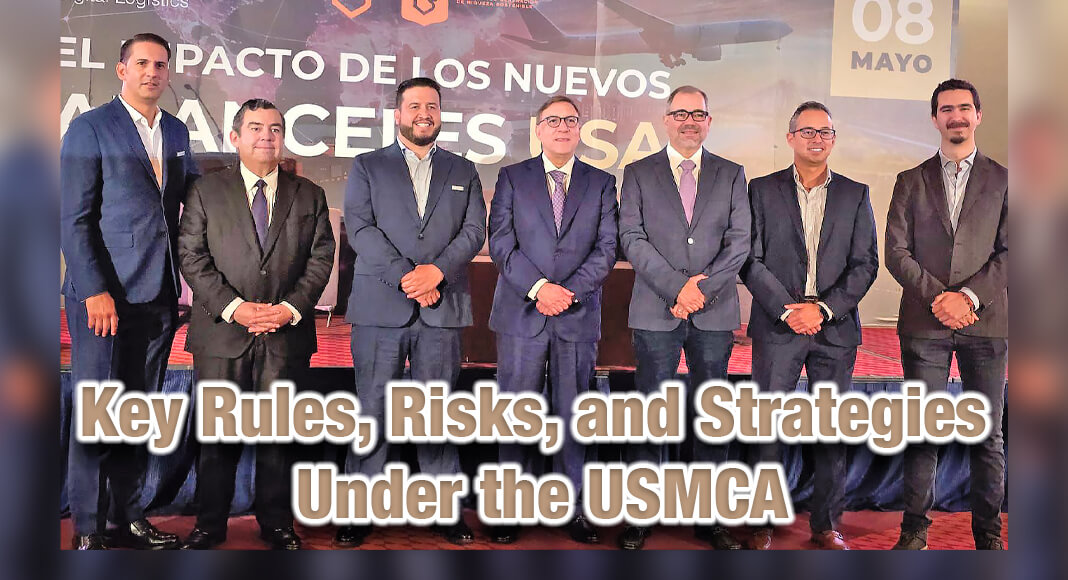
From left to right, participants at the event in Monterrey, Mexico, organized by Wisdom Logistics and Secretaria de Economía de Nuevo León, included Jorge A. Torres (second from the left), U.S.-licensed customs broker and President of Interlink Trade Services, who presented on U.S. tariff payments and origin compliance under the USMCA. The May 8, 2025 session focused on helping Mexican exporters stay competitive and avoid costly penalties when shipping to the United States. Courtesy photo

By Roberto Hugo González

Getting Ready to Export to the U.S.: How Mexican companies can avoid penalties and reduce costs when exporting to the United States.

On May 8, 2025, in Monterrey, Nuevo León, Jorge A. Torres—President of Interlink Trade Services and a licensed U.S. customs broker—delivered a detailed presentation titled “El Proceso de Pago de Aranceles en los EUA / La Relevancia del Análisis de Origen bajo el T-MEC.” His message was clear: Mexican exporters must be well-prepared to navigate the increasingly strict U.S. import environment.

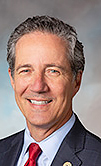
Jorge Torres, president of Interlink Trade Services. Courtesy image

According to Torres, one of the most critical tools in U.S. import procedures is the customs bond, also known as a fianza aduanal. “The customs bond is what ensures the U.S. government gets paid its duties, taxes, and fees,” said Torres. He emphasized that importers could opt for either a single-entry bond or a continuous bond that covers all operations for 12 months. But choosing the wrong coverage amount can halt operations. “If the bond is insufficient, Customs will cancel it, and the importer won’t be able to bring goods into the U.S.,” he warned.

Torres also explained the two main electronic payment systems: ACH (Automated Clearing House) and PMS (Periodic Monthly Statement). ACH allows duties to be paid directly from a bank account, while PMS consolidates payments and provides additional time to pay. “This is a tool that provides flexibility and helps manage working capital,” Torres said.

Beyond payments, verifying a product’s origin under the USMCA is where many companies fall short. “Just because something is made or assembled in Mexico does not mean it qualifies for preferential treatment,” Torres stressed. The U.S. Customs and Border Protection (CBP) has intensified its verifications, particularly in industries such as automotive, electronics, textiles, and metalworking. These checks include document requests, plant visits, and formal audits.

Torres outlined the severe consequences of improper documentation, including back payments of duties, penalties for negligence, and even fraud charges that could result in imprisonment. “The key is to be ready. You need a solid compliance program and accurate, well-documented processes,” he said.

He urged companies to conduct internal reviews, ensure that their ERP and Annex 24 systems have the correct tariff codes and origin data, and maintain updated Bills of Materials (BOMs) and supplier affidavits. “Documentation must be complete and ready at all times,” said Torres, adding that exporters should also designate an internal contact to handle all CBP communication, not just rely on customs brokers.

To reduce costs, Torres recommended exploring mechanisms such as Foreign Trade Zones, Bonded Warehouses, and duty drawback programs. However, he cautioned that there are limits for IMMEX companies and products under Section 232 tariffs. He also advised negotiating “pass-through” contract clauses with suppliers and customers to share cost increases.

In closing, Torres emphasized the importance of reliable sources. “Don’t base decisions on social media. Use only official information from the White House, the Federal Register, or CBP,” he said. His final recommendation: consult with trade experts. “Getting the right advice can be the difference between success and a very costly mistake.”

For companies exporting to the U.S., the stakes are higher than ever. With the proper preparation and a focus on compliance, Mexican businesses can protect themselves, stay competitive, and fully leverage the advantages of the USMCA.

About Jorge A. Torres

Jorge A. Torres is a U.S.-licensed customs broker and founder of Interlink Trade Services, established in 2005. He holds accounting degrees from Texas A&M University and Texas A&M International University, and has over 20 years of experience in customs brokerage, with a particular focus on the maquiladora industry. A former adjunct faculty member at South Texas College, Torres is also a recognized speaker on international trade in both the U.S. and Mexico.

To learn more or contact him, visit www.interlinktrade.com or email Jorge@interlinktrade.com.

El Paso CBP Officers Apprehend Man Hiding 97 Grams of Fentanyl

U.S. Customs and Border Protection officers working at the Bridge of the Americas international crossing in El Paso seized 40 grams of powdered fentanyl and 57 grams of fentanyl pills May 12. USCBP image

EL PASO, Texas – U.S. Customs and Border Protection officers working at the Bridge of the Americas international crossing in El Paso seized 40 grams of powdered fentanyl and 57 grams of fentanyl pills May 12. The drugs were inside three small packages concealed in the rectum of a 47-year-old male U.S. citizen pedestrian border crosser. CBP officers also seized a small quantity of methamphetamine that the man was carrying in a travel bag. 

“Fentanyl is a dangerous drug, and any exposure could be deadly but when it is in a powder form the danger increases exponentially,” said CBP El Paso Port Director Ray Provencio. “Not only is the smuggler at risk but so is anyone else in the vicinity if the packaging would be compromised and the powder became airborne.” 

The events leading to the BOTA seizure began at approximately 1:20 a.m. when the man arrived from Mexico as a pedestrian. A CBP drug sniffing dog screening arriving pedestrians alerted officers to the presence of drugs. CBP officers located a small amount of methamphetamine wrapped in foil in a bag the man was carrying. 

The man told CBP officers that he was also transporting drugs internally. He was transported to a medical facility for an exam which confirmed the presence of multiple objects internally concealed. Medical staff monitored the man and by 9:15 a.m. he had passed three bundles. The contents of the packages tested positive for fentanyl. 

The man was returned to the port of entry where he was arrested and turned over to Homeland Security Investigations special agents to face federal charges associated with the failed smuggling attempt.

Texas Legislature Passes Sen. Hancock’s Fentanyl Child Endangerment Act

The Fentanyl Child Endangerment Act, HB 166, was sent to the Governor after passing the Texas Senate late last week by a 30-1 vote. Image for illustration purposes

AUSTIN, TX – The Fentanyl Child Endangerment Act, HB 166, was sent to the Governor after passing the Texas Senate late last week by a 30-1 vote.

The legislation was developed in coordination with the Tarrant County District Attorney’s office and makes it a felony to expose children or elderly or disabled adults to fentanyl and its derivatives.

Sen. Kelly Hancock. Courtesy image

“In the wrong hands, fentanyl is not just dangerous, it’s deadly,” said Sen. Kelly Hancock, the bill’s Senate sponsor. “These added protections are designed to give local law enforcement and District Attorneys the tools they need to keep our children and vulnerable adults safe in the ongoing fight against drug-poisoning deaths.”

HB 166 updates a section of the Texas Penal Code that covers methamphetamine endangerment, establishing the same severe penalties for fentanyl-related endangerment. It does not impact medical use of the drug, such as in certain medications used by anesthesiologists.

Fentanyl continues to account for a large percentage of all accidental drug deaths in Texas, including at least 2,300 deaths in 2023. Related data is available to the public on the Department of State Health Services Fentanyl Trends Dashboard.

The Fentanyl Child Endangerment Act will formally become law when signed by Governor Greg Abbott. Once signed, the bill takes effect Sept. 1, 2025.

Senator Hancock represents Senate District 9 in Tarrant County. He currently serves as Chairman of the Senate Veteran Affairs Committee and Vice Chairman of the Senate Water, Agriculture & Rural Affairs Committee.

Information source: Office of Senator Hancock

McDonald’s Announces Largest Hiring Push in Years — 375,000 Jobs Nationwide

McDonald’s U.S. President Joe Erlinger. Image source: X. Bgd Image source: Valerie Everett, CC BY-SA 2.0 <https://creativecommons.org/licenses/by-sa/2.0>, via Wikimedia Commons

Texas Border Business

On May 12, 2025, McDonald’s U.S. President Joe Erlinger announced the company’s plan to hire up to 375,000 employees nationwide during a press conference at a McDonald’s restaurant in Delaware, Ohio. This initiative represents McDonald’s largest hiring effort in years, supporting its strategy to open 900 new U.S. locations by 2027.  

During the event, Erlinger emphasized the professional growth opportunities available at McDonald’s, stating, “If you wear a uniform on the front lines of McDonald’s restaurants, you gain a level of professionalism you might not elsewhere.”

Lori Chavez-DeRemer. Public Domain via Wikimedia Commons

U.S. Labor Secretary Lori Chavez-DeRemer, also present at the event, highlighted the broader economic impact of McDonald’s expansion: “McDonald’s is sparking a ripple effect of prosperity for our workers, communities, and the economy. By expanding their workforce, the corporation will be driving investment and setting the standard for industry growth, whether as a launch pad for a different career.”

The press conference also marked the 10th anniversary of McDonald’s Archways to Opportunity program, which provided educational and career advancement resources to over 90,000 employees, including tuition assistance and English language courses.

For more details on McDonald’s hiring initiatives and career opportunities, visit https://careers.mcdonalds.com

Cornyn Meets with National Border Patrol Council

U.S. Senator John Cornyn (R-TX) met with National Border Patrol Council board members to discuss improving infrastructure, updating technology, and increasing personnel along our southern border to give them the resources needed to do their job. Image:  Office of U.S. Senator John Cornyn
U.S. Senator John Cornyn (R-TX) met with National Border Patrol Council board members to discuss improving infrastructure, updating technology, and increasing personnel along our southern border to give them the resources needed to do their job. Image: Office of U.S. Senator John Cornyn

WASHINGTON, DC – U.S. Senator John Cornyn (R-TX) met with National Border Patrol Council board members to discuss improving infrastructure, updating technology, and increasing personnel along our southern border to give them the resources needed to do their job. Thanks to Border Patrol’s work and President Trump’s historic efforts to secure the border and enforce the laws on the books, southern border apprehensions are down nearly 95% from one year ago.

Court Finds Illegal Alien Guilty of Reentering United States for 8th Time

A 43-year-old Mexican national has been convicted of illegally reentering the United States without authorization. Image for illustration purposes

U.S. Attorney’s Office, Southern District of Texas

McALLEN, Texas – A 43-year-old Mexican national has been convicted of illegally reentering the United States without authorization.

Chief U.S. District Judge Randy Crane found Enrique Melendez-Saldivar guilty as charged following a one-hour bench trial.

On Dec. 19, 2024, authorities discovered Melendez-Saldivar as he attempted to illegally enter the country near Los Ebanos. At the time, the investigation revealed he was not a citizen of the United States.

Melendez-Saldivar has a prior conviction for illegal reentry and has been removed at least eight times.

Testimony also revealed Melendez-Saldivar tried to resist and evade arrest as authorities struggled to apprehend him in the South Texas brush.

The defense attempted to convince the court Melendez-Saldivar’s rights were violated due to excessive use of force. Judge Crane did not believe those claims and found him guilty as charged.

Sentencing has been set for July 21. At that time, Melendez-Saldivar faces up to 20 years in federal prison and a possible $250,000 maximum fine.

He has been and will remain in custody pending sentencing.

Border Patrol and FBI conducted the investigation. Assistant U.S. Attorney Jose A. Garcia is prosecuting the case. 

This case is part of Operation Take Back America, a nationwide initiative that marshals the full resources of the Department of Justice to repel the invasion of illegal immigration, achieve the total elimination of cartels and transnational criminal organizations and protect our communities from the perpetrators of violent crime. Operation Take Back America streamlines efforts and resources from the Department’s Organized Crime Drug Enforcement Task Forces and Project Safe Neighborhood.

Updated May 12, 2025

City of Brownsville Hires New Director of Planning and Redevelopment

Brownsville City Manager Helen Ramirez, ICMA- CM, AICP, announces Mr. Daniel Leal, AICP, Assoc. AIA, as City of Brownsville’s new Director of Planning and Redevelopment following an extensive national recruitment effort. Images courtesy of The City of Brownsville

BROWNSVILLE, Texas – Brownsville City Manager Helen Ramirez, ICMA- CM, AICP, announces Mr. Daniel Leal, AICP, Assoc. AIA, as City of Brownsville’s new Director of Planning and Redevelopment following an extensive national recruitment effort.

With more than 25 years of experience in both the public and private sectors, Mr. Leal brings a wealth of leadership and expertise in urban planning, design, transportation, and real estate development. He is bilingual in Spanish and has a career that has been marked by a steadfast commitment to building livable, quality, and sustainable communities through innovation and collaboration with the private sector.

“We are excited to welcome Mr. Leal to Brownsville,” said Ms. Ramirez. “His visionary approach and extensive background in planning, design and real estate development make him an outstanding addition to our leadership team. His bilingual communication skills, customer service focus, and mentorship mindset will be invaluable as we continue advancing our Downtown Renaissance Master Plan, Housing Master Plan and visionary Comprehensive Plan.”

“I’m truly honored to join the City of Brownsville and serve a community with such rich culture, energy, and potential,” said Leal. “I look forward to working alongside residents, City elected officials, leadership, and local partners to shape a more connected, vibrant, and sustainable future for all who call Brownsville home.”

Mr. Leal holds a Master’s Degree in Architecture and Urban Planning and is a certified Urban Designer through Simon Fraser University in Vancouver, Canada. He has served in prominent roles across Texas, including with the City of San Antonio and the City of Fort Worth, as the Assistant Director of Development Services (and Zoning Administrator) where he oversaw a 34-person team. His leadership contributed to major initiatives such as corridor planning, shared-use trail systems, unified development codes, micromobility studies, and transit-oriented development.

Recognized for his collaborative leadership and customer-focused approach, Mr. Leal is a member of the American Institute of Certified Planners (AICP), an Associate Member of the American Institute of Architects (AIA), and an active member of both the American Planning Association (APA) and Congress for the New Urbanism (CNU).

Media inquiries may be directed to the City’s Communications and Marketing Department at (956) 556-1811 or at Manuel.Chacon@BrownsvilleTX.gov.

Pax­ton Takes Action Against Gen­er­al Mills Inves­ti­ga­ting the Com­pa­ny for Vio­la­tions of Texas Law

Attorney General Ken Paxton has sent General Mills, Inc. (“General Mills”) a Civil Investigative Demand (“CID”) as part of a new investigation into the food company for illegal misrepresentations of its food products as “healthy.” Image: public domain

Attorney General Ken Paxton has sent General Mills, Inc. (“General Mills”) a Civil Investigative Demand (“CID”) as part of a new investigation into the food company for illegal misrepresentations of its food products as “healthy.”

General Mills sells cereals such as Trix and Lucky Charms, and it often markets these products as a “good source” of vitamins and minerals and as “healthy” despite them containing petroleum-based food colorings. These artificial food colorings have been shown to contribute to hyperactivity disorders, endocrine dysfunction, autoimmune disease, cancer, and obesity amongst children.

“Under my watch, big food companies should be on high alert that they will be held accountable if they put toxic ingredients in our food and engage in false marketing,” said Attorney General Paxton. “I’m proud to stand with the Trump Administration and Secretary Kennedy in taking on petroleum-based synthetic dyes and will always fight to protect the health of the American people. That includes working tirelessly to ensure that food products are not illegally and deceptively marketed by corporations, which is why I’ve launched this investigation into General Mills.” 

In 2015, General Mills made the pledge to remove, and did remove, artificial dyes from six of its cereals. The company profited from the announcement and garnered significant media support. But a mere two years later, General Mills started reselling its cereals with artificial dyes. 

Additionally, despite the growing consensus regarding the potentially harmful effects of these ingredients, General Mills does not currently include any warning or otherwise make American consumers aware of the potential negative health effects of its products. General Mills still sells reformulated cereal without artificial dyes in other countries, and it should absolutely do the same for Texans and all Americans. 

Attorney General Paxton also has an ongoing investigation into Kellogg’s for violations of Texas consumer protection laws. 

Edinburg North’s Alina Ozuna Wins 2025 Congressional Art Competition

"In America, We Believe" by Alina Ozuna from Edinburg North High School. Image courtesy of the Office of Congresswoman De La cruz
“In America, We Believe” by Alina Ozuna from Edinburg North High School. Image courtesy of the Office of Congresswoman De La cruz

WASHINGTON, DC – Congresswoman De La Cruz (TX-15) announced the winner of the 2025 Congressional Art Competition for Texas’s 15th District, Alina Ozuna from Edinburg North High School. Alina’s piece, “In America, We Believe,” was selected from among 55 entries submitted by talented young high school artists across her district.

As the district winner, Alina’s piece will be displayed for one year in the U.S. Capitol alongside winning artwork from other districts across the country.

“I am thrilled to congratulate Alina on this incredible achievement. Her work beautifully captures the ideas of the American Dream, and it will be an inspiring addition to the halls of the nation’s Capitol for all to enjoy. I am proud of all the students who participated, and I hope you all continue to share your passion for creativity.” – Congresswoman Monica De La Cruz

Congresswoman De La Cruz honored Briana Olvera from Edinburg High School with second place for her piece, “I Thank the Women in My Life for Giving Me a Choice,” and Cassandra Pedraza from Edinburg North High School with third place for her piece, “Hard Work, Tender Care”. 
Background:
Every spring, the Congressional Institute sponsors a nationwide high school visual art competition to recognize and encourage artistic talent in the nation and each Congressional District. Since the competition began in 1982, more than 650,000 high school students have participated.

This year’s competition was judged by a panel of local educators from UTRGV’s School of Art and Design, including Director Ed Pogue and Art Instructors Rosie Kane and Ashley Gonzalez.