
















Texas Border Business




By Roberto Hugo González / Texas Border Business
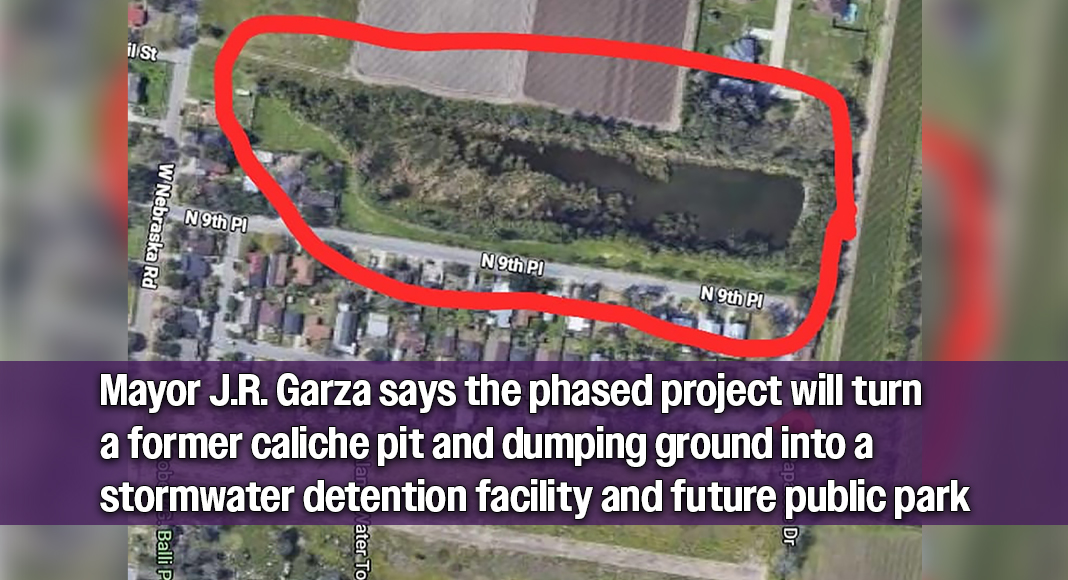
ALAMO, Texas — A 22-acre former caliche pit that had become a dumping ground is undergoing a major cleanup and redevelopment as the City of Alamo works to convert the property into a stormwater detention facility and, in a future phase, a recreational park for residents.

Mayor J.R. Garza said the Laguna Park project addresses two important community needs at once: flood mitigation and quality-of-life improvements.




“Laguna Park is about turning a problem into an opportunity,” Garza said. “We took a property that had been neglected and used as a dumping ground and are transforming it into something that protects our residents from flooding, improves the neighborhood, and gives our families another place to enjoy. That’s the kind of investment we want to make in Alamo.”
The first stage of the project has focused on cleaning up the property and preparing it for its flood-control function. Garza said more than 250 trailer loads of trash, tires and other debris were removed from the site.
Rather than letting the neglected property remain a liability, the city saw an opportunity to use it to help manage stormwater while preparing it for eventual recreational use.
The property is being designed to function as a stormwater detention facility. During significant rainfall, the basin can temporarily hold stormwater and reduce pressure on the surrounding drainage system, an important function for neighborhoods that have experienced flooding.
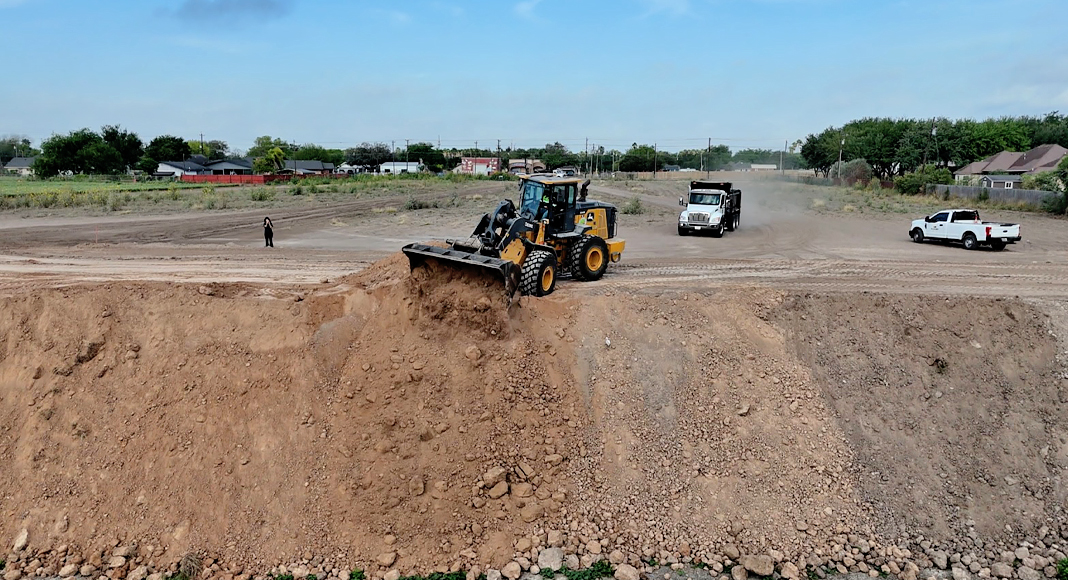
Garza said the basin is approximately 20 feet deep but declined to estimate its detention capacity before engineers provide a definitive figure.
“I don’t want to give residents an estimate that hasn’t been verified by our engineers,” Garza said.
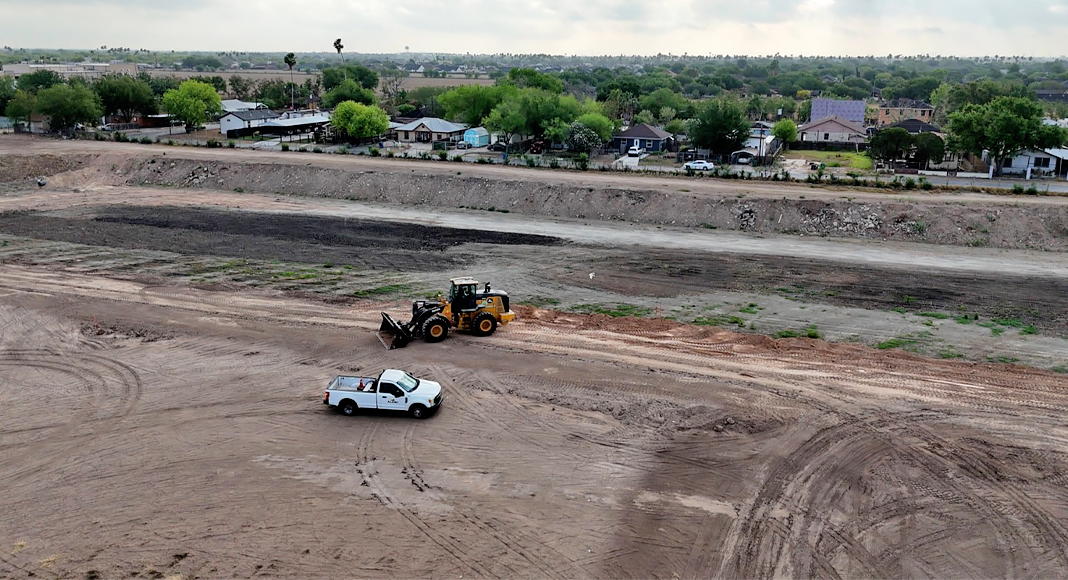
Laguna Park is being developed in phases. The initial priorities have been cleanup, excavation, drainage and flood mitigation. The next stage will focus on developing the recreational components and completing the park.
The city’s vision calls for a clean, attractive public space offering recreational opportunities, walking trails, and open areas while maintaining the property’s flood-retention function. Garza said the city will determine final amenities through its planning and community-input process.
A firm opening date has not been announced. Garza said stormwater and major site work have progressed substantially, while the recreational component will follow as final design, funding and construction schedules are established.
The city has incurred expenses for cleanup, dirt hauling, engineering, and site improvements. Garza said one publicly approved dirt-hauling agreement was not to exceed $200,000 but emphasized that figure should not be confused with the total cost of Laguna Park.
The city is compiling complete project expenditures so residents can see the entire investment.
Environmental considerations have also been part of the project because the property was previously used as a dumping site. Garza said the city has addressed accumulated debris and worked through applicable environmental and site-assessment requirements. The city will continue following environmental standards as the project progresses.
Garza said one of the primary challenges going forward will be completing the park responsibly and within available funding.
“We want to build something residents will be proud of, but we also have to be good stewards of taxpayer dollars,” he said.
Laguna Park is among more than $100 million in projects Garza said are underway or advancing in Alamo. While it may not be the largest financially, he said its impact is significant because it combines flood protection, environmental cleanup, neighborhood improvement and recreation in one project.
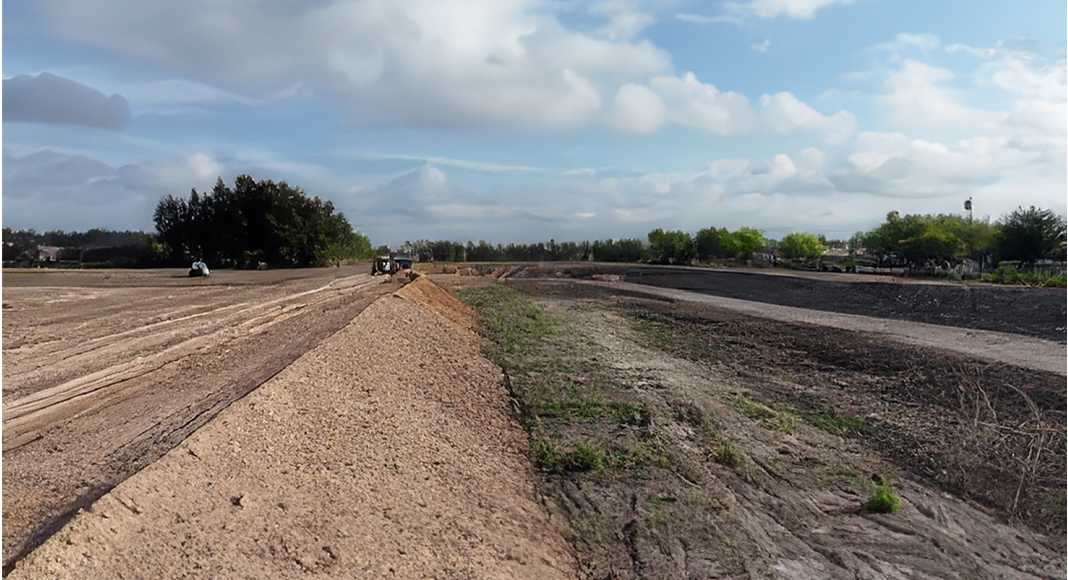
Over the next year, residents should see continued site improvements, landscaping and recreational infrastructure as the city moves toward making the property a place families can use and enjoy.
Garza also sees Laguna Park as an example of how Alamo can approach other neglected or underutilized properties.
“I believe Laguna Park will become much more than a park,” Garza said. “It will be an example of how Alamo can take a neglected property, solve a drainage problem, improve a neighborhood, and create something positive for future generations.”
This is Report 2 of a four-part Texas Border Business series featuring Alamo Mayor J.R. Garza and major projects being undertaken by the City of Alamo.
See related story: