
















Texas Border Business




Texas Border Business
AUSTIN, Texas — Gov. Greg Abbott is proposing legislation that would change how electricity is sold in Austin and San Antonio by opening the cities’ markets to competing providers and restricting the use of municipal utility revenue to support city government operations. If approved, the proposal would end the exclusive control municipal utilities currently have over electricity service in the two cities.
The proposal would allow customers to select an electricity provider rather than receiving service exclusively through their municipally owned utility.




Abbott’s office estimates the changes could reduce electricity costs by about 10% for the average Austin ratepayer and 13% for the average San Antonio ratepayer.
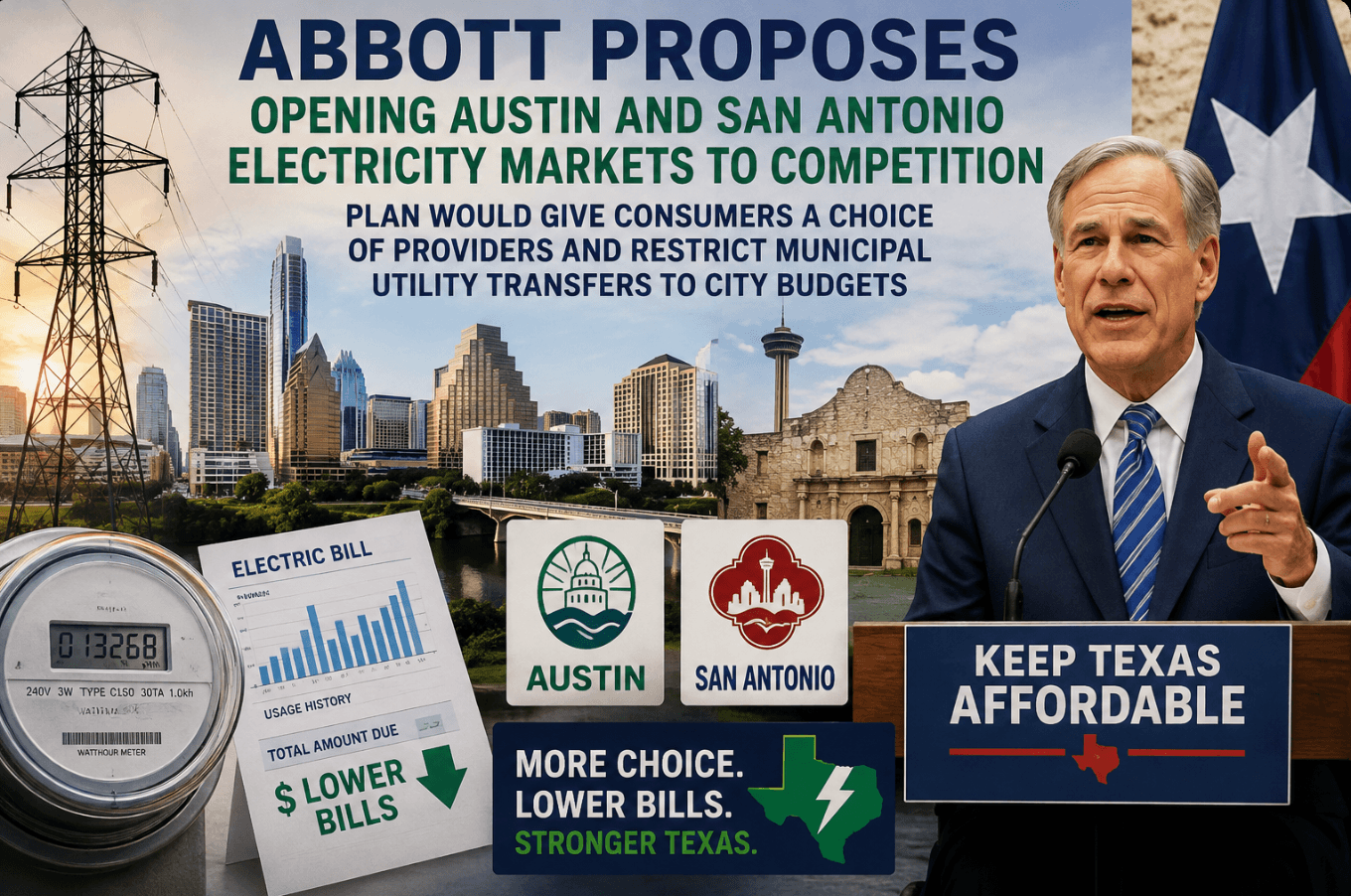
“We must address the cost of electricity that is putting a growing strain on Texas households,” Abbott said. “That’s why I’m proposing legislation to end the monopoly control that cities like Austin and San Antonio have over electricity services and give Texans the freedom to choose the provider that works best for them.”
Austin and San Antonio residents are among approximately 5 million Texans who receive electricity through municipally owned utilities. Unlike investor-owned utilities regulated by the Public Utility Commission of Texas, municipal utilities are operated and overseen by their respective city governments.
Municipal utilities can control several stages of electricity service, including generation, transmission, distribution and the sale of electricity to customers.
CPS Energy, San Antonio’s municipally owned utility, defended its current structure in response to Abbott’s proposal. The utility said it “consistently maintains the lowest combined electric and gas residential rates in Texas and high reliability, including compared to investor-owned utilities.”
Another part of Abbott’s proposal would prevent cities from using utility revenue to help finance their general budgets.
About 30% of San Antonio’s general funding and 10% of Austin’s revenue come from their municipal utilities, according to city government documents cited in the original source material.
“This is taxation through electricity prices without representation, and it must come to an end,” Abbott said.
Abbott also pointed to more than 100,000 people who live outside San Antonio but receive utility service from the city. He argued that those customers contribute financially to city services they do not use.
The use of municipal utility revenue to support city government has previously drawn attention from Texas lawmakers. A bill introduced during the 2023 legislative session would have placed restrictions on the use of utility revenue to fund city budgets, but the measure did not pass.
The issue returned during a Texas Senate interim hearing in May 2026, when lawmakers examined municipal utility transfers, with attention focused on water utilities.
“It’s time that we get it across the finish line,” Abbott said.
The proposed electricity changes are part of Abbott’s Keep Texas Affordable agenda, which also includes measures addressing property taxes, college tuition, housing and insurance costs.