







Home Blog Page 172

Downtown McAllen Town Hall Draws Strong Turnout, Signals Momentum for Revitalization

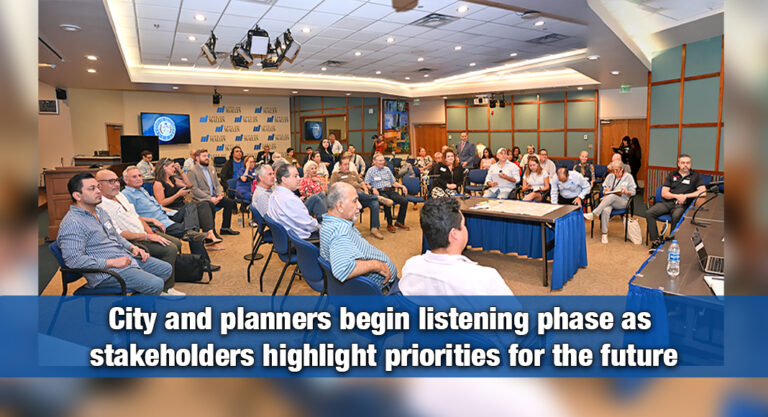
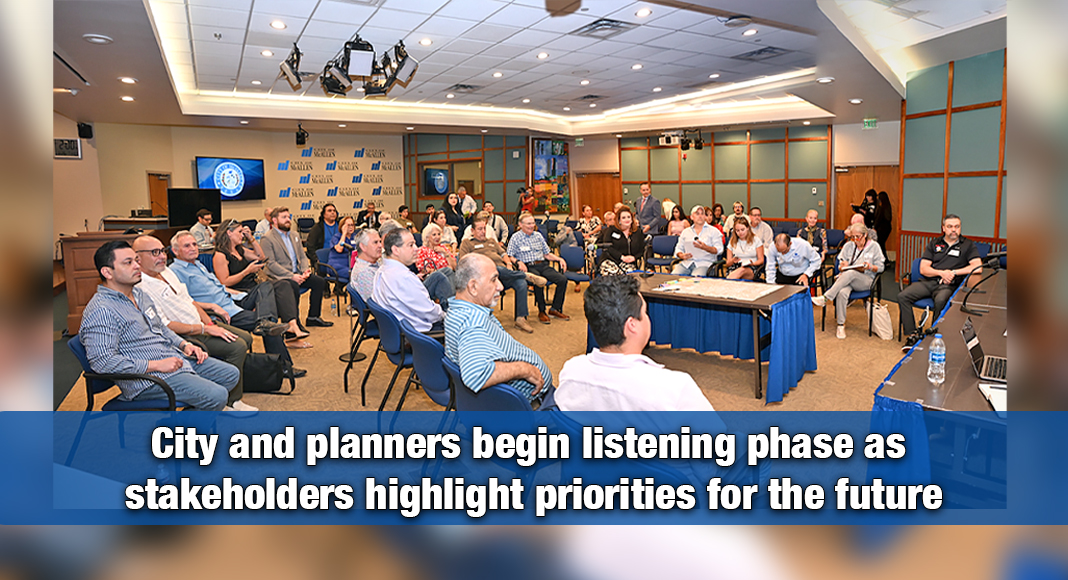
Nearly 100 community members filled the Commissioner Chamber on the third floor of McAllen City Hall for the March 26 Town Hall, highlighting strong public interest in shaping the future of downtown McAllen. Image Texas Border Business
Nearly 100 community members filled the Commissioner Chamber on the third floor of McAllen City Hall for the March 26 Town Hall, highlighting strong public interest in shaping the future of downtown McAllen. Image Texas Border Business

By Roberto Hugo González / Texas Border Business

McALLEN, TX — A packed room at McAllen City Hall on Thursday, March 26, highlighted one clear message: the future of downtown McAllen matters deeply to the community.

City officials and planning consultants from Mend Collaborative hosted a Town Hall meeting to gather public input on downtown revitalization efforts, including updates to the Unified Development Code and a bigger strategic study.

Michelle Rivera, Deputy City Manager, opened the meeting by emphasizing that the evening was designed for the public.

This is your meeting. This is for the downtown folks who are here to give us your opinions.

— Michelle Rivera

Rivera highlighted downtown as a priority initiative for the City and encouraged open dialogue from business owners, property owners, and residents.

Representatives from Mend Collaborative outlined the purpose of the meeting as the first step in a longer planning process.
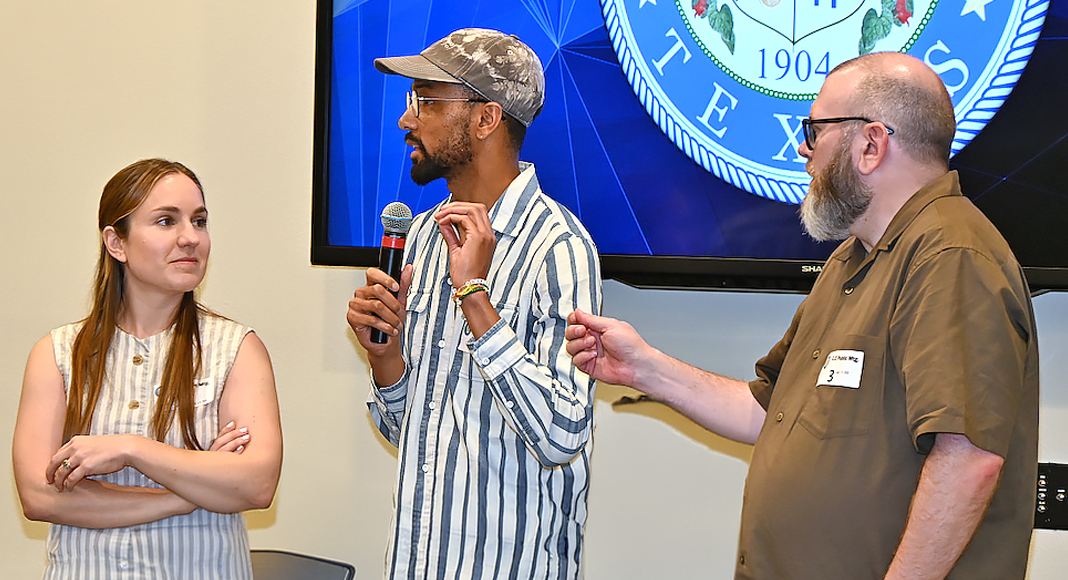
The Mend Collaborative team—an urban planning and landscape architecture firm based in Austin, Texas, and Minneapolis, Minnesota—participates in the Downtown McAllen Town Hall. Pictured from left to right are Kari Spiegelhalter, Partner and Landscape Architect; C. Terrence Anderson, Senior Planner; and Zakcq Lockrem, Partner and Urban Planner. Image Texas Border Business

Kari Spiegelhalter, partner and landscape architect, explained that the session was focused on listening rather than presenting solutions.

This first meeting is really all about listening.

Kari Spiegelhalter

C. Terrence Anderson, senior planner, noted that the turnout exceeded expectations and said additional opportunities for feedback would follow, including surveys and continued engagement.

Zakcq Lockrem, partner and urban planner, described the turnout as remarkable and emphasized that McAllen has strengths many cities lack.

Having this many people who care is really, really exciting.

Zakcq Lockrem

Throughout the meeting, participants raised a wide range of concerns about current downtown conditions. Several themes emerged repeatedly:

• Cleanliness and maintenance, including debris, broken infrastructure, and alley conditions

• Lighting and safety, particularly in underlit areas

• Parking challenges, especially meter enforcement

• Historic preservation, with calls to protect and restore older buildings

• Lack of follow-through, with frustration over past plans that did not lead to action

Many attendees emphasized the need to address basic issues immediately, suggesting that visible improvements could help restore confidence in downtown.

“Start with the basics first… clean it up, fix the lights, and then build from there.”— Community participant

While concerns were candid and, at times, critical, the overall tone of the meeting remained forward-looking. Attendees expressed a shared desire to see downtown become more vibrant, walkable, and economically diverse.

Lockrem noted that many of the challenges discussed are not unique to McAllen but are being experienced in cities across the country.

“A lot of downtowns are struggling today… but what stands out here is the level of investment and commitment in this room.”— Zakcq Lockrem

City officials and the Mend Collaborative team emphasized that this Town Hall marks the beginning of an ongoing process. Upcoming steps include:

            •           Meetings with elected officials and city departments

            •           A broader public survey

            •           Continued stakeholder engagement

            •           Collection and review of past planning documents

Rivera also clarified that communication and materials will be coordinated through the City to ensure transparency and continuity.

The March 26 Town Hall revealed both the challenges and the potential of downtown McAllen. While participants called for improvements in maintenance, safety, and accountability, they also demonstrated high engagement and a willingness to contribute.

If the turnout is any indication, downtown McAllen’s future will be shaped not just by plans, but by a community ready to be part of the process.
National Security Strategy Places Heavy Emphasis on Nuclear and Space Domains

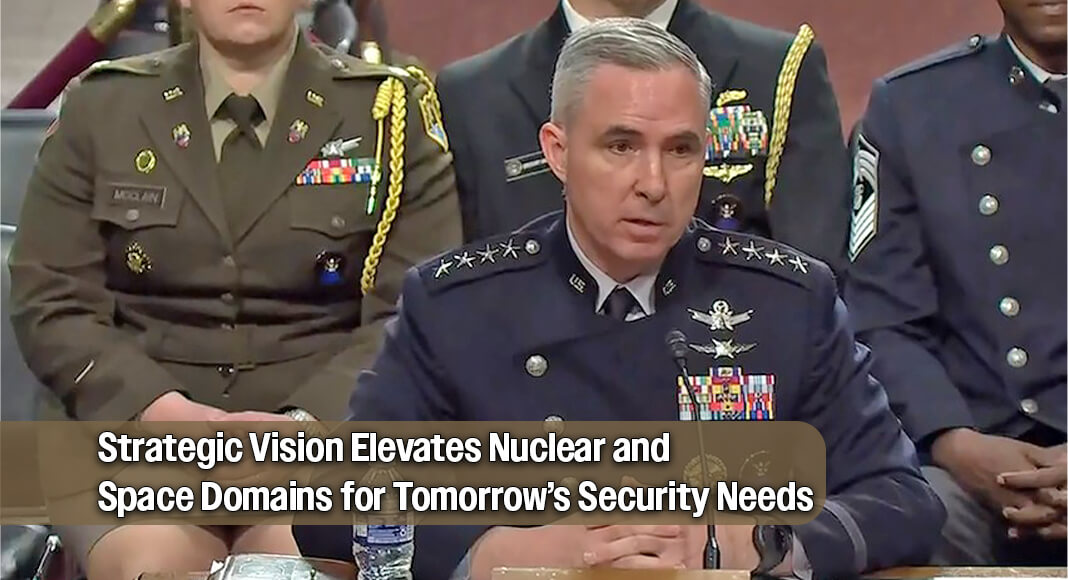
Space Force Gen. Stephen N. Whiting, commander of U.S. Space Command, testifies before the Senate Armed Services Committee in Washington, March 26, 2026.Photo credit: DOW screenshot

By David Vergun, Pentagon News / US DOW

Protecting America’s space systems is essential for national security because so many military capabilities rely on them — including precision navigation, global communications, missile warning and real-time intelligence, said Space Force Gen. Stephen N. Whiting, commander of U.S. Space Command, who testified in Washington before the Senate Armed Services Committee.

Space systems were critical to mission success in recent operations, including Midnight Hammer, Absolute Resolve and currently Epic Fury, he said.

“Should an adversary degrade or destroy our space capabilities, the joint force’s ability to fight as it is sized and designed would be immediately and materially impacted,” Whiting said, adding that opponents are moving at an alarming pace, developing and deploying capabilities to deny the War Department the use of space.

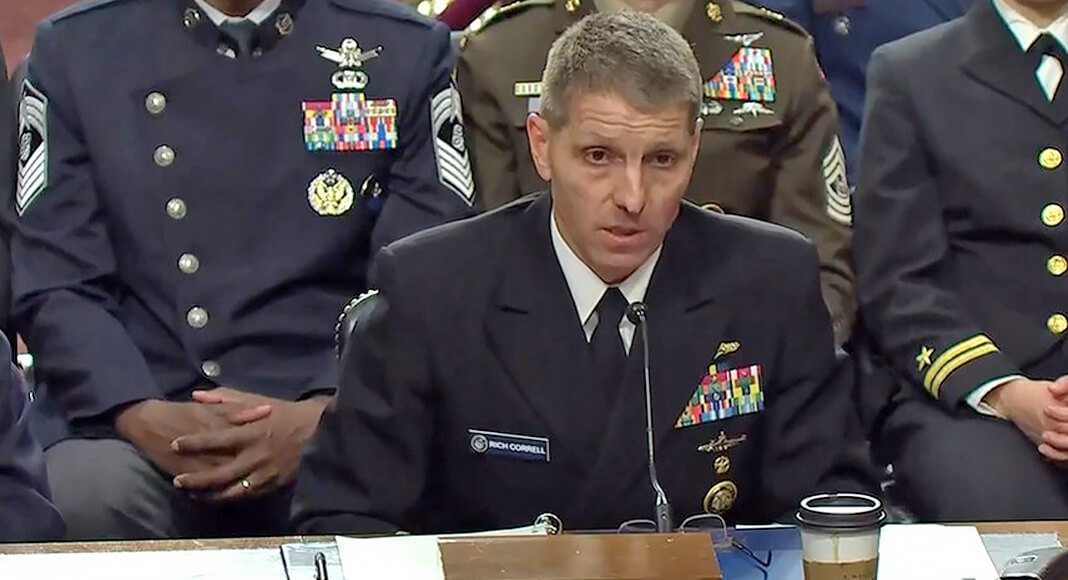
Navy Adm. Richard A. Correll, commander of U.S. Strategic Command, testifies before the Senate Armed Services Committee in Washington, March 26, 2026 Photo credit: DOW screenshot

China’s space presence has grown exponentially, operating over 1,300 active satellites, a 667% increase since 2015, including more than 510 intelligence, surveillance and reconnaissance satellites.

They are using these capabilities to integrate military, space-enabled effects and fielding weapons designed to outmaneuver and destroy U.S. satellites, he said.

Russia has capabilities designed to disrupt U.S. space assets, “including the potential placement of a nuclear weapon [in] orbit — the single greatest threat to our space architecture,” Whiting said. “Armed conflict in space is not inevitable, but should deterrence fail, the integrated space power of our team will provide a decisive advantage.”

The general listed his top funding priorities for fiscal year 2027, which include fielding integrated space fires, active protection of satellites, enhancing battlespace awareness, building an integrated command and control system, and providing sufficient cyber defenses for the space domain.

The command is making good progress in moving its headquarters from Peterson Space Force Base in Colorado to Redstone Arsenal in Alabama, he said.

Navy Adm. Richard A. Correll, commander of U.S. Strategic Command, who also testified today, said that the nation’s nuclear forces are the foundation of national security.

“Stratcom and its components stand ready, not seeking out confrontation, but deterring strategic attack and underpinning all Department of War operational plans,” the admiral said.

The challenge is to deter great power conflict and manage the complexities of deterring multiple nuclear competitors simultaneously, all while adapting to rapid technological change and advancements, Correll said.

Some of those challenges include cyber threats, counter-U.S. space capabilities, a contested electromagnetic spectrum, novel enemy missile systems and supply chain issues.

“As we bring the B-21 [Raider] bomber, the Columbia-class submarines and the Sentinel intercontinental ballistic missile system online, we will ensure the credibility of our deterrence for decades to come,” he said.

UPDATE: Edinburg Police Arrest Additional Suspect in Hit-and-Run Investigation

The man was identified as 71-year-old Alfredo Yanez. Mr. Yanez allegedly admitted to being the driver of the suspect vehicle at the time of the collision. Image courtesy of The City of Edinburg

UPDATE:

Edinburg Police investigators have announced an update in the ongoing investigation of the hit-and-run incident involving a cyclist that occurred on March 20. In addition to the previously identified driver, the driver’s common-law wife has now been charged in connection with the case.
70-year-old Silvia Galindo Martinez has been charged with Failure to Report a Felony, a Class A misdemeanor.

EDINBURG, Texas — At approximately 7 p.m. on March 23, 2026, Edinburg Police Traffic Investigators received information regarding a vehicle matching the description of the suspect vehicle involved in a hit-and-run collision that critically injured a cyclist on Friday night.

Investigators located the vehicle and confirmed it was the one involved in the incident. The investigation then led officers to an address in Roma, Texas, where they made contact with a male individual.

The man was identified as 71-year-old Alfredo Yanez. Mr. Yanez allegedly admitted to being the driver of the suspect vehicle at the time of the collision.

Mr. Yanez is scheduled to be arraigned today at 3 p.m. at Edinburg Municipal Court on a charge of Collision Involving Personal Injury or Death, a third-degree felony.

The investigation remains ongoing.

See related story:

The $1.6 Trillion Trade System Under Pressure

A golden-hour view of a bustling U.S.–Mexico border expressway captures the pulse of North American trade, with streams of northbound freight trucks heading into the United States and southbound vehicles flowing into Mexico—an intricate, high-volume corridor where supply chains, commerce, and daily life converge across multiple lanes divided by a central barrier. Image for illustration purposes

A $1.6 trillion trade system built over decades is now showing signs of strain. This new report reveals how recent tariffs disrupted supply chains, erased billions in trade, and exposed hidden weaknesses across North America’s economy. Behind the headlines are deeper risks—and bold proposals to fix them. Get exclusive access to the full analysis, data, and insights shaping the future of U.S.–Mexico trade. Subscribe for free to unlock the complete report and stay ahead of the economic shifts redefining the region.

Tariffs Shake North American Trade and Expose Fragile Supply Chains

Texas Border Business

A new report by Daniel Covarrubias, Ph.D., the Director of Texas A&M International University’s A.R. Sanchez, Jr. School of Business’ Texas Center for Economic and Enterprise Development, and Heleodoro Lozano Program Manager at the Texas Center for Border Economic and Enterprise Development at Texas A&M International University of the Texas Center at Texas A&M International University finds that three tariff actions in 2025 disrupted decades of North American economic integration, reducing trade flows and exposing structural vulnerabilities in cross-border supply chains.

According to Crossing Paths: Insights into U.S. International Trade, trilateral trade between the United States, Mexico, and Canada grew from $265 billion in 1994 to $1.6 trillion by 2024, forming what the report describes as “the backbone of automotive manufacturing, electronics assembly, energy distribution, and agricultural trade.” The authors characterize this system as “an engineered system with identifiable components, measurable outputs, and real vulnerabilities.” 

The report identifies 2025 as a turning point. It states that tariff measures introduced between January and June—including a 25 percent tariff on all products from Mexico, targeted tariffs on vehicles and parts, and a 50 percent tariff on steel and aluminum— “sent shockwaves through the integrated manufacturing networks that had taken decades to build.”  

Data presented in the report show measurable declines in trade. U.S. imports of vehicles and auto parts from Mexico fell 6.1 percent, a reduction of $4.1 billion, while imports of aluminum, iron, and steel declined 13.6 percent, or $873 million, in the first half of 2025 compared with the same period in 2024. Combined, the report estimates that “nearly $5 billion in trade value evaporated in the first half of the year.” 

Although tariff revenues reached $4.1 billion during the period, the report concludes that “trade declines exceeded revenue gains, resulting in a net loss of economic activity.”  The analysis also notes that exemptions under the United States-Mexico-Canada Agreement limited some impacts, with an estimated 35 percent of U.S. content in assembled vehicles not subject to tariffs.  

The report highlights the concentration of trade activity at key infrastructure points. Port Laredo, described as “the busiest port of entry in the United States,” processed $340 billion in trade in 2024 and serves as a central node in North American commerce.  The document notes that the port handles more than 19,000 truck crossings per day and over 23 million total crossings annually, underscoring its role in sustaining cross-border supply chains.  

Sector-level analysis shows that the automotive trade remains dominant, with $488 billion in vehicle and parts trade recorded through November 2024. Canada and Mexico accounted for 51 percent of that total, reflecting what the authors call an “integrated production network” in which components cross borders multiple times before final assembly.  

Beyond documenting impacts, the report argues that the disruptions reveal deeper institutional gaps. It states that North America lacks “mechanisms for positive industrial coordination,” resulting in “competing national subsidies without a regional strategy” and “exposed supply chain vulnerabilities.”  

To address these issues, the authors propose new governance frameworks, including a binational customs agency, a continental digital infrastructure initiative, and a North American Industrial Coordination Council. These proposals are intended to align policy, improve data sharing, and coordinate investment across strategic sectors such as semiconductors, clean energy, and advanced manufacturing.  

The report concludes that North American integration remains substantial but fragile. It states that “the data is clear. The architecture is documented. The vulnerabilities are measured,” and emphasizes that future competitiveness will depend on whether governments establish institutions capable of managing an increasingly interconnected regional economy.

“Crossing Paths 2025” refers to the 2025 edition of Crossing Paths: Insights into U.S. International Trade, a flagship research compilation produced by the Texas Center for Border Economic and Enterprise Development at Texas A&M International University.

  • A comprehensive annual report compiling ten analytical editions into one publication
  • Focused on U.S.–Mexico and North American trade, combining data, sector analysis, and policy evaluation
  • Built around a three-part structure:
    1. The architecture of trade integration
    2. The disruption caused by the 2025 tariffs
    3. Institutional solutions for the future  

See and download the Crossing Paths report below:

PSJA Educator Selected Among Top U.S. Teachers for Smithsonian’s Teacher Innovator Institute

Pharr-San Juan-Alamo ISD (PSJA ISD) educator Tami L. Bhadai has been selected to participate in the highly competitive Teacher Innovator Institute at the Smithsonian’s National Air and Space Museum in Washington, D.C., a distinguished national program that brings together top educators from across the country. Image courtesy of PSJA ISD. Bgd for illustration purposes

PHARR, Texas – Pharr-San Juan-Alamo ISD (PSJA ISD) educator Tami L. Bhadai has been selected to participate in the highly competitive Teacher Innovator Institute at the Smithsonian’s National Air and Space Museum in Washington, D.C., a distinguished national program that brings together top educators from across the country. 

Bhadai was chosen as part of an elite cohort of approximately 80 educators nationwide — including a limited group of just 30 newly selected participants — recognized for their excellence in teaching, leadership in STEM education, and commitment to advancing innovative classroom practices. 

A 22-year veteran educator and a current Science Lab teacher for 4th and 5th grade students, Bhadai is known for creating engaging, hands-on learning experiences that inspire curiosity and critical thinking. She was also named 2025 Campus Teacher of the Year and is a finalist in the prestigious H-E’B Excellence in Education Lifetime Achievement Elementary category, demonstrating her impact and dedication to student success. In addition, she serves as the campus Junior Master Gardening sponsor, extending learning beyond the classroom. 

The Smithsonian’s Teacher Innovator Institute is a rigorous, multi-year professional development experience designed to connect educators with leading experts in aerospace science, history, and technology. Through immersive, hands-on learning, behind-the-scenes museum access, and collaboration with national thought leaders, participants explore how to integrate informal STEAM (science, technology, engineering, arts, and mathematics) education into authentic classroom instruction. 

“I am deeply honored to represent our district at the national level through the Teacher Innovator Institute at the Smithsonian,” said Bhadai. “This opportunity reflects the dedication of our entire community, and I am excited to bring back what I learn to benefit our PSJA students.” 

Participants commit to a two-summer experience, engaging in intensive sessions led by Smithsonian staff and guest experts, while also developing and implementing a professional learning plan that extends the institute’s impact into their school communities. 

Bhadai’s selection highlights PSJA ISD’s continued commitment to excellence in STEM education and its focus on providing students with innovative, high-quality learning experiences that prepare them for the future. 
 

Honor Texas First Responders: 2026 Star of Texas Nominations Now Open

Governor Greg Abbott announced that nominations for the 2026 Star of Texas Awards, which honor peace officers, firefighters, emergency medical first responders, and federal law enforcement personnel who were seriously injured or killed in the line of duty, are now open. Nominations are due to the Office of the Governor by June 15, 2026. Image for illustration purposes

AUSTIN — Governor Greg Abbott announced that nominations for the 2026 Star of Texas Awards, which honor peace officers, firefighters, emergency medical first responders, and federal law enforcement personnel who were seriously injured or killed in the line of duty, are now open. Nominations are due to the Office of the Governor by June 15, 2026.

“The Star of Texas Award honors the courage and bravery of our peace officers, firefighters, and first responders who have risked their lives to protect their fellow Texans,” said Governor Abbott. “These community heroes have dedicated their lives to a higher purpose and selflessly serve our great state every single day. We thank them for their courage, sacrifice, and unwavering dedication to Texans.”

To be eligible for the 2026 award, the critical incident must have occurred between September 1, 2003 and June 15, 2026. Nominations can also be made for private citizens who were seriously injured or killed while aiding or attempting to aid a peace officer, firefighter, or emergency medical first responder in the performance of their duties.

You can submit your 2026 Star of Texas Awards nominations here.

Abbott Unveils $26M Investment in Texas Military Installations

Governor Greg Abbott announced over $26 million in grant funding for infrastructure projects in military communities through the Texas Military Preparedness Commission’s (TMPC) Defense Economic Adjustment Assistance Grant (DEAAG) program. Photo: Office of the Governor

AUSTIN — Governor Greg Abbott announced over $26 million in grant funding for infrastructure projects in military communities through the Texas Military Preparedness Commission’s (TMPC) Defense Economic Adjustment Assistance Grant (DEAAG) program.

“Texas is home to over 1.7 million veterans and active duty, reserve personnel, and their families,” said Governor Abbott. “These funds will help ensure Texas military facilities, including our 15 major military installations, are up-to-date with the latest technology to enhance the safety and well-being of Texans and Americans by increasing water access and equipment resiliency. I thank the Texas Military Preparedness Commission for their continued service in supporting our servicemembers so that we can best prepare our state to defend its critical infrastructure.”

The grant funds will be invested in infrastructure projects and other initiatives to support military installations in Texas and protect jobs in military communities that may be impacted by any future Base Realignment and Closure (BRAC) process or other basing decisions.  

With this first round of FY 2026-2027 grants, Governor Abbott has awarded over $172 million in grants to military communities through the DEAAG program since 2015.

The following entities will receive FY 2026-2027 DEAAG reimbursements:

  • Ark-Tex Council of Governments: $5 million; Red River Army Depot – Fund mission to meet the U.S. Military Small Unmanned Aircraft Systems (sUAS) requirements
  • Bell County: $4.5 million; Fort Hood – Development of an Aquifer Storage and Recovery (ASR) system
  • City of El Paso: $4 million; Fort Bliss – Increasing water production capacity of the Kay Bailey Hutchison Desalination Plant
  • Val Verde County: $5 million; Laughlin AFB – Modernization of airfield lighting system to FAA standards to meet current and future USAF missions
  • City of Corpus Christi: $2.074 million; Corpus Christi Naval Air Station – Replace aging domestic wastewater collection pipes
  • City of Corpus Christi: $990,000; Corpus Christi Army Depot – Installation of four Atmospheric Water Generation (AWG) units to supplement water usage in high-demand production areas
  • City of San Antonio: $5 million; JBSA- Fort Sam Houston – Renovation partnership with the City of San Antonio, Bexar County, the State of Texas, and the Defense Health Agency (DHA) of the South Beach facility  

The TMPC in the Office of the Governor advises the Governor and the Texas Legislature on defense and military issues. TMPC’s goal is to preserve, protect, expand, and attract new military missions, assets, and installations in Texas. Additionally, the TMPC encourages defense-related businesses to expand or relocate to Texas. The commission is composed of 13 members serving six-year staggered terms, typically representing an installation in their community.

STC Cosmetology Students Shine in Bridal-Themed ‘Spring Glow’ Event

Bridal beauty took center stage at the South Texas College Cosmetology program’s 3rd annual “Spring Glow” student showcase. STC Image

By Joey Gomez

McALLEN, Texas – Bridal beauty took center stage at the South Texas College Cosmetology program’s 3rd annual “Spring Glow” student showcase.

Designed as a bridal-themed event to mirror the demands and artistry of the professional beauty industry, “Spring Glow” is also an opportunity for Cosmetology students to highlight their talent and creativity.

Faculty say behind every polished look presented at the Spring Glow event was months of preparation, teamwork and dedication. STC image

As final touches were made and models walked the runway, the event underscored the program’s mission to not only train students in technical skills, but to elevate them as emerging professionals ready to make their mark in the beauty industry.

“This is a very special day where our students are able to showcase their skills that they have been learning throughout the semester,” said Cosmetology Program Chair Carla Balleza. “This gives them an opportunity to express their craft while also allowing the community to connect with our students and learn more about what we do.”

Held as both a celebration and a capstone experience, the showcase featured students nearing completion of the program, highlighting their work across three disciplines including hair, nails and makeup. Each look was inspired by bridal aesthetics, blending technical skill with imaginative expression as students presented their work to experts in the industry.

Designed as a bridal-themed event to mirror the demands and artistry of the professional beauty industry, “Spring Glow” is also an opportunity for Cosmetology students to highlight their talent and creativity. STC image

Judges at the event included Cosmetologist and Educator at Hair Goddess Academy Maida Ortega; salon Owner Patti De Lucio; Global Platform Master Artist and businessowner Martin Salinas; Visual Coordinator and Color Guard Director at Sharyland ISD, Palmview and Nikki Rowe schools Orly Gaitan; Hair Stylist Catrina de la Cruz and Beauty Influencer and Hair Artist at Lab Pro Makeup Academy Luis Alejandro.

Faculty say behind every polished look presented at the Spring Glow event was months of preparation, teamwork and dedication. The experience is also a reflection of the students who are stepping into their future with every brushstroke.

“They have been preparing and training for months to perfect their skills in hair, makeup and nails,” said faculty member Minela Jaime. “This allows them to explore their creativity and work outside of what’s in the book. They collaborate as a team, research trends and discover what they enjoy doing the most.”

Jaime said the experience is designed to not only refine technical ability, but also adaptability, which are qualities essential in the fast-paced beauty industry.

“This is something I am sure they will always remember,” Jaime said. “Throughout the process we as faculty see their confidence growing. This allows them to explore different sides of themselves and what their future holds.”

For students like Dayana Mendoza, the experience is both challenging and rewarding while offering a glimpse into the expectations of real-world work environments.

“Coordinating events like these is always nerve-wracking, but it’s real-world experience,” said Mendoza, who also won the “Audience Choice” category at the showcase for her gothic-inspired wedding design. “We have to learn time management and how to be faster. You can’t take your time on everything. We learn to be quick and precise. If you want to focus on details, you have to plan ahead.”

Mendoza added that the showcase serves as a milestone moment for students as they approach graduation and licensure.

“When we are out in the real world, we will look back and say, ‘We did this as a class.’’’

For more information on STC’s Cosmetology program, visit southtexascollege.edu/academics/cosmetology/.

La Joya ISD Advances Master Facilities Strategy to Enhance Learning Environments

Mr. S.B. Pierson, La Joya ISD Chief of Operations & Infrastructure. Image courtesy of La Joya ISD

LA JOYA, Texas — La Joya Independent School District presented a comprehensive Facilities Condition Assessment and Long-Range Facilities Master Plan during its March 25 Board Meeting, outlining a strategic, data-driven approach to ensure district facilities effectively support student learning for years to come.

The initiative aligns directly with the district’s strategic plan, Achieving Excellence Together 2030, and reinforces La Joya ISD’s commitment to Operational Excellence and Financial Stability by prioritizing investments that directly impact teaching and learning. 

Through a partnership with MGT Impact Solutions and Parsons, the district will conduct a full assessment of facility conditions, educational adequacy, enrollment trends, and campus utilization. The process will result in a clear, actionable facilities master plan designed to guide future capital improvements and long-term investments. 

“This work is about ensuring every student has access to high-quality learning environments that match the excellence we expect across our District,” said Superintendent of Schools Dr. Marcey Sorensen. “We are taking a thoughtful, data-driven approach so that every decision we make reflects our commitment to students’ success, supports our educators to deliver the highest quality instruction, provides innovative and state of the art spaces that allow our District to remain competitive, and positions our district for long-term success with a vision for the future.”

The master planning process includes several key components:

  • Comprehensive facility condition assessments, including building systems, safety, and compliance
  • Educational adequacy reviews to ensure spaces meet modern instructional needs
  • Enrollment projections and student forecasting
  • Capacity and utilization analysis to identify opportunities and address growth or underuse
  • Community engagement to ensure stakeholder voice is included throughout the process
  • Development of prioritized capital improvement plans with clear implementation strategies 

The outcome will provide the district with a clear vision, actionable options, and a phased investment strategy supported by data and community input. 

Chief of Operations and Infrastructure S.B. Pierson emphasized the importance of planning with clarity and transparency.

“Our goal is to give the district and our community a clear picture of the current state of our facilities so we can create a clear path forward, guided by the voices of our community,” Pierson said. “This process ensures we fully understand the condition of our facilities, align them to instructional needs, engage our community in the findings, and allow us to have informed discussions that are responsible, strategic, and centered on student success.”

The process is designed to be transparent and collaborative, incorporating stakeholder feedback through surveys, focus groups, and community meetings. The final master plan will serve as a roadmap for future facility improvements, ensuring resources are aligned with district priorities and student needs.

La Joya ISD will continue to provide updates as the planning process progresses.

New USA Trade Online Tool Debuts With Improved User Experience

The U.S. Census Bureau has announced the launch of USA Trade Online: Reimagined and transition from the legacy USA Trade Online (UTO) platform. Screenshot from USA Trade online website. Bgd for illustration purposes

U.S. Census Bureau

The U.S. Census Bureau has announced the launch of USA Trade Online: Reimagined and transition from the legacy USA Trade Online (UTO) platform.

UTO has been the most popular way for data users to access trade data for nearly three decades. The new version features the same trade data and improves user experience with a modern and more intuitive interface with a streamlined design.

Data users no longer need to create an account to generate and save reports in the new UTO. Reports can be saved by using an email address, eliminating the need for password management.

Screenshot form USA Trade Online website
Additional features include:
Enhanced navigation by consolidating all report selections on a single screen.
Simplified report-sharing capabilities and enhanced collaboration features.
Redesigned report management with custom tagging and dataset filtering options.

Visit the user guide to learn more.

The legacy version of UTO will be decommissioned by June. Data users who have saved reports on the legacy platform are strongly encouraged to recreate and save them in the new tool.

Information source: U.S. Census Bureau