













Texas Border Business



By Selene Rodriguez
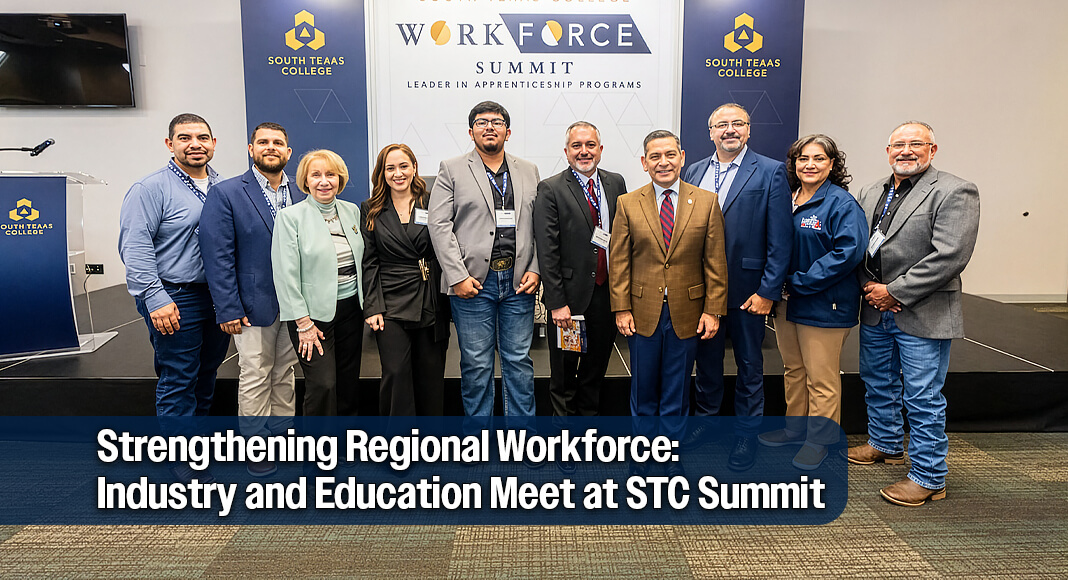
McALLEN, Texas – Showcasing its national leadership in apprenticeships and workforce innovation, South Texas College brought together regional and statewide leaders for its annual Workforce Summit to explore the future of workforce development and the role of education in driving economic growth across the Rio Grande Valley.
Held at the college’s Pecan Campus, this year’s summit highlighted the success of STC’s growing apprenticeship initiatives, which now span 11 industries through 17 registered programs and partnerships with 77 regional employers, while addressing emerging workforce trends and the increasing demand for skilled talent.


“The economic future of South Texas will depend, in large measure, on the talent we develop today,” said STC President Ricardo J. Solis, Ph.D. “Our mission goes well beyond preparing someone for their first job. We are preparing people for careers, opportunity, economic mobility and lifelong learning.”
See the gallery below for more images of the event. All photos courtesy of STC

Among those in attendance were Hidalgo County Judge Richard Cortez and representatives from regional economic development corporations, the Texas Workforce Commission, Workforce Solutions, educational institutions and industry partners, reinforcing the importance of collaboration in sustaining the region’s economic growth.
This year’s keynote speaker, Wynn Rosser, Ph.D., commissioner of higher education for the Texas Higher Education Coordinating Board (THECB), highlighted the Rio Grande Valley’s role in the continued growth of Texas, the world’s eighth-largest economy.
“South Texas College has educational assets and resources that many other communities across the state don’t have,” Rosser said. “As the Rio Grande Valley continues to grow, STC is uniquely positioned to meet the needs of that growing population, develop local talent and contribute to the economic success of the region.”
Rosser also recognized the Valley’s pioneering efforts in expanding early college high schools and dual credit programs, emphasizing the importance of regional collaboration in increasing educational attainment and developing the state’s workforce.
Further highlighting the college’s regional impact, STC professor of Economics Kevin Peek, Ph.D., discussed the economic transformation of Hidalgo and Starr counties, where unemployment rates have declined substantially since the institution’s establishment in 1993.
With more than 108,000 graduates since its inception, STC continues to expand opportunities for economic mobility through its 133 academic and workforce programs, 93 of which are dedicated to workforce training.
“Over the past three decades, STC has played a significant role in transforming the region’s economy by expanding access to higher education and equipping residents with the skills needed to enter the workforce and improve their quality of life,” Peek said.
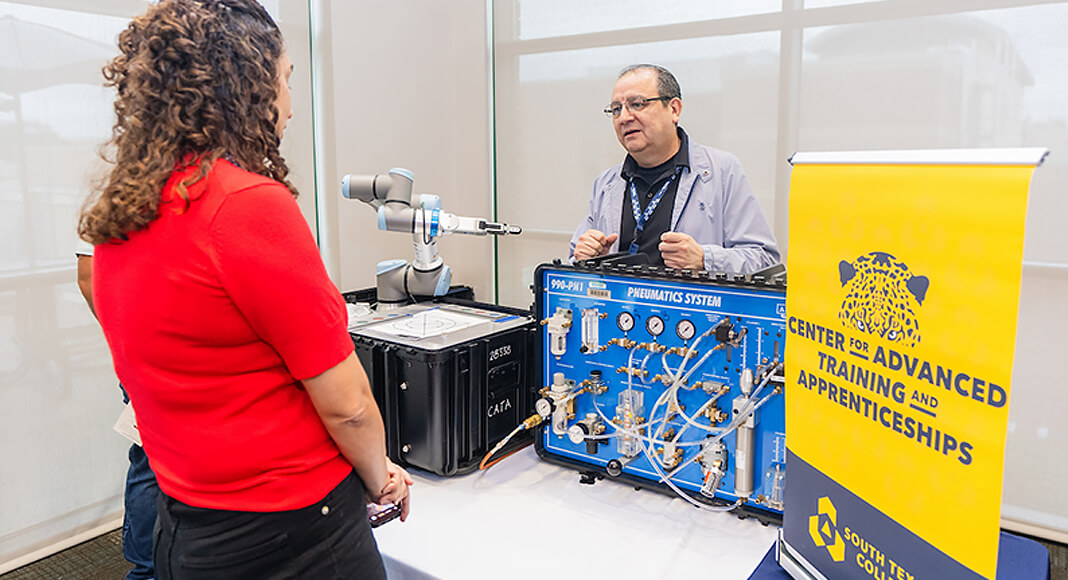
Among the college’s most successful strategies for connecting education with employment are its registered apprenticeships, which have provided more than 730 apprentices with paid on-the-job training and wage increases at no tuition cost.
One of STC’s most notable accomplishments is its partnership with DHR Health to establish the nation’s first federally registered nursing apprenticeship, whose graduates achieved a 100% first-time pass rate on their national licensure exam and are now serving the community as registered nurses.
“Through the apprenticeship, every day I was doing something, learning from different nurses who had different input,” said Hailey Aul, a recent STC Nursing graduate who is now a registered nurse. “It really helped my practice.”
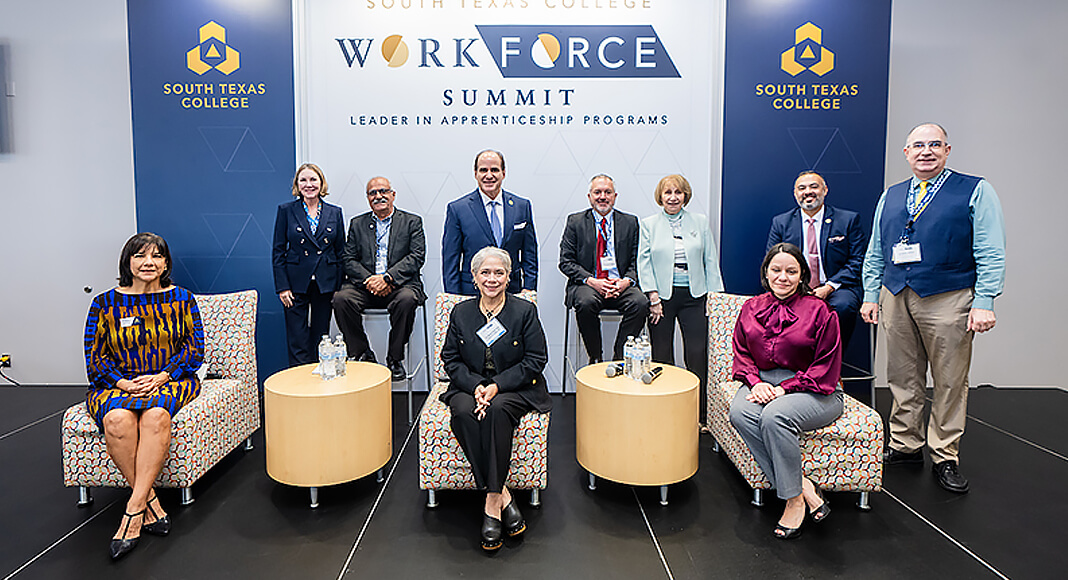
The impact of these industry partnerships was further explored during an employer and student apprenticeship panel moderated by Carlos Margo, Ed.D., STC dean for the Center for Advanced Training and Apprenticeships (CATA), featuring representatives from the construction, early childhood education and nursing industries.
With artificial intelligence and emerging technologies reshaping the global workforce, Solis called on education, industry and community leaders to work together to position South Texas at the forefront of workforce innovation.
“When we get this right, the impact extends far beyond the classroom or workplace,” Solis said. “We create opportunities. We strengthen families. We attract investment.”
For more information on STC’s workforce training and apprenticeship opportunities, visit southtexascollege.edu/cata/apprenticeships.html.
Information source: STC