














Texas Border Business



Texas Border Business
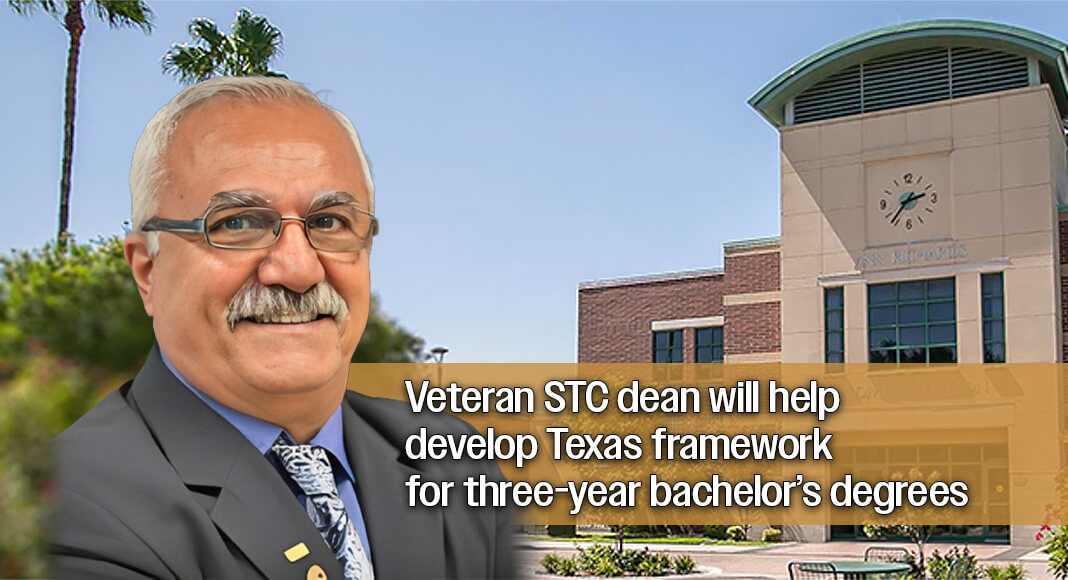
McALLEN, Texas — South Texas College’s Dr. Ali Esmaeili has been selected to serve on a statewide working group charged with helping shape a new framework for three-year bachelor’s degree programs in Texas.
Gov. Greg Abbott announced Sept. 16 that Esmaeili is among 13 higher education leaders selected for the Texas Higher Education Coordinating Board working group. The panel includes representatives from universities and community colleges across Texas with experience in academics, administration, accreditation and workforce education.


Esmaeili brings extensive experience in higher education and bachelor’s degree development. He currently serves as South Texas College’s dean of Math, Science, Information Technology and Bachelor Programs at the Pecan Campus in McAllen.
His selection gives South Texas College and the Rio Grande Valley representation in a statewide discussion that could influence how Texas students pursue bachelor’s degrees in the future.
Esmaeili has been closely involved with STC’s bachelor’s degree programs for years. When Texas first authorized select community colleges to offer bachelor’s degrees, he helped develop STC’s efforts, including the Bachelor of Applied Technology in Technology Management, which began in 2005.
His career at STC has included service as a mathematics instructor, mathematics department chair, division director, campus administrator, professional development coordinator, adjunct faculty coordinator, and associate dean for bachelor’s degree programs. He earned bachelor’s, master’s, and doctoral degrees from Texas A&M University-Kingsville.
The new working group will examine academic standards for three-year bachelor’s pathways, determine which degree programs and high-demand occupations may be appropriate for accelerated degrees, evaluate student and employer needs, and consider accreditation and institutional requirements.
The group will also identify potential statutory, regulatory, or administrative changes needed to implement such programs statewide. Its recommendations and proposed framework are due to the Governor’s Office by Dec. 31, 2026.
Abbott said three-year bachelor’s programs could reduce the cost of earning a degree by as much as 25% and potentially save students between $15,000 and $35,000. The governor has described the initiative as an effort to create more affordable pathways into high-demand, higher-paying careers.
Texas Higher Education Commissioner Wynn Rosser said the group will examine accelerated programs that can provide students with a quality education and lead to financially sustainable careers.
For Esmaeili, the appointment places a longtime Rio Grande Valley higher education leader at the table as Texas considers a significant change in how some bachelor’s degrees could be structured and delivered.