
















Texas Border Business




By David Vergun, Pentagon News | US DOW
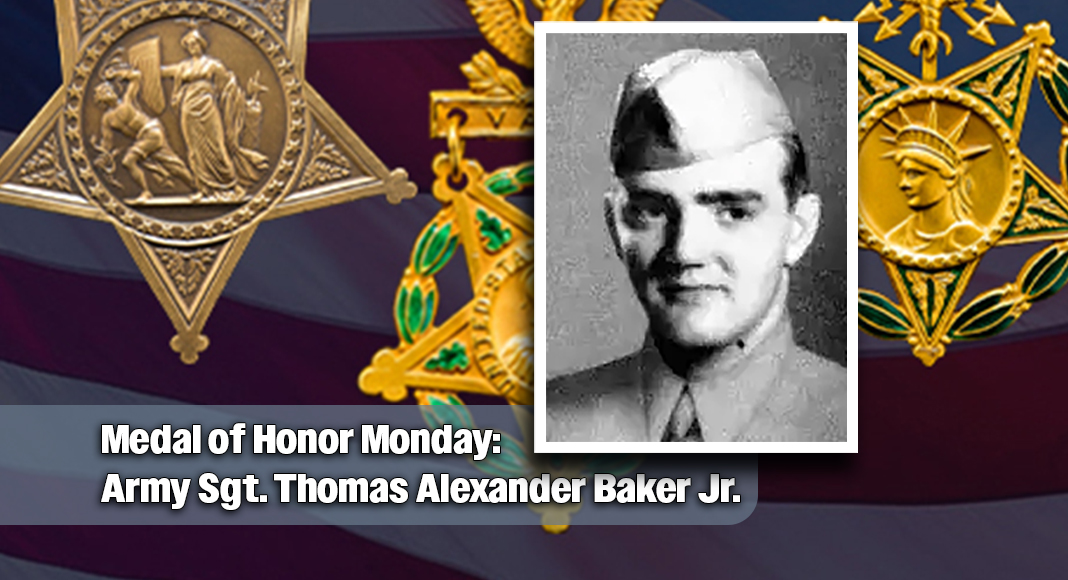
Army Pvt. Thomas Alexander Baker Jr. was an infantryman who served in the Pacific Theater during World War II. He was posthumously promoted to sergeant and awarded the Medal of Honor for his heroic actions during the Battle of Saipan.
Baker was born in Troy, New York, on July 25, 1916, to Thomas Alexander Baker Sr. and the former Emma Balser. He had an older sister, Marion, and a younger brother, Joseph.



After graduating high school, Baker enlisted in the Army Oct. 8, 1935, and was assigned to Company A, 105th Infantry Regiment, a New York Army National Guard unit. He separated from the Army Oct. 7, 1938, and rejoined the same unit Oct. 15, 1940.
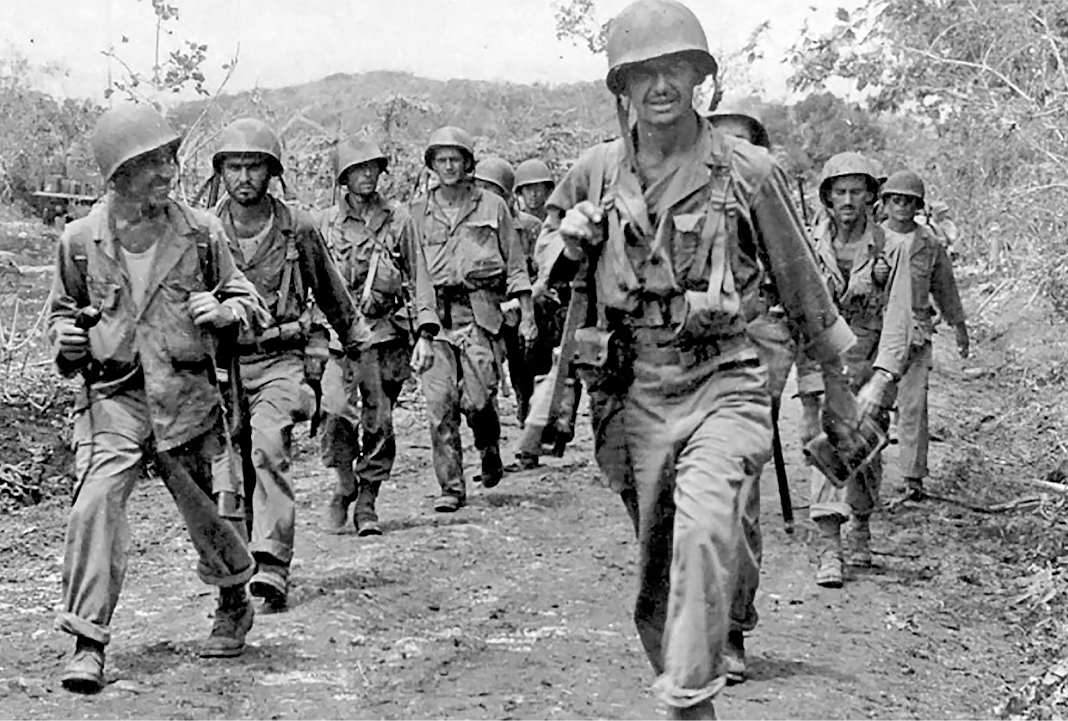
The 105th Infantry Regiment was federalized and inducted into active service Oct. 15, 1940, and assigned to the 27th Infantry Division through the Army’s wartime mobilization process.
Following the Japanese attack on Pearl Harbor and other bases on Oahu, Hawaii, Dec. 7, 1941, Baker and the 105th Infantry Regiment deployed to Hawaii in March 1942, marking the regiment’s move into combat training in the Pacific Theater.
The 27th Infantry Division left Hawaii, May 31, 1944, and landed on Saipan, June 17, 1944 — two days before the start of the Battle of Saipan — the regiment’s first combat action in the Pacific Theater.
After heavy fighting in the hilly, well-fortified southern part of the island, the 27th Infantry joined forces with the 2nd and 4th Marine divisions. Near the end of the battle, the 105th Infantry was attacked by the war’s largest banzai charge, a large-scale, mass infantry assault tactic used by the Japanese soldiers. Baker’s Medal of Honor citation states that his company was held up from advancing by automatic-weapon and small-arms fire from strongly fortified enemy positions that commanded the view of the company. He voluntarily took a bazooka and dashed alone to within 100 yards of the enemy. Despite heavy small-arms fire, Baker eliminated the enemy positions, enabling his company to assault the ridge.
Some days later, while his company advanced across an open field, flanked by obstructions and places of concealment for the enemy, Baker again voluntarily took up a position in the rear to protect the company against surprise attacks and came upon two heavily fortified enemy pockets manned by two officers and 10 enlisted men that had been bypassed.
Despite being outnumbered, Baker attacked and killed them all without hesitation. About 500 yards farther, he discovered six more Japanese troops, who had concealed themselves behind friendly lines, and he killed all of them.
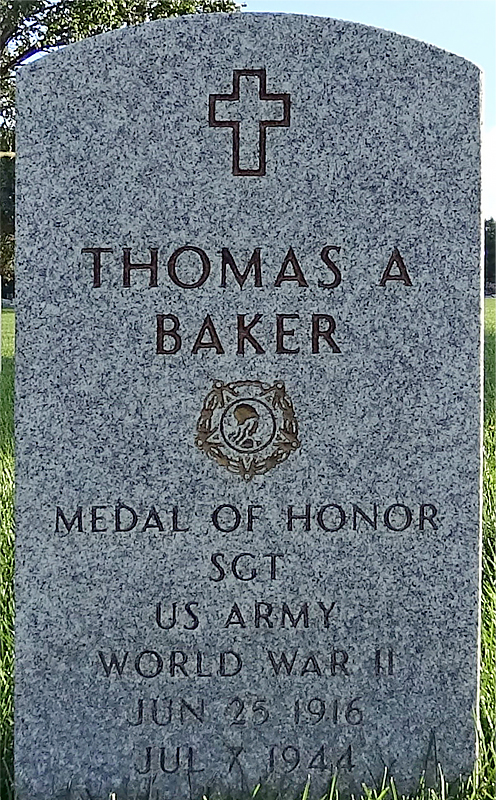
On July 7, 1944, Baker’s perimeter was attacked from three sides by an estimated 3,000 to 5,000 Japanese soldiers. During the early stages of this attack, he was seriously wounded but insisted on remaining and fired at the enemy at ranges sometimes as close as 5 yards, until the ammunition in his M-1 Garand rifle ran out.
Without ammunition and with his own weapon battered to uselessness from hand-to-hand combat, Baker was carried about 50 yards to the rear by a comrade, who was then himself wounded. At this point, Baker refused to be moved any farther, saying that he preferred to be left to die rather than risk the lives of any more of his friends.
A short time later, at his request, Baker was placed in a seated position against a small tree. Another comrade offered assistance, but he refused, insisting that he be left alone.
He was given an M-1911 pistol with eight rounds of ammunition. When last seen alive, Baker was propped against a tree, smoking a cigarette, pistol in hand, calmly facing the enemy.
When Baker’s body was recovered later, it was found in the same position — pistol empty — with eight Japanese soldiers lying dead before him.