

















Texas Border Business



By David Vergun, Pentagon News | US Department of War
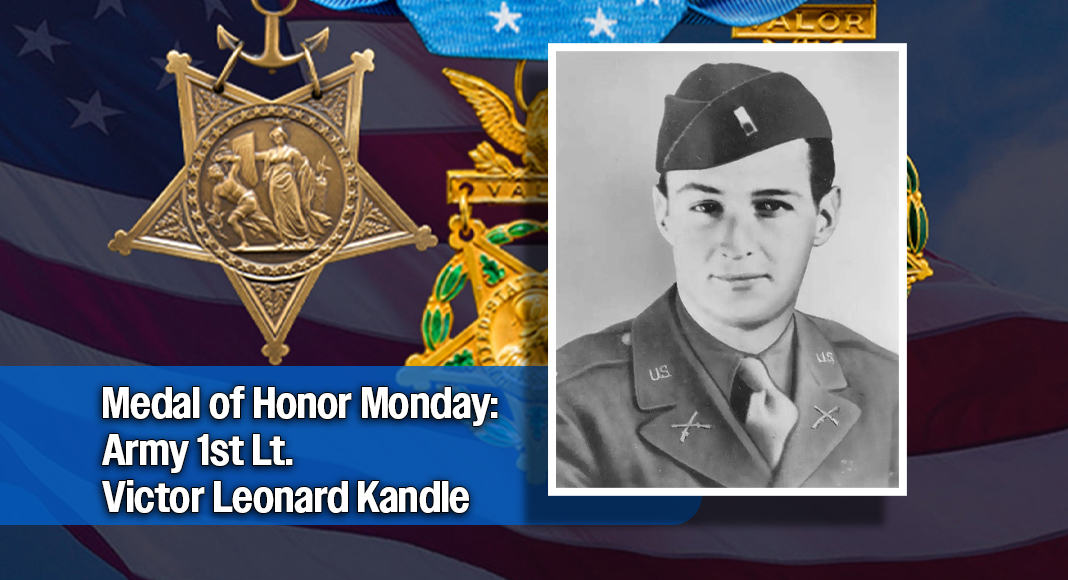
Army 1st Lt. Victor Leonard Kandle was an infantryman during World War II whose bravery, leadership and complete disregard for his own personal safety led to him posthumously receiving the Medal of Honor in 1945.
Kandle was born June 13, 1921, in Roy, Washington. His father, Clyde, was an electrician at a sawmill, and his mother was Ilma May Swanson. Kandle was the middle child between older brother Gene and younger sister Shirley.





In 1939, Kandle graduated from Puyallup High School in Puyallup, Washington, and shortly thereafter, the family moved to Redwood City, California. In September 1940, he enlisted in the Army, completed basic training at Fort Lewis, Washington, and was assigned to the 15th Infantry Regiment, 3rd Infantry Division. In January 1942, he married Marigene Lee, and their son Terry was born two years later.
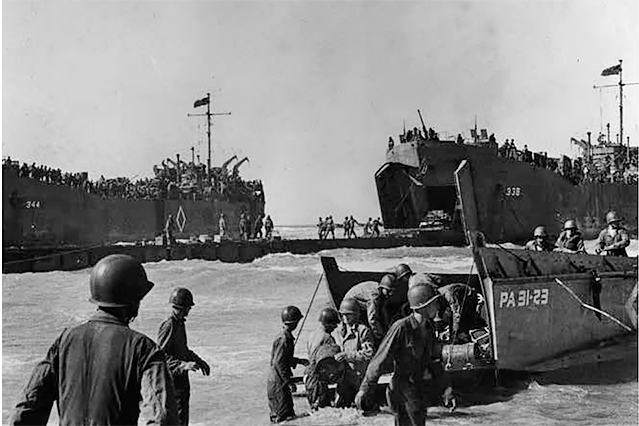
In spring 1942, his regiment moved to Fort Ord, California, for coastal defense duty and amphibious landing training, and on Oct. 24, 1942, it shipped out to Fedala in French Morocco for Operation Torch, landing there Nov. 8, 1942. It would be the first of Kandle’s many combat experiences, as the landings were met with resistance from Vichy French forces.
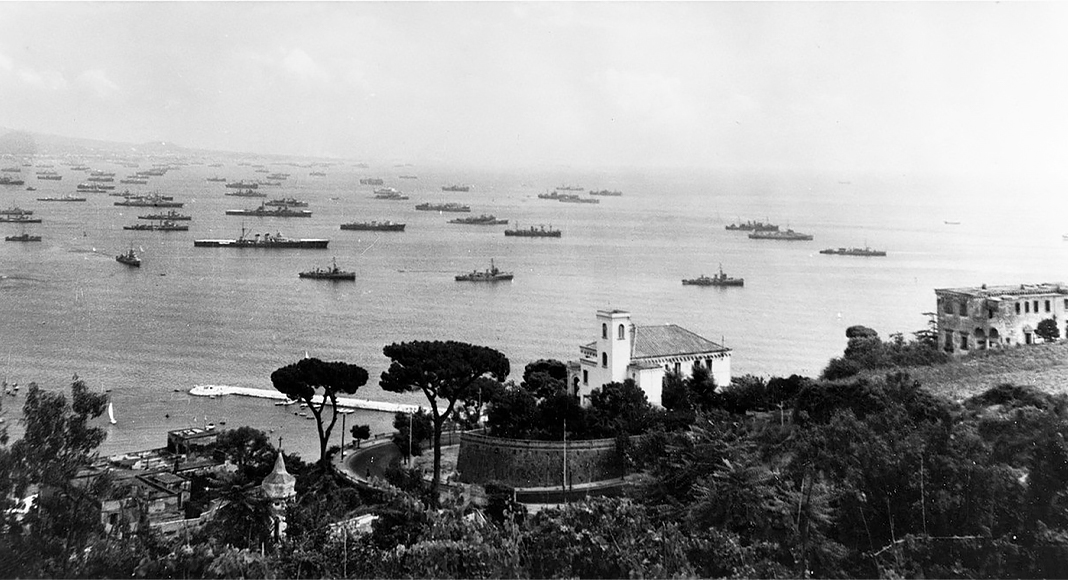
On July 10, 1943, the regiment landed in Sicily as part of Operation Husky, and in September, it invaded the Italian mainland after landing at Salerno and pushing north. During subsequent fighting, then-Army Staff Sgt. Kandle distinguished himself with his leadership and received a battlefield commission to second lieutenant in December 1943. He was again promoted after continuing to show bravery and strong leadership, earning the silver bars of first lieutenant the following May.
On Aug. 15, 1944, the regiment landed on the beaches of the French Riviera, as part of Operation Dragoon, and the soldiers fought their way through the Vosges Mountains in northeastern France.
At around noon Oct. 9, 1944, Kandle had already captured five enemy prisoners and was serving as a platoon leader leading a 16-man reconnaissance patrol into enemy territory over mountainous terrain near La Forge, France.
He engaged in a duel at point-blank range with a German officer, killing him.
His Medal of Honor citation states that the battalion had been held up for two days by heavy enemy resistance. To break the stalemate, Kandle rushed forward several yards ahead of his assault elements and fought valiantly to force the Germans to surrender.
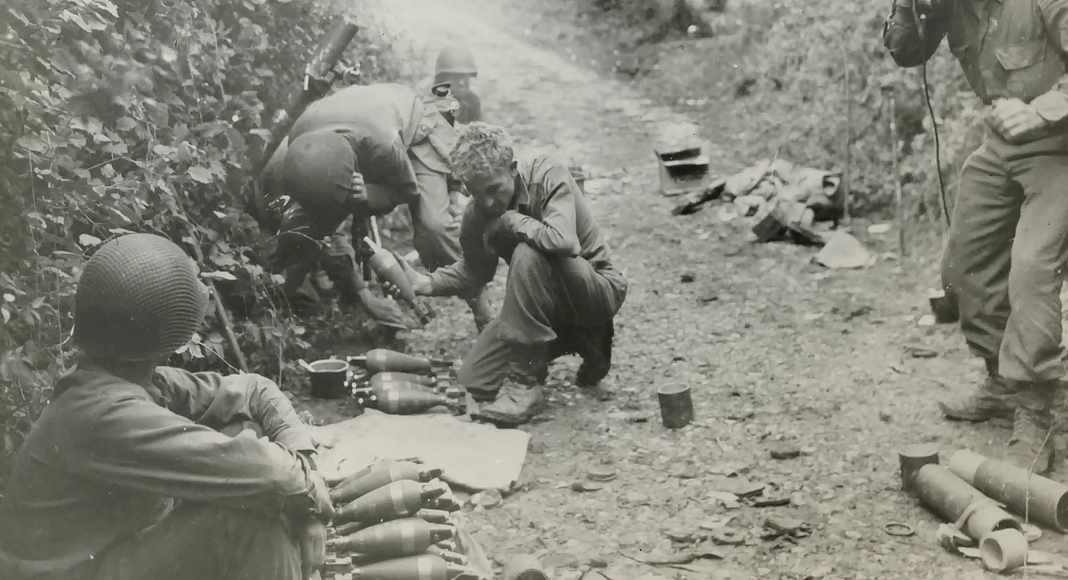
Harassed by machine-gun fire from a position which he had bypassed in the dense fog, Kandle moved to within 15 yards of the enemy, killed a German machine gunner and led his men in the destruction of another machine-gun crew and its rifle security elements.
Finally, he led his small force against a fortified house held by two German officers and 30 enlisted men. After establishing a base of fire, Kandle again rushed forward alone through an open clearing in full view of the enemy, smashed through a barricaded door, and forced all 32 Germans to surrender.
His intrepidity and bold leadership resulted in the capture or killing of three enemy officers and 54 enlisted men, the destruction of three enemy strongpoints and the seizure of enemy positions, which had halted the battalion’s attack.
In the weeks that followed, the 3rd Infantry Division continued to face heavy enemy resistance in the mountainous terrain and the December subzero temperatures. While fighting in the Colmar Pocket of the Alsace region of France, Kandle was killed Dec. 31, 1944, while leading his platoon against a German attack.
Kandle is buried in Epinal American Cemetery and Memorial in Epinal, France, where thousands of his comrades are also buried.
Army Maj. Gen. Henry C. Pratt, commander of then-Western Defense Command, presented the Medal of Honor to Marigene Kandle during a ceremony at Presidio of San Francisco, May 11, 1945.
Kandle Pool in Tacoma, Washington, is named for him, and in 2019, Puyallup High School dedicated a memorial to the 1939 graduate; his son Terry Kandle and grandson Victor attended the ceremony.
The Army Reserve Center in Tacoma, Washington, was named for him, and after its closure, Terry Kandle retrieved the 60-pound bronze plaque and worked with his father’s hometown to find it a new home. In 2024, the lobby of Puyallup City Hall was dedicated to Kandle.