
















Texas Border Business




By SADDIE SMITH for VITAL RECORD
BRYAN-COLLEGE STATION, Texas — The return of the New World screwworm to the United States after a 44-year absence has renewed concerns about its impact on both livestock and people. The U.S. Department of Agriculture says the flesh-eating parasite has spread north from Central America, prompting renewed monitoring and public education.
Texas A&M Health experts say the parasite primarily threatens livestock but can also infest humans if flies lay eggs in open wounds.



Loni Taylor, PhD, DVM, MPH, a veterinary epidemiologist at the Texas A&M School of Public Health, said many clinicians have never encountered a human case because the pest was eradicated decades ago.
“Many clinicians…have never encountered a human case,” Taylor said. “That geographic expansion means we need to educate both patients with chronic wounds and healthcare providers.”
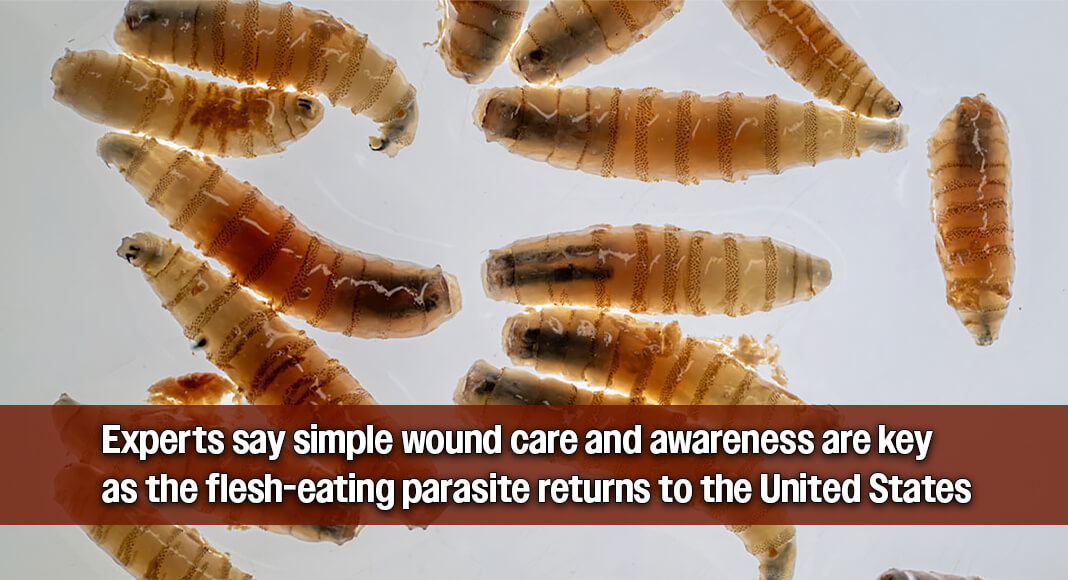
Despite its name, the New World screwworm is not a worm but the larval stage of a parasitic blow fly. Unlike common blow flies, the larvae feed on living tissue after adult flies deposit eggs in open wounds.
Experts emphasize that people cannot become infected by eating meat. Screwworms are external parasites that require a living host with an open wound. Federal meat inspection programs prevent infected animals from entering the food supply.
People at greatest risk include agricultural workers, veterinarians, individuals with chronic wounds such as diabetic ulcers, and people with limited access to medical care. Even a small cut, scratch or insect bite can provide an entry point for the fly.
“You can have a small lesion that becomes infested just as easily as a larger, deeper one,” said Anabel Rodriguez, PhD, MPH, an occupational epidemiologist at Texas A&M.
Rodriguez urged workers to clean and cover even minor injuries immediately instead of waiting until the end of the workday.
“I’ve seen this over and over in the field,” she said. “Taking three minutes to pause, wash it out, clean it up and tape it over with a bandage or glove keeps you safe.”
Experts recommend wearing long sleeves, jeans, boots and other protective clothing outdoors and keeping all wounds clean and covered until fully healed.
Warning signs of infestation include severe pain, wounds that fail to heal, foul-smelling discharge and a sensation of movement beneath the skin. Moriya Tsuji, MD, PhD, said the larvae often burrow beneath the surface, making infestations difficult to detect early.
Anyone who suspects a screwworm infestation should seek medical care immediately. Health experts advise against attempting to remove larvae at home because proper treatment and reporting are necessary. Larvae should be preserved for identification by health authorities.
The USDA and Texas Animal Health Commission continue surveillance and control efforts, including sterile fly releases, while researchers develop rapid diagnostic tools.
Taylor, Rodriguez and Tsuji said the best protection remains simple: practice good wound hygiene, cover injuries promptly, seek medical attention for suspicious wounds and stay informed about areas where the screwworm has been detected. Their message is that awareness and prevention—not panic—are the most effective response.