Legislation has been introduced in the U.S. Senate to eliminate preferential airport security treatment for Members of Congress and require them to undergo the same screening processes as all other airline passengers. Image for illustration purposes
Texas Border Business
Texas Border Business
WASHINGTON – Legislation has been introduced in the U.S. Senate to eliminate preferential airport security treatment for Members of Congress and require them to undergo the same screening processes as all other airline passengers.
The measure, introduced by U.S. Senator John Cornyn, would prohibit the use of federal funds to provide lawmakers with expedited or priority access at Transportation Security Administration checkpoints. It also seeks to ensure that elected officials are subject to the same rules and procedures applied to the general public.
Supporters of the bill argue that current practices allowing Members of Congress to bypass standard screening or receive expedited access create inequities for travelers. The proposal emphasizes that elected officials should not receive special accommodations based solely on their status.
Historically, some lawmakers have been granted expedited screening and, in certain cases, “courtesy escorts” through airport terminals provided by the Transportation Security Administration or airport law enforcement. These practices have faced increased scrutiny, particularly during periods of federal government strain, including partial shutdowns and staffing shortages that have led to longer wait times for the public.
The legislation would require Members of Congress to proceed through standard TSA screening lines while still allowing participation in publicly available programs such as TSA PreCheck and other trusted traveler initiatives. It also preserves TSA’s authority to implement risk-based security measures that are accessible to all eligible travelers.
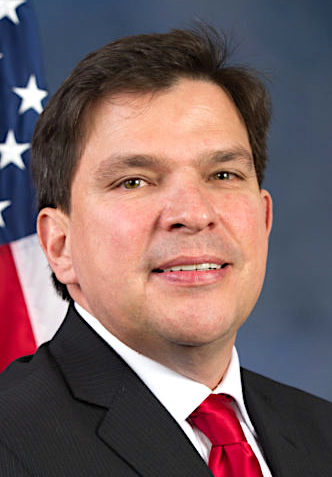
U.S. Representative Vicente Gonzalez introduced new legislation aimed at prohibiting federal immigration officers from conducting searches of private property without a judicial warrant. Image for illustration purposes
Texas Border Business
Texas Border Business
WASHINGTON, D.C. — U.S. Representative Vicente Gonzalez introduced new legislation aimed at prohibiting federal immigration officers from conducting searches of private property without a judicial warrant.
The bill, titled the “Say No to Warrantless Searches Act,” is intended to reinforce Fourth Amendment protections against unreasonable searches and seizures. According to Gonzalez, recent immigration enforcement practices in regions such as South Texas and Minnesota have involved federal officers entering homes using administrative warrants or, in some cases, without any signed judicial authorization.
Gonzalez stated that such practices raise constitutional concerns and could establish broader precedents affecting all U.S. residents. He emphasized that the legislation seeks to ensure that federal agencies cannot bypass judicial oversight when conducting enforcement operations inside private residences.
The issue has drawn attention following a recent lawsuit filed by a family in Donna, Texas, against the U.S. Department of Homeland Security and U.S. Immigration and Customs Enforcement. The family alleges that federal officers entered their property without proper authorization and detained two individuals who were in the process of obtaining lawful immigration status.
Under the proposed legislation, federal immigration authorities would be explicitly required to obtain a judicial warrant before entering private property. While the Fourth Amendment already provides protections against unreasonable searches, supporters of the bill argue that current enforcement practices rely on administrative interpretations and court precedents, rather than clear statutory requirements.
The proposal follows reports, including an internal memorandum from immigration authorities, indicating that existing policies may allow officers to conduct home entries without judicial warrants under certain circumstances.
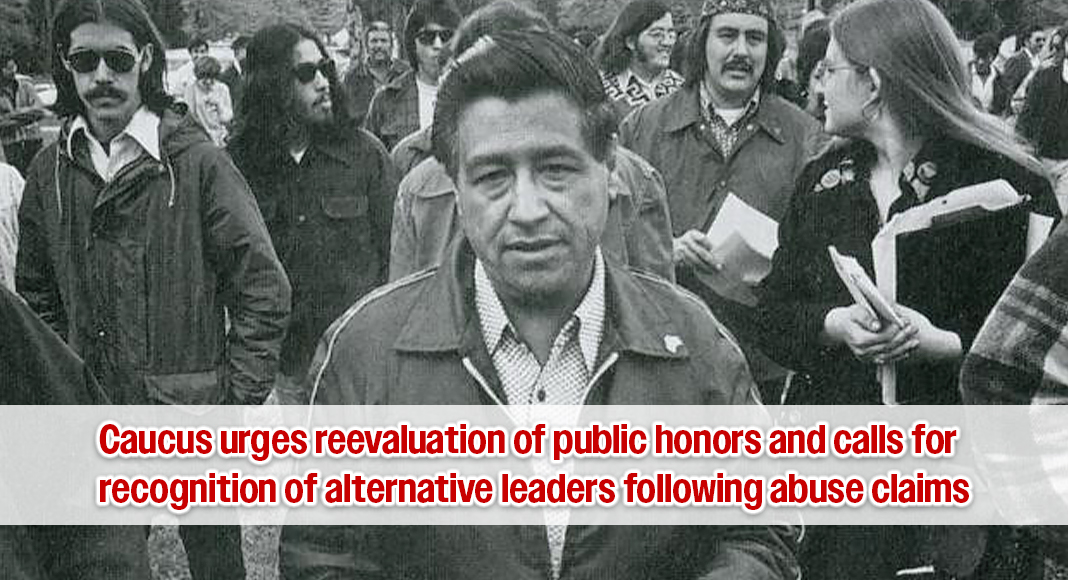
The Mexican American Legislative Caucus (MALC) Executive Committee released a statement addressing a recent New York Times investigation outlining allegations of abuse involving César Chávez. Image: Movimiento, CC BY-SA 3.0 <https://creativecommons.org/licenses/by-sa/3.0>, via Wikimedia Commons
Texas Border Business
Texas Border Business
AUSTIN, Texas – The Mexican American Legislative Caucus (MALC) Executive Committee released a statement addressing a recent New York Times investigation outlining allegations of abuse involving César Chávez.
In the statement, MALC expressed concern for those who have come forward, including Dolores Huerta, and emphasized the importance of accountability regardless of an individual’s historical legacy. The caucus noted that speaking out about alleged misconduct, particularly after many years, requires significant courage.
MALC stated its support for a full and transparent examination of the allegations and indicated that public recognition should align with shared values. As part of this position, the caucus announced it is prepared to pursue efforts to remove the César Chávez state holiday designation and consider alternatives that recognize other leaders, including Dolores Huerta.
South Texas College Art faculty member Leila Hernandez harnesses college events for real-world connections and learning experiences for her students, an initiative that has earned her a Distinguished Teaching and Learning Award for academic year 2025-2026. STC image
Texas Border Business
By Amanda Sotelo
South Texas College Art faculty member Leila Hernandez harnesses college events for real-world connections and learning experiences for her students, an initiative that has earned her a Distinguished Teaching and Learning Award for academic year 2025-2026.
Teaching Digital Media, Photography, Drawing and Design, Hernandez calls herself a collaborator, working closely with the Art department, Theatre and Dance, Music and many others to provide hands-on training for her students.
“My entire career is invested in students having the best learning experience at STC,” said Hernandez, who has been at STC since 2003. “I like getting the students out of the classroom to garner inspiration from the world around them. The work they produce from these collaborations and adventures all end up being portfolio-ready, and each student workforce-ready.”
Most recently her design students worked closely with the Theatre department to produce posters and programs for the recent production of the “Odyssey.”
“My students have done everything from design to photography work for special events such as Cosmetology’s fashion shows and Nursing pinning ceremonies,” she said. “I’ve even taken students to downtown McAllen so they can capture a culture and community. Everyone and everything has a story. I teach our students how to capture that in their work. This helps them become better artists.”
Luis Corpus said the work Hernandez does with her students is noticeable and commended.
“Leila seeks opportunities for her students to engage in assignments that extend beyond the classroom,” Corpus said. “This type of collaborative work requires a great deal of commitment, time and planning, but is the sort of thing that will bridge classroom learning with real-world experience. The best part is the joy of accomplishment when her students can view their collaborative work on display, and they are met with gratitude from the receiving departments. She really does work hard for her students.”
After a visit to Penland School of Craft in North Carolina, thanks to STC’s continual encouragement of professional development, Hernandez learned and reviewed new techniques that she could use in her classroom.
From lessons in Joss paper, a traditional Asian papercraft, to new painting and design techniques, Hernandez created an exhibit at STC that embedded this training with family, tradition and lessons for her students.
The exhibit, titled “The Lessons of The Empress,” was inspired by her late mother, who passed in 2023. The exhibit reflected her mother’s life as a socialite, wife, mother, sister, aunt, friend. It celebrated the matriarchy and meditation. All art pieces from photography, origami, paintings and embroidery, symbolized a moment in her mother’s life and followed a lineage of birth to death.
“I am who I am because of my mother. She always said I’d be a famous artist…while I’m not famous, I am an artist and I’m teaching the next generation,” she said. “The entire exhibit was a life lesson of compassion and patience. A message I want to convey to my students as artists.”
As an interactive exhibit for her students, Hernandez embedded lessons and questions her students followed and completed to better understand art through this exhibit.
Yulianna Lopez, a Digital Media Design student at STC, has enjoyed having Hernandez as an instructor, calling her an excellent teacher who goes above and beyond for her students.
“She has taken us downtown and to other parts of our community to capture our culture and life in our art,” said the 20-year-old Peñitas native. “She always works to inspire us. She’s kind, modest, hardworking and overall, a great instructor who deserves this award. She always ensures that as students, we are well taken care of and ready for the real world.”
Hernandez said although she is honored to have received a Distinguished Teaching and Learning Award, true success for her comes from seeing her students, like Lopez, fulfill their passions and succeed.
“Art and teaching – that’s who I am,” she said. “While I’m grateful for this award and for everything it means, thank you to those who nominated me, I don’t do the work to get recognized. I do the work so that we create a better future for our students. I do the work so students can make their dreams come true. To me, that’s success and the most rewarding part of my career.”
Just over a year ago, we saw men claiming victories in women’s athletics. Colleges and universities were focused more on diversity, equity, and inclusion than ensuring graduates were prepared for success in life after graduation. Image for illustration purposes
Texas Border Business
The Trump Administration is changing the culture in higher education.
Just over a year ago, we saw men claiming victories in women’s athletics. Colleges and universities were focused more on diversity, equity, and inclusion than ensuring graduates were prepared for success in life after graduation. Institutions required DEI statements from faculty and held segregated affinity graduation ceremonies for students. Academic standards fell, admissions were skewed to favor race over merit, and students graduated with a massive pile of debt and degrees that led to no job prospects.
Today, institutions of higher education are changing the game because President Trump is bringing back America’s Golden Age — shifting the culture and restoring our nation’s institutions to greatness.
Keeping Men Out of Women’s Sports: Thanks to the Trump Administration, collegiate female athletes can once again compete on an even playing field and share locker rooms based on biological sex.
Harvard removed its prior transgender inclusion policy from the university handbook after the NCAA updated its policy.
Trinity University publicly updated its transgender participation policy for intercollegiate athletics in March of 2025, restricting competition in women’s sports to student-athletes assigned female at birth.
The University of Pennsylvania and Wagner College both entered into Resolution Agreements to comply with Title IX. The institutions issued apologies and returned stolen victories to the rightful female winners.
Read more about victories for higher education here.
The amount of natural gas produced and marketed in the United States reached a record high in 2025, up by 5.3 billion cubic feet per day (Bcf/d) to average 118.5 Bcf/d, according to data from the Energy Information Administration (EIA). Image for illustration purposes
Texas Border Business
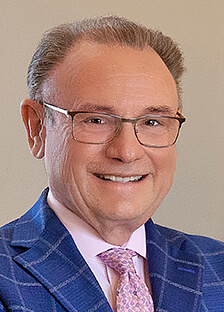
Dr. M. Ray Perryman, President and Chief Executive Officer of The Perryman Group. Courtesy Image
The amount of natural gas produced and marketed in the United States reached a record high in 2025, up by 5.3 billion cubic feet per day (Bcf/d) to average 118.5 Bcf/d, according to data from the Energy Information Administration (EIA). About two thirds of production occurs in three regions—Appalachia, the Permian Basin, and the Haynesville Shale. These three areas accounted for 81% of the growth last year.
The Appalachia region in the northeastern US produced 31%, followed by the Permian Basin with 23%. Production growth in Appalachia had been slowing due to pipeline constraints, but the situation is improving.
The Permian Basin experienced the largest gain (up 11%), about half of overall gains last year. Most of the growth in the region is due to associated gas produced along with oil, and during much of 2025 crude prices were high enough to support significant activity.
Production is also expanding in the Haynesville region of Louisiana and Texas. Wells are more expensive to develop in that area, but proximity to liquefied natural gas (LNG) export terminals reduces transportation costs.
Virtually all LNG facilities are located along the Gulf Coast of Texas and Louisiana. Exports have grown sharply over the past decade, from near zero in 2016 to 569.3 billion cubic feet for the month of December 2025. The US is now the largest source of LNG shipments, and current construction could double capacity over the next few years. It is noteworthy that, even with this growth, natural gas prices have not risen substantially, and, in fact, hit a low not seen in decades in March 2024.
Pipelines from the Permian Basin connect to the Gulf Coast, and the addition of new lines in recent years has somewhat reduced an extreme shortage of takeaway capacity. What was once a major problem, having too much associated gas stuck in West Texas (as proven by extremely low and even negative prices at times at the nearby Waha hub), has become a valuable resource.
The rapid growth in US LNG exports is beneficial from a variety of perspectives. It provides access to additional markets for US production, supporting development of resources and infrastructure. It has also been crucial to energy security in Europe and Asia. For example, since Russia invaded Ukraine, US LNG has been crucial to filling the gap in Europe and preventing a major supply crisis. The rapid expansion of energy-intensive AI data centers is also spurring demand for domestic use to generate electricity.
Development of the US natural gas market and LNG capacity stabilizes critical access, thus reducing supply shocks and price escalation during major geopolitical conflicts. As recent events have dramatically demonstrated, that can be very good thing! Stay safe!
_______________________
Dr. M. Ray Perryman is President and Chief Executive Officer of The Perryman Group (www.perrymangroup.com), which has served the needs of over 3,000 clients over the past four decades.
Mexican American Legislative Caucus Chairman State Representative Ramon Romero, Jr. and Texas House Democratic Caucus Chairman State Representative Gene Wu sent a letter to U.S. Representative Jamie Raskin, Ranking Member of the House Judiciary Committee, expressing opposition to a congressional hearing focused on revisiting Plyler v. Doe, the 1982 Supreme Court decision that guarantees children access to public education regardless of immigration status. Image for illustration purposes
Texas Border Business
State Representative Ramon Romero, Jr. Image: house.texas.gov
AUSTIN, Texas — Mexican American Legislative Caucus Chairman State Representative Ramon Romero, Jr. and Texas House Democratic Caucus Chairman State Representative Gene Wu sent a letter to U.S. Representative Jamie Raskin, Ranking Member of the House Judiciary Committee, expressing opposition to a congressional hearing focused on revisiting Plyler v. Doe, the 1982 Supreme Court decision that guarantees children access to public education regardless of immigration status.
State Representative Gene Wu. Image: house.texas.gov
The hearing, scheduled for March 18 by the House Judiciary Subcommittee on the Constitution and Limited Government, is intended to examine the ruling, which originated in Texas.
In their letter, Romero and Wu state that Plyler v. Doe established that children cannot be denied access to public education based on immigration status. They argue that reconsidering the decision would not contribute to improvements in public education.
The lawmakers also note that questioning the ruling through a congressional hearing could send a negative signal to students, educators, and families regarding access to public schooling.
U.S. Senator John Cornyn (R-TX) today led 11 of his Senate GOP colleagues in introducing the Federal Law Enforcement Officer Service Weapon Purchase Act, which would allow active and retired federal law enforcement officers in good standing to purchase retired service weapons and firearms. Image for illustration purposes
Texas Border Business
Senator John Cornyn
WASHINGTON – U.S. Senator John Cornyn (R-TX) today led 11 of his Senate GOP colleagues in introducing the Federal Law Enforcement Officer Service Weapon Purchase Act, which would allow active and retired federal law enforcement officers in good standing to purchase retired service weapons and firearms:
“There’s no reason the brave men and women in law enforcement who dedicate their lives to preserving public safety should not be able to purchase retired firearms,” said Sen. Cornyn. “This commonsense legislation would reduce unnecessary waste and save both taxpayers and federal agencies money by allowing officers to exercise their Second Amendment rights.”
“Millions of taxpayer dollars are spent each year destroying retired federal service firearms,” said Sen. Crapo. “This practice effectively means the government pays for the same firearm twice—first when it is purchased, and again when it is destroyed. Allowing federal officers in good standing to purchase their retired service weapons is a common-sense, cost saving measure.”
“I am committed to protecting the right to bear arms for individuals not only in Montana, but across our nation. I’m proud to work with Senator Cornyn on the Federal Law Enforcement Officer Service Weapon Purchase Act, which will ensure that retired firearms can be available for purchase, saving costs for both taxpayers and officers,” said Sen. Daines. “This is a commonsense initiative that recognizes the hard work of law enforcement members and protects constitutional rights for Americans.”
“This is a straightforward way to cut waste and respect our law enforcement officers,” said Sen. Lankford. “Instead of forcing agencies to destroy retired firearms at taxpayer expense, this bill allows officers in good standing to purchase the weapons they’ve used. It saves money and recognizes their service.”
“Our Law enforcement officers put their lives on the line every single day—the very least we can do is give them the opportunity to purchase the firearm they carried during their service,”said Sen. Lummis. “This commonsense legislation eliminates a costly and wasteful mandate to destroy usable weapons and creates a program that respects our officers and taxpayers.”
“Destroying a perfectly good firearm when a federal agency no longer needs it is a waste of taxpayer dollars,” said Sen. Risch. “Allowing law enforcement to purchase these firearms is fiscally responsible and plain commonsense.”
“The current cost-of-service weapons policy forces taxpayers to pay twice—once to purchase these weapons and again to destroy them. That’s wasteful and unnecessary,” said Sen. Budd. “I’m proud to partner with Senator Cornyn on a commonsense solution that puts an end to this double spending by allowing active and retired law enforcement officers, in good standing, to purchase retired weapons at salvage value to keep themselves and their families safe.”
“I can’t even begin to tell you how commonsense this bill is, and I applaud Senator Cornyn for introducing legislation that makes a real difference,” said Sen. Justice. “We did the same thing at the state level in West Virginia, and I wholeheartedly believe we should let our honorable law enforcement officers purchase and keep their duty weapons. Let’s stop wasting taxpayer dollars on destroying retired firearms. This bill is supported by every police group possible, and I am fully behind it as well.”
U.S. Senators Mike Crapo (R-ID), Steve Daines (R-MT), Lindsey Graham (R-SC), James Lankford (R-OK), Cynthis Lummis (R-WY), Jim Risch (R-ID), Roger Wicker (R-MS), Ted Budd (R-NC), Jim Justice (R-WV), Ted Cruz (R-TX), and Pete Ricketts (R-NE) are cosponsors of this legislation. Congressman Russell Fry (SC-07) introduced companion legislation, which passed the U.S. House of Representatives last year.
Background:
Under current federal regulations, a firearm must be destroyed once it is either retired from use or is no longer needed by an agency. This destruction process costs taxpayers millions of dollars a year. Sen. Cornyn’s legislation seeks to alleviate the burden facing taxpayers and give law enforcement the opportunity to recoup costs by allowing federal agencies to sell retired service weapons to federal law enforcement officers at fair-market value or a discounted price. Recovering this value can in turn offset the cost of new equipment and technology, fund training programs, and support other public safety needs. It also honors the Second Amendment rights of current and retired law enforcement officers by allowing them to purchase their firearms.
Specifically, the Federal Law Enforcement Officer Service Weapon Purchase Act would direct the Administrator of the General Services Administration to establish a program allowing active and retired federal law enforcement officers who are in good standing with their employing agency to purchase retired firearms within six months of the weapon’s retirement at salvage value. This simple and commonsense measure recognizes the service that law enforcement officers provide to our country, while also delivering cost savings that benefit both taxpayers and federal agencies.
This legislation is endorsed by the Association of State Criminal Investigative Agencies (ASCIA), Federal Law Enforcement Officers Association (FLEOA), Major Cities Chiefs Association (MCCA), Major County Sheriffs of America (MCSA), National Association of Police Organizations (NAPO), National Narcotics Officers’ Associations’ Coalition (NNOAC), and National Fraternal Order of Police (FOP).
TxDOT is not texting anyone about unpaid traffic tickets, toll violations, or other infractions. If you get one, it’s a scam. Don’t click on any links. Image for illustration purposes
Texas Border Business
TxDOT is not texting anyone about unpaid traffic tickets, toll violations, or other infractions. If you get one, it’s a scam. Don’t click on any links.
Our TxDOT office is receiving calls from the public asking if the emails and texts they are getting are legit. THEY ARE NOT.
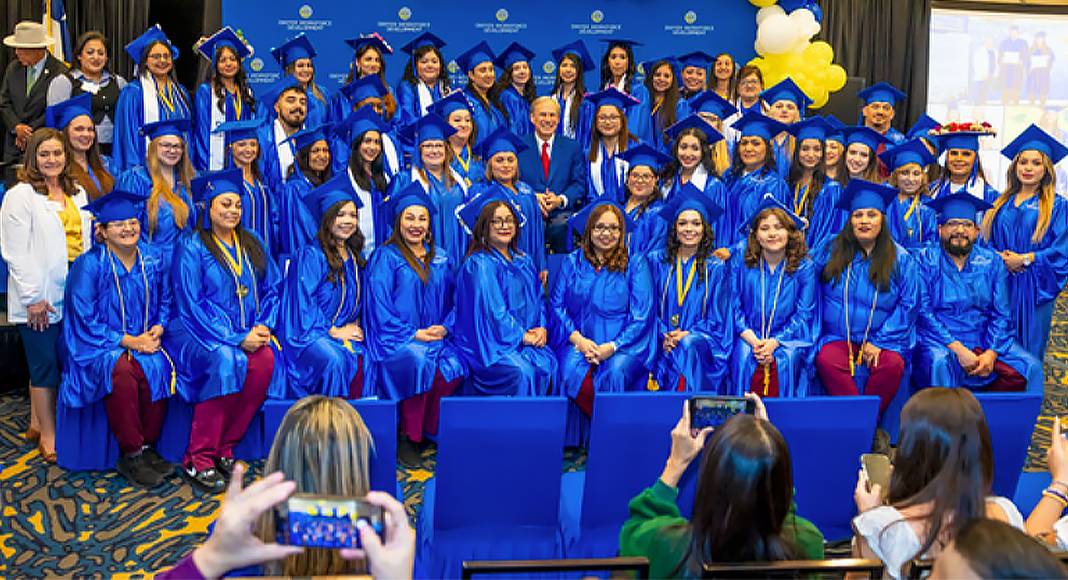
Greg Abbott on Tuesday recognized more than 50 graduates of Certified Nursing Assistant (CNA) and Certified Medication Aide (CMA) training programs, highlighting workforce development efforts to strengthen healthcare services in the Rio Grande Valley. Photo: Office of The Governor
Texas Border Business
Texas Border Business
McALLEN, Texas — Greg Abbott on Tuesday recognized more than 50 graduates of Certified Nursing Assistant (CNA) and Certified Medication Aide (CMA) training programs, highlighting workforce development efforts to strengthen healthcare services in the Rio Grande Valley.
“What you’re doing is more than just a job—you’re stepping into a calling, a noble calling to serve other people,” Abbott told graduates. “Through your grit and determination, you have seized control of your own life and charted a new path for your future. Congratulations on this remarkable achievement, and I wish you all the best in your careers.”
Governor Abbott with the graduates. Photo: Office of The Governor
The ceremony, held in McAllen, celebrated participants in a training initiative led by Dwyer Workforce Development, supported by a $375,000 grant from the Texas Workforce Commission’s Self-Sufficiency Fund, awarded in 2025.
More than 50 “Dwyer Scholars” completed certification programs designed to prepare them for in-demand healthcare roles, helping address workforce shortages in the region.
“Standing alongside Governor Abbott marks a pivotal moment for Dwyer Workforce Development in Texas,” said CEO Barb Clapp. “TWC’s investment underscores the critical role that innovative workforce development programs play in the future of Texas. We look forward to continuing to grow our impact throughout the state.”
The grant enables the expansion of tuition-free CNA and CMA training programs across the Rio Grande Valley, increasing access to stable healthcare careers while meeting regional demand for skilled workers.
Several state and local leaders attended the event, including Adam Hinojosa, Juan Hinojosa, and Terry Canales, as well as Dwyer Workforce Development founder Jack Dwyer and board member Veronica Gonzales.
State officials emphasized that programs like this not only help fill critical healthcare gaps but also create pathways to long-term economic mobility for residents across South Texas.