











Texas Border Business



Texas Border Business presents an exclusive six-part editorial series exploring Project Organic, an ambitious 71-acre mixed-use development planned for Harlingen’s Medical District, with an estimated $97 million in private construction investment. Based on an extensive exclusive interview with Orlando Campos, chief executive officer of the Harlingen Economic Development Corporation, and architectural information provided by Alamo Architects, the series examines the vision, planning, and economic opportunities behind this award-winning master plan.
Published daily for six consecutive days, the series will provide readers with a comprehensive understanding of the project’s infrastructure financing, business opportunities, job creation, residential development, architectural design, and anticipated construction timeline. Its purpose is to inform residents, entrepreneurs, investors, and business leaders throughout the Rio Grande Valley about Project Organic and its potential contribution to Harlingen’s long-term economic growth. Texas Border Business
By Roberto Hugo González / Texas Border Business



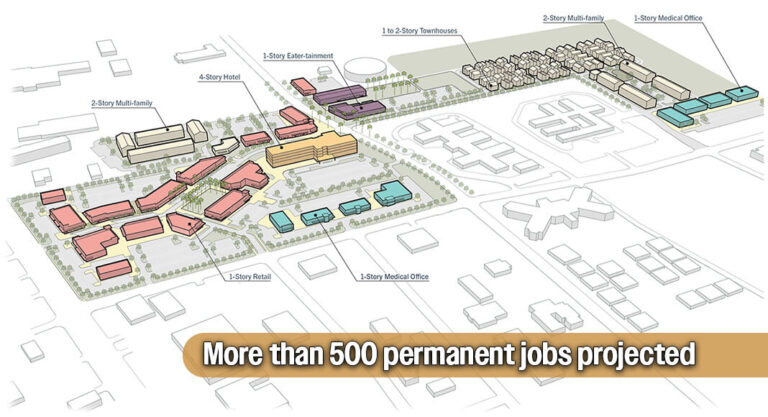
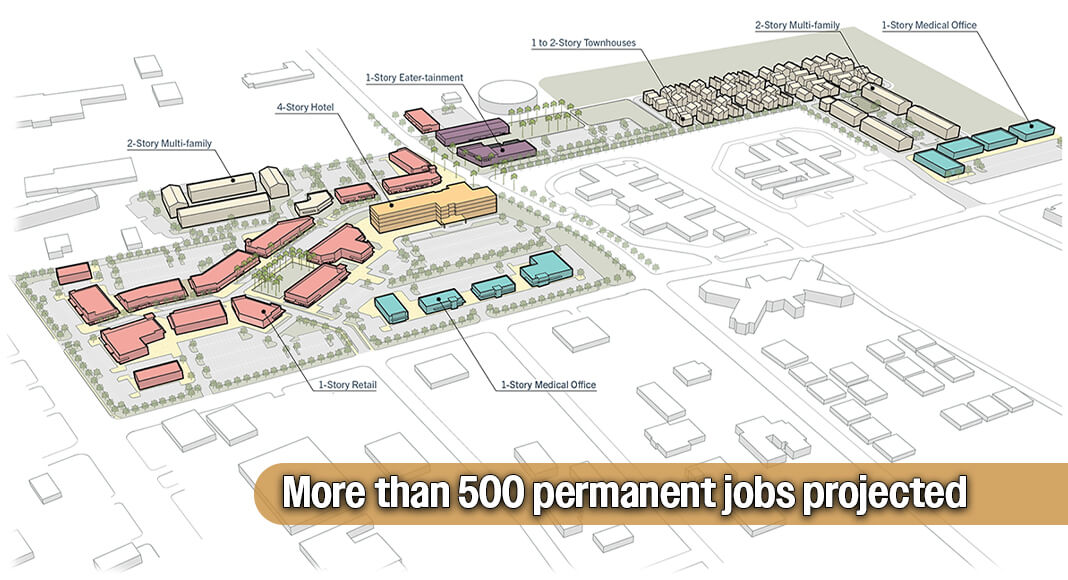
HARLINGEN, Texas — Project Organic, a planned mixed-use development in Harlingen’s Medical District, could accommodate more than 300,000 square feet of new commercial space and generate more than 500 permanent jobs, according to Orlando Campos, chief executive officer of the Harlingen Economic Development Corporation (HEDC).
In an exclusive interview with Texas Border Business, Campos discussed business recruitment efforts, ongoing negotiations with prospective investors and the arrival of the development’s first anchor tenant, Garver Engineering.

“We had the first anchor tenant already move in. Garver Engineering just opened a new 25,000 SF office building that will house over 100 well-paid employees,” Campos said.
Garver’s $5 million office investment includes a commitment to hire 50 additional employees over five years. According to Campos, the company already has 55 employees working at the facility, which was constructed to accommodate more than 100 workers.
The engineering firm’s presence provides an employment base that could help support future commercial establishments within the development.
“Garver’s new office at the site provides a growing daytime population essential to sustaining the development’s retail and residential components,” Campos said.
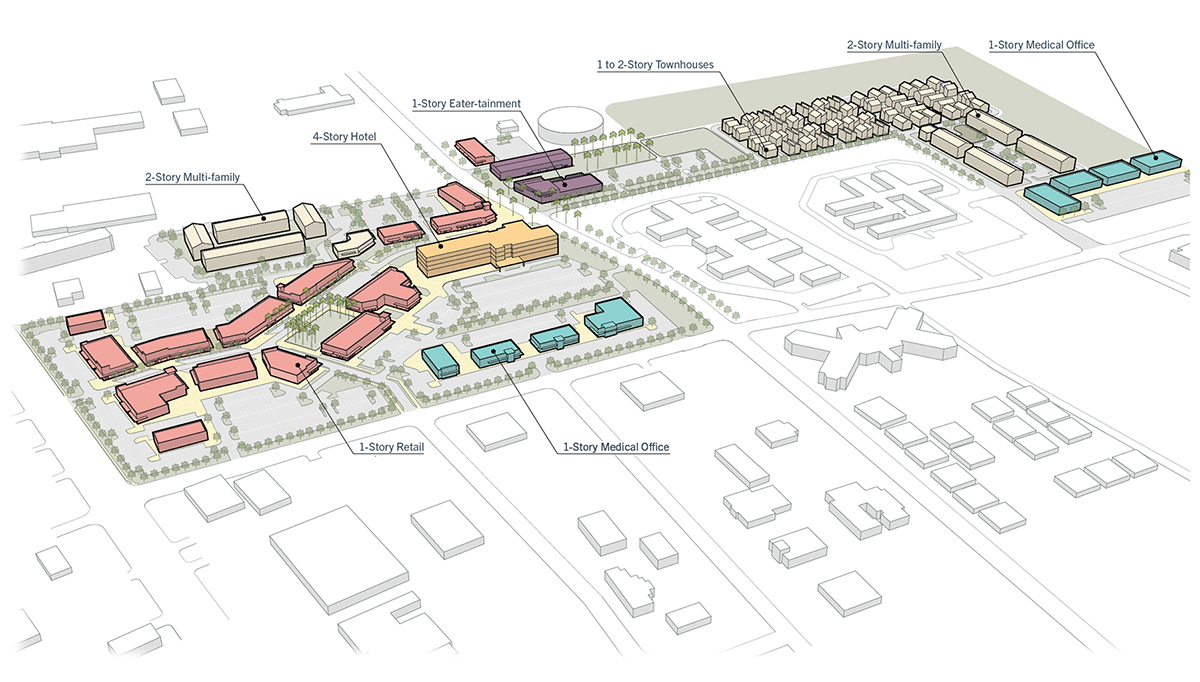
The HEDC is also working with another prospective office user planning a 25,000- to 30,000-square-foot building that could accommodate more than 100 additional employees. Discussions are underway with another investor interested in developing a sports and healthcare facility.
Campos did not identify those prospective investors in the interview.
Private property owners are actively marketing their sites to restaurant operators and retailers. Additionally, one developer is negotiating with a prospective hotel developer.
“We anticipate the development will attract diverse restaurants and is ideal for a new high-class restaurant,” Campos said.
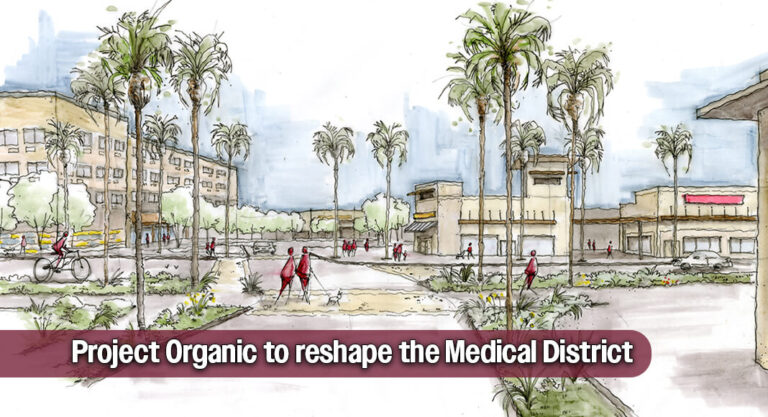
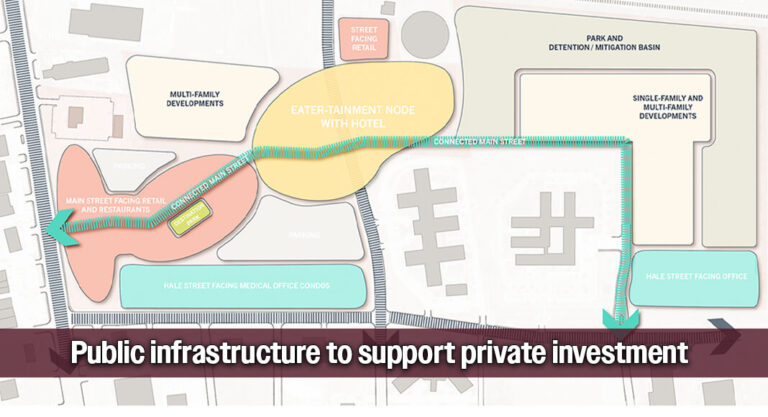
Alamo Architects’ commercial strategy incorporates dining, shopping, and entertainment establishments organized around public gathering spaces. The master plan proposes an entertainment and dining destination along Camelot, combining restaurants with recreational activities and social experiences.
According to the architects, a hotel near this entertainment destination would help generate customer traffic for surrounding restaurants and retail establishments.
The development is expected to create jobs across several industries, from infrastructure construction to professional services.
“Construction jobs will range from infrastructure work to other construction roles,” Campos said. “The development will easily create more than 500 new permanent jobs, including retail, medical, and engineering roles.”
The projected commercial expansion could also increase municipal revenue through property taxes, retail sales taxes, and hotel occupancy taxes.
Campos said the development’s commercial capacity would considerably increase property tax revenue for Harlingen, while the arrival of retailers and a hotel would generate additional sales and hotel occupancy tax collections. Specific revenue projections were not provided in the interview.
For the HEDC, attracting employers that provide well-paying positions is an important component of its business recruitment strategy. Campos pointed to Garver’s expansion as an example of how professional employment can support surrounding commercial activity.
“These jobs will provide retailers with customers that are within walking distance,” Campos said. “Attracting a company such as Garver with good-paying jobs was important.”