

















Texas Border Business



By Roberto Hugo González / Texas Border Business
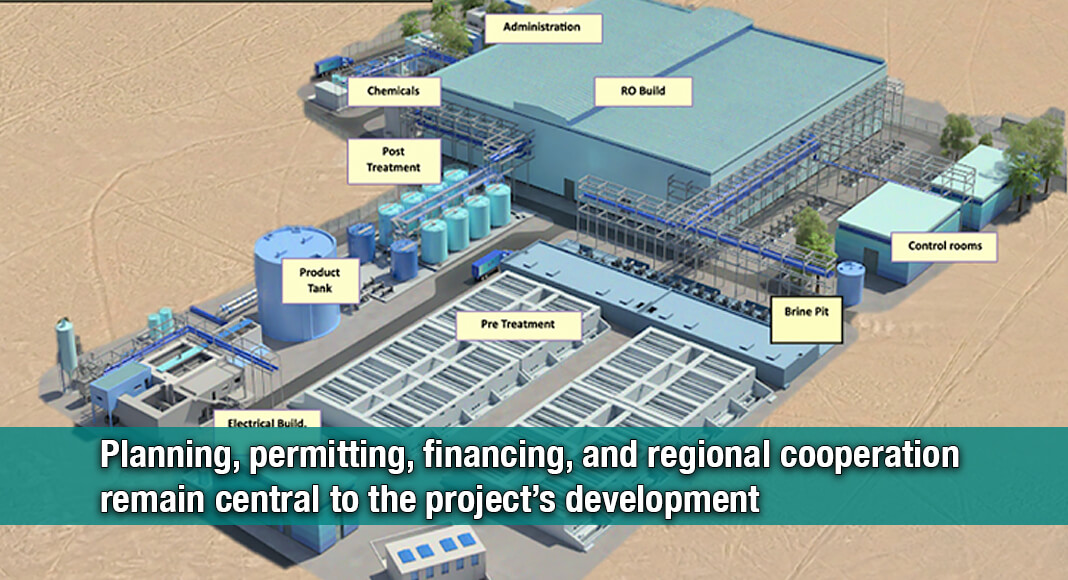
McALLEN, Texas — Leaders of the proposed RGV Desal marine desalination project said environmental permitting, financing, infrastructure, and regional cooperation will determine whether the Rio Grande Valley can develop a large-scale seawater desalination facility.
Speaking at a press conference at Embassy Suites in McAllen, Doug Allison, founder of U.S. Desalination and managing partner of RGV Desal, and Albert Escobedo, South Texas Government Affairs Director for RGV Desal, outlined the project’s progress and the work still required before construction can begin.





Escobedo said the initiative has expanded beyond its original scope.
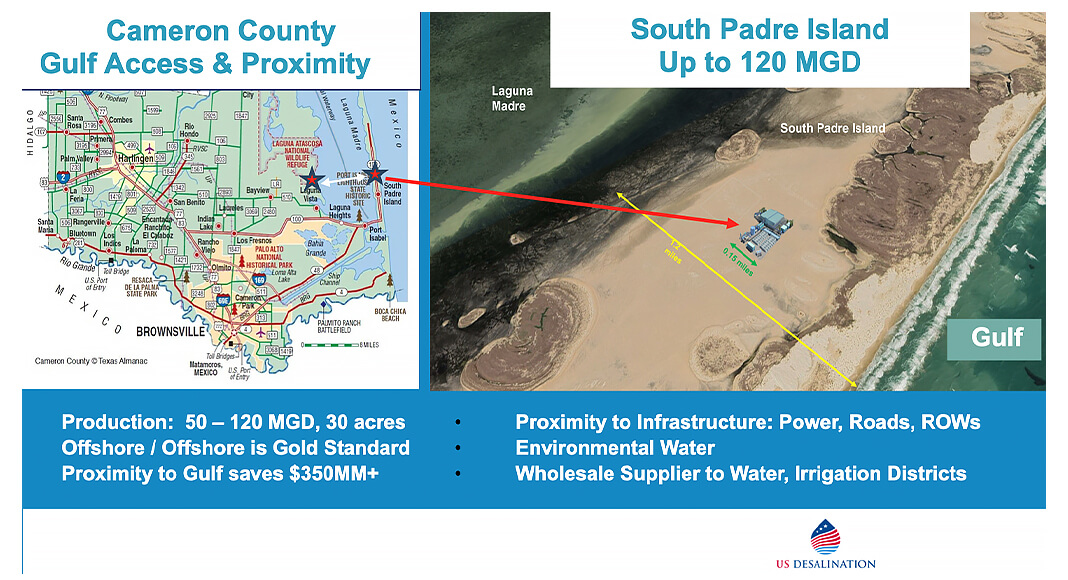
“Our project was a small project that started in Brownsville and has now become a regional project,” Escobedo said. “RGV Desal is here to provide water solutions to the Valley for our drought.”

Allison said environmental permitting has been one of the project’s most significant hurdles. He noted that U.S. Desalination obtained the first permits for a large-scale seawater desalination project in Texas after extensive review by regulators and outside experts.
“We got thoroughly vetted,” Allison said. He added that marine biologists, ecologists, engineers, and regulatory specialists participated throughout the permitting process.
Addressing concerns about marine life, Allison said public misconceptions have contributed to opposition. He presented underwater video from an operating desalination plant in Australia to demonstrate how modern discharge systems function.
“I don’t criticize people for being concerned,” Allison said. “But I do want to say that it’s incredibly important when you hear questions out in the community.”
According to Allison, reverse osmosis technology and offshore high-velocity diffusers allow discharged water to return rapidly to natural salinity levels, and scientific modeling indicates properly designed systems can operate without harming marine ecosystems.
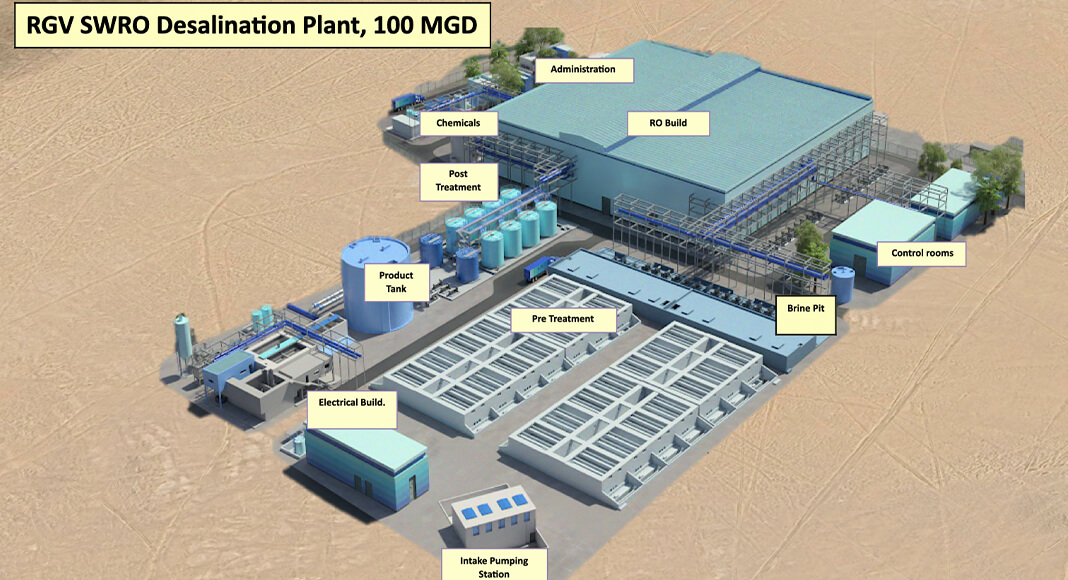
Project cost remains another major consideration. Allison estimated the initial 50-million-gallon-per-day facility would cost about $1 billion. He said the desalination plant itself would be privately financed.
“We’re not looking for any state money,” Allison said.
Questions from attendees focused on the cost of transporting water from South Padre Island to inland communities. Allison said engineering estimates for pipeline construction are still being developed. Responding to estimates of $4 million to $5 million per mile, he said, “I would have probably told you two or three million a mile. I haven’t seen that specific estimate, but I’ve heard numbers like that.”
He said several pipeline routes are under evaluation and that the company has been coordinating with TxDOT, regional water districts, municipalities, and other public agencies. He added that local governments could pursue grants or low-interest financing through the Texas Water Development Board to build distribution infrastructure.
Allison said the McAllen presentation was the project’s first major public briefing and was intended to explain the technology and answer community questions. “I kind of call this demystifying desal,” he said.
The proposed facility would initially produce 50 million gallons of water per day and could expand to 120 million gallons as demand grows. Allison and Escobedo said continued coordination among water districts, municipalities, counties, legislators, and state agencies will be necessary as planning, permitting, engineering, and financing move forward.
See related stories: