













Texas Border Business




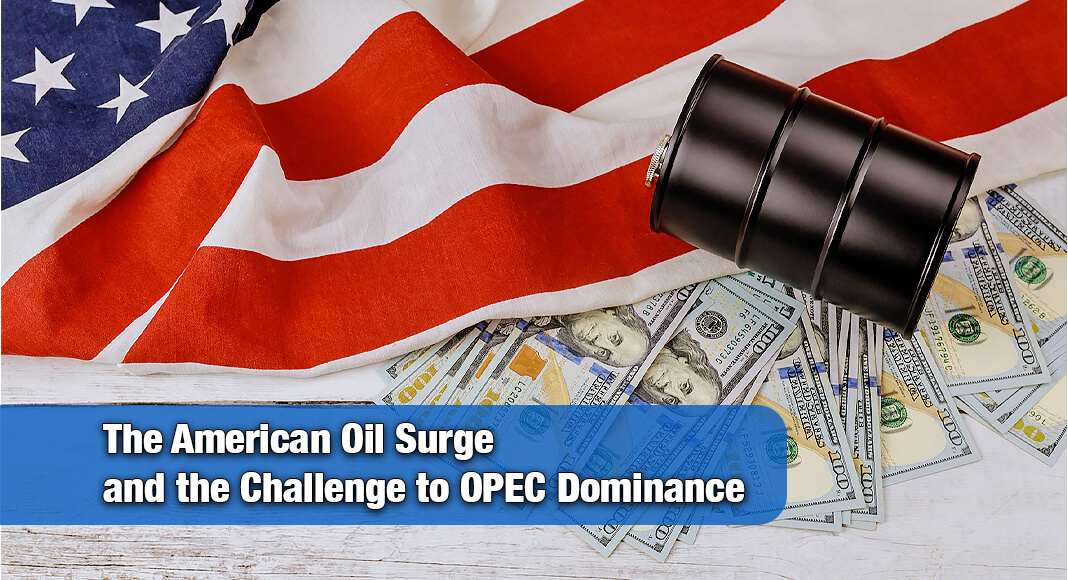
In 1960, five major oil producing countries (Iran, Iraq, Kuwait, Saudi Arabia, and Venezuela) formed the Organization of the Petroleum Exporting Countries (OPEC). The idea was to coordinate production to stabilize prices, countering market power then held by large multinational oil companies. OPEC is a cartel, which is simply a group of independent businesses or countries that collude to fix prices or output. As production by non-OPEC members (especially the United States) has risen, the ability to control prices has been somewhat diluted, but OPEC remains a powerful force.
In the 1970s, OPEC members restricted supply during the Yom Kippur War, causing global crude prices to surge. The organization has maintained significant pricing power since that time and has added other members, including the United Arab Emirates (UAE), Nigeria, Angola, Algeria, and Russia (the “+” in OPEC+). It currently controls about 35-40% of global oil production and 70-80% of proven reserves.
For geeks like me, the mathematics of cartels is fascinating (and inherently unstable). They only work if every member cooperates, yet each country has an individual economic incentive to cheat. For example, if members decide to cut supply to raise prices, any country which secretly produces more receives more revenue. The countries in OPEC+ have very different national priorities and resources; as a relatively rich country, Saudi Arabia can often afford to produce less, whereas less affluent members frequently need immediate cash. There aren’t really enforcement mechanisms other than political pressure, and internal disagreements are both common and inevitable. Countries join voluntarily in the hopes of higher and more stable prices (and, thus, more revenue), but short-term national objectives can change.


Recently, the UAE has indicated that it will leave OPEC, which would allow it to decide its own production levels. Investments in infrastructure could then be optimized, with no worries about quotas or opinions of other members. The UAE’s action would not collapse OPEC, but it would reduce overall market share and possibly encourage other countries to reevaluate their positions.
If multiple countries leave, it may become difficult for the cartel to be sustainable. Without quotas, there would often be incentives to pump as much oil as possible, likely causing prices to fall. There could even be a price war, where major producers try to drive others out of business. Over a longer horizon, prices might be set by the market alone, with cycles and instability becoming more common.
Even in the unlikely scenario in which OPEC totally collapses, major players are likely to continue to (at least implicitly) work together due to the mutual benefits of cooperation. However, there are cracks in the cartel, and it will be interesting to see if anything breaks. Stay safe!
________________
Dr. M. Ray Perryman is President and Chief Executive Officer of The Perryman Group (www.perrymangroup.com), which has served the needs of more than 3,000 clients over the past four decades.