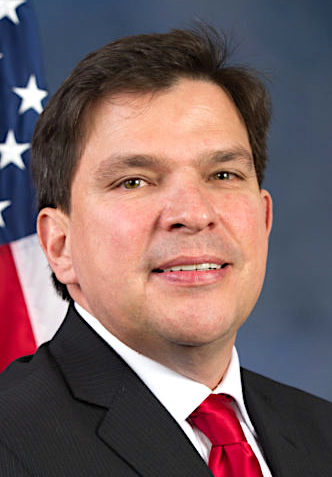
“I’m proud to work alongside Congresswoman Elise Stefanik on this bipartisan legislation to save South Texans and travelers from duplicative costs,” said Congressman Gonzalez. Image courtesy of Valley International Airport
Texas Border Business
HARLINGEN, Texas – Congressman Vicente Gonzalez (TX-34) and Congresswoman Elise Stefanik (NY-21) announced the introduction of the Border Airport Fairness Act, which would designate certain airports within 30 miles of the northern or southern border, including Valley International Airport (HRL) in Harlingen, Texas, as ports of entry (POE). This bill would also terminate the corresponding airport’s user fees.
“I’m proud to work alongside Congresswoman Elise Stefanik on this bipartisan legislation to save South Texans and travelers from duplicative costs,” said Congressman Gonzalez. “As our region continues to rapidly grow, it’s essential that our airports and transportation infrastructure not only keep up with increased demand for commercial travel but also continue to support critical federal operations. This legislation is an investment in our future.”
“The Border Airport Fairness Act will save Plattsburgh International Airport hundreds of thousands of dollars in costs by ensuring that it receives the designation it deserves. My legislation makes certain that Plattsburgh International Airport is equipped with the resources it needs to continue meeting the transportation needs of Upstate New York and North Country families and continue to provide access for tourists visiting our region,” said Congresswoman Elise Stefanik.
“Valley International Airport serves as a vital economic driver for South Texas. As a border community, securing a Designated Port of Entry is critical to expanding international travel and strengthening U.S. Customs and Border Protection services. I want to thank Congressman Gonzalez for standing with Harlingen and helping us take this important step toward a stronger, more connected region,” said Mayor of the City of Harlingen, Norma Sepulveda.
“For years, Valley International Airport (HRL) has operated at a competitive disadvantage due to the absence of benefits routinely available to other primary commercial service airports located along the U.S. border;” said Marv Esterly, Director of Aviation at Valley International Airport. “Securing a designated Port of Entry (PoE) is essential to expanding our access to critical U.S. Customs services and offering greater international travel options to the residents of the Rio Grande Valley. We deeply appreciate Congressman Gonzalez’s leadership and steadfast support in championing this vital initiative for our airport and community.”
Orlando Campos, Harlingen EDC CEO. Courtesy image. Bgd for illustration purposes
Texas Border Business
By Roberto Hugo González
The City of Harlingen has initiated the Harlingen Strong Small Business Recovery Grant to assist local businesses affected by the severe flooding on March 27, 2025. Administered by the Harlingen Economic Development Corporation (HEDC), the grant offers up to $3,000 to eligible small businesses for expenses related to flood recovery, including repairs, equipment replacement, and inventory loss.
The flooding event was unprecedented, with Harlingen receiving over 21 inches of rain, surpassing records dating back to 1912. The Arroyo Colorado crested at 30.44 feet, exceeding its previous record of 24.22 feet. The deluge led to extensive damage, including flooding at least 1,000 buildings and canceling all flights at Valley International Airport through March 31.
Courtesy image
Governor Greg Abbott issued a disaster declaration for Cameron, Hidalgo, Starr, and Willacy counties on March 29, 2025, in response to the widespread damage.
The Harlingen Strong Small Business Recovery Grant supports businesses’ recovery efforts. Eligible businesses must be for-profit entities within Harlingen city limits, qualify as small businesses per SBA guidelines, employ at least one person, and provide proof of flood damage. The grant can be used for expenses incurred between March 27 and 31, 2025, with all work to be completed by July 31, 2025.
Applications for the grant opened on April 8, 2025, and are processed on a first-come, first-served basis. The program is discretionary and subject to the availability of funds.
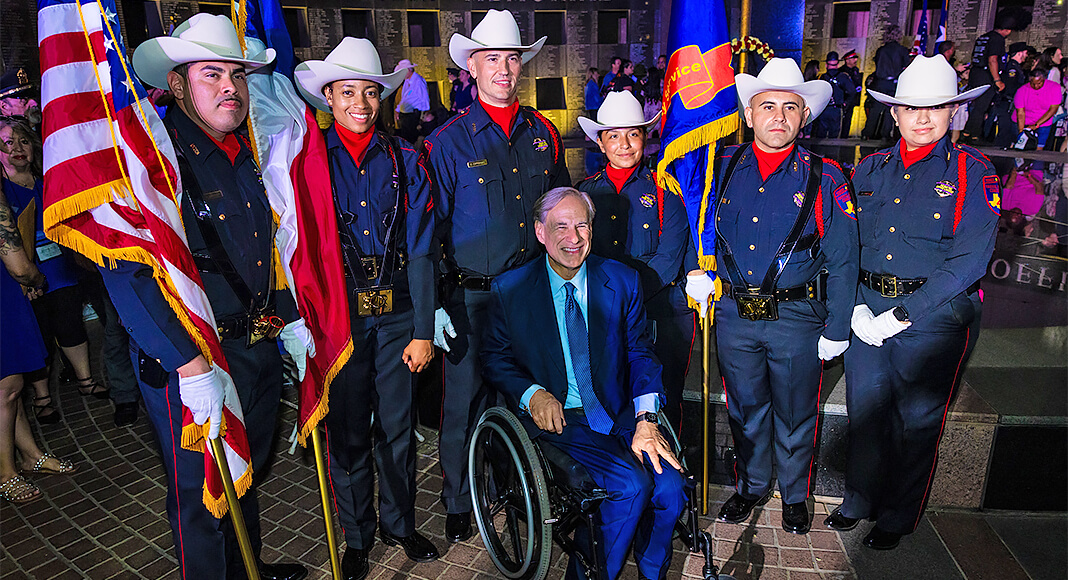
Governor Greg Abbott commemorated the brave men and women of law enforcement who lost their lives in the line of duty at the Texas Peace Officers’ Memorial Ceremony at the Texas Capitol in Austin. The Governor awarded the Texas Medal of Honor to a family member of each of the 40 officers who were recognized at the ceremony. Photo: Office of The Governor
Texas Border Business
AUSTIN – Governor Greg Abbott commemorated the brave men and women of law enforcement who lost their lives in the line of duty at the Texas Peace Officers’ Memorial Ceremony at the Texas Capitol in Austin. The Governor awarded the Texas Medal of Honor to a family member of each of the 40 officers who were recognized at the ceremony.
Photo: Office of The Governor
“To all the law enforcement officers, I share with you the eternal gratitude that Texas has for your brave and tireless service,” said Governor Abbott. “In Texas, we support our law enforcement officers, especially those whose bravery and valor led to the ultimate sacrifice. This Peace Officers Memorial is far more than just a granite monument—it is a reminder of Texas heroes taken too soon. Even though these courageous men and women we honor are no longer with us, they are never gone. Texas will always remain grateful for their valor.”
Photo: Office of The Governor
The annual ceremony recognizes law enforcement personnel who lost their lives in service of their state and communities. The Governor was joined at the ceremony by Senator Brian Birdwell, Senator Sarah Eckhart, Senator Bob Hall, Senator Adam Hinojosa, Senator Mayes Middleton, Representative Brooks Landgraf, Representative Janie Lopez, Representative Brent Money, Representative Terri Leo Wilson, Ellis County Sheriff Brad Norman, Combined Law Enforcement Association of Texas President Scott Leeton, Texas Municipal Police Association President Ken Gardner, Texas Fraternal Order of Police President Clint McNear, and other law enforcement officers and family members.
On April 27, 2025, President Donald J. Trump took to TRUTH Social to share new details about his economic vision for the country, emphasizing the role tariffs could play in reshaping America’s tax structure and job market. Image for illustration purposes
Texas Border Business
Texas Border Business
On April 27, 2025, President Donald J. Trump took to TRUTH Social to share new details about his economic vision for the country, emphasizing the role tariffs could play in reshaping America’s tax structure and job market.
In his post, Trump stated that as new tariffs are implemented, “many people’s Income Taxes will be substantially reduced, maybe even completely eliminated.” He clarified that the intended beneficiaries would be Americans earning less than $200,000 annually. Trump framed the plan as a major shift in federal revenue generation, suggesting that tariff income from foreign goods could replace or dramatically reduce the need for traditional income taxes for a large population segment.
Trump also highlighted that “massive numbers of jobs are already being created,” attributing the growth to “new plants and factories currently being built or planned.” He referred to this projected expansion as a “BONANZA FOR AMERICA,” signaling optimism about the economic future under his proposals.
In addition to discussing tariffs and job creation, Trump introduced a new term, stating, “THE EXTERNAL REVENUE SERVICE IS HAPPENING.” While he did not elaborate in the post, the phrase appears to reflect his concept of shifting the burden of government funding from domestic income taxes to external sources—specifically through tariffs on imported goods.
The former president’s approach aligns with longstanding views he has expressed on trade and taxation, favoring protective tariffs to boost domestic manufacturing and lessen America’s reliance on tax revenue from individuals. If enacted, the plan would mark a significant departure from the traditional American tax model, which has been based primarily on individual and corporate income taxes for over a century.
Currently, no formal legislative proposals are associated with the specific policy changes Trump described in his post. The president or his team would need to provide further clarification to understand how such a system would be structured, how it would affect government revenue streams, and how it would comply with existing trade agreements and tax laws.
“When Tariffs cut in, many people’s Income Taxes will be substantially reduced, maybe even completely eliminated. Focus will be on people making less than $200,000 a year. Also, massive numbers of jobs are already being created, with new plants and factories currently being built or planned. It will be a BONANZA FOR AMERICA!!! THE EXTERNAL REVENUE SERVICE IS HAPPENING!!!,” Donald J. Trump
“I would rather die than to obey a law that prohibits worshiping God,” says Sarah, age 8. “I love God with all my heart. You should do what’s right. Obey what’s right, and you will be fine.” Image for illustration purposes
Texas Border Business
BY CAREY KINSOLVING AND FRIENDs
“I would rather die than to obey a law that prohibits worshiping God,” says Sarah, age 8. “I love God with all my heart. You should do what’s right. Obey what’s right, and you will be fine.”
Thank you for your incredible statement, Sarah. I’m amazed and challenged by your love and devotion.
“I would pray three times a day in the morning, at lunch and at suppertime,” says Lindsay, 11. “I would have a quiet time in the morning and at night.”
You’re in good company, Lindsay. The prophet Daniel prayed three times a day. His custom became the focus of a plot hatched by people who were jealous of his position in the court of King Darius.
The king signed a decree that guaranteed a luncheon with the royal lions if you prayed to any god or man other than the king. In other words, whoever violated the decree would become lion lunch meat.
Daniel’s custom was to pray with his window open toward Jerusalem. It would have been very easy to justify closing the window during the 30 days of the decree. Daniel could have said: “Can you please shut the window? It’s kind of breezy in here today.” Not Daniel. His pattern never changed.
Daniel was thrown into the lions’ den, but the lions suddenly lost their appetites. This miracle apparently impressed the king, who issued another order: “I make a decree that in every dominion of my kingdom, men must tremble and fear before the God of Daniel.”
Sara, 10, is on target when she says, “You should set a good example for other people to know God, and not worship something else.” Amy, 11, adds, “It is better to die for a true God than living and worshiping a false god.”
Yes, Daniel is an example. Do you suppose he knew God would shut the lions’ mouths? Nothing in the Bible indicates he knew anything of God’s plan to turn the lions into house cats during his overnight stay in their den.
“If you believe in the real God, no matter what happens to you, you will not get hurt at all because God and his angels are always with you. That is having faith in God,” says Salar, 10.
Uh, excuse me, Salar. How do you explain the death of first-century Christians who were devoured by lions in the Roman Colosseum?
Obviously, it was God’s purpose to show unbelievers the courage and peace of Christians as they looked past death into the glories of heaven. As Stephen the evangelist was being stoned to death, he said: “Look! I see the heavens opened and the Son of Man standing at the right hand of God!” (Acts 7:56).
Who would have guessed that one of the young men consenting to Stephen’s death would become God’s chief agent for spreading the gospel? Later, that young man’s name, Saul, was changed to Paul — the Apostle Paul.
“I think that if Jesus was able to give his life and die for us, we should be able to stand up and say that we will not obey a law that forbids us from worshiping him,” says Alyssa, 12.
Think about this: Laws that coerce people to worship false gods or the true God should not be obeyed.
Memorize this truth: “But Peter and the other apostles answered and said: ‘We ought to obey God rather than men’” (Acts 5:29).
Ask this question: If a law were passed forbidding the worship of God, would you obey it?
================
Kids Talk About God is designed for families to study the Bible together. Research shows that parents who study the Bible with their children give their character, faith and spiritual life a powerful boost. To receive Kids Talk About God three times a week in a free, email subscription, visit www.KidsTalkAboutGod.org/email.
“Texas offers businesses the freedom to succeed — that’s why the nation’s CEOs have ranked Texas as the Best State for Business for more than two decades and counting,” said Governor Abbott. Image for illustration purposes
Texas Border Business
AUSTIN ‒ Governor Greg Abbott has announced Texas is being ranked the Best State for Business for the 21st year in a row by Chief Executive magazine based on their annual survey of the nation’s leading CEOs.
“Texas offers businesses the freedom to succeed — that’s why the nation’s CEOs have ranked Texas as the Best State for Business for more than two decades and counting,” said Governor Abbott. “Texas is where entrepreneurs can cast a vision and know they can achieve it. The successful CEOs I meet with credit our business-friendly climate, highly skilled and diverse workforce, and exceptional quality of life across every region of our great state as Texas’ top advantages. We will continue to cut red tape and partner with job-creating businesses and innovators to build a stronger, more prosperous Texas for decades to come.”
The Best State for Business ranking is determined in an annual survey conducted by Chief Executive magazine of CEOs’ assessments of each state’s business climate, workforce, and quality of life. Texas has topped the nation every year since Chief Executive began the ranking.
Last week, Governor Abbott signed Senate Bill 14, also known as Texas DOGE, into law, creating the Texas Regulatory Efficiency Office. The law builds on the Governor’s Small Business Freedom Council’s recommendations and will slash regulations, put stricter standards on new regulations that could be costly to businesses, and ensure Texas remains the best state for businesses of all sizes.
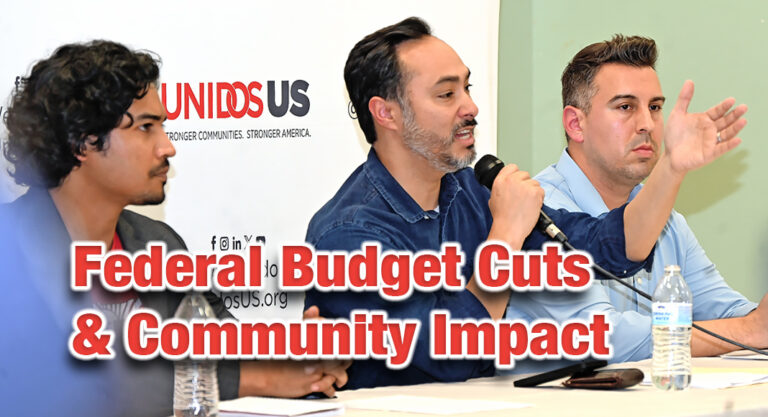
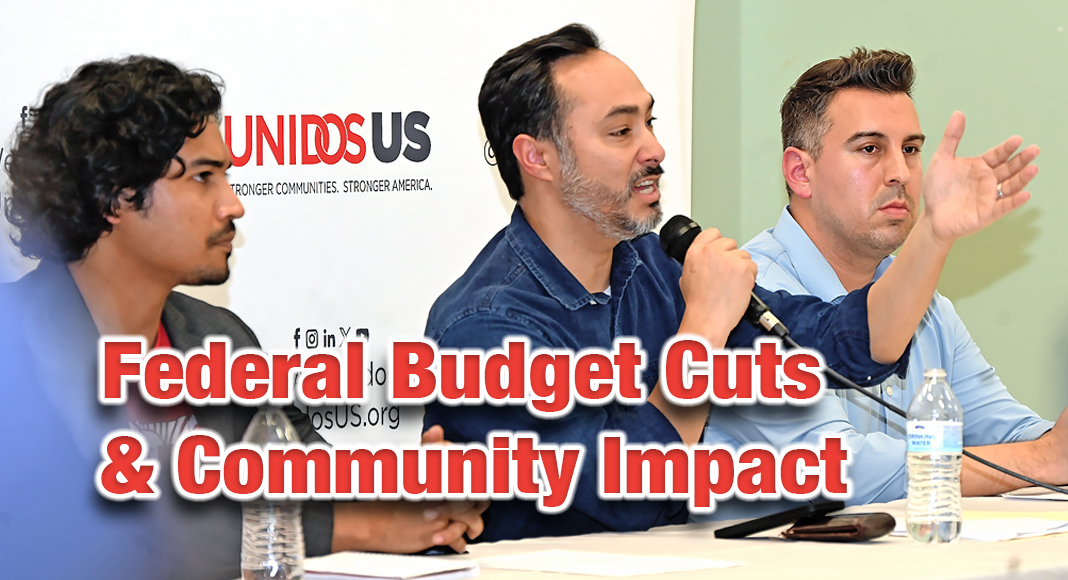
Michael Mireles of LUPE Votes, Congressman Joaquín Castro of San Antonio, and Eric Holguin of UnidosUS discuss federal policy impacts with local residents during the Congress in Conversation Town Hall at Las Palmas Community Center in McAllen, Texas, on April 26, 2025. Photo by Roberto Hugo González
Texas Border Business
By Roberto Hugo González
McAllen, Texas – On April 26, 2025, community leaders, advocates, and residents gathered at the “Congress in Conversation: Federal Priorities and Community Voices” town hall hosted by UnidosUS. Participating RGV organizations include LUPE Votes and the Valley Initiative for Development and Advancement (VIDA). The event featured U.S. Congressman Joaquín Castro (TX-20) as the keynote speaker.
Felida Villarreal, President and CEO of VIDA, opened the forum by welcoming attendees and recognizing local leaders, including McAllen ISD Board of Trustees Member Lucy Regalado, Associate Municipal Judge for Edinburg Judge Katherine Garcia Perez, Judge Fernando Mancias, and PSJA ISD Board Member Cynthia Gutierrez.
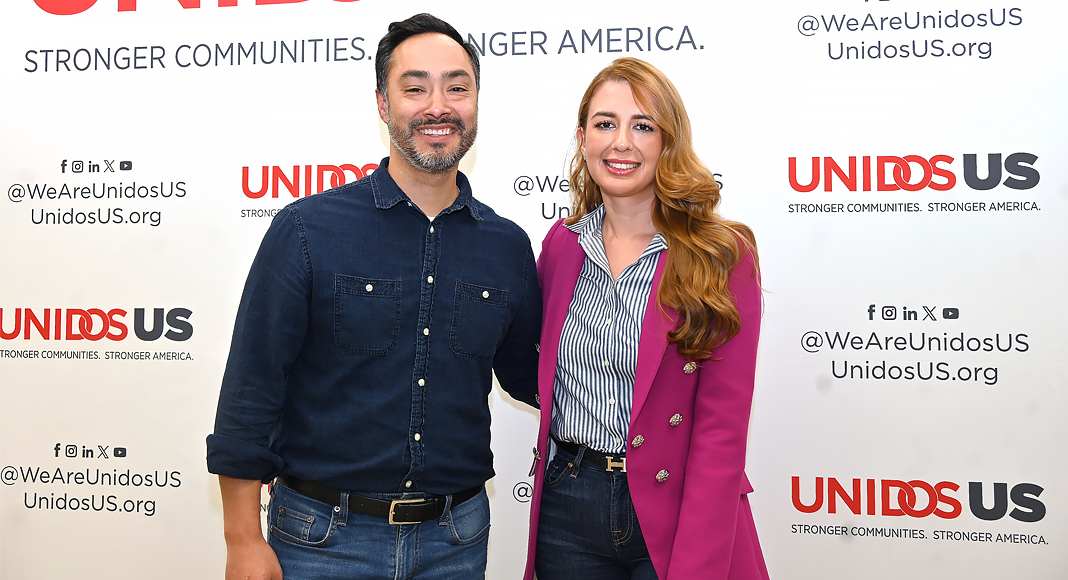
Congressman Joaquin Castro of San Antonio, with President and CEO of VIDA Felida Villarreal. Photo by Roberto Hugo González
Villarreal thanked Congressman Castro and UnidosUS Texas State Director Erica Holguin for their leadership, highlighting the significance of bringing federal discussions directly to the Rio Grande Valley. Villarreal outlined VIDA’s mission of helping Valley residents access higher education and workforce opportunities by providing financial assistance, career counseling, and holistic support services.
Michael Mireles, Director of Civic Engagement for LUPE Votes, introduced his organization’s efforts to promote voter education, leadership development, and civic participation throughout the region. Eric Holguin, Texas State Director for UnidosUS, emphasized UnidosUS’s advocacy work on healthcare, education, civil rights, immigration, and housing affordability, particularly for Latino communities in Texas.
Congressman Joaquín Castro addressed attendees by stating, “I came today because we are living through what I would call a perilous moment in American history — and in my 23 years of public service, I have never seen a time quite like this.” Castro discussed economic pressures such as rising inflation and proposed budget cuts to programs including Medicaid, Social Security, and veterans’ healthcare. He cited concerns expressed by business owners, seniors, and veterans across Texas.
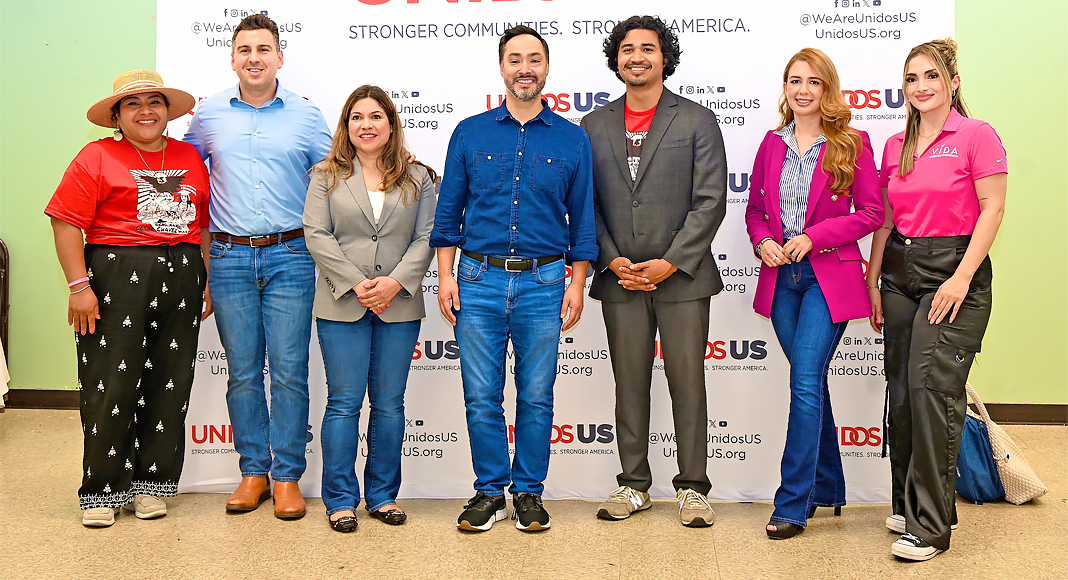
Congressman Joaquín Castro joins UnidosUS Texas State Director Eric Holguin, LUPE Votes Director Michael Mireles, VIDA President and CEO Felida Villarreal, and community leaders at the McAllen Town Hall to discuss federal priorities, budget impacts, and the future of healthcare, education, and veterans’ services in the Rio Grande Valley. By Roberto Hugo González
Sharing a personal healthcare experience, Castro recounted a 2022 car accident in Spain that led to the discovery of cancerous tumors. He emphasized the importance of healthcare coverage, stating, “If I hadn’t had insurance, that lifesaving treatment would have been completely out of reach.”
During the policy discussion, Holguin explained that Texas continues to reject $11 billion annually in federal Medicaid funds, impacting insured and uninsured residents through higher healthcare costs. He noted that more than 200,000 residents in Congressional District 15 depend on Medicaid, including 130,000 children and nearly 25,000 seniors.
Congressman Castro expanded on the consequences of Medicaid cuts, saying, “The proposed cuts are hundreds of billions of dollars — and they would severely impact programs like Medicaid, which doesn’t just cover low-income families. It covers nursing home care for seniors, services for people with disabilities, and more.”
Mireles provided local context, citing over 360,000 Medicaid enrollees in the Rio Grande Valley, and warned of growing confusion among community members regarding eligibility and services.
Turning to education, Holguin outlined potential federal cuts totaling $330 billion to education and job training programs. He stated that 91% of post-secondary students in District 15 are Hispanic/Latino and that 55% of students rely on Pell Grants. Castro explained, “If this budget passes, many young people will be forced into the work-school trap,” describing how students balancing employment and education often drop out.
The conversation also addressed recent legislative actions in Texas supporting school vouchers. Holguin described the impact on public school funding. Congressman Castro explained the bigger implications: “You’ll soon start hearing announcements from school districts about huge budget shortfalls.” He warned that the dual impact of state voucher programs and federal Department of Education funding cuts could lead to service reductions, school closures, and property tax increases.
On veterans’ services, Holguin reported a proposed $23 billion reduction from the Toxic Exposure Fund established under the PACT Act. Castro stated, “Veterans feel betrayed,” noting that the cuts target essential healthcare services for veterans while reallocating funds for tax cuts for the wealthiest Americans.
The Toxic Exposure Fund is a key component of the promise to address the comprehensive Toxics (PACT) Act of 2022. Formally known as the Cost of War Toxic Exposures Fund (TEF), it was established to ensure dedicated funding for the expanded health care and benefits provided to veterans exposed to environmental hazards such as burn pits, Agent Orange, and other toxic substances during their military service.
During the Q&A session, Gabby Lopez asked about attacks on Diversity, Equity, and Inclusion (DEI) initiatives. Congressman Castro responded, “Unfortunately, there’s been an extensive attack on anything related to inclusion,” adding that such actions harm minority communities and reinforce negative stereotypes. Michael Mireles noted that more than 100 bills targeting DEI efforts had been filed in the Texas Legislature.The town hall concluded with a call for ongoing civic engagement. Holguin encouraged attendees to share their stories, participate in advocacy efforts, and attend future events to elevate Latino voices in policymaking
Photo Used for Illustration Purposes. Image by: Jenny Hautmann (Wikimedia Commons) CC-BY-SA-4.0
Texas Border Business
April 25, 2025- Starbase is on the cusp of becoming the nation’s newest municipality. Local voters are casting ballots and deciding whether to incorporate the Starbase community. The voting process, which runs until May 3, 2025, could transform the unincorporated area into a space-focused city.
Starbase is located in Cameron County’s Rio Grande Valley, 25 miles east of Brownsville, Texas. It is home to SpaceX’s Starship manufacturing and launch facility and houses fewer than 300 residents, including approximately 120 children.
SpaceX CEO Elon Musk relocated SpaceX’s headquarters from Hawthorne, California, to Starbase in 2024. Musk first proposed the idea of creating a city called Starbase in 2021, publicly stating his interest in building a futuristic, space-oriented town to support SpaceX operations.
The proposed Starbase city would span 1.5 square miles—an area roughly equivalent to the size of New York’s Central Park—and would be designed to support up to 3,500 SpaceX employees. A petition filed earlier this year, signed by at least 10% of the area’s qualified voters, triggered the incorporation election under Texas Local Government Code for a Type C municipality.
According to Teslarati and the Washington Examiner reports, about 90% of the 279 eligible voters are expected to support the incorporation. These estimates are based on public records and reporting, including information obtained by the New York Times through a public information request. Most residents are believed to be SpaceX employees or their family members, which has influenced projections of overwhelming support.
In addition to voting on incorporation, residents will elect the first officials for the city government. Bobby Peden is currently the sole candidate for Mayor of Starbase. Jordan Buss and Jenna Petrzelka are running unopposed for two commissioner positions.
Cameron County Judge Eddie Treviño, Jr., officially authorized the election after reviewing the incorporation petition. In a statement, Judge Treviño said:
“After careful review of the petition by the Cameron County Judge Eddie Treviño, Jr., Elections Administrator and Commissioners County Civil Legal Division, Cameron County Judge Eddie Treviño, Jr. signed an order finding satisfactory proof in support of the statutory requirements being met for the petition for incorporation of Starbase as a Type-C Municipality.”
The election is scheduled for May 3, 2025, from 7:00 a.m. to 7:00 p.m. at the HUB at 39046 LBJ Blvd., Brownsville, Texas. Early voting is available at the same location from April 22 to April 29, with specific hours set by the county.
Judge Treviño also noted: “If the election passes, this will be the newest town in Cameron County since Los Indios in 1995. We look forward to seeing the outcome of this election.”
If approved, Starbase would become the first U.S. city built specifically around spaceflight activities, further expanding SpaceX’s presence in Texas alongside Musk’s other companies, including Tesla and X (formerly Twitter).
In a pair of filings in the U.S. District Court for the Northern District of Georgia, the Justice Department undid the past administration’s abuse of the legal system that pushed an agenda driven by politics, not law. Image for illustration purposes
Texas Border Business
U.S. Department of Justice
In a pair of filings in the U.S. District Court for the Northern District of Georgia, the Justice Department undid the past administration’s abuse of the legal system that pushed an agenda driven by politics, not law. The Justice Department’s Civil Rights Division withdrew an incorrect statement of interest in one case and submitted a new statement of interest in a separate case brought by inmates seeking to force the state to provide — and taxpayers to fund — dangerous, elective surgery as treatment for inmates’ gender dysphoria claims. The Justice Department’s new filings lay bare the past administration’s manipulation of supposed medical guidelines to try to create an inmate’s right to optional surgeries where no such entitlement exists.
“The prior administration’s arguments in transgender inmate cases were based on junk science. There has never been an Eighth Amendment right for inmates to demand elective and experimental surgeries. States’ limited resources need not be wasted to provide these dubious surgeries to inmates,” said Assistant Attorney General Harmeet K. Dhillon of the Justice Department’s Civil Rights Division. “The prior administration’s nonsensical reading of the Americans with Disabilities Act was an affront to the very people the statute intended to protect”
In both Fuller v. Georgia Dep’t. of Corrections and Doe v. Fuller v. Georgia Dep’t. of Corrections, the plaintiffs sought sexual reassignment surgeries at state expense. The prior administration portrayed such claims as necessary medical care for gender dysphoria under the ADA. That portrayal was based on guidelines that were political motivated and based on junk science. The administration has now corrected the record by removing the statement that was filed in Doe and filing a new statement in Fuller that correctly explains the extent of the ADA and the Eighth Amendment.
For more information on the Civil Rights Division, please visit www.justice.gov/crt. Complaints about discriminatory practices may be reported to the Civil Rights Division through its internet reporting portal at civilrights.justice.gov.