







Home Blog Page 472

Wichita Falls to Host Inaugural Navy Week, September 15th-21st 

The U.S. Navy Ceremonial Guard performs during a ceremony held at the Virginia War Memorial during Richmond Navy Week 2025, May 16. Richmond Navy Week is one of 15 Navy Weeks during the Navy’s 250th year celebration, bringing a variety of assets, equipment and personnel to a single city for a weeklong series of engagements designed to bring America’s Navy closer to the people it protects. Each year, the program reaches more than 140 million people - about half the U.S. population. (U.S. Navy photo by Mass Communication Specialist Seaman Mark Peña)
The U.S. Navy Ceremonial Guard performs during a ceremony held at the Virginia War Memorial during Richmond Navy Week 2025, May 16. Richmond Navy Week is one of 15 Navy Weeks during the Navy’s 250th year celebration, bringing a variety of assets, equipment and personnel to a single city for a weeklong series of engagements designed to bring America’s Navy closer to the people it protects. Each year, the program reaches more than 140 million people – about half the U.S. population. (U.S. Navy photo by Mass Communication Specialist Seaman Mark Peña)

The U.S. Navy proudly announces the inaugural Wichita Falls Navy Week, taking place Sept. 15-21, 2025. As part of a nationwide outreach effort, Wichita Falls Navy Week will bring 70-80 Sailors to engage directly with the community through a week-long series of performances, educational events, and service projects.

This milestone event marks the first-ever Navy Week in Wichita Falls, Texas. Navy Week offers residents a unique opportunity to interact with Sailors and learn more about the Navy’s role in national security and global stability.

This year’s 2025 Navy Week schedule holds special significance as it coincides with the U.S. Navy’s 250th birthday — a historic milestone celebrating a quarter-millennium of maritime excellence, national security, and global leadership.

“America is a maritime nation! Today, 90% of commerce travels across the oceans that the Navy has protected for 250 years, and we’re thrilled to bring your Navy Sailors to Wichita Falls,” said Cmdr. Julie Holland, Navy Office of Community Outreach director. “Sailors are the reason America’s Navy is the most powerful in the world, and Navy Weeks are an opportunity to showcase our 250-year tradition and share with the Wichita Falls community why we continue to be a decisive global power from seabed to cyberspace.”

Since its inception in 2005, the Navy Week program has visited more than 95 markets across the United States, but this marks the first time Wichita Falls will host the event. The week will feature a dynamic lineup of activities designed to educate, inspire, and strengthen community ties:

●      Senior Navy Leaders: Meet and hear from senior Navy officials, including those with local ties to Texas, and Wichita Falls Navy Week Senior Executive Rear Admiral Douglas J. Adams, Program Executive Officer, Undersea Warfare Systems.

●      Namesake Ships: Interact with Sailors serving aboard U.S. Naval vessels and learn about their assignments while deployed at sea and around the world. 

●      U.S. Navy Band Southwest: Enjoy live musical performances and masterclasses led by talented Navy musicians.

●      Naval History and Heritage Command: Explore the rich connection between Texas and the Navy through interactive presentations and educational programs.

●      USS Constitution: Witness demonstrations featuring the Navy’s oldest commissioned ship and its enduring legacy.

●      U.S. Naval Meteorology and Oceanography Command: Engage in STEM-focused sessions highlighting oceanographic and atmospheric science.

●      Navy Talent Acquisition Group: Discover opportunities within the Navy through community projects, displays, and career discussions.

Wichita Falls Navy Week brings the Navy to regions without a major naval presence, fostering connections and showcasing how the Navy’s mission ensures the security, prosperity, and freedom of our nation.

For more details on Wichita Falls Navy Week, visit https://outreach.navy.mil/navy-weeks/ or contact John Hankemeier at (541) 844-9789 or via email at john.t.hankemeier.civ@us.navy.mil. Follow Navy Outreach on social media:

●      Instagram: @navy.outreach

●      Facebook, YouTube, LinkedIn: @navyoutreach

●      #NavyWeek #AmericasNavy250

●      PRESS KIT

About Navy Week:

Navy Week is the Navy’s flagship outreach program, designed to connect Americans with their Navy. Over the past two decades, the program has brought the Navy’s mission, people, and capabilities to hundreds of communities nationwide, inspiring new generations and strengthening the bonds between the Navy and the American people.

Information source:  Navy Office of Community Outreach 
CBP Officers Stop Cocaine Smuggling Attempt at El Paso Port

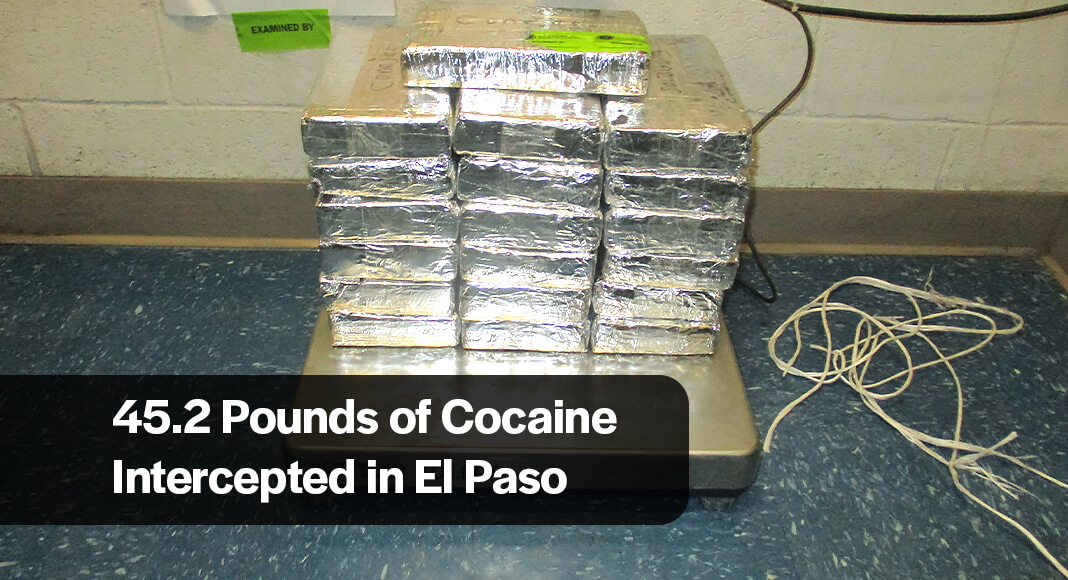
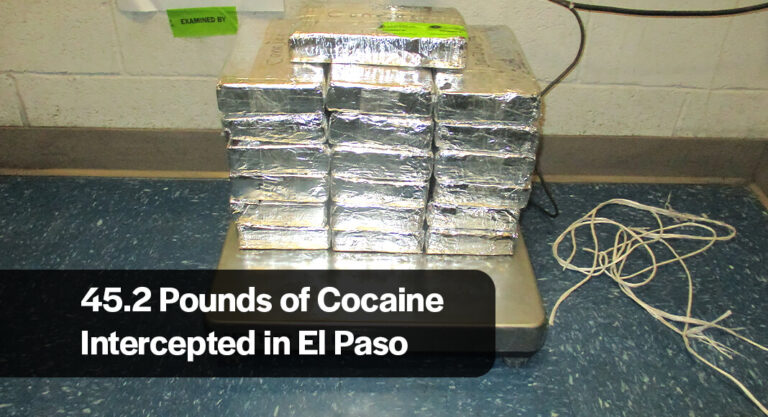
U.S. Customs and Border Protection officers working at the Bridge of the Americas international crossing in El Paso seized 45.2 pounds of cocaine. USCBP image

EL PASO, TEXAS – U.S. Customs and Border Protection officers working at the Bridge of the Americas international crossing in El Paso seized 45.2 pounds of cocaine May 27. The drugs were hidden in a vehicle being driven by a 20-year-old female U.S. citizen.

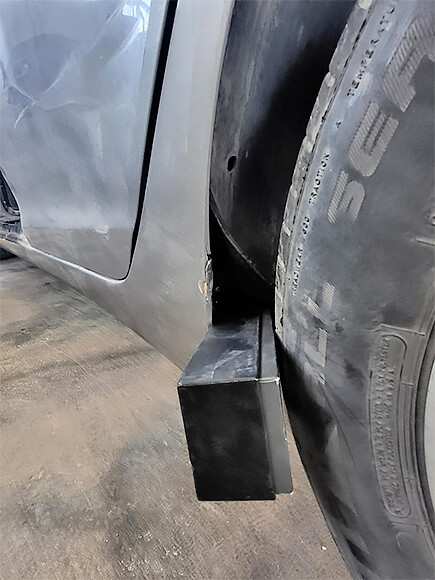
Hidden compartment where the cocaine was discovered. USCBP image

“Every day our dedicated CBP workforce stands guard protecting our community from any and all threats,” said CBP El Paso Port Director Ray Provencio. “Our homeland security mission is never ending and every drug load that we prevent from reaching its intended destination makes a difference.”

The events leading to the seizure began just before 8 a.m. when a 2016 Hyundai Elantra with a single female occupant arrived from Mexico. A CBP officer working at the primary inspection booth selected the vehicle for a secondary exam.

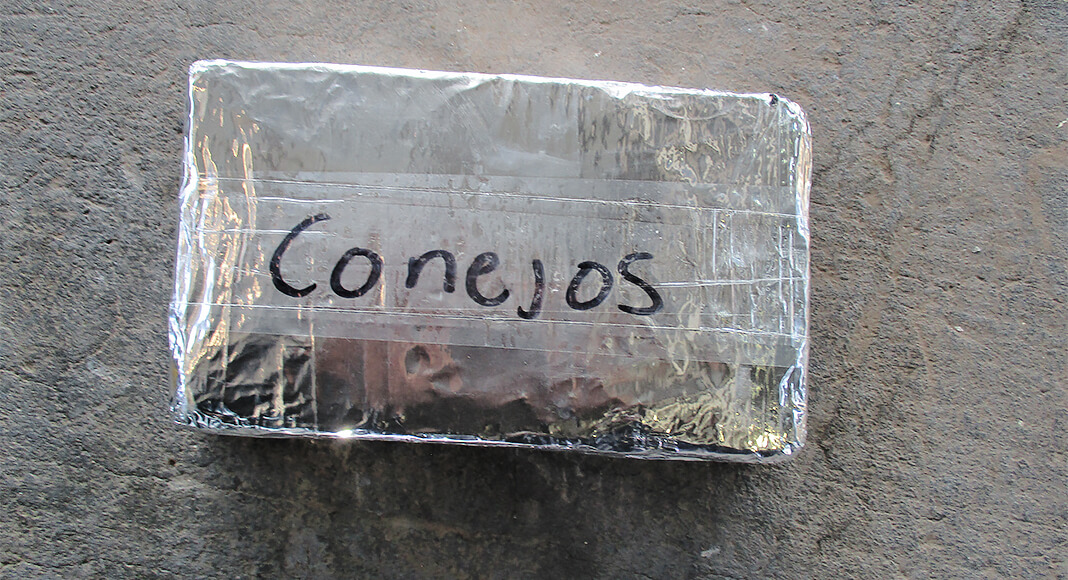
USCBP image

A CBP drug-sniffing dog searched the car and alerted officers to the presence of narcotics. CBP officers located several wrapped bundles in the vehicle’s rocker panels. A nonintrusive x-ray scan of the car confirmed the presence of anomalies in the left and right rocker panels. CBP officers continued their exam and removed 19 cocaine-filled bundles from the hidden compartments.

CBP officers arrested the woman. She was turned over to the El Paso County Sheriff’s office to face charges associated with the failed smuggling attempt.

U.S. Department of Education Fights Fraud in Student Aid to Protect the American Taxpayer 

A recent comprehensive analysis uncovered nearly $90 million disbursed to ineligible recipients, including thousands of deceased individuals receiving some form of payment. Image: ajay_suresh, CC BY 2.0 <https://creativecommons.org/licenses/by/2.0>, via Wikimedia Commons. McMahon: Public Domain via Wikimedia Commons

U.S. Department of Education

The U.S. Department of Education announced actions and proactive steps to ensure American taxpayer dollars spent on federal student aid programs are used properly and responsibly. A recent comprehensive analysis uncovered nearly $90 million disbursed to ineligible recipients, including thousands of deceased individuals receiving some form of payment. 

“As we continue to rehabilitate the student loan portfolio, we must also ensure there are accountability measures at every step of the student aid process,” said U.S. Secretary of Education Linda McMahon. “From start to finish – filling out the FAFSA form to loan repayment – the American taxpayer underwrites federal student aid programs. We are committed to protecting and responsibly investing their hard-earned dollars.” 

The Biden Administration deprioritized accountability in order to carry out its illegal student loan bailout agenda. The Department’s actions today are among the first steps to restore many protections that were in place prior to the COVID-19 pandemic as well as modernize management of the loan portfolio in order to improve service for borrowers and accountability to taxpayers.  

Strengthening Oversight and Reducing Erroneous Payments 

Deceased Aid Recipients 

A cross-check of student aid records against the federal grant logs with the Social Security Death Index revealed that more than $30 million in aid was disbursed to thousands of deceased individuals over the past three years. The Department is strengthening real-time data-sharing with the Social Security Administration to prevent identity theft and avoid such errors in the future. 

Immigration Parole Ineligibility 

Individuals granted immigration parole status, a temporary designation issued by the U.S. Department of Homeland Security (DHS), are not immediately eligible for federal student aid. The Department has gained additional specificity on student status from DHS to prevent disbursements to ineligible individuals moving forward. 

Key Protections and Tools 

NSLDS® Post Screening 

In May, the Department resumed automated post screening of student aid records for the 2024–25 and 2025–26 Free Application for Federal Student Aid (FAFSA®) cycles. Without this process, student records are less likely to be up to date and reflect recent changes to students’ financial aid eligibility. For example, once a student reaches their lifetime limit for receiving Federal Pell Grants, post screening flags this limit in the student loan database, which prevents a financial aid administrator from awarding further Pell Grant aid. Post screening is critical for the federal student aid programs because it ensures that students only access the aid they are eligible to receive. 

As of mid-January, an approximate $10 million in improper Direct Loans payments were disbursed before the Department restored NSLDS post screening. 

FAFSA Identify Verification and Fraud Detection

To deliver meaningful and lasting results for the American taxpayers and safeguard against identity fraud, in March, the Department resumed flagging applicants suspected of using someone else’s identity when completing the FAFSA form. A recent review found that, as of early-February, nearly $40 million in Direct Loan payments, and an additional $6 million in Pell Grants, were incorrectly disbursed to ineligible individuals. The Department uses data models to identify potentially suspicious or inconsistent information submitted on the FAFSA form. These models help flag applications that may require additional review to ensure the student aid is awarded accurately. 

The Department regularly works with law enforcement partners to detect, investigate, and prosecute fraudsters, as well as emphasize to financial aid professionals the importance of robust verification requirements, particularly those focused on identity and fraud. 

Resources for Students and Parents 

The office of Federal Student Aid provides a wealth of information about how to avoid student aid scams—on StudentAid.gov/scams—including how students and their contributors can lower their risk of identity theft when applying for federal student aid. The page also includes information about the steps to take if their information has been used fraudulently. 

Cornyn & Colleagues Introduce Bill to Improve Seniors’ Access to Care

U.S. Senator John Cornyn (R-TX) joined Sens. Roger Marshall, M.D. (R-KS), Mark Warner (D-VA), and 44 of his Senate colleagues in introducing the Improving Seniors’ Timely Access to Care Act, which would improve access to care for seniors enrolled in Medicare Advantage (MA) plans at no cost to American taxpayers. Image for illustration purposes
Senator John Cornyn

TYLER, Texas – U.S. Senator John Cornyn (R-TX) joined Sens. Roger Marshall, M.D. (R-KS), Mark Warner (D-VA), and 44 of his Senate colleagues in introducing the Improving Seniors’ Timely Access to Care Act, which would improve access to care for seniors enrolled in Medicare Advantage (MA) plans at no cost to American taxpayers. The legislation focuses on streamlining the often cumbersome and time-consuming prior authorization process, ultimately allowing healthcare providers to spend more time on patient care rather than administrative burdens.

“Doctors and health care providers are too often bogged down by unnecessary burdens, which can lead to delayed care and negative outcomes for patients,” said Sen. Cornyn. “By streamlining the prior authorization process under Medicare Advantage, this legislation would cut red tape, improve enrollee experiences, and ensure seniors receive the timely care they deserve.”

Additional cosponsors include U.S. Senators Maggie Hassan (D-NH), John Fetterman (D-PA), Amy Klobuchar (D-MN), Bill Cassidy (R-LA),  Shelley Moore Capito (R-WV), John Hickenlooper (D-CO), James Lankford (R-OK), Jeff Merkley (D-OR), Marsha Blackburn (R-TN), Cynthia Lummis (R-WY), Cindy Hyde-Smith (R-MS), Tim Kaine (D-VA), Jeanne Shaheen (D-NH), Mike Rounds (R-SD), Alex Padilla (D-CA), Bill Hagerty (R-TN), Andy Kim (D-NJ), John Boozman (R-AR), Dick Durbin (D-IL), Patty Murray (D-WA), Jerry Moran (R-KS), Kirsten Gillibrand (D-NY), Maria Cantwell (D-WA), Mazie Hirono (D-HI), Thom Tillis (R-NC), Cory Booker (D-NJ), Tina Smith (D-MN), Peter Welch (D-VT), Sheldon Whitehouse (D-RI), Ted Budd (R-NC), Catherine Cortez Masto (D-NV), Tim Sheehy (R-MT), Tammy Baldwin (D-WI), Pete Ricketts (R-NE), Richard Blumenthal (D-CT), Elizabeth Warren (D-MA), Tammy Duckworth (D-IL), John Hoeven (R-ND), Rick Scott (R-FL), Mark Kelly (D-AZ), Jacky Rosen (D-NV), Martin Heinrich (D-NM), Deb Fischer (R-NE) and Chris Coons (D-DE).

Background:

Prior authorization is a tool used by health plans to reduce unnecessary care by requiring health care providers to get pre-approval for medical services. However, the current system often results in multiple faxes or phone calls by clinicians, which takes precious time away from delivering care. Prior authorization continues to be the number-one administrative burden identified by health care providers, and nearly three out of four Medicare Advantage enrollees are subject to unnecessary delays due to the practice.

The Improving Seniors’ Timely Access to Care Act would codify and enhance elements of the Advancing Interoperability and Improving Prior Authorization Processes (e-PA) rule that was finalized by the Centers for Medicare & Medicaid Services (CMS) on January 17, 2024.

Last Congress, the bill was supported by a super majority of members in the Senate (60) and a majority in the House (232), and was unanimously passed by the House in 2022. In 2018, the Office of the Inspector General at the U.S. Department of Health and Human Services (HHS) raised concerns after an audit revealed that Medicare Advantage plans ultimately approved 75% of requests that were originally denied. In 2022, the HHS Office of Inspector General released a report finding that MA plans incorrectly denied beneficiaries’ access to services even though they met Medicare coverage rules.

The Improving Seniors’ Timely Access to Care Act would:
 
Establish an electronic prior authorization process for Medicare Advantage plans, including a standardization for transactions and clinical attachments;
Increase transparency around Medicare Advantage prior authorization requirements and their use;
Clarify HHS’ authority to establish timeframes for e-prior authorization requests, including expedited determinations, real-time decisions for routinely approved items and services, and other prior authorization requests;
Expand beneficiary protections to improve enrollee experiences and outcomes;
Require HHS and other agencies to report to Congress on program integrity efforts and other ways to further improve the e-prior authorization process;
And result in a zero cost to American taxpayers.

Full text of the legislation can be found here.

Information source: Office of Senator Cornyn

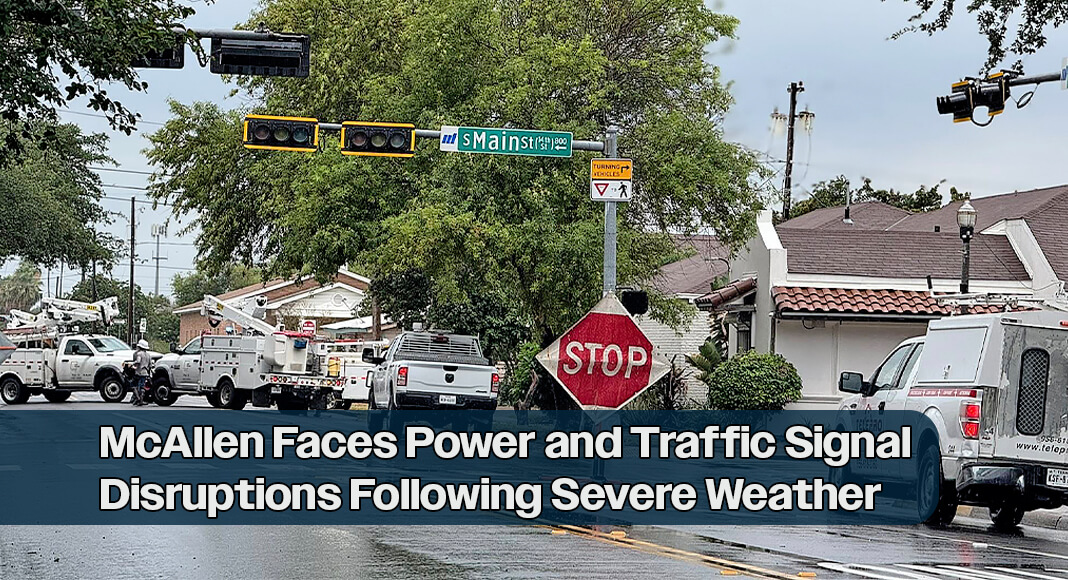
McAllen Faces Power and Traffic Signal Disruptions Following Severe Weather

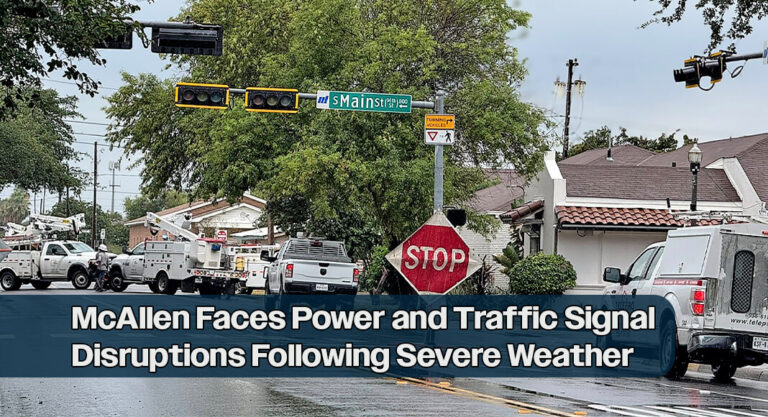
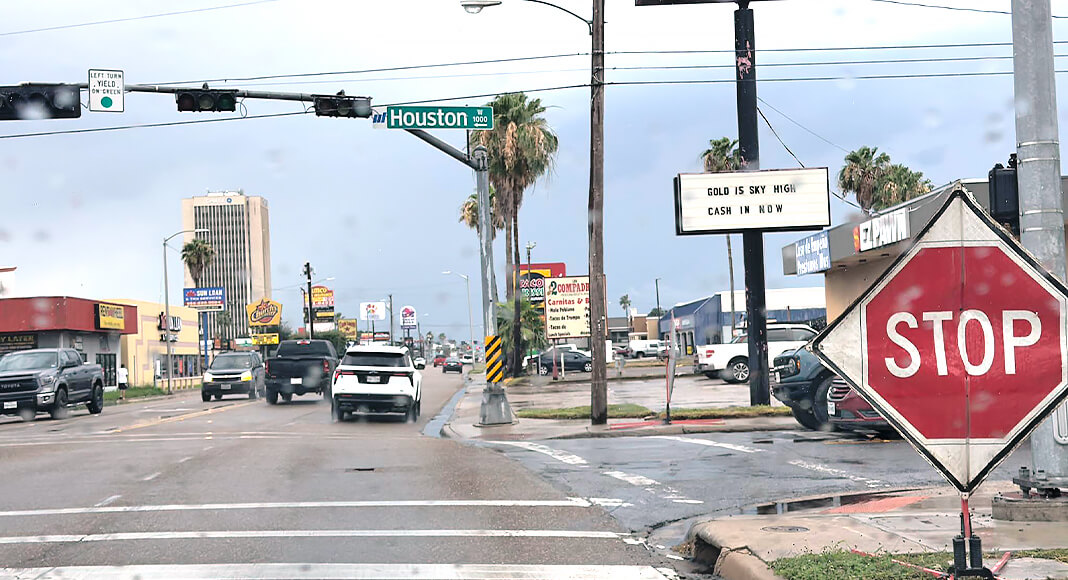
The City of McAllen Government announced at 11:44 AM that several intersections are affected. Photo Courtesy the City of McAllen, via Facebook

As of Wednesday, May 28, 2025, the City of McAllen, Texas, is experiencing power outages and traffic signal disruptions due to recent severe weather conditions. The City of McAllen Government announced at 11:44 AM that several intersections are affected, including:

            •           10th Street and Houston Avenue

            •           Main Street and Houston Avenue

            •           Broadway Street and Houston Avenue

            •           10th Street and Dallas Avenue

            •           Main Street and Jackson Avenue

            •           10th Street and Jackson Avenue 

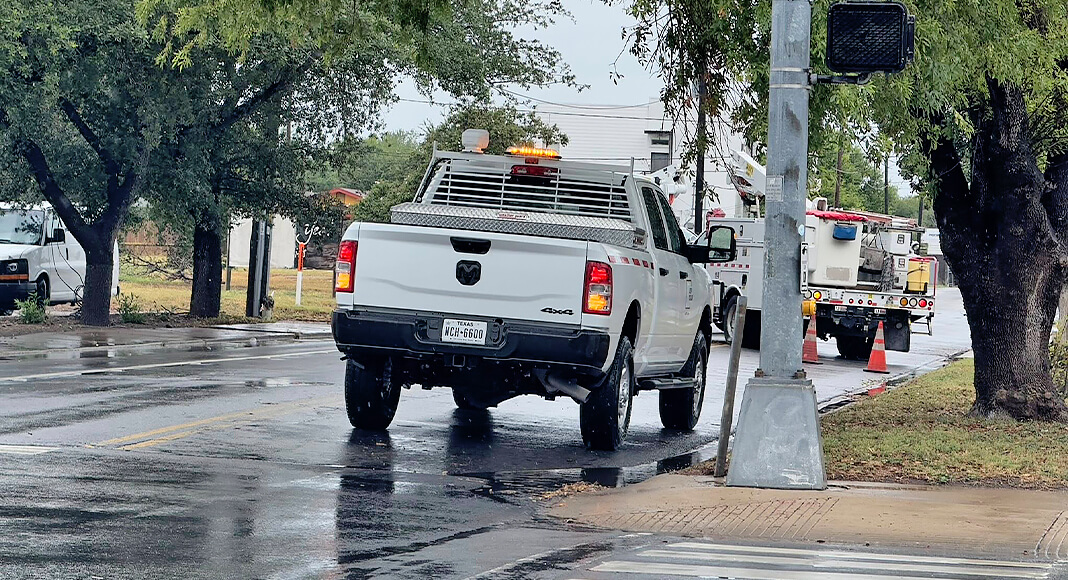
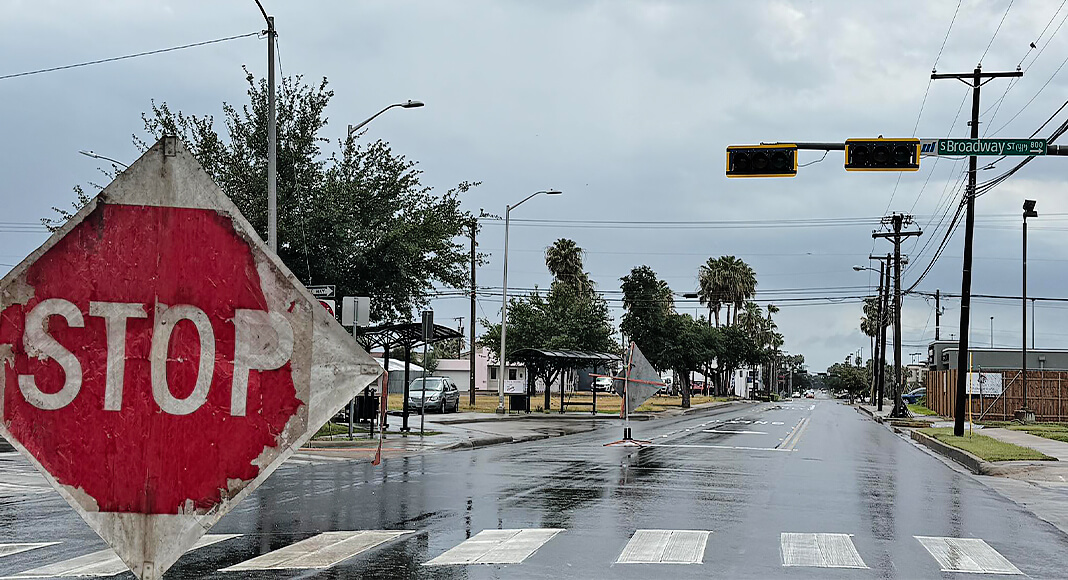
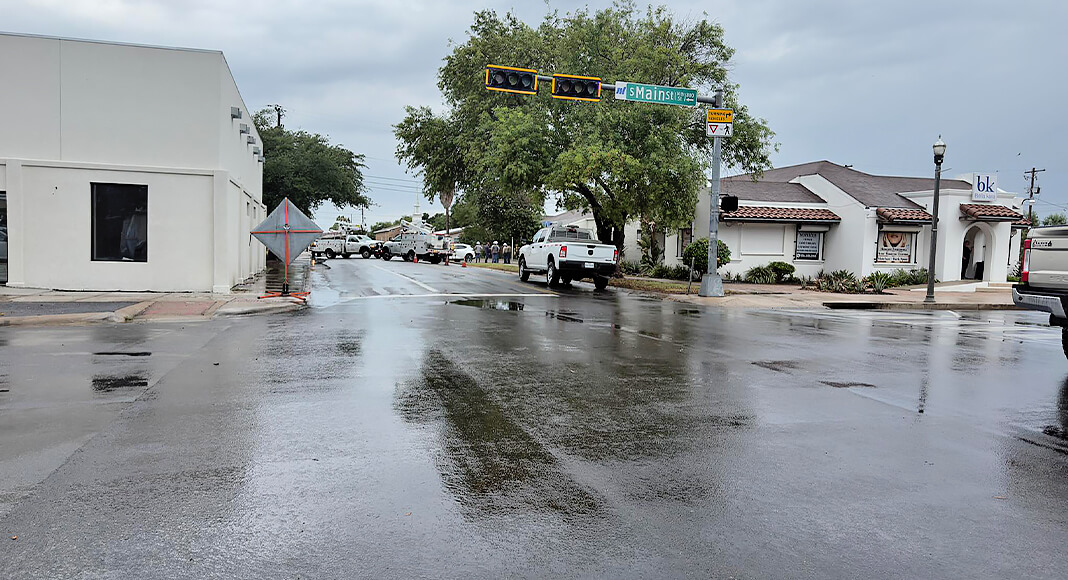
Photo Courtesy the City of McAllen, via Facebook

Motorists are advised to approach these intersections with caution, as four-way stop protocols are currently in place.

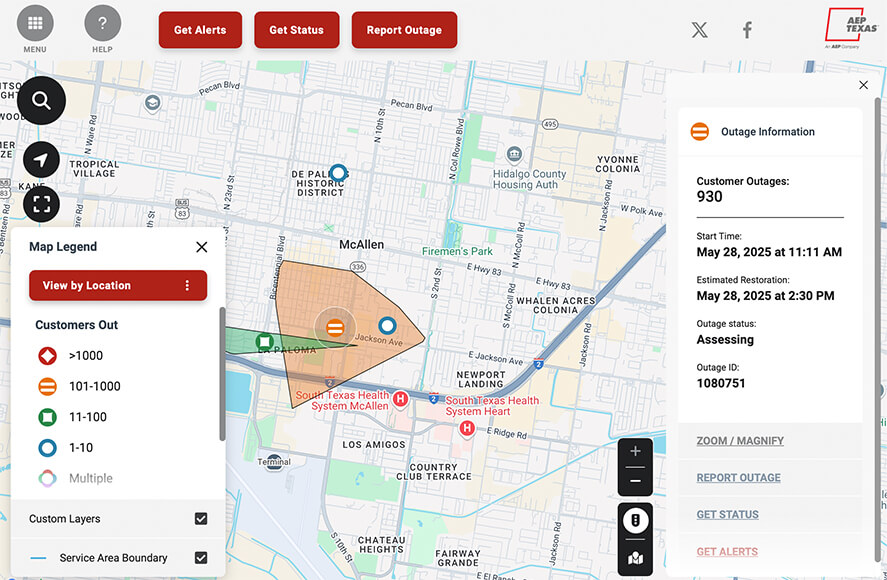
The outages are primarily due to thunderstorms that have impacted the Rio Grande Valley region. According to KRGV News, over 4,000 residents in the Valley are without power, with the majority of outages reported in McAllen. Specifically, Magic Valley Electric Cooperative has reported 1,489 customers without power, while AEP Texas has reported 2,956 customers affected. 

Map provided by AEP Texas

The severe weather has also led to widespread flooding and infrastructure damage across South Texas. 

There is no specific timeline for restoring power in the affected areas. Residents are encouraged to stay informed through official channels and exercise caution when traveling, especially near the impacted intersections.

Starship’s Ninth Flight Test

tarship’s ninth flight test lifted off at 6:36 p.m. CT on Tuesday, May 27 from Starbase, Texas. The Super Heavy booster supporting the mission made the first ever reflight in the Starship program, having previously launched on Starship’s seventh flight test in January 2025. Image: SpaceX on X

SpaceX

Starship’s ninth flight test lifted off at 6:36 p.m. CT on Tuesday, May 27 from Starbase, Texas. The Super Heavy booster supporting the mission made the first ever reflight in the Starship program, having previously launched on Starship’s seventh flight test in January 2025. The booster performed a full-duration ascent burn with all 33 of its Raptor engines and separated from Starship’s upper stage in a hot-staging maneuver. During separation, Super Heavy performed the first deterministic flip followed by its boostback burn.

Super Heavy demonstrated its ability to fly at a higher angle of attack during its descent back to Earth. By increasing the amount of atmospheric drag on the vehicle, a higher angle of attack results in a slower descent speed which in turn requires less propellant for the initial landing burn. Getting real-world data on how the booster controlled its flight at this higher angle of attack will contribute to improved performance on future vehicles, including the next generation of Super Heavy.

As it approached its designated splashdown area in the Gulf of America, Super Heavy relit its 13 center and middle ring Raptor engines. Contact with the booster was lost shortly after the start of landing burn when it experienced a rapid unscheduled disassembly approximately 6 minutes after launch, bringing an end to the first reflight of a Super Heavy booster.

Following a successful stage separation, the Starship upper stage lit all six of its Raptor engines and performed a full-duration ascent burn. The engines on Starship flew with mitigations in place following learnings from the eighth flight test, including additional preload on key joints, a new nitrogen purge system, and improvements to the propellant drain system.

During Starship’s orbital coast, several in-space objectives were planned, including the first payload deployment from Starship and a relight of a single Raptor engine. 

Starship’s payload bay door was unable to open which prevented the deployment of the eight Starlink simulator satellites. A subsequent attitude control error resulted in bypassing the Raptor relight and prevented Starship from getting into the intended position for reentry. Starship then went through an automated safing process to vent the remaining pressure to place the vehicle in the safest condition for reentry. Contact with Starship was lost approximately 46 minutes into the flight, with all debris expected to fall within the planned hazard area in the Indian Ocean.

Starship’s ninth flight test marked a major milestone for reuse with the first flight-proven Super Heavy booster launching from Starbase, and once more returned Starship to space. Data review is underway, and new improvements will be implemented as work begins to prepare the next Starship and Super Heavy vehicles for flight. Developmental testing by definition is unpredictable, but every lesson learned marks progress toward Starship’s goal of enabling life to become multiplanetary.

Information Source: SpaceX

101 Years of Border Patrol Service

For 101 years, the United States Border Patrol has protected America —through every shift, every threat, and every chapter of modern history. USCBP image public flickr for illustration purposes

WASHINGTON — For 101 years, the United States Border Patrol has protected America —through every shift, every threat, and every chapter of modern history. From the earliest horseback patrols to today’s multi-domain operations, the men and women of U.S. Border Patrol have answered the call with grit, skill, and a steadfast commitment to the mission.

“Border Patrol agents are the backbone of America’s border security,” said Chief Michael W. Banks. “Their courage, skill, and commitment to mission are unmatched and—with renewed backing from leadership in Washington—they’re delivering results that are both unprecedented and undeniable.”

A Century of Service
The U.S. Border Patrol was founded in 1924 with just 450 agents tasked with securing the U.S.-Mexico border. In the decades since, the agency has grown into a roughly 20,000-strong force operating across every U.S. border and beyond. From stopping smugglers during Prohibition, to securing ports during World War II, to trailblazing the post-9/11 homeland security mission, Border Patrol has evolved with the times while never wavering from its core duty: securing our nation’s borders.

A Renewed Mission, A Stronger Force
We’ve always known what our agents are capable of; and—these past couple months—the nation is seeing it in full force. With leadership from the Trump administration, Border Patrol is not just backed, they’re empowered. Empowered to enforce the law. Empowered to defend this country. Empowered to do what they’re trained to do.

And the results speak for themselves. Across our southern border, illegal crossings have dropped to unprecedented levels. Smuggling networks are being dismantled. Agents are regaining control of previously overrun areas. The border is being secured—not in theory, but in reality—by men and women who ask for no spotlight, only the chance to serve their mission and their country.

Looking Ahead: One Mission, One Team
As Border Patrol marks 101 years of continuous service, one truth remains: these agents are America’s frontline defenders. Whether responding to threats along the southern border, coastal regions, or the northern frontier, they bring unmatched resolve to one of the toughest jobs in federal law enforcement. Their work may not always make headlines, but its impact is felt across the nation. In this renewed era of mission success, Border Patrol is delivering real results, real security, and real strength at the border.

And So the Tariff Impact Begins

With the recent tariffs, many analysts and economists (including a short one from Texas) began sounding the alarm about disruptions and losses that were inevitable with sustained levies. We are starting to see the fallout in a tangible way. Image for illustration purposes
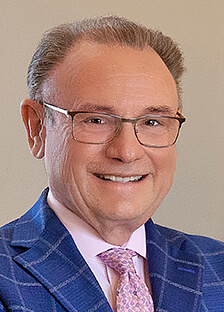
Dr. M. Ray Perryman, President and Chief Executive Officer of The Perryman Group. Courtesy Image

The economic theories supporting free trade were introduced in the early 19th century, when the basic concepts of comparative advantage were logically and mathematically derived. It is one of those ideas that we don’t often ponder, but it has played a fundamental role in shaping our world and is the reason why we have an integrated global business complex that has allowed the US to become the strongest economy in human history.  

With the recent tariffs, many analysts and economists (including a short one from Texas) began sounding the alarm about disruptions and losses that were inevitable with sustained levies. We are starting to see the fallout in a tangible way. 

Port volumes are falling. The Port of Los Angeles, for example, recently estimated a drop of more than 35% compared to a year prior due largely to retailers cancelling shipments from China. Even the ships that do arrive are expected to be less than fully loaded. 

This reduction brings many ripples. While some dockworkers are salaried and continue at least initially to receive their usual incomes, countless others are paid by the load or hour. When they can’t stay busy, they make less money and curb their local spending. Logistics firms, shippers, retailers, and a variety of other industries are also negatively affected, as are US manufacturers using imported inputs. 

There are some goods which transcend geopolitics, weather, pandemics, or anything else. For example, we need to manufacture some critical medications domestically to ensure an adequate supply, as well as other items essential to national security and not feasible to stockpile. For the vast majority of goods, however, the best place for production is determined by relative costs, and specialization and trade make the pie bigger for all of us. 

Ports drive tremendous economic activity, as does the entire logistics chain. Systematic shipment reductions cannot be ignored. While it’s unlikely that we will see entirely empty shelves, it’s certainly possible that there could be less consumer choice (plus higher prices). It is neither feasible nor desirable to shift the production of goods to the US when other areas are better suited to make them. Our analysis indicates that, at best, about 13% of current imports could be effectively made here, and even that would take years and be inefficient. 

Given the multiple downsides to the ongoing trade war, it probably won’t persist. As disruptions mount and move from talking points to tangible harms, the pressure to make lasting agreements will intensify. The uncertainty alone is taking a toll, with companies and consumers alike postponing commitments while waiting to see how things evolve. The damage is already happening, and it’s starting to show. Stay safe! 

_________________________

Dr. M. Ray Perryman is President and Chief Executive Officer of The Perryman Group (www.perrymangroup.com), which has served the needs of over 3,000 clients over the past four decades.

Brownsville CBP Officers Apprehend Man Wanted for Online Solicitation of a Minor

U.S. Customs and Border Protection officers at Brownsville Port of Entry encountered a man wanted in the Dallas County area on an outstanding felony warrant for online solicitation of a minor. Image for illustration purposes

BROWNSVILLE, Texas — U.S. Customs and Border Protection officers at Brownsville Port of Entry encountered a man wanted in the Dallas County area on an outstanding felony warrant for online solicitation of a minor.

“Our frontline CBP officers carry out their duties with vigilance, and their efforts helped uncover an outstanding warrant for online solicitation of a minor out of Dallas County,” said Port Director Tater Ortiz, Brownsville Port of Entry. “This apprehension illustrates CBP’s commitment to its border security mission and to keeping our communities safe.”

On Monday, May 26, CBP officers at the Gateway International Bridge referred Gerardo Zubiri Perez, 71, a Mexican citizen, for secondary inspection. During secondary examination, CBP officers utilizing biometric verification and federal law enforcement databases verified his identity and discovered that he was the subject of an outstanding felony arrest warrant for solicitation of a minor issued by the Dallas County Sheriff’s Office. Zubiri Perez was placed in custody in Cameron County pending final adjudication of the warrant.

The National Crime Information Center is a centralized automated database designed to share information among law enforcement agencies including outstanding warrants for a wide range of offenses. Based on information from NCIC, CBP officers have made previous arrests of individuals wanted for homicide, escape, money laundering, robbery, narcotics distribution, sexual child abuse, fraud, larceny, and military desertion. Criminal charges are merely allegations. Defendants are presumed innocent unless proven guilty in a court of law.

Federal Disaster Relief Secured for Rio Grande Valley

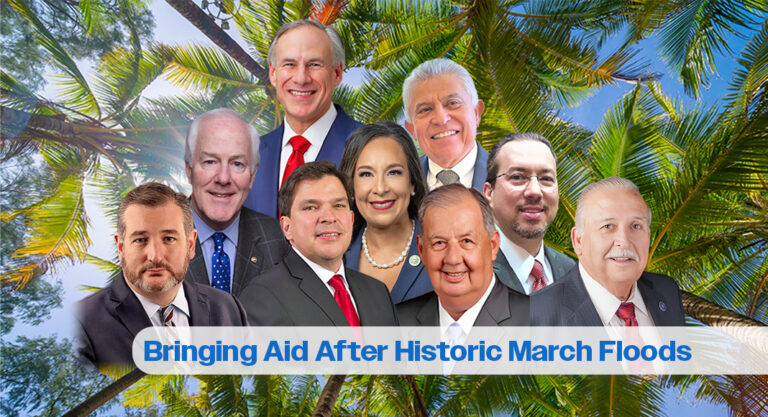
In response to the devastating flooding across the Rio Grande Valley (RGV) from March 26 to 28, 2025, a coordinated effort among local, state, and federal leaders led to the federal government approving a Major Disaster Declaration. Courtesy images. Bgd for illustration purposes

By Roberto Hugo González

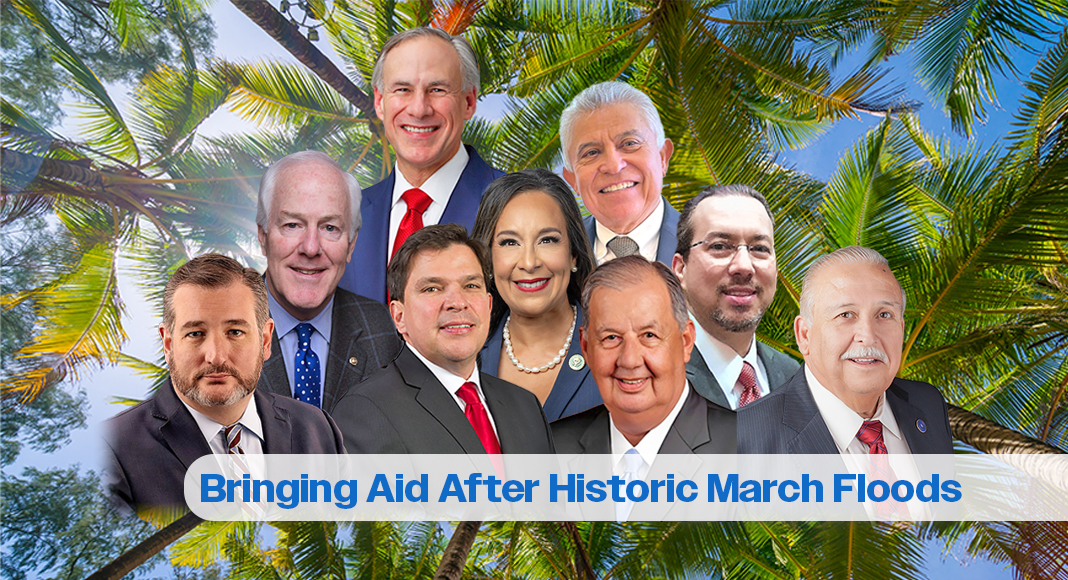
In response to the devastating flooding across the Rio Grande Valley (RGV) from March 26 to 28, 2025, a coordinated effort among local, state, and federal leaders led to the federal government approving a Major Disaster Declaration. The declaration has enabled the release of emergency aid and recovery assistance to thousands of residents and businesses affected across the four-county region.

On March 29, Governor Greg Abbott declared a state disaster for Hidalgo, Cameron, Starr, and Willacy counties due to widespread flooding caused by historic rainfall. The declaration initiated a multi-level effort to secure federal support.

On April 18, Governor Abbott and U.S. Senator John Cornyn formally requested a federal disaster declaration from President Donald J. Trump. The request emphasized the scale of the damage and the need for immediate federal involvement. U.S. Representative Vicente Gonzalez followed with a letter on April 29 urging the President to support the request and draw attention to the impact on vulnerable communities.

Congresswoman Monica De La Cruz also actively supported the relief effort. On April 24, she sent a letter to President Trump endorsing Governor Abbott’s request for an emergency declaration. In her letter, she emphasized the urgent need for federal assistance to address the extensive damage in South Texas. De La Cruz cited the strain on local and state resources and called for federal support to protect public health and assist displaced residents. Following the President’s approval on May 23, De La Cruz publicly stated:

“Thank you, @POTUS, for your prompt action in providing federal funds after declaring a disaster in South Texas due to the March floods. I appreciate your leadership and willingness to help South Texans during these challenging times.”

Federal action followed in late May. On May 23, President Trump approved the Major Disaster Declaration, unlocking resources through the Federal Emergency Management Agency (FEMA). On May 28, FEMA began setting up Disaster Recovery Centers across the region to assist residents with emergency housing, home repairs, and financial recovery.

At the local level, all four county judges declared disasters shortly after the flooding and played key roles in advocating for federal aid. In Hidalgo County, Judge Richard F. Cortez issued a local disaster declaration and worked with state and federal leaders to support the federal request. He publicly thanked Senators Ted Cruz, John Cornyn, Representative Gonzalez, and Governor Abbott for their assistance.

In Cameron County, Judge Eddie Treviño Jr. also declared a disaster and coordinated with officials to facilitate recovery efforts. In Starr County, Judge Eloy Vera joined regional leaders in building support for the declaration. In Willacy County, Judge Aurelio “Keter” Guerra called the flooding the worst he had seen and collaborated with neighboring counties to push for aid.

The flooding caused at least six fatalities and extensive property damage. According to the Texas Division of Emergency Management, 26 homes were destroyed, 1,455 sustained significant damage, and nearly 2,900 more had minor damage. Infrastructure damage included flooded roadways, washed-out bridges, and compromised utilities, with some areas remaining underwater for weeks.

Federal assistance available to eligible residents and businesses includes temporary housing grants, emergency home repair aid, low-interest loans for uninsured losses, and recovery support for small businesses. Applications can be submitted online at DisasterAssistance.gov, by phone at 1-800-621-3362, through the FEMA mobile app, or in person at designated recovery centers.

Governor Abbott described the federal response as a “critical step” in helping the region recover. Leaders throughout the Rio Grande Valley praised the bipartisan cooperation at every level of government. The combined efforts of local officials, state authorities, and federal lawmakers—including Senators Cruz and Cornyn, Representative Gonzalez, and Representative De La Cruz—were key in securing relief for communities affected by the March floods.