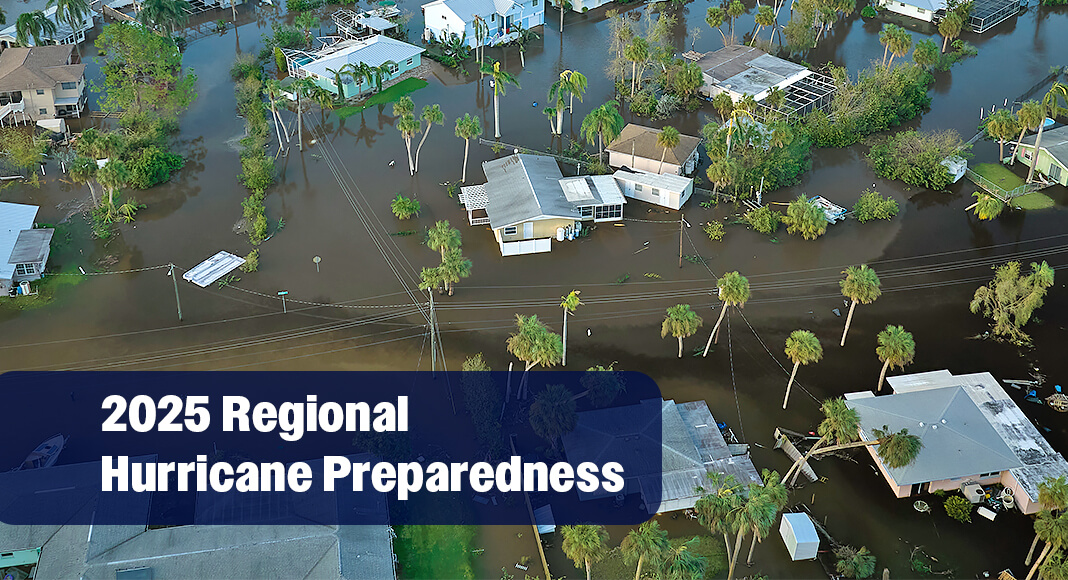
Even before the first hurricane threatens, the American Red Cross, Texas Gulf Coast Region, is working behind the scenes to make sure people don’t have to face the worst alone. Image for illustration purposes
Texas Border Business
American Red Cross
Even before the first hurricane threatens, the American Red Cross, Texas Gulf Coast Region, is working behind the scenes to make sure people don’t have to face the worst alone.
“At the Red Cross we never stop preparing for disasters because we know they can happen anytime, anywhere,” said Shawn Schulze, Regional CEO for the American Red Cross Texas Gulf Coast Region. “It’s critical that people make their preparations too. Large disasters are occurring almost continuously, and it only takes one to change someone’s life forever.”
Courtesy image
To prepare forhurricanes, the Red Cross focuses on coordinating response plans and readying both volunteers and supplies. For example, the Red Cross coordinates closely with government officials and community partners to make sure people will have access to safe shelter, food and water, and critical relief supplies when needed. We’re also actively recruiting and training volunteers that will be ready to step up and help their neighbors. And finally, we’re checking that our local response vehicles and warehouses are stocked and ready to go if needed.
TAKE THESE STEPS TO GET READY
Plan to evacuate and to shelter safely at home. The evacuation plan should include knowing where to go, how to get there, and where to stay. The stay-at-home plan should focus on gathering the right supplies to live safely without power, water, gas, phone or internet for several days.
Sign up for free local government emergency alerts, which will include important information such as evacuation orders in an emergency. Download the free Red Cross Emergency app for real-time weather alerts, open shelter locations and expert advice in both English or Spanish.
HOW YOU CAN HELP People look to the Red Cross for assistance every day and our volunteers help and support them on what often is one of their worst days. Because the Red Cross is operating in a state of continuous disaster response, there is an urgent need for new volunteers. Visit redcross.org/volunteer to learn more and sign up for free online training today.
There is a critical need for these key positions:
· Disaster Action Team (DAT): Help families in your community after a home fire or other disaster. DAT team members provide emotional support, emergency financial assistance and information to help families begin to recover.
· Shelter Volunteers:Ensure needs of shelter residents are metand help them access additional services.
· Disaster Health/Mental Health Services: Use your professional skills as a licensed health care provider to help meet people’s immediate needs in emergency shelters and refer them for ongoing, specialized care.
Like the people we serve, the Red Cross is proud that our volunteers represent a wide array of cultures, backgrounds, ages, gender identities, lifestyles and beliefs. Everyone is welcome. Join us today.
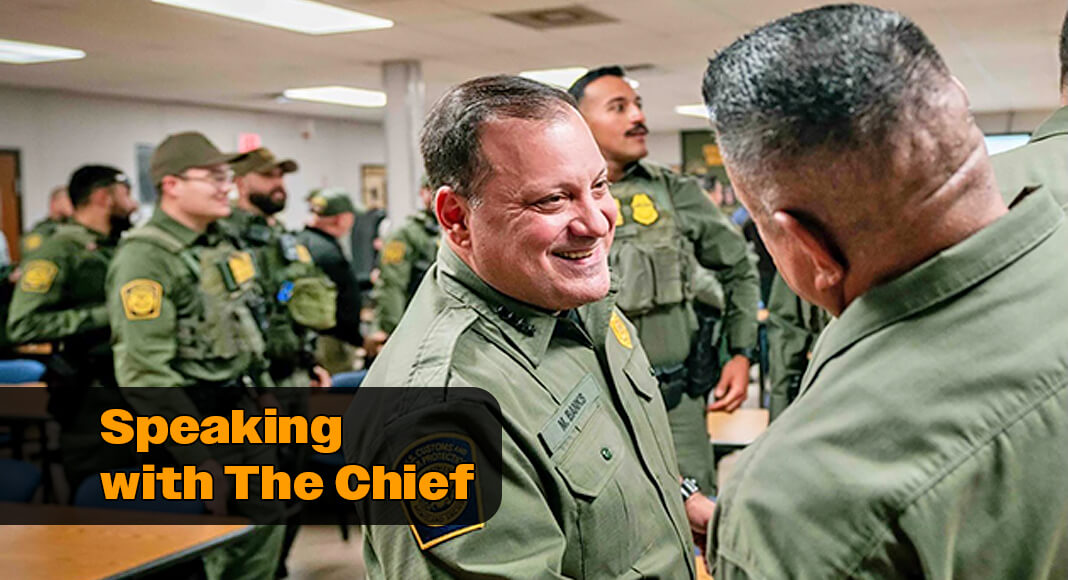
U.S. Border Patrol Chief Michael W. Banks speaks with a Border Patrol agent at the Calexico Border Patrol Station in El Centro, California, March 11, 2025. USBP photo by Julie Diaz
Texas Border Business
US Customs and Border Protection
Question:
Tell me about your early years. Where did you grow up, and how did your early life experiences influence who you are today? What from your past got you here and made you who you are?
Answer:
I grew up in a small town in Warner Robins, Georgia. I had a single mother – she was struggling to raise two of my older half-sisters. I had an absentee father, so I was predominately raised by my grandmother. She was retired on a fixed income, so I found myself working a lot to try to help my grandmother pay the bills.
I would do any job I could find. Anything from cutting grass to picking up debris. I think I got my first real job when I was about 14 years old. I’d work full time in the summer, often part time during the school year in the peach orchard picking peaches. And it was back-breaking work. You’d start before the sun comes up, picking peaches. You’d end by the time the sun went down back at the sorting shed.
I think growing up like that, struggling and having to work just to get through high school to kind of support myself and help my grandmother get by – it taught me work ethic. One of the things I like to say is that I may not be the smartest man in the room, but there’s nobody that’s going to outwork me.
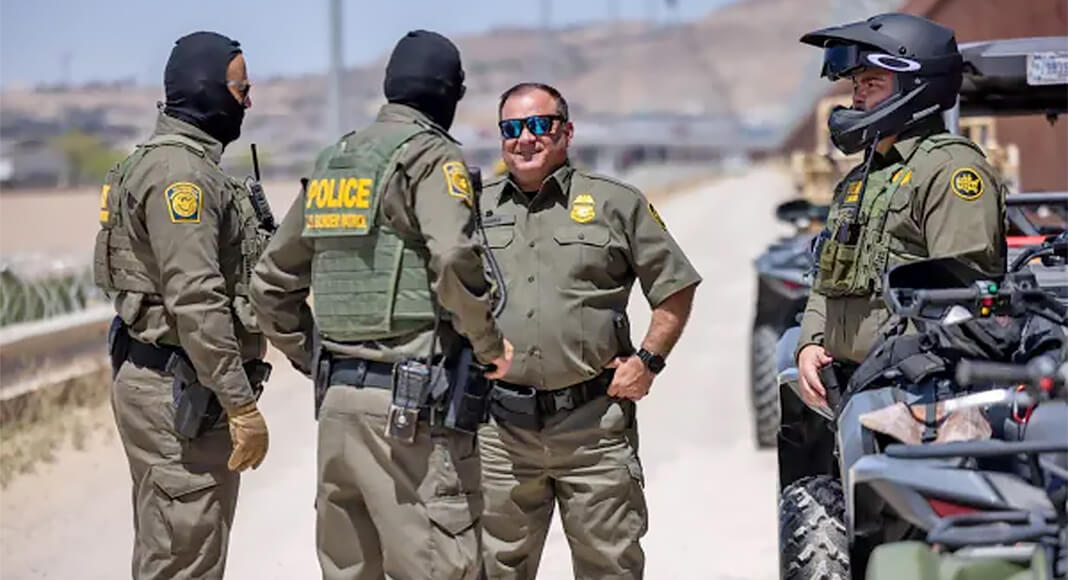
U.S. Border Patrol Chief Michael W. Banks speaks with Border Patrol agents assigned to the All-Terrain Vehicle Unit. USBP photo by Julie Diaz
Question:
What are three things those experiences taught you?
Answer:
I think the main thing is humility. It really gave me a sense of humility that I’ve held on to my entire career. Oftentimes, when you’re doing work like picking peaches and farm type work, you work alongside a lot of migrant farm workers, and you see that they’re supporting their entire family, doing what you’re trying to do just to support your grandmother.
So, compassion and humility. It really breaks it down for you, an understanding of what it takes to care for your family and to raise your family in this country.
Question:
What motivated you to join the U.S. Border Patrol back in 2000?
Answer:
I went into the military right out of high school. It’s pretty common for children from poor families to enlist in the military, so I enlisted in the military at 17. At 17, you still need your parents’ permission to join. My parents were willing to sign for me to join the military even though there was a looming war pending because they just couldn’t afford to feed me.
I went into the military and served about 10 years. I served in combat and in peacetime, both overseas and in the United States. I took advantage of the things the military had to offer, like tuition assistance and the G.I. Bill. I started going to school at night when I had time to.
After serving my country and obtaining my degree, I started looking for other options. Most of my career in the military I was in law enforcement, so I was really trying to find something where I could continue serving my country, continue giving back, and stay in law enforcement.
I met and became friends with a few Border Patrol agents. After having a few beers and listening to their stories, I knew the Border Patrol was for me. I applied to the Border Patrol and only the Border Patrol and got accepted and hit the ground running.
I will tell you every one of the stories that they shared were true, and it convinced me to join.
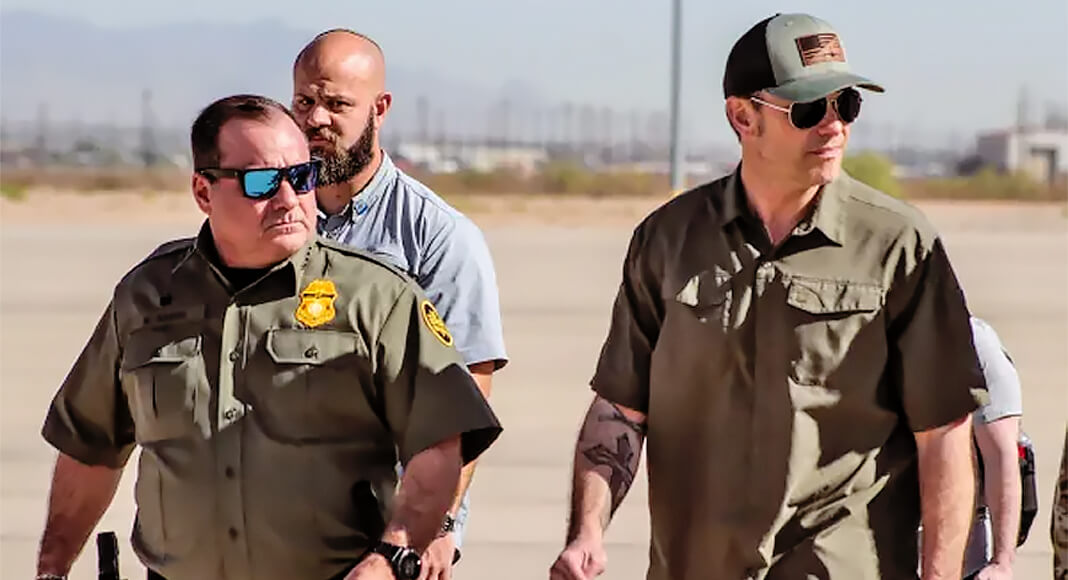
U.S. Border Patrol Chief Michael W. Banks with Secretary of Defense Peter B. Hegseth in El Paso, Texas, in February 2025. USBP photo by Maria Alatorre
Question:
What about law enforcement resonated with you?
Answer:
When I was a young kid, growing up poor and struggling, I participated in sports and felt the camaraderie, but I felt the adults in the school system really weren’t doing what they should have done. I didn’t realize it back then, but where they should’ve been encouraging me and trying to promote me [they weren’t]. They didn’t talk to me about college. They didn’t talk to me about anything other than let’s just get you through high school, get you a high school education, then you can go into the labor force somewhere. I had outstanding test scores and even graduated a year early. I didn’t realize it then, but they looked down on me because I was just this poor kid, and they didn’t feel like they had to invest time in me.
I got in a little bit of trouble when I was around 16 years of age driving without a license. I got stopped by a police officer, and the officer was so compassionate. He was more understanding than any teacher I ever had. He literally was like, look, this is your first offense. I know you’re not a troublesome kid. And he took me home to my grandmother. I promise you the punishment I got from my grandmother was far worse than I would have gotten from the judicial system. But he exercised that discretion and made the decision that he didn’t want to put me into a system for being a kid driving my grandmother’s car without her permission.
From that day forward, I knew I wanted to go into law enforcement. When I joined the military, I knew I was going to have a career in law enforcement. I wanted to have that kind of impact on people that I felt teachers and law enforcement officers should have on people.
I never turned back. I started my law enforcement career in the military and never looked back.
That one incident, that one time that I did something wrong and got caught, and the compassion and the discretion that officer used in that situation, was impactful on my life.
Question:
Can you tell us a little bit about your first day at the Academy?
Answer:
I’d been prior military and prior law enforcement. The marching, the uniforms, the grooming, the PT, even the law enforcement training came naturally.
I think everybody at the Academy worries about something different. For me, from the first day, it was Spanish, and I think the biggest reason why was on day one I found out that we didn’t have certified Spanish instructors. We had Spanish speaking Border Patrol agents. It was a big concern for me because I don’t hear things and learn it. I have to be taught. Everyone learns differently. I knew that about myself, so I struggled with Spanish through the entire Academy. I can tell you that if I wasn’t already proficient in a lot of those other aspects of the Academy, I probably wouldn’t have made it through.
I’d say about halfway through the Academy, suddenly it just clicked, and I started figuring it out. I had the nickname in the Academy, the Spanish Martyr, because every night after class, everybody would want to go out or do something. I’m like, “Nope, I’m in the Spanish lab, listening to Spanish tapes.”
Question:
What were the greatest challenges you faced as a Border Patrol agent?
Answer:
That’s a tough question. Probably the toughest challenge that I’ve had as a Border Patrol agent is getting people to understand what Border Patrol agents do. Even people that live on the border often will mistake what U.S. Border Patrol does with what Office of Field Operations does.
If you cross in between the ports of entry, no matter your citizenship, you’ve violated the law. But also, I think the American people don’t understand that the Border Patrol really is a small percent of immigration and much more about protecting our country – preventing foreign terrorists from getting into the country and preventing illicit drugs from getting into the country.
Our number one mission is to safeguard the country, prevent illegal drugs, weapons, and terrorists from coming into the country and doing us harm. I do really believe that if most Americans truly understood what our real role was, there’d be a whole lot more support for the Border Patrol. We have been fighting that for over 100 years. We’ll probably fight that for another 100 years. But I’m committed to messaging it every day as much as I can so that people truly understand what we do.
We shift from lifesaving, where some cowardly smuggler tosses a baby into the river and we immediately focus on saving that child, to going hands-on and getting in altercations and all out fights for our lives. We shift at a moment’s notice. We’re always going to be humane in the way we do our business, and I think that a lot of Americans don’t see that. A lot of Americans just see us as an agency out there that is just stopping immigration, and they don’t see the aspect of the weapons, the drugs, the terrorists that are coming into the country.
Question:
Who have been some of your mentors, and what did they teach you?
Answer:
This is tough, but not because I don’t have mentors that I can identify. It’s tough because there have been a lot of leaders, both informal and formal leaders, that have influenced my career and have shaped who I am. Both professional staff and law enforcement alike.
If I had to identify two people, one of the greatest influences of my career as a mentor was Chief Manuel Padilla Jr., who just recently retired. Something I absolutely loved about the way Chief Padilla led was he always put people first. Sometimes it didn’t work out, but that was his priority. His workforce was always his number one priority.
I know people say, well, yeah, that’s what a leader is supposed to do. But it is so hard today to find leadership that actually walk the walk. Chief Padilla, over my entire career, working with him on and off, he walked that walk every day. He made it about his people.
I try daily to emulate that leadership quality. I often find Chief Padilla on my shoulder talking into my ear. Is this what’s best for the agents? It’s kind of scary, but I hear him in my ear, asking me if this is what’s right for the agents. He is a huge influence on my career.
The other person I would say that was a phenomenal mentor is Jennifer Barreras-Rawls. She is probably one of the most intelligent, professional, smartest, and detail-oriented people I’ve ever had the joy of working for, with, and even led.
Detail-oriented can mean a lot of things, and it can get really frustrating trying to satisfy someone that is that detail oriented. But I can tell you that in my 35 years in a uniform, I’ve never worked for a more professional, detail-oriented, and intelligent leader.
Question:
You talked about the compassion of that police officer and how that was a pivotal thing, the act of kindness and compassion. Would you say that gave you the sense of the importance of mentorship, and if so, did you carry that into your career as you’ve gone through the leadership ranks?
Answer:
Absolutely – the chances he took on me and the risk he took that I was going to straighten up. I’ve gone back and met with that officer numerous times. I met with him after I graduated boot camp. The guy was just delighted and so happy to see what I was doing with my life.
I am from Georgia, and I graduated from the Academy in Glynco. I drove home for the weekend. One of the first things I did was go meet with that officer and let him know, hey, look, look at me, I’m in law enforcement now. This has influenced me greatly, and it is one of the biggest reasons I believe it is so important to make sure I’m mentoring people.
Question:
What inspired you to take on the immense challenge of being Chief of the Border Patrol?
Answer:
I think you’re right. This is an absolute immense challenge. And it’s not just a challenge because we’re trying to advance border security and protect the country, but over the last four years in the Biden administration, we saw a regression in border security. Every president since I’ve worn a uniform has done something to advance border security. Some at a greater level than others. But every one of them did something to advance border security.
The Biden administration did the exact opposite. They regressed border security, so, you’re coming into the Border Patrol at a time when morale is at an all-time low. You’re coming into the Border Patrol, where we not only have to get back to where we were at before the previous administration destroyed morale and border security, but you’ve got to advance it well beyond that.
It is an immense challenge. But I can tell you right now, I jumped in with both feet. I was excited to do it.
For the first two years of the Biden administration, I watched what they did to the Border Patrol and retired and went to work for the state of Texas. I watched what they continued to do to, not just the men and women of the Border Patrol, but to the mission of the Border Patrol and to border security. I couldn’t wait to come back and take on this challenge.
Question:
We know you’ve done many things throughout your career. What’s your favorite part of being here?
Answer:
It’s hard to say any one thing that I’ve done in the Border Patrol has been better than the other. But I can tell you what I love about the Border Patrol, and you won’t find this in any other agency. You definitely won’t find it in the military, and that is you can literally do a different job in the Border Patrol every year, and in 20 years, you still haven’t done it all.
In my 23 years in Border Patrol, I’ve done ATVs, horse patrol, bikes, boats, tunnel team, investigations, and prosecutions, etc., held numerous leadership positions, and I still haven’t touched half of what the Border Patrol has to offer. I think one of the greatest things about the Border Patrol is you don’t get bored.
In the Border Patrol, you can continue to advance. You can continue to move your career forward, and you can go do something else while staying inside of the Border Patrol.
There’s absolutely nothing you don’t get an opportunity to do. When you come out of the Border Patrol after 20 plus years, you know you’ve had a fulfilling career. I guarantee you’ll sit around and tell stories and people ask, how did you do all of that? Because no other agency offers that.
Question:
How has the situation at the southern border changed under the Trump administration? And what is making the difference on the front?
Answer:
The border has changed dramatically. I would say a complete 180 degrees, and here’s why. The United States Border Patrol knows how to secure the border. We just needed an administration that would empower us to do it, support us, provide us with the resources, and let us go do it.
We’re a few months into this, and we’re just getting started. We’ve seen a level of success that most couldn’t have imagined. Under the previous administration, we saw massive amounts of people being allowed into the country. We even had instances where we were literally directed to get out of the way and allow these masses to continue to come into the country. Absolutely zero enforcement of our nation’s laws, absolutely zero deterrents.
Our number one mission in the Border Patrol is to deter anyone from wanting to come in illegally. Then I think of the other key factor we must look at is the level of consequences. We are providing a consequence now. Where there’s action comes consequences. You now have the probability of being detected, apprehended, and then prosecuted and returned to your country or both.
That is a huge deterrent. We see that in the reverse migration. We are working with our foreign partners, and they’re constantly informing us of large groups that are walking south from Mexico back to Guatemala. When they’re being intercepted, they’re saying, “Hey, we’re realizing that the border is secure. We’re not going to go.”
It’s the agents. They know what to do. When they’re not stuck inside processing massive amounts of illegal aliens and they’re actually out there doing law enforcement, then you have that deterrent effect. It’s deterrence. It’s consequences. It’s having the support of this administration. It’s having the support of Secretary Kristi L. Noem, who is tough as nails.
It’s knowing that leadership has your back. That is important, messaging from this administration and from our secretary is important. They’re getting out there, talking to agents. They’re letting them know your mission is important, and we support you.
I went to Del Rio with Secretary Noem, and her intent behind that trip was to speak to those horse patrol agents that, as you guys are aware of, were slandered by the president and the Secretary of Homeland Security, tried and executed on public TV, and after a long investigation, guess what? They did absolutely nothing wrong. Secretary Noem made it a priority to get down there her first couple of weeks in office to say what happened to them was unacceptable and that we’re not going to tolerate that.
While the previous administration rode over the Border Patrol, this administration is riding with us. I think that is huge because nothing motivates agents more than knowing that if they go out there and do their job, they’re not going to be tried and prosecuted on national TV by the administration. This administration supports us. That’s been huge in getting our morale back up. It is phenomenal the level of work these agents are doing. We’re Border Patrol – turn us loose and let us do the job that we’re trained to do. We’re going to get the border secure, and we are closer than we have ever been. Our country right now has the most secure border it has had in recorded history. We’re a few months into this administration. We’re just getting started. It’s all gas, no brakes downhill.
Question:
In a nutshell, border encounters are flipping historic highs from the previous administrations with historic lows since the administration changed in January 2025. How has the Border Patrol adapted to these changing trends?
Answer:
The U.S. Border Patrol has been adapting and overcoming for over 100 years. We’ll be adapting and overcoming for 100 more years. The fact is, this is probably the first time in the history of the Border Patrol where we’ve had this level of support, as a whole-of-government approach is being applied.
We’re seeing our prosecutions go through the roof. In the last two days, we’ve had 100 percent prosecutions. Everything we’ve submitted for prosecution has been accepted. So, there is that consequence. We’re adapting. It’s a whole lot easier to adapt being allowed to do your job than it is adapting while being held back from doing your job.
I knew morale was at an all-time low when I came back into the Border Patrol, and my biggest worry was how do we get this morale back to where it needs to be? I can tell you, agents being allowed to do their job has been one of the biggest morale boosters that I’ve seen.
You want to talk about a resilient workforce? The morale has bounced back phenomenally. It’s not because the American people are cheering them on – don’t get me wrong, it is great having that support – but what’s better than that is simply being allowed to do the job they signed up for.
Allow the agents to do their job, and look where we’re at. A 95 percent decrease in traffic. A 97 percent decrease in gotaways in just a few short months. It’s historic.
Question:
What’s the most important aspect about the Border Patrol that media and the public overlooks in the myriad of debates and discussions about border security?
Answer:
I think what they overlook is the number of narcotics, the amount of crime, the number of terrorists that are being kept off the streets when Border Patrol agents are doing their job. Once again, this is not only about immigration. It is about border security and knowing what is going to come across the border.
This country was built on immigrants and will not survive without immigrants. It was done so with legal migration and will continue to grow and be a better country based on our legal pathways. What you can’t do is come in between the ports of entry unvetted so we don’t know what is coming into this country. This is our house. We’re a very inviting country, but we want to make sure that those that are entering into our country are being invited into our country, and we know who we’re letting into our home.
Question:
You talked about the importance of legal immigration. Would you define legal immigration as those immigrants who are wanting to come in with respect to the sovereign borders of the United States?
Answer:
The sovereignty of every nation is what makes them a nation. If you have no sovereign borders, you’re no longer a nation. Our immigration laws are designed to protect that sovereignty of our nation. We’re open for legal immigration, but you must come here legally.
Now, if you want to come here illegally and try to violate the sovereignty of this country, you’re going to be apprehended, you’re going to be prosecuted, and you’re going to be returned to your country.
Question:
In your opinion, during the course of your career, what has been the most significant technology that has impacted Border Patrol operations?
Answer:
If you asked me today what the most significant technology is, that answer will change in two weeks because it continues to advance. I think the most important thing we’ve seen is the wall system. We talk about the wall, and people say that’s infrastructure. It’s not technology, but we don’t build a wall and walk away from it. We have a wall system. That wall system comes with cameras. It comes with ground-based radar systems, ground sensing systems that helps us have situational awareness of the border.
I think every piece of technology that gives us situational awareness has been phenomenal. One of the strongest things I’ve seen develop over the last few years is the ability to apply AI to our camera systems and why that is so important to us. If we have Artificial Intelligence monitoring a bank of, say, 34 cameras in one location, AI can ping that officer or that agent and say, you want to look at this versus local traffic.
What we require is to place more officers and agents out in the field making the interdiction and not have them sitting in a tactical operation center operating 34 cameras. It has been a huge force multiplier for us. It allows us to put less agents monitoring cameras and more agents where they belong.
Question:
Border Patrol agents face more assaults than just about any other law enforcement personnel. How can we better protect agents?
Answer:
I think we’re already starting to see that. First and foremost, we need to train and equip our agents to go out and win the fight every time. Now, in addition to training and equipping our agents to make sure that we’re going to win that fight every time, we also have to make sure there are consequences.
We talked about how under the previous administration the number of illegal aliens that were prosecuted for assaulting agents was little to none. We would often hear questions like, is the agent in the hospital? Is the agent losing time off work? If the answer was no, then the reply was we’re not going to take the case. Not under my watch, not under this administration.
Right now, since January of this year, every single assault that has happened against an agent has been prosecuted. We’ve had 100% prosecution. And guess what? The assaults are starting to go down. Once again, actions have consequences. If you lay a finger on one of our agents, we’re going to prosecute you to the fullest extent of the law. Once the word starts getting out that, hey, if you touch a Border Patrol agent, if you assault a Border Patrol agent, you will be prosecuted, which has led to assaults going down.
We’re also protecting our agents not just by arming them, equipping them, or only training them, but also ensuring that there’s consequences for those actions, which, again, drives down those numbers. We have seen a drastic decrease in assaults in the last few months on the U.S. border, and we expect those numbers to continue dropping.
Now, let me be very clear. I understand that there are going to be times where someone is going to be so desperate to get away that they’re still going to choose to fight. My job is to make sure that those agents are ready for that fight, and they’re ready to win that fight when it happens.
Question:
Thinking back to when you were an agent, what were some programs – or the lack thereof – that helped or would have been beneficial while serving?
Answer:
I think resiliency is where the Border Patrol was lacking, and we’ve made significant progress. I don’t believe we’re ready to say we’ve won yet, but again, it’s in resiliency. Having come out of the military, being warfighters, resiliency has always been a very important part of the military.
I believe we’re proving that we’re doing some things right, but I know we can do better. We need to invest more into our workforce. If you take care of your people, they’re going to take care of the mission.
We’ve come a long way. I’ve watched our resiliency program grow over the years. I’ve been very impressed with it. But we’re constantly reviewing it. I always tell my people, once you’ve done a good job, pat yourself on the back for about two minutes and then figure out what you can do to make it better.
Question:
You kind of hit on it, but what are your views on caring for the workforce and their families?
Answer:
Border Patrol talks about being a green family, and we mean it. I’ve seen the camaraderie and the family mentality in the Border Patrol, more so than I’ve seen it in the military, but we have to make sure we’re walking that walk. We have to continue investing in our families. When we’re investing in our employees, that includes their families.
We’ve expanded our peer support program and a lot of other resiliency programs to include immediate family members. We’re going to continue doing that.
We’re also investing heavily into our morale, welfare, and recreation to ensure that we are offering events and activities that bring families together, such as family days. I think it’s very important for those families to be able to come to the office and see what those agents do every day, what they’re dealing with every day.
Having families able to come and interact with us at work, interact with the command staff. I think it opens their eyes. We are heavily invested in it.
I can promise you we will not be backing off that investment, and we will be advancing it.
Question:
You talked about Border Patrol being a family. In short, tell me what you mean by that.
Answer:
The U.S. Border Patrol is truly a green family. We have each other’s back. We’re always going to be there for each other. Like any family, we fight like brothers and sisters, but we are a family. We’re there to support each other in times of need, whether it’s on or off duty. In 35 years in uniform, I’ve never been in an organization that wears that title more proudly. And that is – we are a green family.
Question:
Who was Michael Banks before the Border Patrol, and who is Michael Banks now? What has the Border Patrol given you that you didn’t have before?
Answer:
The Border Patrol’s given me a lot. It’s given me perspective. It’s given me knowledge. I have been to places with the U.S. Border Patrol that I didn’t even go to with the military. I have seen some of the most heinous crimes against women and children, serving on the border. It’s opened up my eyes and given me perspective.
I have grown immensely, not just as a leader, but as a human being. I’ve had to learn compassion at a level that I never even knew I could find. It’s just been amazing. The Border Patrol has made me a better father. It’s made me a better husband. And it’s definitely made me the leader I am today.
I owe a lot to the Border Patrol. That is one of the main reasons why I jumped at the opportunity to come back into the Border Patrol and lead us forward into the future.
Question:
What are the most pressing challenges facing the Border Patrol today? What keeps you up at night in terms of long-term concern and going into the next day? Or as you go out the door?
Answer:
There’s a lot that keeps me up at night. We’ve got a lot on our plate. We’ve got a lot to do. I honestly believe what keeps me up the most at night is two parts.
The first is making sure that I’ve done everything in my power to ensure my agents are armed with the right equipment and level of training to make sure we win that fight every time. Every agent must go home at the end of shift – that keeps me awake every night.
I think the second thing is gotaways. For those who don’t understand what gotaways are, they are those unknowns. Historically, when people try to get away, when they invade, when they go to extremes to evade, they’re doing so because they’ve got a background that prevents them from coming into this country legally.
My concern is that every gotaway is a possible terrorist. Every gotaway is a possible criminal. Every gotaway is going to impact our communities with increased levels of crime. It’s going to put Americans at a greater risk of being a victim of violent crime. Every gotaway is a possible drug load that poisons our communities.
The United States Border Patrol will be unapologetic in its enforcement of our nation’s laws.
We will secure the border.
Question:
What kind of advice would you give someone contemplating a career in the Border Patrol?
Answer:
I would tell them, you know what? There’s no greater mission than that of the United States Border Patrol. I’ve served my country for over 35 years in one form or another, and nothing has been more rewarding to me than serving in the United States Border Patrol.
I’d also let them know that it’s not going to be easy. Our Academy is one of the toughest academies out there, but when you graduate from the U.S. Border Patrol Academy, you’re going to know that you earned that badge. You need to prepare yourself for an adventure. It is truly an adventure, and you will end a career having fulfilled a great mission of securing our border and protecting our nation.
Question:
Looking forward to what is next for the U.S. Border Patrol, what’s on the horizon?
Answer:
Great things are on the horizon for the Border Patrol. You know, I say this is the best time in the history of the Border Patrol to be in the Border Patrol. We are going to be building the wall at a rapid pace. We’re going to start resuming the wall we were building four years ago. We’re going to be putting in waterborne buoy barriers to add another layer of defense. We’re going to be upgrading our fleet. We’re going to be investing more into our workforce. We’re going to be hiring more agents, increasing the number of agents that we have deployed to ensure we win the fight.
There’s never been a better time to be in the Border Patrol. I couldn’t be more excited about being the Chief of the Border Patrol. I’m honored to be given the opportunity to come back and work for the men and women of the U.S. Border Patrol because we’re doing great things.
I’m excited about it. Every day we’re gaining more control of our border, and the future is very bright for the United States Border Patrol.
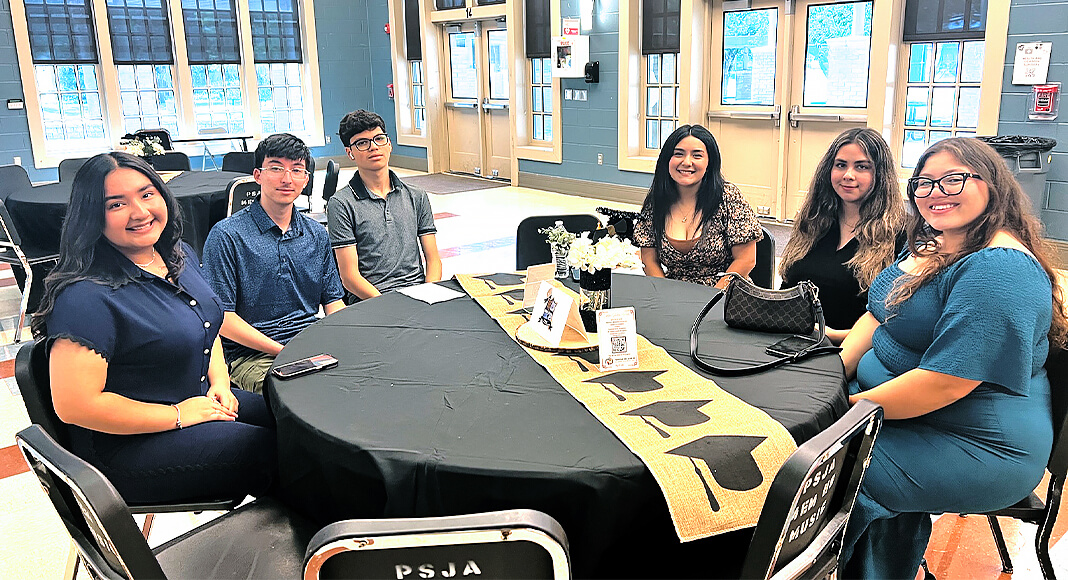
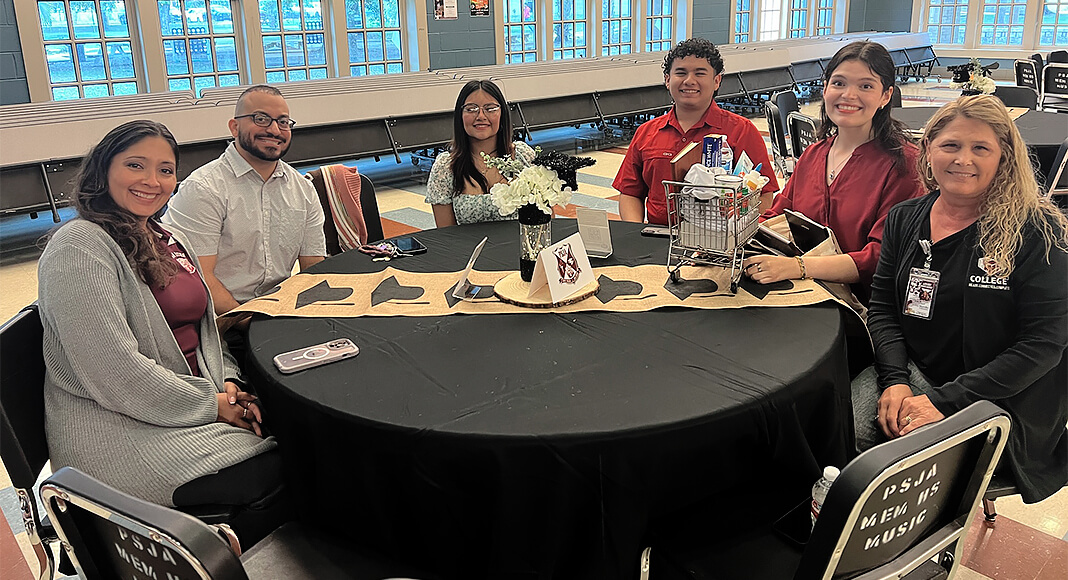
The Pharr-San Juan-Alamo Independent School District hosted its annual Capstone Scholars Awards Luncheon at the PSJA T. Jefferson T-STEM Early College High School Cafeteria, showcasing the district’s top-performing Capstone students and their yearlong, college-level research projects. Image courtesy of PSJA ISD
Texas Border Business
PHARR, Texas – The Pharr-San Juan-Alamo Independent School District hosted its annual Capstone Scholars Awards Luncheon at the PSJA T. Jefferson T-STEM Early College High School Cafeteria, showcasing the district’s top-performing Capstone students and their yearlong, college-level research projects.
Each PSJA ISD high school honored its top three Capstone scholars, with one student per campus selected to present their work to a panel of judges. From these finalists, one scholar was named the PSJA ISD District Capstone Champion—earning top recognition for academic excellence, innovation, and impact.
Image courtesy of PSJA ISD
“This event was a distinguished celebration of academic excellence, critical thinking, and student voice,” said Michael Murray Carreon, PSJA ISD Director of Advanced Academics. “It provided a meaningful platform for students to share the results of their in-depth, original research—work that truly reflected the values of a future-ready education.”
Students graduating under the Distinguished Level of Achievement with Collegiate Honors (DLACH) graduation plan at PSJA ISD are required to complete a rigorous Capstone Project by the end of the 5th Six Weeks. This comprehensive, college-level research experience is a hallmark of the district’s most prestigious graduation pathway, designed to challenge students to think critically, investigate real-world issues, and propose meaningful solutions. More than just an academic requirement, the Capstone Project exemplifies PSJA ISD’s commitment to preparing students for success in higher education and beyond—fostering scholarly independence, communication skills, and a deep sense of purpose.
Image courtesy of PSJA ISD
“Our students were driven by the opportunity to explore topics they cared deeply about—whether it was climate action, clean water, education, or inequality,” said Carreon. “They weren’t just completing an assignment; they were contributing their ideas to important global conversations.”
Throughout the Capstone journey, students learn to craft original research questions, evaluate credible sources, synthesize evidence, and present well-founded solutions.
Image courtesy of PSJA ISD
“The Capstone Project prepares students for college by helping them develop the academic and personal skills needed for success in higher education,” said Dr. Nora Rivas-Garza, PSJA ISD Executive Officer for Secondary Schools. “It also builds confidence and gives them a sense of ownership over their learning, which is essential for thriving in a college environment.”
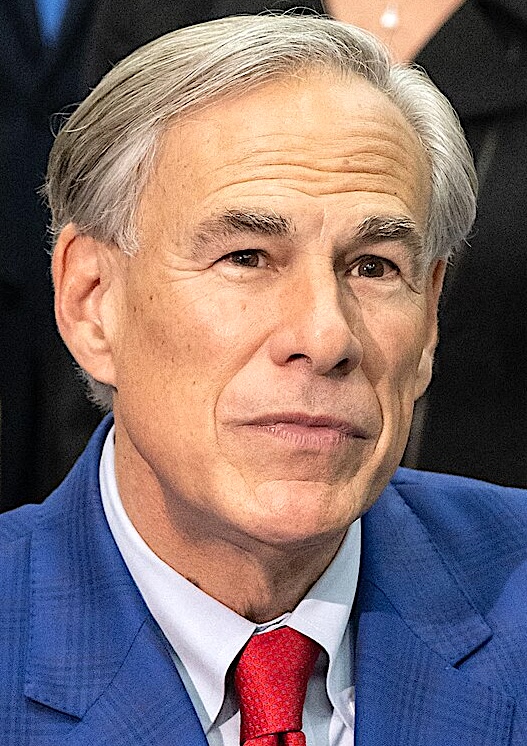
“With the dramatic population growth that Texas continues to experience, our water supplies are drying up, impacting Texans and communities across our great state,” said Governor Abbott. Image for illustration purposes
Texas Border Business
AUSTIN – Governor Greg Abbott commended the Texas Legislature for making a Texas-size investment in the state’s water infrastructure following passage of Senate Bill 7 and House Joint Resolution 7.
“With the dramatic population growth that Texas continues to experience, our water supplies are drying up, impacting Texans and communities across our great state,” said Governor Abbott. “This Texas-size water package is critical to fix broken and leaking pipes and give our agriculture producers in the Rio Grande Valley and West Texas the water they need to grow their crops. Thanks to the efforts of Lieutenant Governor Dan Patrick, Speaker Burrows, Senator Charles Perry, and Representative Cody Harris, Texas will make a generational investment to our water infrastructure and tap into new water supplies. I look forward to swiftly signing Senate Bill 7 into law, and I encourage Texans to pass the constitutional amendment this November to put Texas on a path to have plenty of water for the next 50 years.”
In his 2025 State of the State Address earlier this year, Governor Abbott declared a Texas-size investment in water infrastructure an emergency item this legislative session.
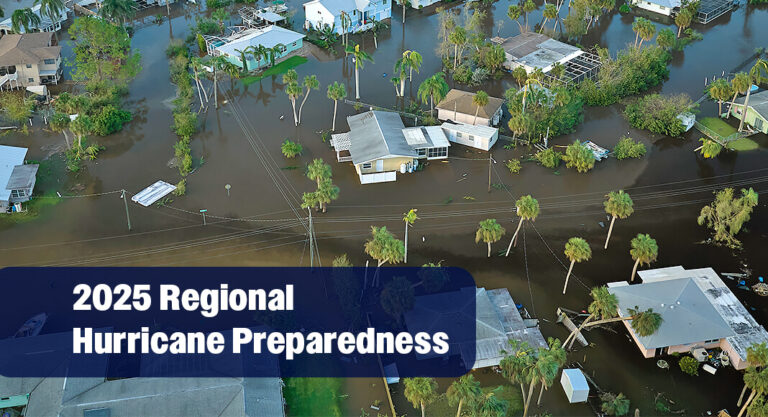
With hurricane season quickly approaching, the City of Edinburg, in conjunction with Hidalgo County and the cities of Alamo, McAllen, Mission, and Pharr, hosted a Joint Regional Hurricane Preparedness Press Conference. Image for illustration purposes
Texas Border Business
With hurricane season quickly approaching, the City of Edinburg, in conjunction with Hidalgo County and the cities of Alamo, McAllen, Mission, and Pharr, hosted a Joint Regional Hurricane Preparedness Press Conference to highlight the multi-jurisdictional collaboration and provide residents with crucial information about their cities’ disaster response plans, past experiences, and available resources before and after a hurricane strikes.
Governor Greg Abbott, Lieutenant Governor Dan Patrick, and Speaker Dustin Burrows lauded the passage of Senate Bill 4, Senate Bill 23, House Bill 9, Senate Joint Resolution 2, Senate Joint Resolution 85, and House Joint Resolution 1. Courtesy images. Bgd for illustration purposes
“Never before has the Texas Legislature allocated more funds to provide property tax relief than they did this session,” said Governor Abbott. “I thank Lieutenant Governor Patrick, Speaker Burrows, and the members of the Texas House and Senate for providing Texans with badly-needed property tax reductions. I will sign these bills into law to deliver lasting relief for Texans and their families, and I urge Texans to approve the new increases in the homestead and business property tax exemptions this November.”
“When I became Lieutenant Governor in 2015, the homestead exemption was a tiny $15,000,” said Lieutenant Governor Patrick. “Since then, we have increased it to $100,000, and with the passage of Senate Bill 4 and Senate Bill 23, it is now $200,000 for seniors and $140,000 for non-seniors. The average senior homeowner will no longer pay any school property taxes for the rest of their life as long as they live in their home. Homeowners under 65 years old will now see almost 50% of their school taxes cut. Nearly 25% of our all state funds budget this year is going to property tax relief. We have come a long way in the last 10 years, when only a small percentage of our budget went to property tax relief.”
“With the Legislature’s overwhelming passage of additional property tax relief, Texas home and business owners are on their way to keeping more of their hard-earned money,” said Speaker Burrows. “Texas House members worked with our Senate counterparts to deliver these savings. I want to thank House members for coming together to pass this priority legislation, and I look forward to Texas voters approving these measures on the ballot this fall.”
In his 2025 State of the State Address earlier this year, Governor Abbott declared property tax relief an emergency item this legislative session.
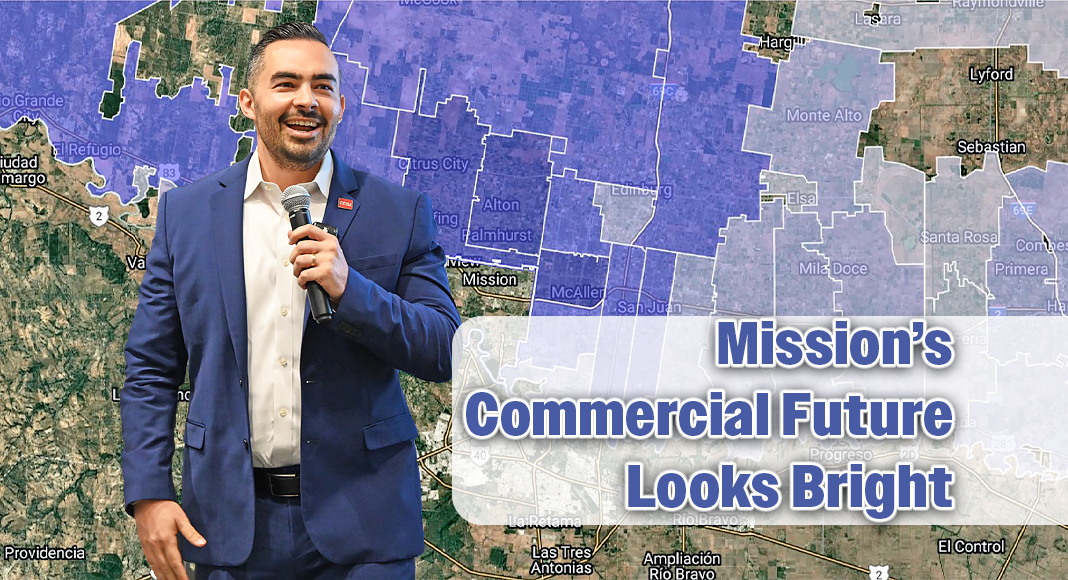
Mark Hanna, CCIM, addresses attendees at the CEED building during the Mission EDC Commercial and Investment Tour, sharing insights on market trends and investment opportunities in Mission, Texas. Photo By Roberto Hugo González
Texas Border Business
By Roberto Hugo González
On May 28, 2025, the Mission Economic Development Corporation (Mission EDC), led by CEO Teclo Garcia, hosted a Commercial and Investment Tour at the Center for Education and Economic Development (CEED). The event showcased four developers whose work is reshaping Mission, Texas. It featured a panel discussion, virtual tour, and market update presentation by Mark Hanna, CCIM, owner of SVN | Hanna Solutions Commercial Real Estate.
Hanna, who also sponsored the event’s breakfast, offered a detailed overview of the Mission commercial real estate market using 10 years of data from CoStar Group Inc. and recent geolocation insights from Placer.ai. “When we look at real estate, we often like to look from one day to the next, right?” Hanna said. “But the best way to look at a market is over time. Historically, is it a safe place, a sound place to invest?”
According to Hanna, the answer to the Mission is yes. Drawing on CoStar analytics, he pointed to a decade-long upward trend in both retail and industrial lease and sale prices. “Look at the trend,” he told the audience. “It’s going up. Are prices going down? No. When we look at CoStar’s five-year forecast, they don’t predict a decline either.”
He stressed that this growth reflects a healthy and maturing market. “If you’re a landlord looking to lease or a business owner looking to purchase, you want to know that over time your value is going to appreciate,” Hanna said. “And based on the last 10 years, it has. That means you’ve made a solid investment.”
Vacancy rates further supported the picture of a strengthening market. “It’s one thing to ask $20 or $30 a square foot annually,” Hanna said. “But are your spaces occupied? In Mission, the retail vacancy rate has decreased for 10 years.” While he acknowledged some fluctuation ahead, he emphasized the city’s sound fundamentals. “We can look at data and make calculated decisions. The city of Mission is a safe and sound place to invest.”
Hanna also highlighted the emerging strength of Mission’s industrial sector, driven in part by infrastructure projects like the Anzalduas International Bridge. “That’s going to be a big asset not only to the region, but specifically to the city of Mission,” he said. He noted that while industrial vacancies had been volatile in the past, they are forecasted to stabilize. “The rest of the United States, the region, Mexico—they’re looking at this area as the next place for industrial growth.”
Geolocation data from Placer.ai added another layer of insight to Hanna’s presentation. Using geo-fencing technology, the platform tracks real-time consumer movement and origin data. “Now with Placer.ai, we’re literally able to see not how many people pass in front of a business, but how many people went inside, what their average dwell time was, and where they came from,” Hanna explained.
According to the data, Mission draws significant non-resident traffic from surrounding cities such as McAllen, Edinburg, and Pharr. “McAllen is the biggest fan of Mission,” Hanna said. “They’re visiting—8.2 percent of visitors are from there. Everyone from the Valley is coming this way.”
Two local ZIP codes, 78574 and 78573, comprised the largest share of visitors to the 78572 area, with 21% and 12% respectively. This supports Mission’s position as a regional hub for retail, services, and economic activity.
Hanna closed his presentation with a call to action for investors and developers. “We have positive growth trends over the last 10 years,” he said. “Placer.ai is telling us that the entire Valley, in some way, shape, or form, is coming to Mission. The future is bright. The question is: how do we build more retail, more housing, more industrial? We’ve got more people searching than there’s available space, which is an amazing problem to have.”
Mission EDC CEO Teclo Garcia echoed the value of the insights provided. “It is what helps inform our decisions here at the EDC,” he said.
Below is the PowerPoint presentation presented by Mark Hanna during his market trends briefing.
Space Fest is positioning Brownsville as a hub for space and innovation by attracting industry attention, boosting small business engagement, and opening doors for future investment. Image courtesy of The City of Brownsville
Texas Border Business
BROWNSVILLE, Texas – The City of Brownsville (COB), its Convention and Visitors Bureau (CVB) and Office of Space Commerce, in collaboration with its Greater Brownsville Incentives Corporation (GBIC), are set to host the 2nd Annual Brownsville Space Festival. The community event is scheduled for Friday, May 30, 2025, from 6:00 PM to10:00 PM in downtown Brownsville, spanning more than four blocks from E. 10th Street and E. Washington Street, including the Brownsville George Ramirez Performing Arts Academy – Revival of Cultural Arts (ROCA).
This dynamic event celebrates Science, Technology, Engineering, and Mathematics (STEM) through the lens of space exploration and innovation. It coincides with National Travel and Tourism Week, underscoring Brownsville’s rising profile as a destination for aerospace, culture, and community.
“The Brownsville Space Festival is a celebration of our City’s role in shaping the future of aerospace and STEMeducation,” said Mayor John Cowen, Jr., City of Brownsville. “As we continue to expand our relationship with the space industry, now is the perfect time to highlight the opportunities and innovation taking root in Brownsville.”
More than 120 vendors and exhibitors will bring an incredible celebration to downtown, including major players such as SpaceX and NASA, in addition to local businesses, educators, and artists. Attendees will enjoy a wide range ofeducational booths, panel
discussions, art contests, exhibitions, a feature film screening, free giveaways, a live concert, and food trucks (food and beverages available for purchase). Downtown restaurants will also be open to welcome guests.
“Our Space Festival is an invitation to our residents, downtown businesses, and tourists to take part in our City’sgrowth story,” said Helen Ramirez, ICMA-CM, AICP, Brownsville City Manager. “Embracing and partnering in thisfestival ensures that we move forward together culturally, economically, and educationally.”
The City’s Convention and Visitors Bureau is partnered with local hotels to offer discounted hotel rates to those travelling into Brownsville to attend the Space Festival. Partner hotels and rates may be found at: https://www.instagram.com/p/DJ92PmqPYHn/.
“Our first ever Brownsville Space Symposium is designed to provide a glimpse into the space industry, its ancillary space businesses and space education, all of which have a significant economic impact in our region. By sharing thenarratives of different leaders and influencers in this industry, we continue on our mission of developing the pipeline of talent and expanding the local supplier base in the space sector, which has become a huge part of the fabric of theBrownsville area,” said Gilberto Salinas, CEO of the GBIC, the economic development arm of the City. “Most importantly, we’re developing our future leaders in Brownsville’s rapidly evolving space economy.”
The Space Festival and all its events are FREE and open to the public. Entry locations are at E. 10th Street and E. Adams Street and 11th Street and E. Elizabeth Street. There will be free shuttle rides provided by BTX Connect andBrownsville Pedicabs across downtown to the event site. Please note that all attendees will be subject to securityscreenings. Clear bags are required for entry.
Calendar of Events:
Tuesday, May 27 | Launch window opens at 6:30 PM CST
Texas Southmost College – SETB Auditorium | 80 Fort Brown, Brownsville, TX
Panel discussion to highlight the cutting-edge advancements and investments in the aerospace industry. Event will include keynote speaker Tim Dodd, also known as
“Everyday Astronaut.” Mr. Dodd is a former aerospace engineer now known for his YouTube channel and Instagram account, where he discusses space exploration, rocketry, and technology. His videos are produced for general consumption and are accessible and entertaining.
Downtown Brownsville | E. 10th Street & E. Washington Street to ROCA
Featuring NASA, SpaceX, STEM booths, live music, art contests, and more. Event will open with a panel discussion featuring Texas Space Commission Executive Director, Norman Garza; Brownsville City Mayor, John Cowen, Jr., Brownsville Youth Advisory Board Member and Space Enthusiast, Rayyan Farooqui; and moderator Brownsville City Manager, Helen Ramirez. It will feature live robotic demonstrations and more than 100-exhbitors and vendors. An art contest will be hosted for children and adult divisions at the ROCA. Art contest participants can view the rules and register at: https://www.surveymonkey.com/r/spacefestartcontest. The event will be headlined by a live music concert featuring recording artist AB Quintanilla.
Saturday, May 31 | 10:00 AM – 4:00 PM
Titans of Space Day
Children’s Museum of Brownsville | 501 E. Ringgold Street
STEM activities, space exhibits, family-friendly programming; experience the incredible VR journey, drones, robotics, and a planetarium – fun for kids of allages!
The Texas Health and Human Services Commission is urging health care facilities, child care operators and other providers to update their safety procedures and emergency response plans as the 2025 Atlantic hurricane season begins on June 1. Image for illustration purposes
Texas Border Business
AUSTIN – The Texas Health and Human Services Commission is urging health care facilities, child care operators and other providers to update their safety procedures and emergency response plans as the 2025 Atlantic hurricane season begins on June 1.
The National Oceanic and Atmospheric Administration forecasts a range of six to 10 hurricanes in the Atlantic Ocean this season. Of those, three to five are expected to be major hurricanes of Category 3 or higher. An average Atlantic hurricane season has three major hurricanes.
“We’ve seen the dangerous and sometimes deadly consequences of severe weather in Texas,” said Stephen Pahl, deputy executive commissioner of HHSC Regulatory Services Division. “That’s why it’s so important to have a current emergency preparedness plan that staff can implement quickly and effectively to protect vulnerable clients.”
Harlingen Mayor Norma Sepulveda. Photo by Roberto Hugo González
Texas Border Business
By Roberto Hugo González
Mayor Norma Sepulveda delivered the 2025 State of the City Address on May 29 at the Harlingen Convention Center, under the theme, “A City Working Together, Working for You.” The evening brought together city commissioners, staff, partners, and residents to reflect on Harlingen’s recent progress and outline future priorities.
“We are building more than just a city. We’re building a community that rises together,” Sepulveda said during a video presentation that opened the event. She emphasized teamwork, resilience, and fiscal responsibility throughout the address.
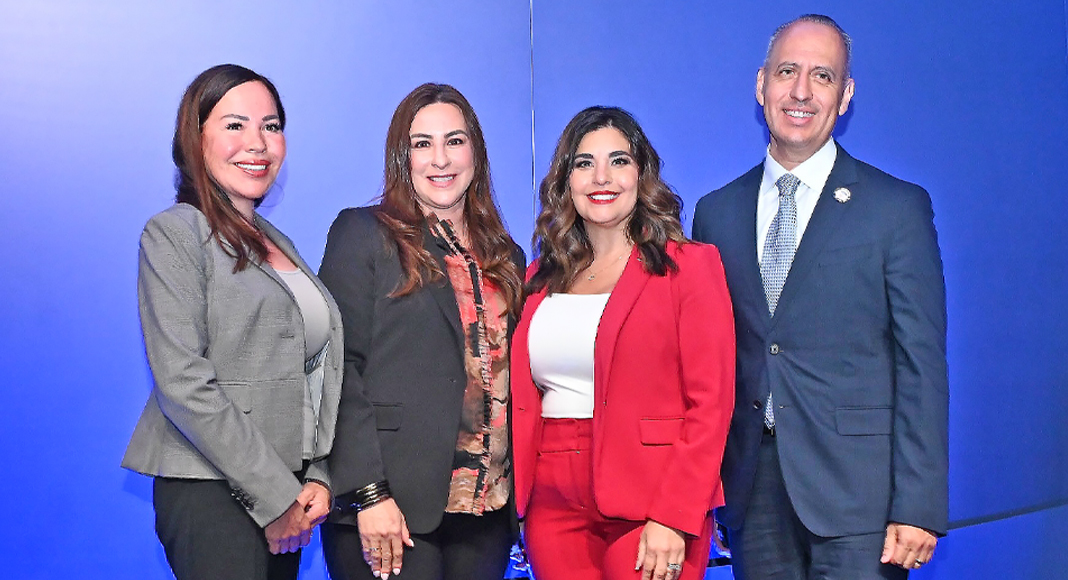
Mission City Commissioners Marissa O. Gerlach and Jessica Ortega join Harlingen Mayor Norma Sepulveda during her 2025 State of the City Address—Edinburg Mayor Ramiro Garza stands at far right, highlighting cross-city support in the Rio Grande Valley. Photo by Roberto Hugo González
One of the most significant events addressed was the historic flood in March 2025, which delivered 22 inches of rain in a matter of hours. The city responded by activating emergency protocols immediately. “This convention center turned into a shelter in just one hour,” Sepulveda recounted. “Public work crews were already on the ground… and by the next morning, strike teams from across the state of Texas had arrived.”
She praised the city’s coordination during the crisis. “Not one single life was lost,” she said, crediting emergency responders, volunteers, and neighboring cities. The convention center became “a hub of hope,” offering shelter, meals, and comfort to displaced families.
The city’s drainage infrastructure has since received intense focus. Sepulveda noted, “We completed the work [on HPD detention pond for less than half the cost, saving taxpayers nearly $400,000.” Over $19 million in grants have been secured, with an additional $33 million in applications submitted. “We don’t wait for help. We go after it,” she said.
Harlingen launched its first-ever in-house paving crew in transportation, reducing outsourcing costs and accelerating road improvements. “This year alone, our crews are on track to repave more than seven miles of roads,” she said. The city has also made operational improvements, such as restructuring trash collection to save over $160,000 annually in fuel and repair costs.
Sepulveda reported strong economic indicators. The city’s fund balance increased to $38.1 million, property tax rates dropped 12%, and the debt burden decreased by 25%. “Through smart planning, conservative budgeting, and bold leadership, we have built the strongest financial foundation in our city’s history,” she said.
Sales tax revenue also rose by 7.7%, reflecting nearly $1.7 billion in local spending. “It shows just how committed our community is to shopping local,” Sepulveda said.
The city added 2,454 new housing and commercial development lots since 2022 and voluntarily annexed nearly 500 acres. “People are not being pushed into Harlingen. They are choosing to be here,” Sepulveda stated. A planned $94 million mixed-use development at Ed Carey Drive and Hale Avenue is expected to add retail, residential, and professional spaces, including a $5 million engineering office and 100 new jobs.
The city is also investing in recreation. Upgrades to Tony Butler Golf Course, new pickleball and basketball courts, and a $6.2 million recreational center are completed or underway. “We are building a healthier, more connected, and more vibrant community,” Sepulveda said.
A new animal shelter, opened in 2024, has handled over 500 adoptions and 240 reunifications. Expansion is planned, along with new kennels to increase capacity. “No shelter can do this alone… we need the community to join us,” she urged.
Education and workforce development were another focus. Sepulveda highlighted HCISD’s increased certification programs and scholarships, TSTC’s $61 million investment in technical education, and UTRGV’s new School of Physical and Occupational Therapy. “When we invest in learning, we attract families, build a skilled workforce, and strengthen our economy,” she said.
Public safety continues to be a top priority. The fire department improved its Insurance Services Office (ISO) rating to Class 2 and received $3.4 million in new resources. Police initiatives have reduced crime by nearly 7% and added new mental health task forces. “Public safety is not just a service. It’s a commitment,” Sepulveda said.
She also recognized first responders for life-saving efforts, including Officer Castillo, whose intervention saved a child’s life. “Because of you, I truly believe that we are sitting here today,” said the child’s mother in a pre-recorded message.
The airport and port were noted as key economic assets. A $32.5 million runway expansion and a $25 million air traffic control tower are underway at Valley International Airport. “Harlingen was the fourth city Southwest Airlines ever flew to,” Sepulveda reminded the audience. At the Port of Harlingen, over $8 million in federal and state grants are helping support infrastructure and job growth.
The city’s economic development strategies have led to over $39.5 million in investment and more than 1,000 jobs. “We’re focused on creating the kind of community where businesses thrive and families flourish,” Sepulveda said. She also credited the Harlingen Chamber of Commerce for advancing regional small business support.
Grants and donations made during the address included $10,000 to the RGV Food Bank and $40,000 to the Boys and Girls Club of Harlingen for a new youth podcast studio. “Since taking office, we’ve donated over $70,000 to local nonprofits,” she said.
Sepulveda concluded by reaffirming her administration’s long-term vision. Comprehensive and park master plans are underway to guide growth. “We’re not just watching it happen. We’re planning for it,” she said.
With gratitude and optimism, the mayor closed by recognizing city staff, her family, and the Harlingen community. “This is your city—working together, working for you,” she said.