









Home Blog Page 464

McAllen Launches ‘Home to Texas’ Internship Program with UT Austin

The McAllen Economic Development Corporation (MEDC), in partnership with the McAllen Chamber of Commerce, has officially launched the Home to Texas internship program. Image for illustration purposes

Texas Border Business

McAllen, TX – The McAllen Economic Development Corporation (MEDC), in partnership with the McAllen Chamber of Commerce, has officially launched the Home to Texas internship program, welcoming its inaugural cohort of University of Texas at Austin students. This marks a strategic investment in developing McAllen’s future workforce by connecting college freshmen with meaningful, paid internships in their hometown.

As McAllen’s lead economic development organization, MEDC is co-leading the initiative alongside the University of Texas at Austin and the Texas Exes alumni association. The statewide program is designed to foster early career development, deepen students’ connection to their communities, and increase the likelihood that young professionals will return and contribute to their hometowns after graduation.

This summer, four UT Austin students—Riza Hernandez, Mariana Castillo, Lauren Perez, and Ana Garza—began their nine-week internships with MEDC and the McAllen Chamber. Their work will focus on priority areas, including economic development, business outreach, and workforce development, directly supporting ongoing efforts to improve McAllen’s business environment and economic resilience.

“The Home to Texas program presents a unique opportunity to highlight the depth and diversity of professional opportunities available in McAllen,” said Josh Vasquez, Director of Workforce Development at MEDC. “By engaging students early in their academic careers, we are building a stronger, more connected talent pipeline that supports the future of our local economy.”

Sharon Flores, representing Texas Exes, emphasized the long-term impact: “Many UT Austin students leave their hometowns for college and never return after graduation. Home to Texas allows students to rediscover the potential of their communities. Through our partnership with MEDC and the Chamber, we are helping bridge students back to McAllen by offering substantive, career-oriented experiences that benefit both the individual and the region.”

With the launch of the Home to Texas program, McAllen is taking a proactive step toward retaining top talent, reinforcing community identity, and supporting the region’s long-term growth and competitiveness.


Texas Legislature Wraps 2025 Session with Major Conservative Wins

The session reflected a strong effort by Republican lawmakers to advance a conservative agenda in education, taxation, public safety, health, and state governance. Image for illustration purposes

Texas Border Business

The 89th Texas Legislature concluded its regular session on June 2, 2025, after passing over 1,200 bills. The session reflected a strong effort by Republican lawmakers to advance a conservative agenda in education, taxation, public safety, health, and state governance.

In education, lawmakers approved Senate Bill 2, which created a $1 billion private school voucher program set to launch in 2026. The initiative, the largest of its kind in the country, offers up to $30,000 for students with disabilities and $2,000 for home-schooled students. Public education also saw major investment through House Bill 2, which allocated $8.5 billion for teacher pay raises and infrastructure improvements. Teachers in larger districts will see $2,500 to $5,000 raises, while those in smaller districts may receive up to $8,000. Senate Bill 568 introduced a new funding model for special education, linking support to individual student needs and providing $125 million for staffing and transportation.

Tax relief was another central theme. Senate Bills 4 and 23 raised homestead exemptions, aiming to save homeowners hundreds of dollars annually. These changes came as part of a larger $338 billion two-year state budget, which redirected many funding responsibilities to local governments despite a $24 billion surplus.

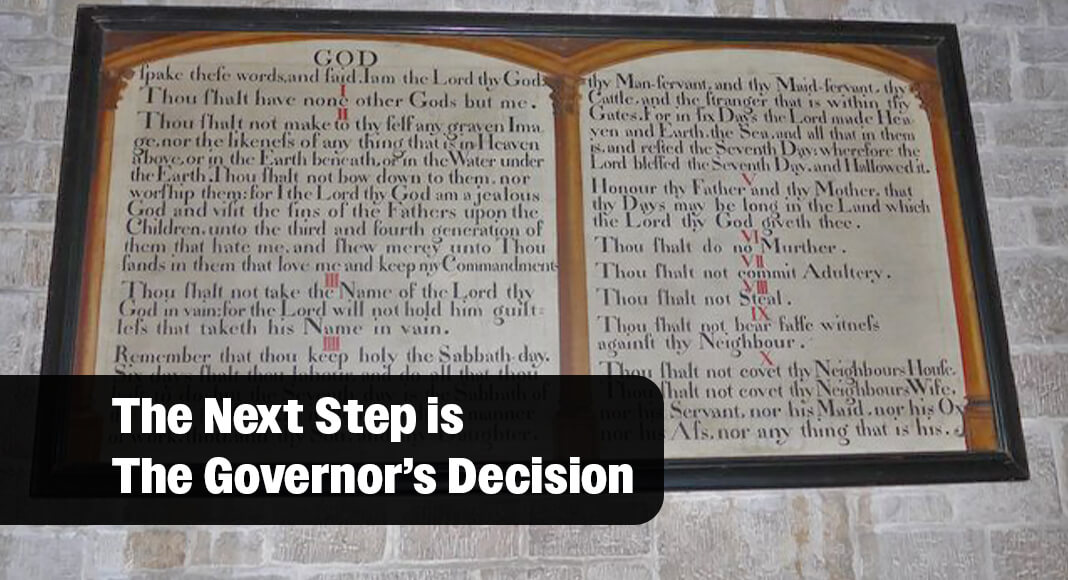
In the criminal justice arena, Senate Bill 9 limited bail for violent crimes to elected district judges and removed noncash bond eligibility for additional offenses. Senate Bill 40 barred public funding for bail bonds, while House Bill 75 required written justification from magistrates when dismissing cases for lack of probable cause. Meanwhile, Senate Bill 10 mandated the display of the Ten Commandments in public school classrooms, igniting renewed debate over the separation of church and state.

Health and consumer legislation also featured prominently. Senate Bill 3 proposes a ban on consumable hemp-derived THC products containing psychoactive compounds, while allowing non-psychoactive cannabinoids. The bill awaits Governor Abbott’s decision. Senate Bill 2308 established Texas as a national leader in ibogaine research, dedicating $50 million to FDA-approved trials targeting addiction and PTSD. Senate Bill 25 will require warning labels by 2027 on foods with synthetic dyes banned in the EU.

On immigration and state infrastructure, Senate Bill 8 compels sheriffs to work with federal immigration authorities, expanding Texas’s role in enforcement. Senate Bill 22 dedicates $1.5 billion through 2035 to the state’s film incentive fund to boost production. Senate Bill 21 establishes a state-managed bitcoin reserve, the first of its kind in the U.S.

Several high-profile proposals did not pass. These included Senate Bill 240, which would have restricted bathroom access based on biological sex, and Senate Bill 2880, which sought tighter restrictions on abortion pills. Senate Bill 16, proposing stricter voter ID laws, also failed, along with House Bill 186, which aimed to ban minors from social media platforms.

Governor Greg Abbott has until June 22 to sign, veto, or allow bills to become law without his signature. Most new rules are scheduled to take effect on September 1, 2025.

See related stories:

Texas Legislature Passes Bill Requiring Ten Commandments in Classrooms

The bill mandates that the display be a poster or framed copy that is legible and prominently placed. Image: St John the Baptist, Flookburgh: The Ten Commandments by Basher Eyre, CC BY-SA 2.0 <https://creativecommons.org/licenses/by-sa/2.0>, via Wikimedia Commons

Texas Border Business

Senate Bill 10, passed during the legislative session that concluded on June 2, 2025, requires the Ten Commandments to be displayed in every public school classroom across Texas. The bill mandates that the display be a poster or framed copy that is legible and prominently placed. The legislation revives a longstanding debate over the intersection of religion and public education.

Supporters of SB 10 argue that the measure reflects the country’s historical foundations and promotes moral values. Opponents, including civil liberties groups, contend that it raises constitutional concerns regarding the separation of church and state.

Both chambers of the Texas Legislature approved the bill, which now proceeds to the governor’s desk. Governor Greg Abbott can sign the bill into law, veto it, or allow it to become law without his signature. If signed or allowed to take effect, the requirement would begin in the upcoming school year, depending on the bill’s implementation timeline.

This legislation is part of a national conversation about religious expression in public spaces. It follows previous efforts in Texas and other states to increase the visibility of religious texts and symbols in schools. 

The outcome now depends on the governor’s action, which is expected in the coming days.

See related stories:

Texas Approves Major Boost in Public School Funding

 A significant portion of this $4.2 billion funding is dedicated to teacher compensation through a new teacher retention allotment. Image for illustration purposes
A significant portion of this $4.2 billion funding is dedicated to teacher compensation through a new teacher retention allotment. Image for illustration purposes

Texas Border Business

House Bill 2, passed during the legislative session that ended June 2, 2025, provides $8.5 billion in new funding for Texas public schools. A significant portion of this $4.2 billion funding is dedicated to teacher compensation through a new teacher retention allotment. 

Under HB 2, teachers with three to four years of experience in school districts with more than 5,000 students will receive a $2,500 raise, while those with five or more years of experience will receive $5,000. In districts with 5,000 or fewer students, teachers with three to four years of experience will receive a $4,000 raise, and those with five or more years will receive $8,000.  

The raises will take effect in the 2025–2026 school year. The bill also includes $500 million for pay raises for non-administrative staff, such as counselors, librarians, nurses, teacher assistants, custodians, food service staff, bus drivers, and administrative assistants. These pay raises are provided through a $45 per student adjusted average attendance allotment.  

In addition to compensation, HB 2 provides $1.3 billion for a new fixed cost allotment to help districts cover expenses such as utilities, transportation, and health insurance premiums. The bill also allocates funds for early learning programs, school safety, special education, and teacher preparation initiatives.  

The bill has now passed the Legislature and is now awaiting Governor Greg Abbott’s final approval. If signed, the funding measures will begin rolling out in the months ahead, with districts expected to finalize their updated pay scales and capital improvement plans by the start of the new school year.

See related stories;

New Legislation Raises Homestead Exemptions, Promising Savings for Homeowners

These bills are designed to deliver significant tax relief to homeowners by increasing the state’s homestead exemption, which could save the average household several hundred dollars annually. Image for illustration purposes

Texas Border Business

Senate Bills 4 and 23, part of a legislative package addressing property tax reform, were passed by the Texas Legislature before the session ended on June 2, 2025. These bills are designed to deliver significant tax relief to homeowners by increasing the state’s homestead exemption, which could save the average household several hundred dollars annually.

SB 4 raises the general school district homestead exemption from $40,000 to $70,000. SB 23 complements this by adjusting how local governments calculate property tax levies, effectively reducing the overall tax burden on residential property owners. The bills aim to address long-standing concerns about rising property tax bills and their impact on Texans, particularly those on fixed incomes.

This legislation is likely part of the property tax relief agenda that Lieutenant Governor Dan Patrick has frequently promoted. Patrick has been vocal in recent years about the need to reduce property taxes and has made raising homestead exemptions a legislative priority. In public statements during the session, he repeatedly pointed to homestead exemption increases as a central component of the state’s tax strategy.

The bills’ next step is executive review. They have been sent to Governor Greg Abbott, who can sign them into law, veto them, or allow them to become law without a signature. Given their alignment with Republican leadership priorities and prior public support from both Abbott and Patrick, the bills are expected to be enacted.

If signed, the new exemption amounts would apply to the 2025 tax year, with homeowners seeing the benefit reflected in bills due later this year or early next year. 

See related stories:

Texas Senate Bill 8: State Moves to Expand Immigration Enforcement Role

The bill mandates that Texas sheriffs and local law enforcement agencies actively cooperate with federal immigration authorities, further cementing the state’s position as one of the most aggressive in asserting a role in immigration enforcement. Image for illustration purposes

Texas Border Business

Austin, TX- Senate Bill 8, a key piece of legislation focused on immigration enforcement, concluded its journey through the Texas Legislature on June 2, 2025. The bill mandates that Texas sheriffs and local law enforcement agencies actively cooperate with federal immigration authorities, further cementing the state’s position as one of the most aggressive in asserting a role in immigration enforcement.

Under SB 8, local law enforcement will be required to comply with detainer requests from U.S. Immigration and Customs Enforcement (ICE) and provide federal authorities access to detained individuals suspected of immigration violations. The bill also sets guidelines for communication between state and federal agencies and introduces penalties for jurisdictions that fail to comply.

What’s Next?

With the legislative session closed and SB 8 passed by both chambers of the Texas Legislature, the bill now awaits action from Governor Greg Abbott. The next step in the legislative process is for the governor to either sign the bill into law, veto it, or allow it to become law without his signature.

• If signed, the bill will become law and take effect on the date specified in the bill text (typically September 1 of the same year, unless otherwise noted).

• If vetoed, lawmakers could attempt to override the veto with a two-thirds majority in both chambers.

• If the governor takes no action within ten days (excluding Sundays) while the Legislature is in session, or 20 days after adjournment if they are not, the bill automatically becomes law.

Governor Abbott has been a vocal advocate of state-level immigration enforcement in the past, making it likely that SB 8 will soon become law.

See related story:

Barry Patel Honored with Golden Eagle Award at Noche de Gala

Barry Patel. Image by Noah Mangum González

By Roberto Hugo González

Barry R. Patel, CEO of Ruby Red Hospitality and Perspective Hospitality Management Services, was awarded the prestigious Golden Eagle by the Rio Grande Valley Hispanic Chamber of Commerce during their annual Noche de Gala – A Night in Bloom, held on May 15, 2025. The award recognizes individuals whose leadership, business success, and community involvement have impacted the Rio Grande Valley.

Barry and Jayshree Patel. Image by Noah Mangum González

As the final and highest honor of the evening, the Golden Eagle was presented in recognition of Patel’s decades-long contributions to the region. Originally trained as a pharmacist, Patel transitioned into the hospitality sector after earning degrees from the University of Bradford in England and Southwestern Oklahoma State University. He launched his first hotel project—a Ramada Inn on South Padre Island—while still living in New York, marking the beginning of a prolific career that would help reshape the region’s hospitality landscape.

Over the years, Patel has developed more than 30 hotels and motels across the Rio Grande Valley, including nine properties on South Padre Island. These ventures have generated more than $600 million in economic impact and created over 800 full-time jobs. Notable developments include the Embassy Suites by Hilton in McAllen, the Courtyard by Marriott on South Padre Island, and the Aloft Hotel at the McAllen Convention Center.

Barry and Jayshree Patel and family. Image by Noah Mangum González

Patel expressed deep appreciation for the honor and the community in his acceptance remarks. “Cynthia, and all the Rio Grande Valley Hispanic Chamber of Commerce board members, I am deeply honored and truly grateful for this recognition you have bestowed upon me,” he said. “I’ve lived in many places and met many people, but never have I experienced a community like the one I’ve found here in the Rio Grande Valley.” Cynthia Zakulenski is the President of the RGV Hispanic Chamber.

Patel emphasized that his business success has always been rooted in strong relationships and teamwork. “The friendships we’ve built and the projects we’ve accomplished would have been impossible without the incredible people in this region,” he said. “To everyone who has supported us through the years—thank you. That includes our partners, our employees, and the financial institutions that have stood by us through thick and thin.”

His contributions to the community extend beyond business. Patel is a committed supporter of various nonprofit and civic organizations, including Catholic Charities, Sea Turtle, Inc., Friends of Animal Rescue, and the U.S. Border Patrol. In 2018, his philanthropic and civic work was recognized with an induction into the Rio Grande Valley Walk of Fame.

Patel’s family has been closely involved in his entrepreneurial journey. “My family has grown alongside my business,” he noted during his speech. “I’m proud to have my wife, father-in-law, and brother-in-law with me tonight. My son and his wife were here earlier—our grandkids had to head back because they’ve got school in the morning.”

Under his leadership, Ruby Red Hospitality has continued to evolve, expanding into dining and entertainment with ventures such as Bar Louie on South Padre Island. Patel is also pursuing software development and retail projects, reflecting a diversified business strategy that builds on his longstanding success.

“I’m humbled to be recognized tonight among so many incredible people,” he said in closing. “Thank you all, and God bless.”

Barry Patel’s recognition with the Golden Eagle Award highlights his accomplishments as a business leader and his dedication to improving the lives of others in South Texas through investment, employment, and community engagement.

Written by Roberto Hugo Gonzáles, the 2009 SBA Journalist of the Year Award Winner and the 2009 and 2012 Paul Harris Award recipient.

Transforming Center for AI Standards and Innovation (CAISI)

Under the direction of President Trump, Secretary of Commerce Howard Lutnick announced his plans to reform the agency formally known as the U.S. AI Safety Institute into the Center for AI Standards and Innovation (CAISI). Image for illustration purposes
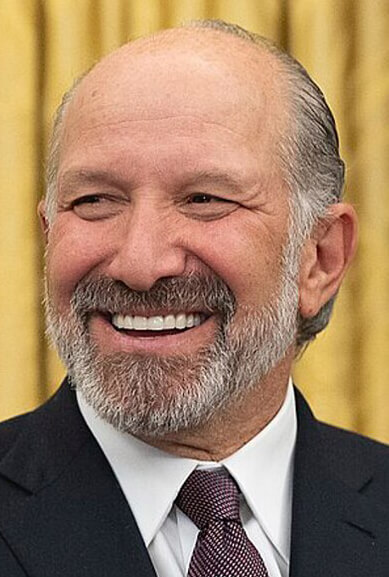
U.S. Secretary of Commerce Howard Lutnick. Image: Public Domain

WASHINGTON – Under the direction of President Trump, Secretary of Commerce Howard Lutnick announced his plans to reform the agency formally known as the U.S. AI Safety Institute into the Center for AI Standards and Innovation (CAISI).

AI holds great potential for transformational advances that will enhance U.S. economic and national security. This change will ensure Commerce uses its vast scientific and industrial expertise to evaluate and understand the capabilities of these rapidly developing systems and identify vulnerabilities and threats within systems developed in the U.S. and abroad.

“For far too long, censorship and regulations have been used under the guise of national security. Innovators will no longer be limited by these standards. CAISI will evaluate and enhance U.S. innovation of these rapidly developing commercial AI systems while ensuring they remain secure to our national security standards,” said Secretary of Commerce Howard Lutnick.

CAISI will serve as industry’s primary point of contact within the U.S. Government to facilitate testing and collaborative research related to harnessing and securing the potential of commercial AI systems. To that end, CAISI will:

– Work with NIST organizations to develop guidelines and best practices to measure and improve the security of AI systems, and work with the NIST Information Technology Laboratory and other NIST organizations to assist industry to develop voluntary standards.

– Establish voluntary agreements with private sector AI developers and evaluators, lead unclassified evaluations of AI capabilities that may pose risks to national security. In conducting these evaluations, CAISI will focus on demonstrable risks, such as cybersecurity, biosecurity, and chemical weapons.

– Lead evaluations and assessments of capabilities of U.S. and adversary AI systems, the adoption of foreign AI systems, and the state of international AI competition.

– Lead evaluations and assessments of potential security vulnerabilities and malign foreign influence arising from use of adversaries’ AI systems, including the possibility of backdoors and other cover, malicious behavior.

– Coordinate with other federal agencies and entities, including the Department of Defense, the Department of Energy, the Department of Homeland Security, the Office of Science and Technology Policy, and the Intelligence Community, to develop evaluation methods, as well as conduct evaluations and assessments.

– Represent U.S. interests internationally to guard against burdensome and unnecessary regulation of American technologies by foreign governments and collaborate with the NIST Information Technology Laboratory to ensure US dominance of international AI standards.

CAISI will continue to operate within NIST and regularly collaborate and coordinate with other organizations within NIST, including the Information Technology Laboratory, as well as other bureaus within the Department of Commerce, including BIS.

Governor Congratulates Texas Legislature for Passing Nuclear Power Legislation

Governor Greg Abbott congratulated the Texas Legislature for passing House Bill 14, which will revolutionize Texas’ growing nuclear industry and will lead a nuclear power renaissance in the United States. Image for illustration purposes

AUSTIN — Governor Greg Abbott congratulated the Texas Legislature for passing House Bill 14, which will revolutionize Texas’ growing nuclear industry and will lead a nuclear power renaissance in the United States.

“Texas is the energy capital of the world, and this legislation will position Texas at the forefront of America’s nuclear renaissance,” said Governor Abbott. “By creating the Texas Advanced Nuclear Energy Office and investing $350 million—the largest national commitment—we will jumpstart next-generation nuclear development and deployment. This initiative will also strengthen Texas’ nuclear manufacturing capacity, rebuild a domestic fuel cycle supply chain, and train the future nuclear workforce. I look forward to signing it into law.”

Last year, Governor Abbott released Texas’ plan to build a world-leading advanced nuclear power industry to enhance electric reliability and energy security, promote economic development, and unleash new opportunities for the growing Texas workforce.

Nano Ramirez Jr. Honored for Five Decades of Cultural Leadership in South Texas

Arnaldo “Nano” Ramirez, Jr. Image by Noah Mangum González

By Roberto Hugo González

Arnaldo “Nano” Ramirez Jr., a trailblazer in South Texas entertainment, was honored with the Excellence in Arts Award by the Rio Grande Valley Hispanic Chamber of Commerce during their annual Noche de Gala – A Night in Bloom on May 15, 2025. The award recognizes his over 55 years of contributions to the region’s cultural, music, and business landscape.

The Ramirez family. Image by Noah Mangum González

Ramirez’s influence began when his father, former Mission mayor Don Arnaldo Ramirez, Sr., founded Falcon Records, a cornerstone of regional Mexican music. He later launched La Villa Real Entertainment, quickly becoming a premier venue in McAllen. Hosting concerts by iconic artists such as Selena, Vicente Fernandez, Guns N’ Roses, and AC/DC, Nano’s work gave local audiences access to global talent. “We were almost sold out,” he recalled about his first major event in 1971, “but we lost money because I let half the crowd in for free… because I knew them.”

That moment, shared during his acceptance speech, marked a turning point. He said his wife taught him his first lesson in business: “Where were you the whole night?” she asked. “I was at the entrance, thanking everyone for coming.” She responded, “And what did you do? You let half of the crowd in because you knew them.” That lesson stuck. “For the next 30 years at La Villa Real, I still greeted every guest—but only after they bought a ticket,” Ramirez said with a laugh.

His entrepreneurial spirit expanded well beyond music. He created family-friendly spaces like Fun Time Pizza, where children were rewarded with game tokens for Easter eggs. He launched the Valley’s first commercial fitness centers, The Workout, in McAllen and Brownsville. “Now there’s a gym on every corner,” he noted. He also established the Valley’s first sports bar, 23rd Street Sports Bar & Grill, and several nightclubs, including The Big Apple, Hot Spots, and The Yacht Club, which still operates today. “I thought Hot Spots was the most sophisticated nightclub in Valley history,” he said proudly.

Nano’s success was a family endeavor. He credited his wife as his strongest support through five decades in an industry filled with nightlife, travel, and unpredictability. “They said it wouldn’t last—a year, maybe—too much nightlife, too many parties,” he recalled. “Here we are, 55 years later, and we’re still going strong.”

His children have also played pivotal roles. Daughter Linda Bell became his first HR director. “She returned from Denton, saw I had five businesses and 150 employees, and asked, ‘You need a human resource director,’ and I had no idea what a human resources director was.” After graduating from Texas Tech, his son JR became his right-hand man, continuing the family brand under “Book’em Nano.” His youngest daughter, Clarissa, described as a “jack of all trades,” remains a trusted advisor despite missing the event due to a family emergency.

Nano Ramirez has been recognized with a Texas State Proclamation, the Key to the City of McAllen, multiple Tejano Hall of Fame inductions, and the Vida Award for contributions to arts and entertainment. “I’d like to thank Cynthia for nominating me, and the Chamber staff and members for this humble award,” he said.

In closing, Ramirez turned to the words of Paul Anka to summarize his journey: “I’ll say it clear, I’ll state my case of which I’m certain—Book’em Nano will continue to my last breath. Let the record show: I did it my way.”