A 36-year-old citizen of Mexico with a felony record has been sentenced for illegal reentry into the United States. Image for illustration purposes
Texas Border Business
U.S. Attorney’s Office, Southern District of Texas
CORPUS CHRISTI, Texas – A 36-year-old citizen of Mexico with a felony record has been sentenced for illegal reentry into the United States.
Jose De Jesus Soto-Gonzalez pleaded guilty March 5.
U.S. District Judge David S. Morales has now ordered Soto-Gonzalez to serve 21 months in federal prison. Not a U.S. citizen, he is again expected to face removal proceedings following his sentence.
In handing down the sentence, the court noted Soto-Gonzalez had a felony conviction for possession with intent to distribute over 100 kilograms of marijuana and served approximately four years in prison before his removal in 2022. He illegally returned and was removed again in 2023. Authorities had also previously removed him in 2008 and 2014.
On Dec. 20, 2024, authorities encountered Soto-Gonzalez at the Border Patrol checkpoint near Falfurrias. They discovered he was a citizen of Mexico without any permission to be back in the United States. The investigation revealed he had illegally reentered the country in July 2024 near Laredo after his 2023 removal.
Soto-Gonzalez has been and will remain in custody pending transfer to a U.S. Bureau of Prisons facility to be determined in the near future.
Border Patrol conducted the investigation. Assistant U.S. Attorney Ashley Martin prosecuted the case.
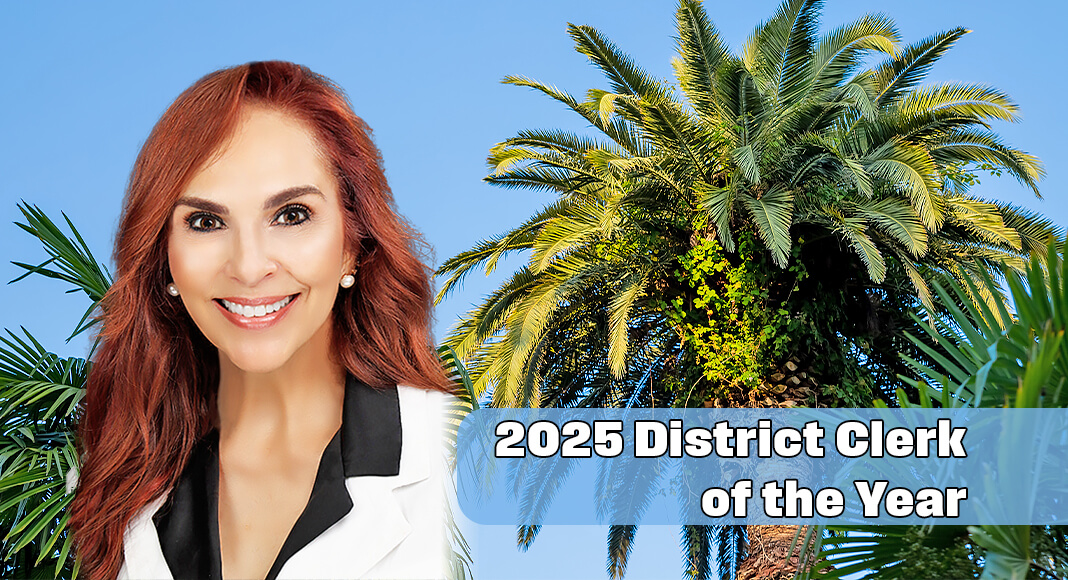
The County & District Clerks’ Association of Texas (CDCAT) presented the District Clerk of the Year Award to Laura Hinojosa. Courtesy image. Bgd for illustration purposes
Texas Border Business
HOUSTON, Texas – The County & District Clerks’ Association of Texas (CDCAT) presented the District Clerk of the Year Award to Laura Hinojosa, Hidalgo County District Clerk, during their 130th Annual Conference held in Houston, Texas. The Clerk of the Year award, the highest distinction for a clerk in the State of Texas, is presented annually to an outstanding district clerk and a county clerk for their notable service to the association, their county, and the State of Texas.
“I am incredibly honored and humbled to receive the District Clerk of the Year Award,” said Hinojosa. “It means a great deal to be recognized by my peers statewide and I feel nothing but immense gratitude for their ongoing support and encouragement along the way. I am touched and deeply appreciative of this recognition.”
Laura has served as Hidalgo County District Clerk since 2007 and was re-elected in 2022 to serve a fifth term in office. She has distinguished herself as a committed public servant and believes in progress through sound working relationships and collaboration. During her tenure, Laura has significantly improved the Hidalgo County District Clerk’s Office transforming it into one of the most exemplary and reputable offices in the State. At the State-level, Laura previously served as President and Executive Board Member of the statewide association and most recently served on the Texas Association of Counties (TAC) Board of Directors, which she was also appointed to in 2019.
“I am pleased that this year’s District Clerk of the Year is none other than Laura Hinojosa, District Clerk for Hidalgo County,” said John Warren, CDCAT President and Dallas County Clerk. “Laura has been deeply involved in all aspects of the County and District Clerks’ Association since her election to office. Having served on several committees, the board of directors, executive board and president of this esteemed association 2019-2020, it is befitting that Laura’s colleagues recognize her love and devotion to the association and its members. Congratulations Laura!”
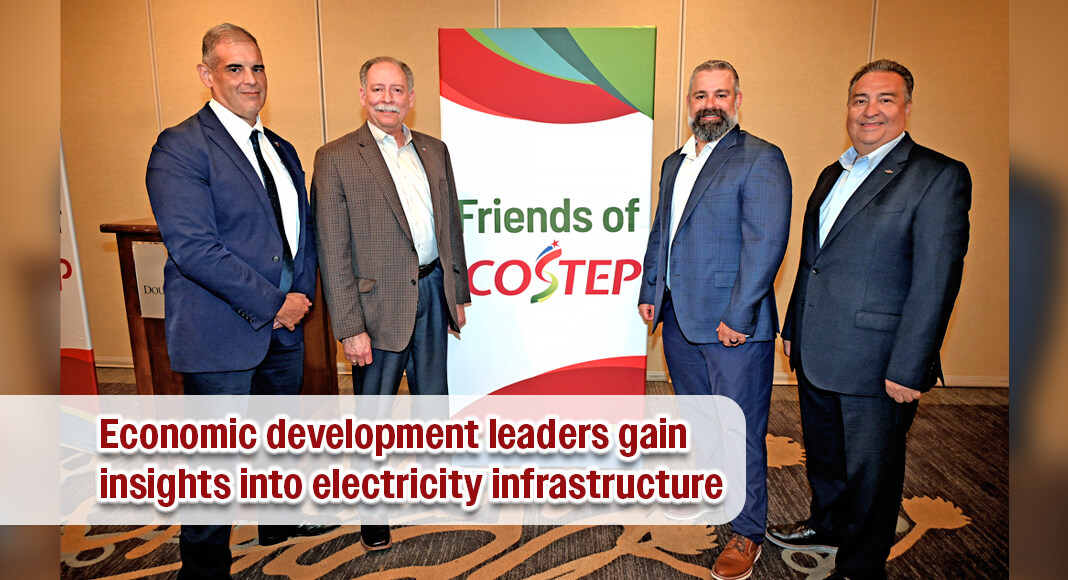
Rick Carrera (Director of Economic Development, COSTEP), Dale Fowler (Economic Development & Business Manager, AEP Texas), Brad Schwarz (Director of Planning, Hunt Utility Services), and Adam Gonzalez (CEO, COSTEP) pose together following the “Electricity 101” session—part of COSTEP’s Friends of Council initiative—where regional leaders gained key insights into electricity infrastructure, grid modernization, and long-term transmission planning critical to powering economic progress in Rio South Texas. Image by Roberto Hugo González
Texas Border Business
By Roberto Hugo González
“Good morning, everybody. Thanks again and welcome… to this presentation of Friends of Council for South Texas Economic Progress (COSTEP) from the Rio South Texas Region,” said Adam Gonzalez, CEO of COSTEP, as he opened the quarterly learning event. “We have AEP and Sharyland Utilities that are gonna share some insight as to what is going on with power transmission… and their plans for the next 10, 20 years.”
Gonzalez noted, “A lot of us don’t know exactly what they’re working on to improve our region’s electricity output. As economic developers, we all need this knowledge to attract the industries we want.” He thanked event sponsors and the COSTEP board and handed the program to Rick Carrera, Director of Economic Development.
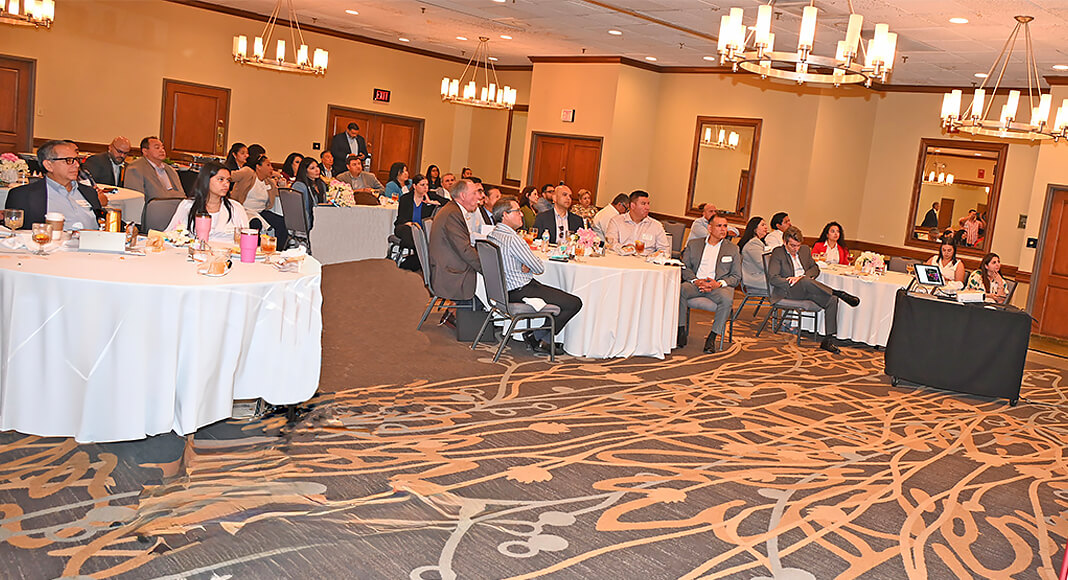
Economic development leaders from across the Rio South Texas Region gather for COSTEP’s “Electricity 101” event, uniting city officials, utility experts, and industry partners to explore the future of energy infrastructure and its role in powering regional growth. Image by Roberto Hugo González
“We try to bring these to you because they’re value-added and informative,” Carrera said. “Dale Fowler hears from me more than he probably wants to… the questions he’ll answer today are the ones many of us in economic development get all the time.”
Dale Fowler, Economic Development & Business Manager at AEP Texas, presented “Electricity 101: How Texas Powers Economic Development.” “Let’s put together a presentation to help economic development understand electricity… right down to the basics of watts, volts, and amps,” Fowler said. He opened with a safety message: “Never assume downed wires aren’t live… stay 25 feet away, and if you’re in a car and it’s not on fire, stay put.”
Fowler explained electricity basics, noting the importance of demand over total consumption: “That’s what we have to build infrastructure for.” He added, “AEP Texas currently has 15 signed agreements for gigawatt-scale projects. If we serve them all, we could double or triple the size of our operations.”
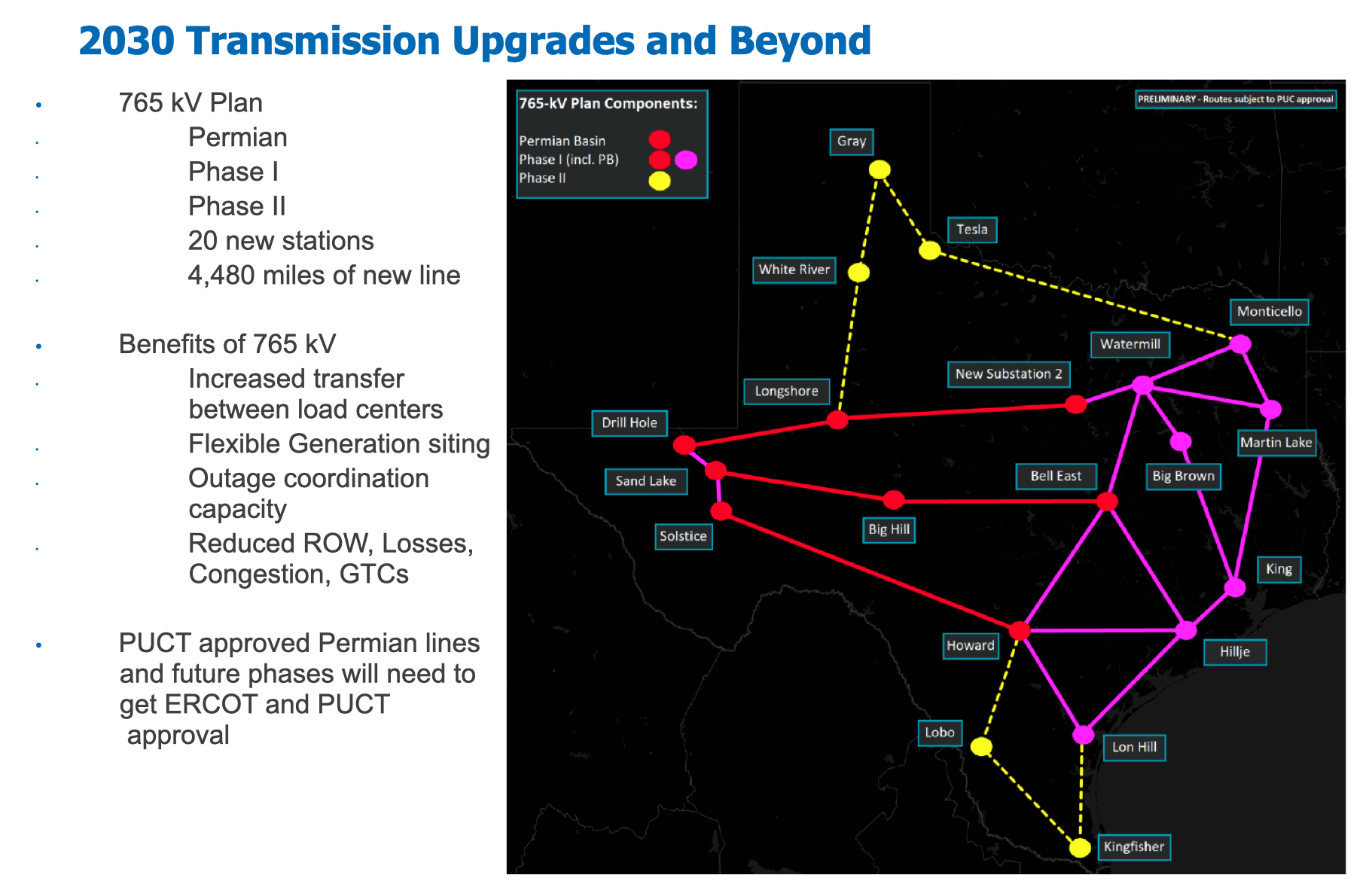
A map of Texas highlighting the planned 765 kV transmission system through 2030 and beyond, including the Permian Basin, Phase I, and Phase II expansions. The project features 20 new substations and over 4,480 miles of high-voltage line upgrades designed to boost grid capacity, enhance reliability, and support long-term economic growth across the state. Courtesy image
On infrastructure, he said, “We’ve traditionally served industrial loads with 138 kV, but today, even customers want to tap directly into 345 kV.” With 765 kV lines now under planning, Fowler urged business parks to reserve space for substations and transmission easements.
He also explained Texas’s deregulated electricity market: “We build and maintain the grid, but don’t sell the power. That’s done through Retail Energy Providers (REPs).” He addressed Winter Storm Uri’s lessons and noted progress on grid modernization, battery storage, and renewable integration.
Brad Schwarz, Director of Planning for Hunt Utility Services, followed with an overview of long-term transmission planning. “Dale did a great job of giving us the basics,” Schwarz said. “I’m here to give comfort that there are folks thinking about the Valley and ERCOT… and what’s coming in the next 20 years.”
Schwarz explained Sharyland Utilities’ role as a transmission-only utility and its involvement in joint projects with AEP, including a new San Antonio to Brownsville circuit and a San Benito transmission loop. “That project is expected to energize next year,” he said.
He discussed the Port of Brownsville and the 650 MW Rio Grande LNG project: “I was there just yesterday… dozens of cranes in the air.” He outlined plans for a 345 kV loop connecting several substations, scheduled for service by 2029.
Introducing ERCOT’s 765 kV initiative, Schwarz called it “a game-changer.” He said, “Each 765 kV line carries the same capacity as three double-circuit 345 kV lines.” The Valley will be served by substations in Laredo, San Benito, and near Corpus.
“We need Phase 2 of 765 kV build-out to move forward sooner rather than later,” Schwarz said, encouraging developers to speak with legislators. He explained the cost—$30–40 billion statewide—and emphasized the urgency.
In a closing comment, Fowler added, “We can build all the wires we want—but without more generation, it won’t matter. The 765 system makes moving power more efficiently and across longer distances easier.”
The Friends of Council for South Texas Economic Progress (COSTEP) Electricity 101 event gave economic development leaders crucial tools to support infrastructure-ready growth across the Rio South Texas Region.
U.S. Customs and Border Protection, El Paso Field Office, is warning against attempting illegal entry into the United States on trains after a recent incident. Image for illustration purposes
Texas Border Business
El PASO, Texas — U.S. Customs and Border Protection, El Paso Field Office, is warning against attempting illegal entry into the United States on trains after a recent incident.
On June 6, at 6 p.m., CBP officers assigned to rail operations apprehended an adult male Mexican national attempting to enter without inspection on a train, via the Union Pacific Railway in El Paso.
During a nonintrusive inspection via the vehicle and cargo inspection system on a northbound train, anomalies were observed. A physical inspection led to the discovery and removal of one undocumented illegal alien concealed in a hollow space at the end of an empty hopper. The illegal alien was taken into custody; and records checks revealed that he had a prior immigration arrest and deportation. The alien was charged with 8 USC 1326 (illegal entry after removal).
“Attempting to enter the United States without inspection via a cargo train is not only illegal, but it is also very dangerous,” said CBP El Paso Field Office Assistant Director for Border Security, Samuel Cleaves. “Aliens attempting to board moving trains sometimes slip and have limbs severed. As temperatures rise above 100 degrees Fahrenheit, the risk of death from heat stroke or dehydration increases. Also, cargo can shift and injure or trap aliens. Finally, when discovered, the alien will face certain consequences for illegally entering the United States under Title 8 of the U.S. Code. It is not worth the risk.”
CBP apprehended 143 people attempting to enter the United States without inspection in FY2024. So far in FY2025, 43 people have apprehended trying to make illegal entry on trains.
A 34-year-old Mexican national with a felony criminal history has been sentenced for illegally reentering the United States after three previous removals. Image for illustration purposes
Texas Border Business
U.S. Attorney’s Office, Southern District of Texas
HOUSTON – A 34-year-old Mexican national with a felony criminal history has been sentenced for illegally reentering the United States after three previous removals.
Jose Manuel Cruz-Diaz, who had illegally resided in Houston, pleaded guilty March 28.
U.S. District Judge Sim Lake has now ordered Cruz-Diaz to serve 57 months in federal prison. Not a U.S. citizen, he is expected to face removal proceedings following his imprisonment. In handing down the sentence, the court noted Cruz-Diaz had been removed four times previously and was a drug dealer.
He has three prior felony convictions for illegal reentry as well as evading arrest with a motor vehicle. He was also convicted of delivery of black tar heroine and methamphetamines and sentenced to 10 years in state prison. He was first removed from the United States in 2011 and most recently in 2016. However, authorities discovered him in Houston in January 2020 upon his arrest for distribution of controlled substances.
Cruz-Diaz has been and will remain in custody pending transfer to a Federal Bureau of Prisons facility to be determined in the near future.
Immigration and Customs Enforcement – Homeland Security Investigations and the Houston Police Department conducted the investigation. Assistant U.S. Attorney Jay Hileman prosecuted the case.
This case is part of Operation Take Back America, a nationwide initiative that marshals the full resources of the Department of Justice to repel the invasion of illegal immigration, achieve the total elimination of cartels and transnational criminal organizations and protect our communities from the perpetrators of violent crime. Operation Take Back America streamlines efforts and resources from the Department’s Organized Crime Drug Enforcement Task Forces and Project Safe Neighborhood.
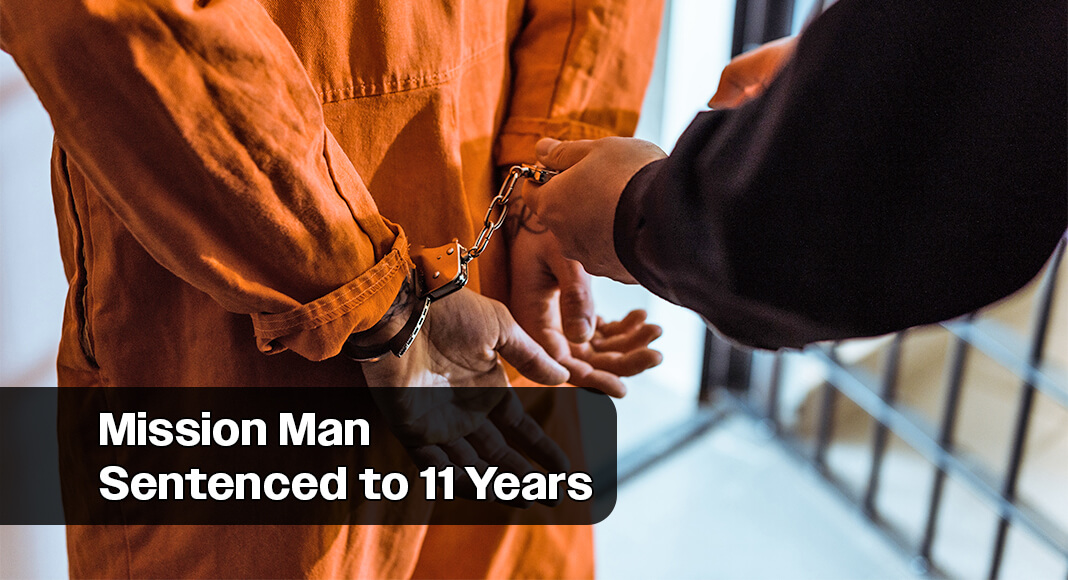
A 39-year-old Mission man has been sentenced for his role in a long-running and violent conspiracy to monopolize the transmigrante forwarding agency (TFA) industry in the Los Indios border region. Image for illustration purposes
Texas Border Busines
U.S. Attorney’s Office, Southern District of Texas
HOUSTON – A 39-year-old Mission man has been sentenced for his role in a long-running and violent conspiracy to monopolize the transmigrante forwarding agency (TFA) industry in the Los Indios border region.
Carlos Martinez, who pleaded guilty Feb. 6, and his co-conspirators controlled the transmigrate industry through monopolization and extortion of competitors.
U.S. District Judge George C. Hanks Jr. has now ordered Martinez to serve 132 months in federal prison to be immediately followed by three years of supervised release. He must also pay a $2 million fine.
Martinez and others used fear to control pricing, eliminate competition and keep the transmigrante industry profitable through “pool” allocations and piso payments.
Transmigrantes transport used vehicles and goods from the United States through Mexico for resale in Central America. Only a few U.S. border crossings, including the Los Indios Bridge, allow transmigrantes to enter Mexico.
Transmigrante forwarding agencies are U.S.-based businesses that help clients complete customs paperwork to export vehicles into Mexico. Martinez and his co-conspirators fixed prices for forwarding services and created a centralized entity, known as the “pool,” to collect and divide revenue among conspirators. They used the pool to eliminate competition and raise prices.
“Price fixing is not a victimless crime; it harms customers in the form of artificially high prices. Consumers need to have faith that the prices they pay are fairly determined by the market, rather than the product of illegal collusion,” said U.S. Attorney Nicholas J. Ganjei. “The 11-year sentence Mr. Martinez received reflects the size and scope of his criminal operation, as well as his leadership role in organizing and facilitating the unlawful scheme.”
“The defendants extorted victims trying to make an honest living in the freight forwarding business, and by fixing prices illegally drove up the cost of moving goods,” said Matthew R. Galeotti, head of the Justice Department’s Criminal Division. “The lead defendant’s sentence of 11 years in prison reflects the harm caused to the business community along the Southern border. The Department of Justice’s Criminal Division will continue to work to ensure that competition is fairly preserved.”
“Today’s sentence reflects the significant danger and harm the American people face from violent and extortive actions aimed at fixing prices and monopolizing the market for essential services in the Texas border region,” said Assistant Attorney General Abigail Slater of the Justice Department’s Antitrust Division. “The Antitrust Division will continue to aggressively pursue violent criminals who aim to corrupt America’s free markets and advocate for their incarceration.”
“This case underscores the serious threat posed by transnational criminal networks operating at our borders,” said Special Agent in Charge Craig Larrabee of Immigration and Customs Enforcement – Homeland Security Investigations (ICE-HSI) San Antonio. “Carlos Martinez and his co-conspirators orchestrated a violent scheme that extorted small businesses, fixed prices, and laundered millions of dollars — all while threatening the safety and integrity of lawful commerce. HSI will continue to aggressively pursue those who exploit legitimate industries through corruption and intimidation, and we remain steadfast in our mission to protect our communities and our economy.”
“The FBI will remain laser focused on transnational criminal organizations, including organizations that use violence, threats or extortion to fix prices and eliminate competition,” said Special Agent in Charge Aaron Tapp of the FBI’s San Antonio Field Office. “The American people deserve access to fair markets, free from threats of violence or the corrosive impact of illegal market interference, manipulation, or collusion. Together with our partners, we are committed to protecting our borders and dismantling every component of transnational criminal organizations.”
Martinez, the son-in-law of a former Gulf Cartel leader in Mexico, ran a violent criminal syndicate operating at the U.S.-Mexico border. He seized control of the Los Indios bridge near Harlingen and Brownsville and hired workers to monitor transmigrante forwarding agencies and calculate the piso each owned.
Workers collected piso payments in cash and submitted them to Martinez’s organization. He enforced compliance by ordering disciplinary action against agencies that operated without permission, violated pool rules, failed to charge fixed prices or refused to make extortionate payments.
Forwarders not involved in the conspiracy were forced to join and pay into the pool. Martinez and other pool members monitored whether agencies followed pricing rules and made required payments. Martinez and his co-conspirators also demanded additional extortion fees, including a piso for each processed transaction and a fine for operating outside the pool. They used threats, intimidation and violence to enforce compliance and further their antitrust and extortion conspiracies.
Clients who didn’t comply faced consequences ranging from being denied access to the Los Indios Bridge to having their cars stolen. In more severe cases, they were kidnapped, beaten, firebombed, shot or killed.
Martinez personally collected at least $9.5 million in extortion payments. He and his family laundered the money through bank accounts they controlled, disguising the deposits to hide the true source, nature and ownership of the illicit funds.
To date, seven others have been convicted, three of whom have already been sentenced in the case.
ICE-HSI and FBI conducted the investigation.
Assistant U.S. Attorney Alexander L. Alum is prosecuting the case along with Trial Attorney Christina Taylor of the Criminal Division’s Violent Crime and Racketeering Section; Senior Litigation Attorney John Davis and Trial Attorneys Brittany E. McClure, Anne Veldhuis and Michael G. Lepage, all of the of the Antitrust Division.
The rescued individual was immediately evaluated by a Border Patrol EMT and transported to a local hospital for medical evaluation. USCBP image: Public Flikr for illustration purposes
Texas Border Business
MISSION, Texas – U.S. Border Patrol agents from the McAllen Station rescued an individual from the Rio Grande on June 6, preventing a potential drowning incident near the National Butterfly Center. At 12:25 p.m., agents observed a group of suspected illegal aliens making landfall and launched a coordinated response involving multiple units. During the operation, one individual fled toward the river and attempted to swim back to Mexico, appearing to be in distress and ingesting water before the McAllen Riverine Unit rescued him.
“Our agents are trained not only in law enforcement but also in life-saving techniques,” said Rio Grande Valley Sector Chief Patrol Agent Gloria I. Chavez. “Today’s swift response by our Riverine Unit demonstrates our commitment to preserving human life, regardless of circumstances. The dangerous currents and conditions of the Rio Grande pose serious risks, and we’re grateful our agents were able to prevent what could have been a tragic outcome.”
The rescued individual was immediately evaluated by a Border Patrol EMT and transported to a local hospital for medical evaluation. In total, eight individuals were taken into custody during the operation.
Information source: US Customs and Border Protection
Cameron County is excited to announce the Ribbon Cutting and Grand Opening Ceremony for the new Pump Track at Pedro“Pete” Benavides County Park on Friday, June 13th, 2025, at 7:00 p.m. Courtesy image. Biker for illustration purposes
Texas Border Business
BROWNSVILLE, Texas – Cameron County is excited to announce the Ribbon Cutting and Grand Opening Ceremony for the new Pump Track at Pedro“Pete” Benavides County Park on Friday, June 13th, 2025, at 7:00 p.m.
The Pump Track was made possible through funding from the American Rescue Plan Act (ARPA), with a total construction costof approximately $424,000. The Pump Track enhances the county’s commitment to providing diverse recreational opportunities for residents and visitors of all ages.
The Pump Track spans approximately 492 feet and features an additional track with three jumps designed to accommodate riders of all skill levels. Built adjacent to the park’s newly developed mountain bike trail, the track offers a perfect space for bikers to warm up and develop essential skills such as bike handling and pumping techniques, which are key to improving trail performance.
Additional enhancements to the Pump Track area include solar-powered lighting and a 12′ x 24′ palapa, creating a welcoming and functional space for families and riders alike.
Designed for broad community use, individuals of nearly all ages can enjoy the Pump Track – from toddlers on balance bikesto adults in their 90s. Its durable asphalt surface supports a variety of wheeled activities, including bicycles, skateboards, roller skates and rollerblades.
Courtesy image
“This Pump Track is more than just a recreational feature—it’s an investment in our community’s health, well-being, and vitality. We’re proud to offer a facility that brings families together, encourages outdoor activity, and showcases Cameron County’s commitment to providing top- quality amenities for residents of all ages, “stated County Judge Eddie Treviño, Jr.
“The completion of the Pump Track is a proud moment for Cameron County. This new Pump Track reflects our ongoingcommitment to creating safe, fun and accessible spaces for everyone in our community. We’re excited to see kids, families, and riders of all ages come together to enjoy this one-of-a-kind facility. It’s a great addition to the Pedro “Pete” Benavides Park and a win for Cameron County,” stated County Commissioner Pct.1, Sofia Benavides.
“The Pump Track is a great example of how we’re expanding recreational opportunities across Cameron County. Designed tobe fun, inclusive and challenging for riders of all ages and abilities, this Pump Track will provide a space where families can beactive together, and future generations can build confidence and skills in a safe outdoor environment,” stated Parks Director Joe E. Vega.
Cameron County secured the services of A&I Manufacturing and collaborated with Alliance Action Sports Experts (ASE)—anAustria-based firm renowned for building more than 200 pump tracks across Europe. ASE specializes in designing and constructing mountain bike trails, skills parks, asphalt pump tracks and skateparks.
Cameron County also worked closely with the Valley Off-Road Bicycle Association (VORBA), a local non-profit dedicated topromoting cycling and trail development. VORBA provided key input and support throughout the project’s development.
Join us on June 13th at 7:00 p.m. as we celebrate the official opening of this exciting new amenity that will serve riders and families for years to come.
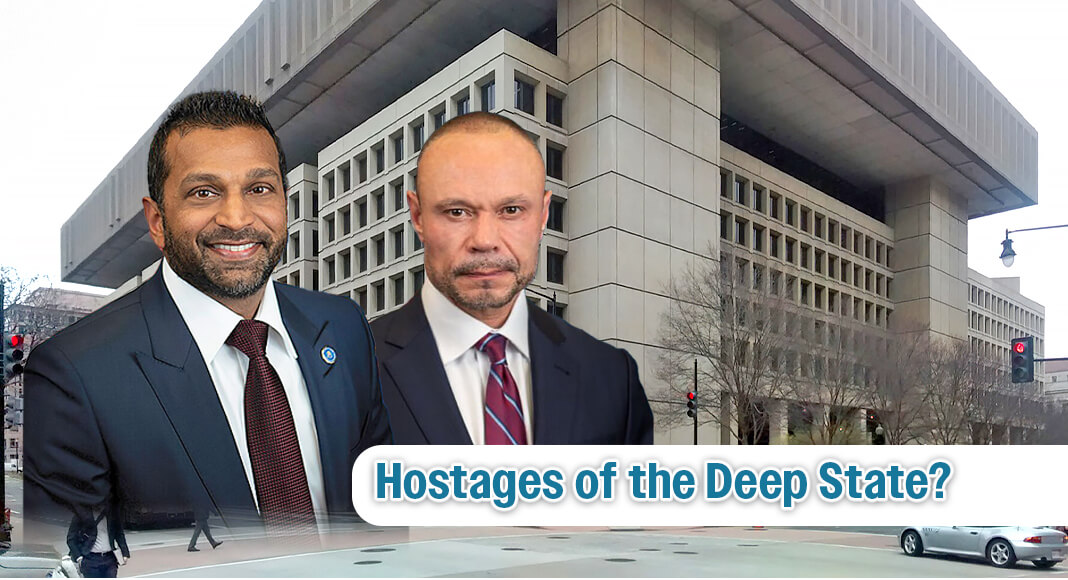
FBI’s Patel and Bongino. Image: Gunnar Klack, CC BY-SA 4.0 <https://creativecommons.org/licenses/by-sa/4.0>, via Wikimedia Commons. Patel and Bongino: Public Domain
Texas Border Business
Judicial Watch
Kash Patel and Dan Bongino have been stalwart allies of the conservative movement—and good friends of Judicial Watch—for many years. Judicial Watch applauded their appointments as director and deputy director of the FBI. Expectations were high. In a statement following Patel’s confirmation as FBI director, JW President Tom Fitton noted that Patel has “his work set out for him.” He called on Patel to “bring transparency and accountability back to an agency that became irredeemably corrupt and the tip of the spear in unfettered lawfare against any American seen as a threat to the ruling class. From sitting on Hunter Biden’s laptop in order to influence the 2020 election, the raid of President Trump’s Mar-a-Lago home, and the censorship of Americans, to the targeting of traditional Catholics, the FBI has shown itself as a tainted domestic and intelligence service.”
Veteran Washington reformers like Fitton understand that Patel’s time for true change is limited. The Deep State, the forces of inertia, and the political calendar are all working against him. These days, as well, conservative insiders are alarmed by mounting signs that Patel and Bongino have been taken hostage by the Deep State consensus and are failing to bring meaningful change to the FBI.
An early warning sign came in April when Patel plucked Steven Jensen from exile in Columbia, South Carolina, and appointed him head of the FBI’s powerful Washington Field Office. Conservatives were aghast. As chief of the Domestic Terrorism Section at FBI headquarters in 2020 and 2021, Jensen led a highly damaging law-enforcement campaign against the January 6 protestors, raising the specter of domestic terrorism.
Jensen was “a true believer in Joe Biden’s domestic terrorism narrative,” retired FBI supervisor George Hill told Miranda Devine of the New York Post, “…that every Trump supporter in and around Capitol Hill [on January 6] was an insurrectionist, a white supremacist and probably violent.”
Jensen “set up the infrastructure for that [domestic terrorism narrative],” Hill told Devine. “He made the decisions, set up the mechanisms whereby all the cases would be opened around the country to give the picture that this was a nationwide problem. Previously it would have been opened up [as one case with multiple suspects] in Washington — but by opening it that way, you allowed [then-FBI Director] Chris Wray to sit in Congress and say domestic terrorism was a nationwide problem.”
Patel and Bongino vigorously defended Jensen. Appearing on Fox News, they urged patience. “Just wait,” Bongino said, “and you’ll see. Nothing we’re doing—nothing—is by accident.”
Two months later, we’re still waiting.
Meanwhile, more concerns have surfaced. Media reports about Patel’s jet-setting lifestyle and love of sporting events can largely be dismissed as sour grapes from the opposition press. But the disquiet about the FBI’s lack of transparency and failure to mount significant investigations is not easily ignored.
Exhibit A is the uproar over the Jeffrey Epstein files. In February, following a much-ballyhooed campaign promising new disclosures, Attorney General Pam Bondi released an underwhelming batch of documents, most of which turned out to be already in the public domain or heavily redacted. Bondi pinned the blame on the FBIand promised more documents to come as soon as the next day. No documents were forthcoming. Judicial Watch repeatedly asked the FBI to turn over the Epstein files under the Freedom of Information Act. The FBI did not respond to the JW requests and in April, Judicial Watch sued for the records. “The Justice Department needs to respond to public demands for transparency under law and release the Epstein files under FOIA,” said JW’s Fitton.
The Epstein case is not the only instance of a troubling lack of transparency at the Justice Department and the FBI. Officials have been stonewalling Judicial Watch—the national leader in FOIA actions related to government corruption—in some cases for years.
Seven years ago, for example, Judicial Watch filed a FOIA lawsuit for text messages between FBI agents involved in the bogus “Russia Collusion” investigation of Donald Trump. The FBI has refused to turn over many of the texts and related documents—or even disclose what they are withholding.
JW sued the Justice Department—twice, in 2023 and 2024—for communications surrounding the controversial Hunter Biden laptop story. And in October 2024, JW sued the Justice Department for communications among top officials about anti-Trump social media posts by a senior agent involved in an investigation of a Florida assassination attempt against Trump.
The Justice Department and FBI response to these requests? Stonewalls, silence, and foot-dragging.
Installation in key positions of Deep State actors like Jensen and lack of transparency are not the only strikes against Bondi, Patel, and Bongino. Perhaps most disturbing is their failure to act decisively to reduce the vast powers of the Justice Department and the FBI.
“President Trump was almost jailed by his own Justice Department in his first term,” Steve Bannon recently reminded viewers in a War Room interview with Fitton. It’s a segment worth viewing in its entirety.
“There’s no evidence the FBI thinks it is subject to the rule of law,” Fitton said. “Kash Patel and Pam Bondi need to take a much more aggressive [approach] and have an expansive understanding as to what their opportunities and roles are.”
“It’s a systemic problem,” Bannon said. “It’s not just a personnel problem. [The FBI] has to be taken apart brick by brick.”
The outlines of an aggressive inquiry that would set the stage for reducing the power of the Justice Department and FBI are obvious: get to the bottom of the targeting of Trump and his allies in the Russiagate scandal; look at the FBI role in the Hunter Biden laptop case and the limiting of the story’s media circulation at a critical moment in the 2020 election; expose the roots of the 2022 Mar-a-Lago raid; connect the dots of FBI targeting of conservative Catholics, parents attending school board meetings, and pro-life groups.
Doubtless Bondi, Patel, and Bongino have their hands full managing the day-to-day affairs of their giant bureaucracies. Conservatives still wish them well, but time is running out. And the president who promised to “demolish the Deep State” is watching from the White House. They will not be forgiven for bungling a historic opportunity.
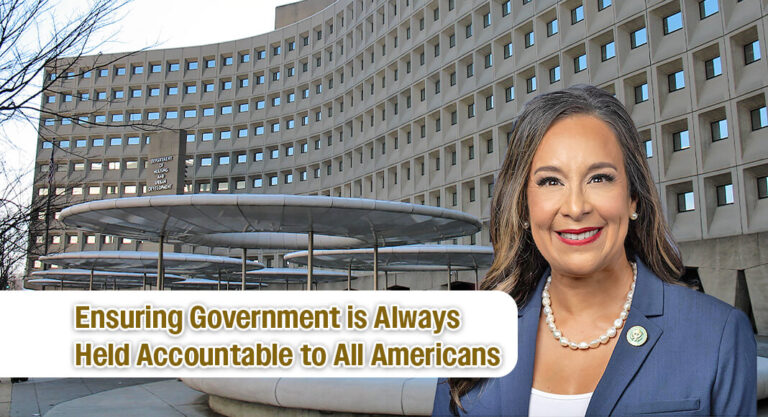
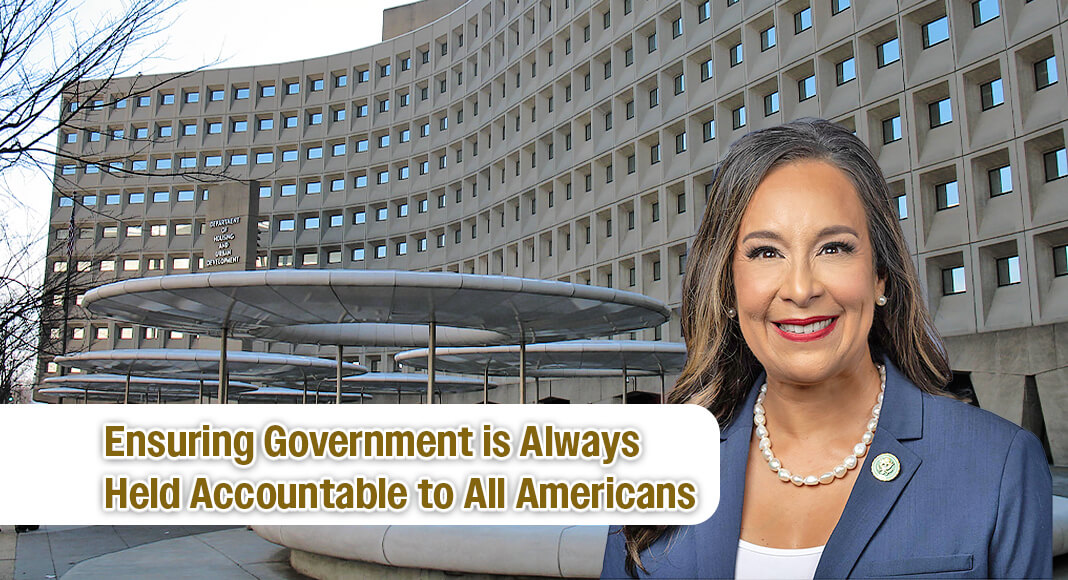
Through passage of the HUD Transparency Act, we will require the HUD IG to testify annually on the responsible uses of their budget.HUD Image: Kjetil ReeArchitect: Marcel Breuer, CC BY-SA 2.5 https://creativecommons.org/licenses/by-sa/2.5, via Wikimedia Commons
Texas Border Business
WASHINGTON – Congresswoman Monica De La Cruz (TX-15) released the statement below following the passage of her HUD Transparency Act through House Financial Services Committee with overwhelming bipartisan support.
The legislation mandates the Inspector General (IG) at the Department of Housing and Urban Development (HUD) to testify annually before Congress on efforts to detect and prevent waste, fraud, and abuse.
“The Financial Services Committee took an important step toward ensuring government is always held accountable to all Americans. Through passage of the HUD Transparency Act, we will require the HUD IG to testify annually on the responsible uses of their budget. Improving accountability and protecting American taxpayer dollars will always be a top priority. Next stop: the House floor!” – Congresswoman Monica De La Cruz
Information source: Office of Congresswoman De La Cruz