








Home Blog Page 451

Intern Day 2025: TRB Kicks off Annual Summer Intern Program

 Texas Regional Bank (TRB) launched its 2025 Internship Program on June 11 with an informational Internship Day at its corporate headquarters in Harlingen. Image courtesy of TRB

HARLINGEN, Texas — Texas Regional Bank (TRB) launched its 2025 Internship Program on June 11 with an informational Internship Day at its corporate headquarters in Harlingen. Students from top universities across the nation— like Texas A&M, the University of Texas, University of Arkansas, and Indiana University — gathered to kick off their summer journey with TRB. The day was filled with dynamic presentations by bank leadership giving career insights, and meaningful conversations that introduced interns to the heart of TRB’s mission and culture. 
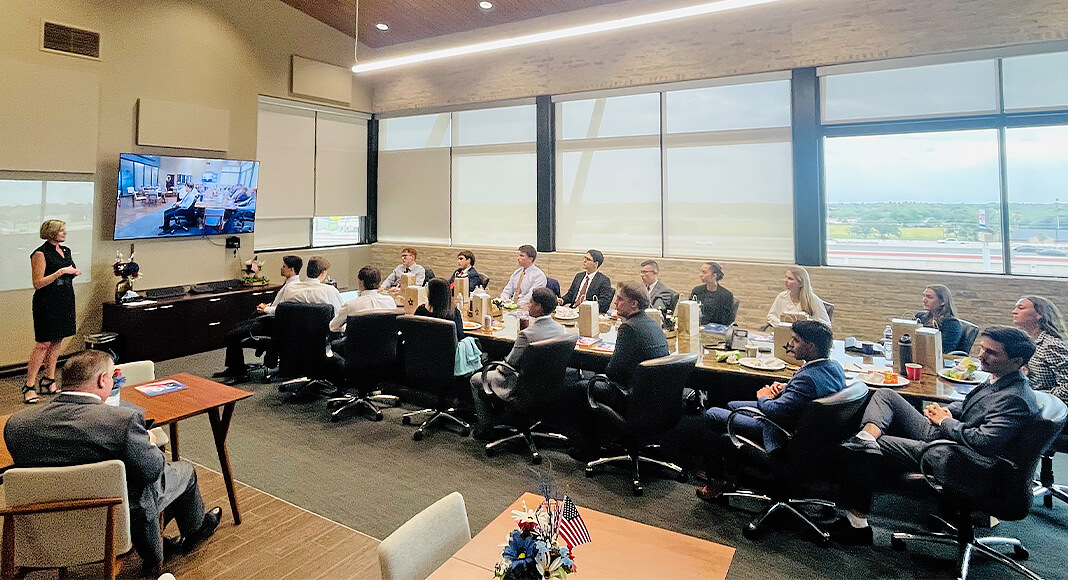
TRB’s Summer Internship Program in full swing in Harlingen. Image courtesy of TRB

Inside Intern Day: Leadership, Learning, and TRB’s People-First Culture 

Directed by Michael Lamon, TRB’s President of Banking Administration, and organized by Cody Gains, Talent Acquisitions Manager, Internship Day brought together over 10 employees and executives from across the organization to share their experiences and insights with the interns.

Among the speakers were Eduardo Caso, International Private Banking; Michele Robinson, Area Market President; Chairman Bobby Farris and Wealth Advisor Linda Roberts of TRB Trust & Wealth Management; Brad Freudenberg, Chief Technology Officer; Jamie-Lynne Brown, Business Development Officer; Tracy Harris, Chief Strategic Planning & Project Officer; Cambrea Merriweather, Chief Human Resources Officer; Cesar Suarez, Chief Banking Officer; and Brent Baldree, President of Commercial Banking. Each shared valuable insights into their roles, daily operations, and how their work contributes to the bank’s broader mission, helping to make the event a dynamic and collaborative experience for all involved.

Interns also learned about TRB’s deep commitment to community, discovering how local engagement is central to the bank’s identity and impact. Through each executive presentation, interns explored various areas of banking that piqued their interests, laying the groundwork for a summer of learning, growth, and meaningful connections for prospective banking careers. 

With the goal of setting a vision for this year’s interns, Lamon closed the program with a key point: “For each bank we build at TRB, we start with a person, and then we build around them because we believe relationships matter—because strong connections are the foundation of everything we do—that’s how we continue to become the people you know in the communities we serve.”   

The Internship Program: Investing in the Future 

The Internship Program, running from June 2 to July 11, offers hands-on experience across various departments, giving students practical exposure to the areas they’re most passionate about. The program emphasizes professional development through leadership opportunities and real-world projects, helping students build essential skills, industry relationships, and relevant experience.  

“We believe that a thriving banking industry is essential to strong communities,” shared Lamon, “That’s why we make a tremendous investment in our internship program—because we’re committed to developing the next generation of banking professionals, whether they choose to build their careers with us or elsewhere in the industry.” 

Out of approximately 100 applicants, 20 top college students were selected for the TRB Internship Program. Each intern submitted their areas of interest, allowing TRB to place them in roles that aligned with their goals and objectives. Interns are welcomed into the TRB family, trusted with meaningful work, and supported as they grow personally and professionally. 

Jacob Esparza, a former intern who now serves the bank as a Corporate Financial Analyst, reflected on his time in the program: “I had the freedom to explore projects, conduct research, and think creatively to solve problems. TRB made me feel valued—not just another intern—by creating a supportive environment that encourages learning. The people at TRB value innovation and problem-solving, which made me feel like a true part of the bank.”

As the program continues, it strengthens the connection between classroom learning and practical application—preparing the next generation of financial leaders for successful careers in the banking industry.


Western District of Texas Adds 331 New Immigration Cases

United States Attorney Justin R. Simmons for the Western District of Texas announced that federal prosecutors in the district filed 331 new immigration and immigration-related criminal cases from June 6 through 12. Image for illustration purposes

U.S. Attorney’s Office, Western District of Texas

SAN ANTONIO – United States Attorney Justin R. Simmons for the Western District of Texas announced that federal prosecutors in the district filed 331 new immigration and immigration-related criminal cases from June 6 through 12.

A

These cases were referred or supported by federal law enforcement partners, including Homeland Security Investigations (HSI), Immigration and Customs Enforcement’s Enforcement and Removal Operations (ICE ERO), U.S. Border Patrol, the Drug Enforcement Administration (DEA), the Federal Bureau of Investigation (FBI), the U.S. Marshals Service (USMS), and the Bureau of Alcohol, Tobacco, Firearms and Explosives (ATF), with additional assistance from state and local law enforcement partners.

The U.S. Attorney’s Office for the Western District of Texas comprises 68 counties located in the central and western areas of Texas, encompasses nearly 93,000 square miles and an estimated population of 7.6 million people. The district includes three of the five largest cities in Texas—San Antonio, Austin and El Paso—and shares 660 miles of common border with the Republic of Mexico.

These cases are part of Operation Take Back America, a nationwide initiative that marshals the full resources of the Department of Justice to repel the invasion of illegal immigration, achieve the total elimination of cartels and transnational criminal organizations (TCOs), and protect our communities from the perpetrators of violent crime. Operation Take Back America streamlines efforts and resources from the Department’s Organized Crime Drug Enforcement Task Forces (OCDETFs) and Project Safe Neighborhood (PSN).

Indictments and criminal complaints are merely allegations and all defendants are presumed innocent until proven guilty beyond a reasonable doubt in a court of law.

Mexican National Charged with Kicking Federal Agent During Immigration Inspection

A 37-year-old Mexican woman living in San Benito has been charged with assaulting an agent with Immigration and Customs Enforcement - Homeland Security Investigations (ICE-HSI). Image for illustration purposes
A 37-year-old Mexican woman living in San Benito has been charged with assaulting an agent with Immigration and Customs Enforcement – Homeland Security Investigations (ICE-HSI). Image for illustration purposes

U.S. Attorney’s Office, Southern District of Texas

BROWNSVILLE, Texas – A 37-year-old Mexican woman living in San Benito has been charged with assaulting an agent with Immigration and Customs Enforcement – Homeland Security Investigations (ICE-HSI). 

Maria Isabel Cruz-Salas is expected for her next hearing before U.S. Magistrate Judge Karen Betancourt June 18 at 11:15. She is currently in custody.

The criminal complaint filed June 10 alleges Cruz-Salas assaulted a federal officer during a worksite immigration inspection in San Benito.

According to the charges, authorities were conducting a lawful enforcement operation June 9 at Taqueria El Mante, where they discovered Cruz-Salas. As an HSI agent attempted to detain her, she allegedly kicked him in the face.

If convicted, she faces a maximum of eight years in federal prison and a possible $250,000 maximum fine.

ICE-HSI and FBI are conducting the investigation. Assistant U.S. Attorney David Coronado is prosecuting the case. 

This case is part of Operation Take Back America, a nationwide initiative that marshals the full resources of the Department of Justice to repel the invasion of illegal immigration, achieve the total elimination of cartels and transnational criminal organizations and protect our communities from the perpetrators of violent crime. Operation Take Back America streamlines efforts and resources from the Department’s Organized Crime Drug Enforcement Task Forces and Project Safe Neighborhood.

A criminal complaint is a formal accusation of criminal conduct, not evidence. A defendant is presumed innocent unless convicted through due process of law.

Updated June 13, 2025

Cornyn Highlights Tax Priorities in Senate’s One Big Beautiful Bill

“The One Big Beautiful Bill presents a once-in-a-generation opportunity for Congress to bend the spending curve, make key provisions of the Trump Tax Cuts permanent, and improve the lives of hardworking Texas families,” said Sen. Cornyn. Image for illustration purposes

WASHINGTON – U.S. Senator John Cornyn (R-TX) released the following statement on his tax priorities included in the Senate Finance Committee’s legislative text for the Senate’s version of the One Big Beautiful Bill Act:

“The One Big Beautiful Bill presents a once-in-a-generation opportunity for Congress to bend the spending curve, make key provisions of the Trump Tax Cuts permanent, and improve the lives of hardworking Texas families,” said Sen. Cornyn. “Under Chairman Crapo’s leadership, the Senate Finance Committee has worked around the clock to release this landmark legislation, marking an important step forward in our mission to deliver on President Trump’s mandate.”

The Senate Finance Committee’s legislative text for the Senate’s version of the One Big Beautiful Bill Act contains the following provisions championed by Sen. Cornyn, a senior member of the committee:

  • Includes his Stop Funding Genital Mutilation Act, which would prohibit federal funding from Medicaid and the Children’s Health Insurance Program (CHIP) from going towards gender transition procedures at any age;
  • Includes a modified version of his Small Business Investment Act, which would make it easier for small and start-up businesses to access the financing they need to grow and succeed;
  • Cuts burdensome taxes and regulations of certain firearms and silencers;
  • Prevents a more-than $3,000 tax hike on the average Texas family;
  • Protects 547,000 Texas jobs from being lost;
  • Ensures more than 3.7 million Texas households’ child tax credit is not cut in half;
  • Shields more than two million Texas small business owners from a massive tax hike;
  • Makes sure more than 12 million Texas families’ standard deduction is not cut in half;
  • Establishes work requirements for able-bodied adults who are choosing not to work and do not have dependent children or elderly parents in their care;
  • And ensures no taxes on tips or overtime for millions of tipped and hourly workers.

Information source: Office of Senator Cornyn

Governor Abbott Signs Property Tax Relief Laws 

Governor Greg Abbott signed House Bill 9, Senate Bill 4, and Senate Bill 23 into law to provide lasting property tax relief for Texans. Photo: Office of The Governor

DENTON — Governor Greg Abbott signed House Bill 9, Senate Bill 4, and Senate Bill 23 into law to provide lasting property tax relief for Texans at a bill signing ceremony at Robson Ranch Clubhouse. 

“When I became Governor, the homestead exemption was $15,000,” said Governor Abbott. “With Senate Bill 4, the homestead exemption is now $140,000, an almost 1,000% increase. Seniors’ homestead exemption now goes all the way up to $200,000. This session, we also spent $50 billion on property tax relief. This is truly unprecedented – no state in American history has devoted such a large percentage of their budget to tax relief.”

Photo: Office of The Governor

Watch the Governor’s full bill signing ceremony here.

The Governor was joined by Congressman Brandon Gill; Speaker Dustin Burrows; Senators Paul Bettencourt, Brian Birdwell, Brandon Creighton, Brent Hagenbuch, Bob Hall, Adam Hinojosa, Tan Parker, Angela Paxton, Royce West; Representatives Keith Bell, Ben Bumgarner, Charlie Geren, Andy Hopper, Morgan Meyer, Candy Noble, Jared Paterson, Keresa Richardson, Carl Tepper; Mayor Gerard Hudspeth; Denton County Commissioner Dianne Edmondson; and other state and local officials and business leaders. 

During his remarks to a crowd of over 125 supporters and business leaders, Governor Abbott highlighted that Texas has no income tax, no death tax, and no capital gains tax. After signing House Bill 9, Senate Bill 4, and Senate Bill 23 into law, Governor Abbott pointed out that the state government does not impose property taxes on Texans—only local governments do—and that these new laws would help buy down property tax bills. The Governor also noted that he is not done yet and will continue to work to provide Texans with the property tax relief they deserve. Specifically, Governor Abbott discussed the need to further limit the ability of local governments to raise Texans’ property taxes.

House Bill 9 (Meyer/Bettencourt) increases the business personal property tax exemption from $2,500 to $125,000. 

Senate Bill 4 (Bettencourt/Meyer) increases mandatory school district residence homestead exemption to $140,000. 

Senate Bill 23 (Bettencourt/Meyer) increases mandatory school district residence homestead exemption for over 65 and disabled individuals to $200,000. 

Edinburg Rotary Club Celebrates 100 Years of Service at Centennial Installation Banquet

During the banquet, Arlina Casa Larson was officially installed as the 2025–2026 President of the Board. Courtesy image

EDINBURG, Texas – The Rotary Club of Edinburg commemorated its 100th anniversary with a celebratory Installation Banquet on Thursday, June 12, 2025. The milestone event reflected on a century of service and the club’s enduring commitment to community impact.

The evening honored outgoing 2024–2025 President of the Board, Manuel Cantu, whose leadership helped direct more than $64,000 in charitable giving back to the Edinburg community. Beneficiaries included the Boys & Girls Club of Edinburg, the Food Bank of the Rio Grande Valley, scholarships for local students, and hurricane relief efforts, among many other vital causes.

During the banquet, Arlina Casa Larson was officially installed as the 2025–2026 President of the Board. In her address, Larson shared the club’s theme for the upcoming year:

“All In. All Together.”

“So when someone asks what Edinburg Rotary is all about,” Larson said, “you can tell them:

We show up — for our neighbors, our community, and each other.

And we do it with heart, with purpose, and for the love of Rotary.

At the end of the day, the heart of Rotary is you. All In. All Together.”

Larson also outlined her vision for the year, To serve — through hands-on volunteering, To give — for the betterment of our community, To be kind — to one another and to those we serve, and To have fun — because joy should always be part of the mission

2025–2026 Edinburg Rotary Board of Directors:
Arlina Casas Larson, President
Casey Smith, President-Elect 
Manuel Cantu, Immediate Past President
Trecia Munal, Secretary
Rebecca Morrison, Treasurer
Kevin Huff, Director
Tim Smith, Director
Danny Torres, Director
Rose Ybarra, Director
Elias Longoria, Director
Mike Tamez, Director
Rene Verduzco, Director
Ron Cavazos, Director
Martin Randall, Director
Marla Maldonado, Director
Nayeli Zenteno , Director

The Rotary Club of Edinburg continues to uphold the spirit of “Service Above Self,” carrying forward a proud legacy into its next century of impact. For more information on Edinburg Rotary visit www.edinburgrotary.org

Wisk Aero and Houston Airports Partner

A Wisk Aero Generation 6 self-flying aircraft on display, symbolizing a new era of urban air mobility in Texas. As part of a groundbreaking partnership with Houston Airports, Wisk aims to bring autonomous, all-electric air taxis to Greater Houston—connecting suburbs, airports, and business centers through safe, sustainable flight. Courtesy image by Wisk Aero

Texas Border Business

MOUNTAIN VIEW, CA and HOUSTON, TX– Wisk Aero, a leading Advanced Air Mobility (AAM) company, and Houston Airports, have established a Memorandum of Understanding to bring autonomous air taxis to Greater Houston. The agreement supports the strategic planning efforts needed to bring a new form of air transportation to an important region within Texas. 

As part of this collaboration, Wisk will partner with Houston Airports to identify and assess potential locations for the development of vertiport infrastructure at George Bush Intercontinental Airport (IAH), William P. Hobby Airport (HOU), and Ellington Airport (EFD).

Wisk’s 6th Generation aircraft takes off and lands vertically like a helicopter before transitioning to forward flight. They are fully electric, don’t have combustion engines, and are significantly less noisy than helicopters. These aircraft are being built to meet or exceed commercial aviation levels of safety, the highest possible aviation standard. While Wisk’s Generation 6 aircraft is autonomous, a human supervisor on the ground oversees every flight. 

John Whitmire. Courtesy Houston City website

“During my time in the Texas senate, I voted for legislation supporting advanced air mobility. This public-private partnership marks a significant step forward for the City of Houston as we invest in innovative and sustainable modes of air transportation,” said Houston Mayor John Whitmire. “The collaboration underscores our commitment  to pioneer advancements that will shape the future of urban mobility.”

Over the next 12 months, Houston Airports and Wisk will work together to develop infrastructure, routes, and partner with the community, while continuing conversations with the Federal Aviation Administration (FAA). 

Earlier this year Wisk entered into a partnership with the City of Sugar Land to bring autonomous air taxis to the Greater Houston Region. 

Brian Yutko. Courtesy image

“Our partnership with Houston Airports solidifies Wisk’s commitment to creating new and efficient ways to travel within the Greater Houston area, and furthers our relationship with infrastructure and regulatory partners in the region. Texas is quickly becoming a leader not only in AAM, but in ushering in safe, autonomous flight here in the United States.” said Brian Yutko, CEO at Wisk. “Connecting suburbs to Houston’s airports, business centers and prime tourist destinations through autonomous, sustainable air travel will create a new form of urban mobility and have tremendous economic and workforce impacts, supporting the growth of the Houston region.” 

Houston Airports and Wisk will engage in projects to advance the overarching goal of the partnership:

  • Houston Airports will focus on integrating AAM into its long-term plans, championing community engagement, and establishing operational policy, such as infrastructure permitting and noise levels.
  • Wisk will provide expertise on technical needs for autonomous eVTOL operations, including infrastructure, training, ground operational procedures, and plans for potential site expansion.
  • Together, the two organizations will explore incorporating maintenance and training facilities in Houston 

“Houston is at the forefront of aviation and aerospace innovation, so it’s only fitting that Houston Airports take the first steps to explore the next generation of air transportation,” said Jim Szczesniak, Director of Aviation for Houston Airports. “Our partnership with Wisk represents a bold step towards revolutionizing air mobility not just within our city, but across the entire Greater Houston region. As a hub of business and progress, Houston is the ideal starting point for advancements in autonomous air travel, as the ideas, infrastructure and innovation stand to benefit residents, tourists and the business community. This collaboration with Wisk aligns with our vision to create a 5-Star global air service gateway where the magic of flight is celebrated.” 

About Wisk
Wisk is an Advanced Air Mobility (AAM) company dedicated to delivering safe, everyday flight for everyone. Wisk’s self-flying, eVTOL (electric vertical takeoff and landing) air taxi will make it possible for passengers to skip the traffic and get to their destination faster. Wisk is a fully-owned Boeing subsidiary and is headquartered in the San Francisco Bay Area, with locations around the world. With over a decade of experience and over 1700+ test flights, Wisk is shaping the future of daily commutes and urban travel, safely and sustainably.

Meet the FBI’s Newest Class of Crisis Response Canines

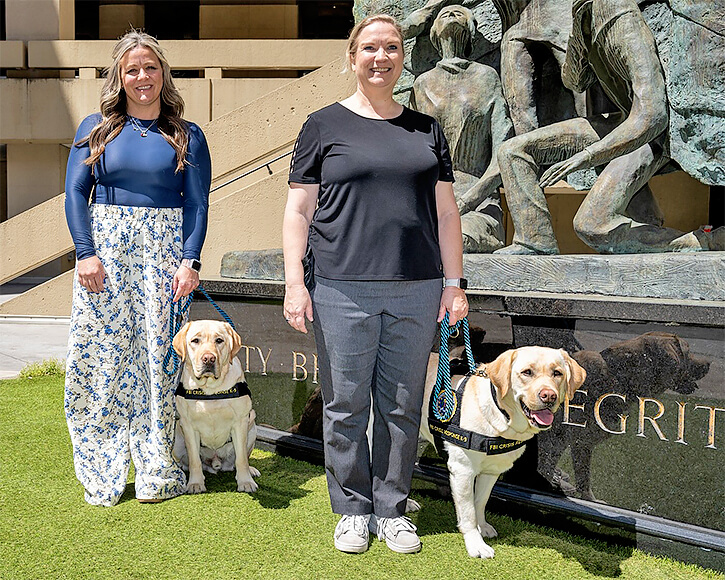
The FBI’s Victim Services Division has welcomed two new recruits: yellow English Labradors named Taz and Peg. Taz and Peg join the FBI family as certified crisis response canines (CRCs). These dogs are specially trained to support victims of crime and foster trust among impacted communities. CRCs also help victims find the courage and confidence to share their experiences in sensitive settings, such as investigative interviews and on the witness stand in court. Image courtesy of FBI

Federal Bureau of Investigation (FBI)

The FBI’s Victim Services Division has welcomed two new recruits: yellow English Labradors named Taz and Peg. 

Taz and Peg join the FBI family as certified crisis response canines (CRCs). These dogs are specially trained to support victims of crime and foster trust among impacted communities. CRCs also help victims find the courage and confidence to share their experiences in sensitive settings, such as investigative interviews and on the witness stand in court.  

In this way, these four-legged first responders help the Justice Department secure convictions in violent crime and counterterrorism cases.

Training days 

From left to right, FBI crisis response canine handler Amanda and her canine, Taz, and fellow handler Melissa and her canine, Peg, pose for a photo in the courtyard at FBI Headquarters in April 2025. Image courtesy of FBI

Taz and Peg, along with their handlers Amanda and Melissa, recently traveled to the Washington, D.C., area for a week of intensive training for their new jobs at the Bureau.  

Our partners at Assistance Dogs of the West (ADW)—a nonprofit dedicated to breeding and training not only crisis response canines but also other types of mobility and service dogs—led the training. The FBI has worked with ADW to acquire CRCs and train them and their handlers since 2015.

During training, the dogs and handlers learned how to move together and how to communicate via cues that the dogs learned when they were puppies. Then, they all practiced navigating urban streets, courtroom settings, and the halls of FBI Headquarters.

Finally, they deployed to their new homes in the field. There, they each passed their final assignments to become certified to support victims on behalf of the Bureau. 

az and Peg are now based in the FBI’s Atlanta and Dallas field offices, respectively. That way, they can quickly deploy nationwide to the scenes of violent crimes, mass violence incidents, courtroom appearances, forensic interviews, and other sensitive scenarios to support victims.  

While the dogs recently completed their last round of training, their journeys to public service actually started as soon as they were born into human hands at ADW’s puppy enrichment center in New Mexico.  

ADW trainers begin exposing their puppies to unfamiliar smells, sounds, and other stimuli while some of their senses are still fully forming.

“So, of course, they cannot see, they cannot hear until about 14 days old, but they can smell,” said ADW Lead Instructor and Trainer Aimee Brown. “They’re moving around. They feel vibrations. They have taste. And so, they’re being exposed to a wide variety of things.”  

The puppies also learn to love people from their earliest days.  

As they grow, the trainers keep an eye on traits that can make or break their success as service or facility dogs—such as their gait and their ability to take commands from multiple people. The trainers also look for natural areas of interest or aptitude, essentially allowing the dogs to choose their own vocational adventure.

“They tell us through the training,” explained Jill Felice, founder, vice president, and program director at Assistance Dogs of the West. 

The science behind the canines 

Image courtesy of FBI

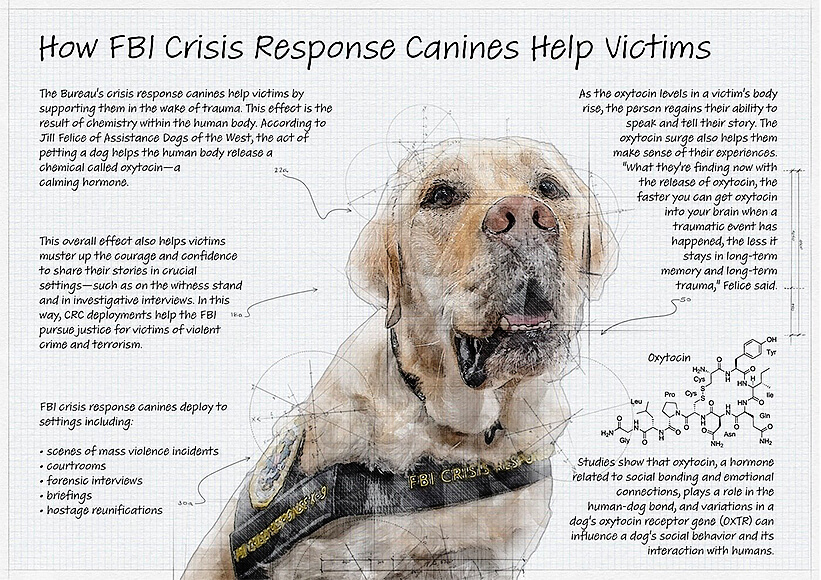
The dogs’ presence in the immediate aftermath of a crisis has a scientifically proven ability to decrease the likelihood of victims’ bodies storing their experiences as long-term trauma. 

According to Assistance Dogs of the West Vice President and Program Director Jill Felice, this is because the mere act of petting a dog causes the human body to release oxytocin—a hormone that induces calmness.  

“What they’re finding now with the release of oxytocin,” she added, “is the faster you can get oxytocin into your brain when a traumatic event has happened, the less it stays in long-term memory and long-term trauma. And that’s one of the hardest things about crises.”

And over the course of an investigation and judicial process, crisis response canines can help victims calm their nerves enough to share their stories with investigators and juries, alike. In turn, this helps our Justice Department partners secure convictions in violent crime and terrorism cases.  

The dogs also help the Bureau establish rapport and build trust with victims.

“Victims are volunteers,” explained Staci, a victim services coordinator. Staci became the Bureau’s second-ever crisis-response canine handler when she was paired with English Labrador Wally. “They don’t have to speak with us.  

“In a lot of cases, without victims, you don’t have a case. And so, if we can implement tools to assist victims to be able to want to speak with us—to make it easier for them to speak with us—it’s a win-win, because if victims speak with us, it gives us more information to help with our investigations and hopefully holding people accountable for their victimization, which keeps our streets safer and really helps society overall.”

In this way, these canine-handler teams are critical to the Bureau’s efforts to crush violent crime, defend the homeland, and rebuild public trust. 

Following in unparalleled paw prints 

Image courtesy of FBI

The FBI’s inaugural crisis response canines, Wally and Gio, joined the Bureau in October 2015 after their ADW training.

“Early on, the mission of the program really was to leverage the canine-human bond to mitigate stress and anxiety of victims following mass violence incidents,” said Melody, who was paired with Gio in what became one of the Bureau’s first crisis response canine teams.  

“Soon after that, we branched out, and we started providing support to critical incidents and violent crime. So, that means Gio and Wally would assist across all threat programs in the Bureau. And that could look like court support, forensic interviews, briefings, hostage reunifications, and so on.” 

The December 2015 mass shooting in San Bernardino, California, marked their first deployment to a mass violence incident. The canines and their handlers went on to support victims in the wake of eight additional mass violence incidents—including the Pulse nightclub, Parkland, and Route 91 Harvest Festival mass shootings.  

But they’ve also supported victims in other settings. Notably, Gio and Wally became the first two facility dogs to ever support victims in a courtroom setting. 

The success of these human-canine teams didn’t just lead the Victim Services Division to expand its crisis response canine program to the field. It also inspired the next generation of Victim Services personnel to become handlers. 

Peg’s handler, Melissa, was first exposed to the power of dogs as a military social worker, where she saw the impact of canines on combat soldiers’ emotions. But seeing the original class of FBI crisis response canines in action cemented her calling to serve as a handler. 

“When I joined the Bureau and met Wally and Gio and started going out to mass violence incidents, seeing Wally and Gio work and the true impact it has on that community and what they bring to the table, I knew that this was something I wanted to pursue,” recalled Melissa, who worked as an FBI victim specialist before moving to her current role. 

The legacy that Melody and Gio and Staci and Wally have built has similarly inspired Amanda. 

“We have seen the work that these dogs do on deployments when we’ve worked really long hours and the way they work with victims,” she said. Amanda, who also worked as an FBI victim specialist, now serves as Taz’s handler.  

“And then,” she continued, “we’ve seen them work with victims in our cases … and then, we bring these dogs in to maybe help during court when they have to go testify against their abuser. And just seeing what those dogs bring to those victims? It’s life-changing.”

McAllen Hosts Ribbon-Cutting Ceremony for Major Drainage Improvement Project

0
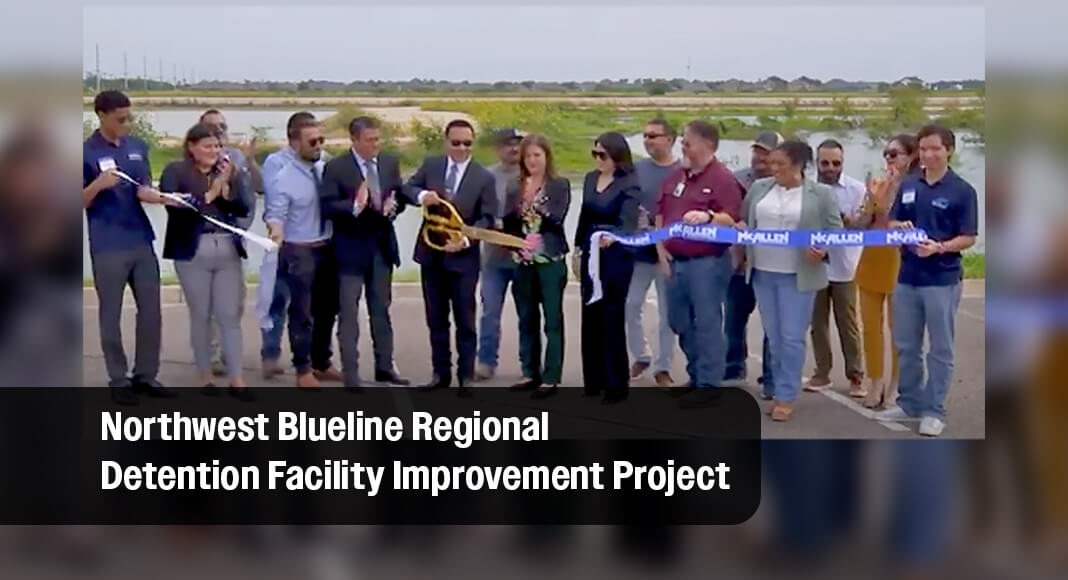
The Northwest Blueline Regional Detention Facility Improvement Project adds a new stormwater detention facility with space to hold about 97,000 cubic yards of runoff. Youtube image

McALLEN, Texas – The Northwest Blueline Regional Detention Facility Improvement Project adds a new stormwater detention facility with space to hold about 97,000 cubic yards of runoff. Crews improved 5,500 feet of the Northwest Blueline Ditch and cleared another 2,400 feet downstream. They also stabilized the area with permanent vegetation. These upgrades will greatly reduce flooding risks in northwest McAllen and nearby neighborhoods.

This project is the last of the 18 designated projects of the 2018 $22 million Bond Election Drainage Improvement Projects, coming in at a project cost of $1,520,810.04. This project is part of the City of McAllen’s continued investment in critical drainage infrastructure to protect neighborhoods, improve resilience during storm events, and enhance quality of life for residents. The contractor for the project was E-CON Group, LLC and Gannett Fleming as the engineer of record.

The project broke ground in April 2024 and was completed in March earlier this year.

STC Earns National Distinction for Affordable Online Programs

South Texas College is nationally known for many of its programs and initiatives, and this summer, it has also been named one of the “Most Affordable Schools for Online Associate Degrees” in the nation by OnlineU. STC image

By Amanda Sotelo

South Texas College is nationally known for many of its programs and initiatives, and this summer, it has also been named one of the “Most Affordable Schools for Online Associate Degrees” in the nation by OnlineU.

OnlineU is an online education industry-ranking organization that uses data-driven analysis and transparent reporting to provide students across the nation with the critical insights needed to make informed decisions about their future.  

Currently, STC offers 22 online associate degree programs ranging from Accounting, Computer Science, Education to Human Resources, Interdisciplinary Studies, Paralegal and Social Work. STC image

Ranking No. 11, and one out of only three colleges in Texas to earn this recognition, STC met several key factors to earn this distinction, such as being institutionally accredited – STC is accredited by the Southern Association of Colleges and Schools Commission on Colleges (SACSCOC), meet tuition criteria as set forth by OnlineU regarding in-state and out-of-state tuition and have at least 10 online associate degree programs.

“This recognition underscores STC’s unwavering commitment to accessible, affordable and high-quality education,” said Anahid Petrosian, Ph.D., vice president and provost for Academic Affairs and Economic Development. “This national ranking affirms our commitment to eliminating financial barriers while expanding flexible, fully-online pathways that deliver meaningful opportunities and exceptional value.”

Currently, STC offers 22 online associate degree programs ranging from Accounting, Computer Science, Education to Human Resources, Interdisciplinary Studies, Paralegal and Social Work.

As of fall 2024, 11,675 traditional and dual credit students have enrolled in online classes to earn either a certificate, associate degree or bachelor’s degree from STC.

One of those students is Tasha Bellevue, a Florida resident who recently earned an associate degree in Social Work by taking advantage of STC’s fully online program.

The 38-year-old said STC’s online Social Work program allowed her to work toward her purpose of helping others. Bellevue chose STC for its affordability and flexibility.

“It just felt right. STC gave me the motivation to succeed and offer my children a better life,” she said. “Completing this online program through STC has been a beneficial experience, allowing me to balance a full-time job, school and my family. I couldn’t have done it otherwise. I’m proud to be an online alumna from South Texas College.”

For many students like Bellevue, STC’s online program tuition costs, on average, between $7,620 and $9,800, making it the most affordable nationally and in the Rio Grande Valley compared to other institutions of higher education.

Additionally, students can register, pay and complete advisement entirely online with the college’s virtual campus.

STC President Ricardo J. Solis, Ph.D., has consistently emphasized the importance of making a college education accessible and affordable for all students, making this recognition a testament to STC’s mission, vision and values.

“We are proud to receive this recognition. It’s a reflection of the impact we are making not only in our region, but beyond,” said Solis. “To be recognized as a national leader in affordable online education echoes our commitment to making high-quality, flexible academic programs accessible to all students. These factors should never be a barrier to achieving a college degree.”

Petrosian added that as STC continues to expand offerings, providing students with online options remains in the forefront of program innovation.

“As we continue to grow and innovate across all programs, online education remains a key strategy to meet students where they are and prepare them for success in the workforce,” she said.

For more information on STC’s online programs, visit southtexascollege.edu/online.  

Information source: STC