Governor Greg Abbott has signed Senate Bill 7 and House Joint Resolution 7 into law, delivering what he called the largest generational investment in Texas’ water infrastructure. Photo: Office of The Governor
Texas Border Business
Texas Border Business
Lubbock, Texas – Governor Greg Abbott has signed Senate Bill 7 and House Joint Resolution 7 into law, delivering what he called the largest generational investment in Texas’ water infrastructure. The signing ceremony took place in Lubbock at SIMFLO, a local water technology manufacturer, and was attended by lawmakers, industry leaders, and more than 150 water sector professionals.
The legislation allocates a historic $20 billion toward improving and expanding water infrastructure across the state. The funds will be used both to repair aging water systems and to develop new water supply projects. Governor Abbott emphasized the long-term impact of the initiative, stating that it would secure Texas’ water future for generations.
“This law written by Chairman Perry and Chairman Harris does just that,” said Governor Abbott. “Providing a $20 billion generational investment for both new water supply and for the repairing of existing infrastructure.”
Photo: Office of The Governor
Speaker Dustin Burrows echoed the importance of the legislation, pointing out that it is essential not only for ensuring access to water but also for supporting economic development and job creation across Texas. “This legislation will not only help secure Texans’ access to water, it will support continued economic growth and job creation across our state,” Burrows said.
Senator Charles Perry described the initiative as a critical step in preparing the state for the future. “This legislation ensures our children and grandchildren have access to the water supply needed to keep our communities strong and our economy thriving,” he said.
Photo: Office of The Governor
Chairman Cody Harris highlighted the urgency of upgrading the state’s water systems, citing Texas’ rapid population growth. “Texas is growing fast, and our water supply isn’t keeping up,” Harris said. “Senate Bill 7 and HJR 7 are Texas-sized investments that put us on a path to strengthen the state’s water system.”
Senate Bill 7 designates the Texas Water Development Board as the lead agency responsible for managing the state’s water supply projects. The law expands the New Water Supply for Texas Fund and provides direction for long-term planning and coordination of statewide water conveyance systems.
House Joint Resolution 7 introduces a constitutional amendment that earmarks a portion of the state’s sales and use taxes—$1 billion annually—for the newly created Texas Water Fund. This dedicated funding stream is intended to ensure the sustainability of future water infrastructure investments.
Governor Abbott previously declared water infrastructure investment an emergency legislative item during his 2025 State of the State Address. With the signing of this legislation, the state takes a significant step toward addressing both current and long-term water challenges, while supporting continued population growth, business investment, and community resilience.
South Texas College’s Phi Theta Kappa (PTK) Honor Society Epsilon Mu Chapter is celebrating a remarkable year by achieving state and international recognition for its commitment to academic excellence, leadership and service. STC image
Texas Border Business
South Texas College’s Phi Theta Kappa (PTK) Honor Society Epsilon Mu Chapter is celebrating a remarkable year by achieving state and international recognition for its commitment to academic excellence, leadership and service, even earning a spot as a top 100 chapter out of 1,200 worldwide, placing them in the top 8% globally.
With more than 844 active members and over 200 new students joining each semester, the Epsilon Mu Chapter stands as a beacon of academic engagement and community service with a mission to recognize and encourage high-achieving students.
At the recent 2024 Texas Regional Convention held in Houston, the chapter earned numerous awards, including the prestigious College Project Award of Merit for its initiative titled, “Shattering the STIGMA of Attending a Community College: Implementing CCsmart Strategies.” This impactful effort featured a student-led panel, confronting outdated perceptions about community colleges.
“Many people see community college as a second choice,” said Celina Jorge, PTK student coordinator and Psychological Science faculty member. “But for many of us, it’s a lifeline. We want to change the view from ‘It’s just STC’ to ‘This is STC.’”
The chapter was also named a Texas Top Chapter, an elite recognition reserved for chapters that exemplify outstanding performance across all pillars of the PTK mission.
Another standout project, “The Story Behind the Mask,” earned an Honors in Action Award of Distinction. The initiative used art to promote mental health awareness, encouraging students to explore emotions and dismantle stigmas through creative expression.
“We started with our student community and then opened it up to the public,” Jorge said. “Our goal was to create a space where honest conversations about mental health could take place.”
The chapter’s momentum carried to the international stage at the PTK Catalyst Conference held in Kansas City, Missouri, where they received global recognition for their “The Story Behind the Mask,” Honors in Action project. They also earned a Distinguished Theme Award for exploring the power of storytelling in mental health advocacy through various media.
In a crowning achievement, the Epsilon Mu Chapter was named the CCsmart Champion, a national honor recognizing the chapter with the greatest impact in promoting community college awareness.
For student leaders, the awards signify more than just recognition, they are symbols of resilience and teamwork. PTK is brought to life by this dynamic group of scholars, who continually excel through innovative projects and purposeful outreach.
“Walking across the stage to accept the awards was life-changing,” said Francis Rosales, STC vice president of Fellowship. “It was a powerful reminder that dedication and long hours really do pay off.”
STC PTK President Oscar Hinojosa echoed this sentiment, emphasizing how these honors raise awareness about the society’s value.
“Our goal is to encourage more students to accept their PTK nominations and take advantage of the opportunities it offers,” said Hinojosa. “These awards are a powerful reminder that the time and sacrifices we’ve made, time away from school, work and family truly meant something. They prove that every effort was worth it.”
Faculty and leadership also share in the pride. Brett Millan, associate vice president for Academic Success and Advancement, applauded the chapter’s transformation.
“These awards showcase the remarkable growth of our students as they’ve developed into strong, compassionate leaders who fully embody the mission and spirit of the community college experience,” he said.
Beyond awards, the chapter actively supports organizations such as Make-A-Wish and the Rio Grande Valley Down Syndrome Association, while volunteering at events like the annual Feast of Sharing and engaging in leadership development activities that embody PTK’s mission.
Looking ahead, the chapter is focused on growing its reach and making its presence known across campuses and beyond.
“I want people to recognize PTK members, not just by name, but by the impact they’re making,” said Celina Casas, associate professor of Occupational Therapy and PTK faculty advisor. “We want to be known for what we do for the college and the community.”
As the premier honor society for two-year colleges, the Epsilon Mu Chapter continues to lead with purpose and set a national standard for excellence.
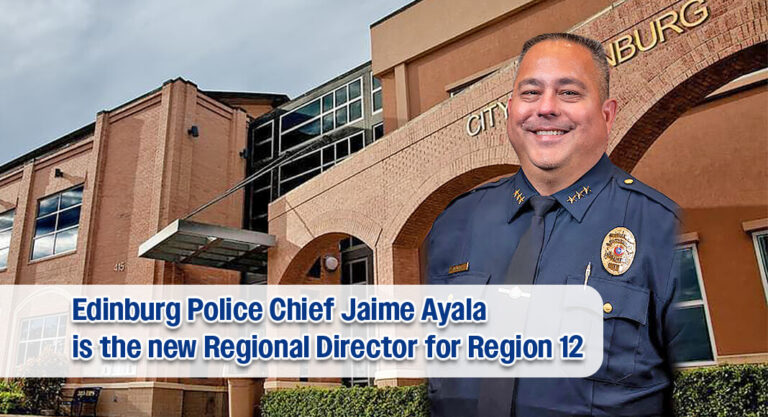
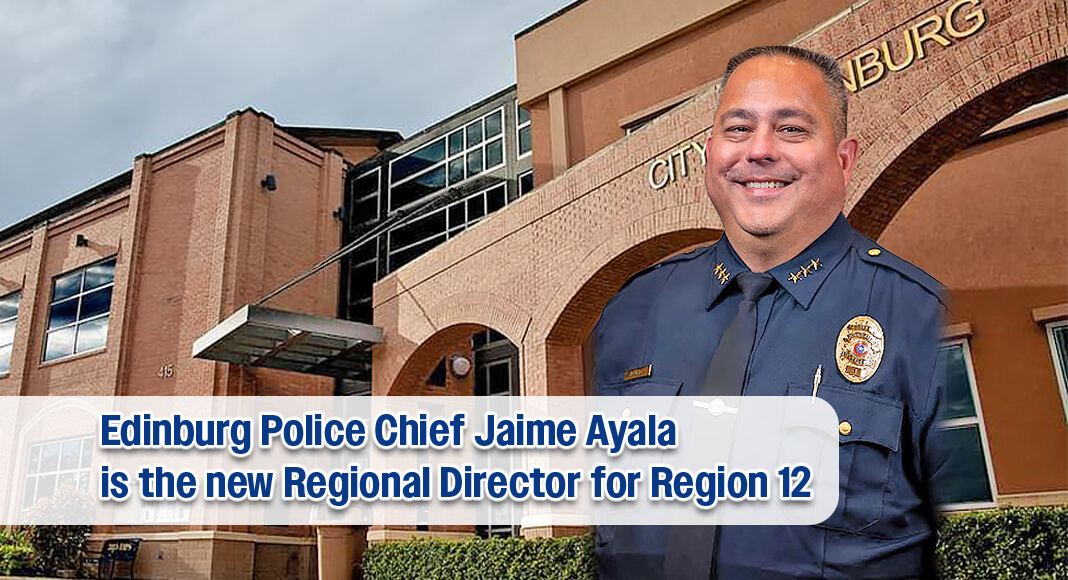
“I’m honored to serve as Regional Director and represent the dedicated law enforcement leaders of Region 12,” said Chief Ayala. “Together, we’ll continue working toward safer communities and stronger partnerships across South Texas.” Image courtesy of the City oF Edinburg
Texas Border Business
EDINBURG, Texas – The Texas Police Chiefs Association (TPCA) has appointed Edinburg Police Chief Jaime Ayala as the new Regional Director for Region 12, which includes the majority of the Rio Grande Valley. The appointment was made by TPCA President Will Johnson and reflects the organization’s continued commitment to experienced and community-driven leadership.
Chief Ayala brings more than 35 years of distinguished law enforcement experience to the role. A deep commitment to public safety, innovative policing strategies, and community engagement has marked his career. Prior to this appointment, Chief Ayala served as the Affiliate Representative for the South Texas Police Chiefs Association, where he worked closely with departments across the region to promote best practices in law enforcement.
As Regional Director, Chief Ayala will play a key role in strengthening communication and collaboration among police departments in Region 12, advocating for officer development, and advancing the TPCA’s mission to enhance professionalism and leadership across Texas law enforcement.
“I’m honored to serve as Regional Director and represent the dedicated law enforcement leaders of Region 12,” said Chief Ayala. “Together, we’ll continue working toward safer communities and stronger partnerships across South Texas.”
The Texas Police Chiefs Association represents over 1,200 police chiefs and law enforcement executives statewide and is committed to supporting its members through leadership, advocacy, education, and training.
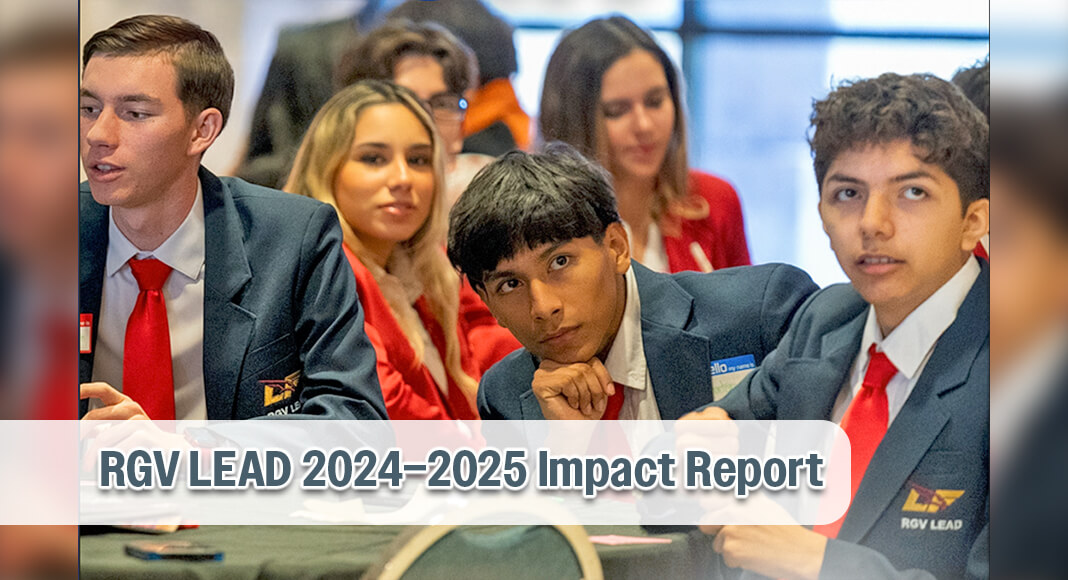
RGV LEAD, the Rio Grande Valley’s longtime leader in bridging education and workforce, reported notable expansion and measurable success in its 2024–2025 Impact Report. Under the leadership of Executive Director Dr. Marcos Silva, the organization extended its services to 20 school districts, reaching over 53,000 high school students and reinforcing its commitment to preparing young people for college, careers, and lifelong success.
“This year, we have expanded access while staying true to our mission,” said Dr. Silva. “We’re connecting more classrooms to industry than ever before, and the results are tangible for students and educators across the region.”
The organization emphasized strategic growth through deeper partnerships and broader participation. New district memberships reflected a growing shared commitment to equipping students with the skills and awareness necessary to thrive beyond high school.
“Our growth isn’t just in numbers—it’s in depth of impact,” Dr. Silva noted. “We’re seeing students more engaged, teachers more supported, and industry more connected.”
Throughout the year, RGV LEAD implemented high-impact programs that directly supported student success. Over 900 students participated in the Leadership & Workforce Conference, where they received communication, networking, and professional confidence training. More than 4,000 high school seniors earned career-readiness graduation certificates, and $12,000 in direct funding was awarded to student-led entrepreneurial projects. The annual Education and Career Expo welcomed over 400 students, and 45 business-student mentorships were established to foster career exposure and skill-building.
“Our programs are designed with purpose,” said Dr. Silva. “When students see how their education connects to the real world, they become more confident in their path forward.”
The Teacher Externship Program emerged as a flagship initiative in 2024. In partnership with Workforce Solutions Lower Rio, Workforce Solutions Cameron, and Region One ESC, the program placed 46 teachers into 25 local businesses. This hands-on experience allowed educators to bring industry insights back into the classroom, aligning curriculum with current workforce expectations.
“By investing in educators, we multiply our impact,” said Dr. Silva. “These externships give teachers the context and confidence to prepare students for careers that matter to our local economy.”
Industry participation grew, with 166 recorded engagements including mentorships, guest speaking, and sponsorships. Dr. Silva emphasized, “The partnership between education and industry is not optional—it’s essential. When businesses show up for students, the entire region benefits.”
A key development was the release of RGV LEAD’s updated Labor Market Report. For the first time, the report was also published in Spanish, ensuring broader accessibility for students and families. The report provided detailed regional data on in-demand occupations, helping schools better align academic offerings with real job opportunities.
“Our goal is not just to inform—it’s to empower,” Dr. Silva stated. “When students and families understand the labor market, they can make more confident decisions about the future.”
Survey data collected during a spring student conference highlighted common concerns, with 86% of students citing lack of information and lack of experience as key barriers to employment. Dr. Silva pointed to these findings as further justification for early and ongoing career education.
RGV LEAD also reported a diversified funding strategy to sustain its mission. The organization drew 44.7% of its revenue from membership fees, 31.6% from grants, 19.8% from events, and 3.8% from services. This balance of public and private funding enabled continued growth and financial stability.
“Our financial model supports both innovation and sustainability,” said Dr. Silva. “We’re building a foundation that will allow us to scale our efforts and deepen our service in the years ahead.”
Looking ahead to 2025–2026, RGV LEAD is focused on expanding its programming to middle school and college students, further enhancing bilingual resources, and increasing community engagement. Dr. Silva expressed optimism for the future: “We are prepared to do even more. With continued partnership, we will keep building a system where education and opportunity go hand in hand.”
As RGV LEAD moves forward, the vision remains clear: empowering every student in the Rio Grande Valley to succeed through meaningful connections between learning and livelihood.
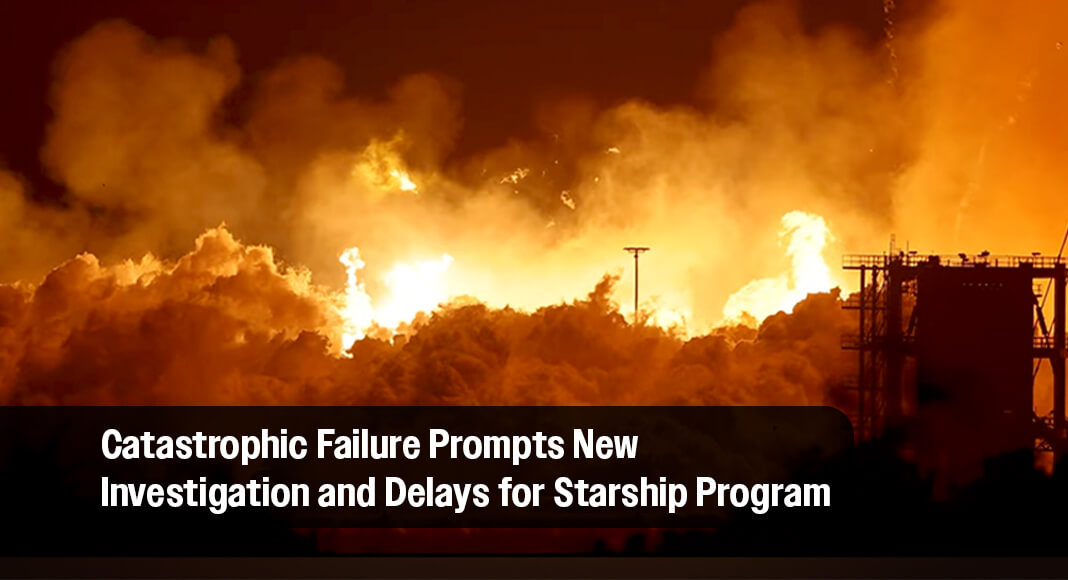
On June 18, 2025, at approximately 11 p.m. Central Time, SpaceX’s Starship prototype Ship 36 experienced a catastrophic explosion during a static-fire test at the company’s Starbase facility in Cameron County, Texas. Image: SpaceX
Screenshot
Texas Border Business
Texas Border Business
On June 18, 2025, at approximately 11 p.m. Central Time, SpaceX’s Starship prototype Ship 36 experienced a catastrophic explosion during a static-fire test at the company’s Starbase facility in Cameron County, Texas. The blast, which generated a massive fireball and was widely captured on livestreams, shocked residents in surrounding communities and rattled nearby homes.
Screenshots show the moments before and during the explosion of SpaceX’s Starship Ship 36 at Starbase, Texas, on June 18, 2025. The first image captures the vehicle seconds before ignition; the second reveals the massive fireball resulting from a catastrophic static-fire test anomaly.
According to SpaceX and local law enforcement, no injuries were reported. The event occurred within a secured area, and emergency protocols—supported by a pre-established safety perimeter—ensured that both SpaceX personnel and the public remained unharmed.
The incident occurred during what was expected to be a routine static-fire test involving propellant loading. SpaceX later confirmed the explosion as a “major anomaly” and a “catastrophic failure,” destroying Ship 36. The prototype had been slated for an upcoming flight on June 29, which is now expected to be postponed.
An official investigation is underway to determine the precise cause of the failure. SpaceX is coordinating closely with local authorities to secure the test site and mitigate any residual hazards before cleanup and restoration efforts begin. Fire response teams from Cameron County and the Brownsville Fire Department were promptly dispatched to the scene.
In the immediate aftermath, SpaceX outlined the following priorities: a complete technical review to assess the failure, safety operations to ensure all hazards are contained, and reassessing the Starship program’s testing and launch timeline.
The explosion of Ship 36 adds to a string of setbacks for the Starship program in 2025. Earlier prototypes—Flights 7, 8, and 9—also encountered failures or explosive outcomes during testing phases. Despite these events, SpaceX maintains that such challenges are part of its development strategy, which focuses on rapid iteration and long-term reusability.
In the video, the explosion was seen as a sudden and powerful fireball, marking a complete structural loss for the test vehicle. Key facts from the event confirm that the anomaly occurred during a controlled test, safety measures were effectively in place, and there were no casualties.
SpaceX officials reaffirmed their commitment to continued testing, indicating that the lessons learned from Ship 36 will inform future builds and launches. The company’s long-term mission to develop a fully reusable spacecraft for deep-space travel, including missions to Mars, remains unchanged.
As SpaceX reevaluates its timeline and technical procedures, the focus will remain on safety, investigation, and iterative improvement. Updates on the cause of the failure and the status of future launches are expected in the coming weeks.
Through this SDF grant, Workforce Solutions Lower Rio Grande Valley will provide customized training to 317 new and current employees of Lone Star National Bank for high-demand occupations in the commercial banking industry. Image for illustration purposes
Texas Border Business
AUSTIN ⎯ Governor Greg Abbott today announced a Skills Development Fund (SDF) grant award totaling $262,944 to Workforce Solutions Lower Rio Grande Valley by the Texas Workforce Commission (TWC). Through this SDF grant, Workforce Solutions Lower Rio Grande Valley will provide customized training to 317 new and current employees of Lone Star National Bank for high-demand occupations in the commercial banking industry.
“As our state’s economy continues to grow, it is critical that we invest in our workforce to ensure key industries have the talent they need to thrive,” said Governor Abbott. “This grant will provide the necessary tools to train over 300 employees in the commercial banking industry. I thank the Texas Workforce Commission for their partnership with Lone Star National Bank to ensure Texans in the Rio Grande Valley can be competitive in high-demand industries and help meet the needs of our growing state.”
“The Skills Development Fund grant is a powerful tool to aid in the success of the Texas workforce,” said TWC Chairman Bryan Daniel. “By providing training resources to hundreds of workers for high-demand roles in commercial banking, we are supporting Texas businesses while improving the skills of Texas workers.”
Earlier today, TWC Commissioner Representing Labor Alberto Treviño III presented the award to representatives from Workforce Solutions Lower Rio Grande Valley, Lone Star National Bank, and other local partners during a ceremony held at Lone Star National Bank’s corporate office in McAllen.
SDF is the state’s workforce training grant program to help businesses upskill their new or incumbent workforce. In partnership with the public community and technical colleges, workforce development boards, and Texas A&M Engineering Extension Service, TWC collaborates to provide customized, innovative training to Texas businesses of all sizes.
The SDF grant program has provided training opportunities in partnership with more than 4,900 employers to upgrade or support the creation of over 435,000 jobs throughout Texas since the program’s inception in 1996.
Janet Ogden Vackar is a prominent businesswoman and philanthropist in the Rio Grande Valley. Courtesy image by Bert Ogden Auto Group
Texas Border Business
By Caroline Waldrip
“I was born in Weslaco and raised in the Rio Grande Valley, where my parents, Bert and Dorothy Ogden, established the Bert Ogden Auto Group with a Pontiac, Buick, and GMC dealership in Edinburg. Growing up in this environment, I developed a deep appreciation for the automotive industry and the importance of community engagement,” Janet said.
Her dedication to the Valley is evidenced by the variety of organizations and schools she has sponsored throughout South Texas. One such partnership is her relationship with Covenant Christian Academy.
Covenant Christian Academy (CCA), located in McAllen, Texas, is a private educational institution that provides a holistic education rooted in a biblical worldview. Established in 1995, CCA serves students from early childhood (K2) through high school, emphasizing academic excellence intertwined with Christian principles. In alignment with its mission to equip learners for excellence, embrace biblical principles, and empower servant leaders for Christ, CCA offers a comprehensive curriculum integrating faith and learning. The school’s programs are designed to develop the whole person — mind, body, and soul — preparing students for both academic success and moral integrity.
For aspiring entrepreneurs, I emphasize the importance of resilience, community engagement, and connecting with your team in a way they know they are valued. Building strong relationships within your community and understanding the needs of your customers are foundational to long-term success.
Janet Ogden Vackar, owner, president of marketing, and long-time spokeswoman of the Bert Ogden Auto Group
Nearly a decade ago, Covenant Christian Academy CEO Dr. Milton Gonzalez met Janet Vackar in a hospital elevator during a moment of shared crisis. She was there comforting two young women whose father was in critical condition, and Dr. Gonzalez was there to pray for another family. That brief encounter, followed by a simple message through Facebook Messenger offering prayer, became the beginning of a God‑ordained relationship.
As the Bert Ogden Auto Group grew, Janet reflected on her father’s influence: “Continuing my father’s legacy is both an honor and a profound responsibility. He laid the foundation with values of integrity, hard work, and community service,” she said.
In the years that followed, Bob and Janet Vackar sowed the first seeds into a tuition scholarship fund that blessed multiple families. As Janet witnessed the school’s growing vision, she felt led to do more — personally funding and championing the launch of the high school, now named in her honor: The Janet Vackar Distinguished Leadership High School at Covenant Christian Academy. Her generosity helped secure dual accreditation and establish a dual enrollment partnership with South Texas College.
“While expanding the Bert Ogden Auto Group has been a significant accomplishment, I take immense pride in our philanthropic endeavors. But nothing beats the achievement of seeing the strong woman and mother my daughter has become and enjoying the blessing of being a Nana to the most amazing four grandchildren!” she said.
Most recently, Bob and Janet Vackar donated an additional eight acres of land adjacent to another eight-acre property already owned by the school, located just across the street from the current campus. This generous gift has made it possible to begin planning for a brand new high school facility, which is currently in the design phase and scheduled to open its doors by the end of 2026.
Beyond her remarkable generosity, Janet is a beloved presence on campus — she often speaks at chapel, reads stories in classrooms, and even brings puppets to preschool to put on skits for the little ones. “Community involvement is at the heart of everything we do. We believe that investing in our community fosters growth, unity, and a brighter future for all residents,” she said.
The CCA student body has significantly benefited from Vackar’s generosity and will continue to do so for decades to come. From funding the new high school to spending countless hours pouring into the littlest CCA students, her presence and firm support have created a legacy of love in action—one that will shape leaders and strengthen families for generations.
Reflecting on her journey, Janet offered this advice to future entrepreneurs:
“For aspiring entrepreneurs, I emphasize the importance of resilience, community engagement, and connecting with your team in a way they know they are valued. Building strong relationships within your community and understanding the needs of your customers are foundational to long‑term success.”
Janet Vackar’s generosity has helped build more than just a school — it’s helped shape a community. Her legacy lives on in every student she’s encouraged, every family she’s supported, and every act of love she’s quietly offered. The future of the Rio Grande Valley is brighter because of her unwavering commitment to serve.
Article authorized for publication by The Bert Ogden Auto Group.
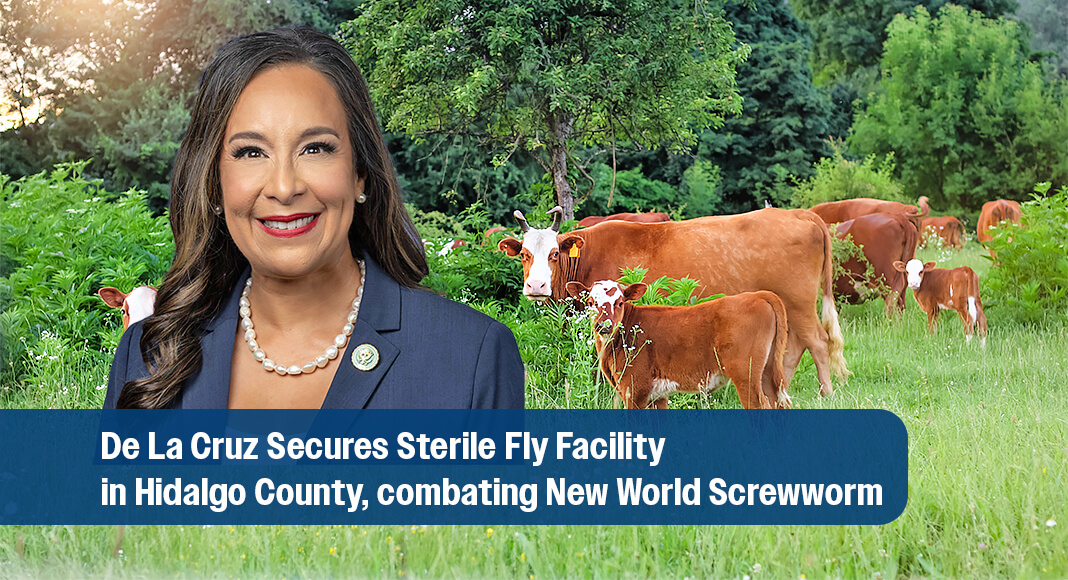
Congresswoman Monica De La Cruz (TX-15) and U.S. Department of Agriculture Secretary Brooke Rollins announced $8.5 million to establish a New World Screwworm sterile fly facility at the Moore Air Base in Hidalgo County. Image for illustration purposes
Texas Border Business
WASHINGTON – Congresswoman Monica De La Cruz (TX-15) and U.S. Department of Agriculture Secretary Brooke Rollins announced $8.5 million to establish a New World Screwworm sterile fly facility at the Moore Air Base in Hidalgo County. As the threat posed by the New World Screwworm moves northward, the facility will be crucial in producing and distributing sterile flies to prevent potential outbreaks in the U.S. “If we do not take action now, the New World Screwworm will devastate Texas livestock and wildlife. Thank you, Secretary Rollins, for swiftly accepting my proposal to establish this critical facility in Hidalgo County. I am committed to working alongside the Administration to put Texas farmers and ranchers first and safeguard our agriculture industry.” – Congresswoman Monica De La Cruz
“The United States has defeated NWS before and we will do it again. We do not take lightly the threat NWS poses to our livestock industry, our economy, and our food supply chain. The United States government will use all resources at its disposal to push back NWS, and today’s announcement of a domestic strategy to bolster our border defenses is just the beginning. We have the proven tools, strong domestic and international partnerships, and the grit needed to win this battle.” – U.S. Department of Agriculture Secretary Brooke Rollins
Background:
The New World Screwworm is a highly destructive parasitic fly that infests the flesh of livestock and wildlife. The parasite has been detected in Veracruz, Mexico, approximately 700 miles from the U.S. border. As more cases arise, the threat and concerns of northward spread grow.
Last week at the House Agriculture Committee hearing with Secretary Rollins, Rep. De La Cruz advocated for Moore Air Base in Hidalgo County to be considered as a site to help combat New World Screwworm. In May, De La Cruz sent a letter to the Secretary requesting that Moore Air Base be considered for a new sterile fly facility to help combat this parasite. The Congresswoman has also led legislative initiatives, including the New World Screwworm Preparedness Act, to ensure Texas agriculture is prepared to combat the threat.
Information Source: Office of Congresswoman De La Cruz
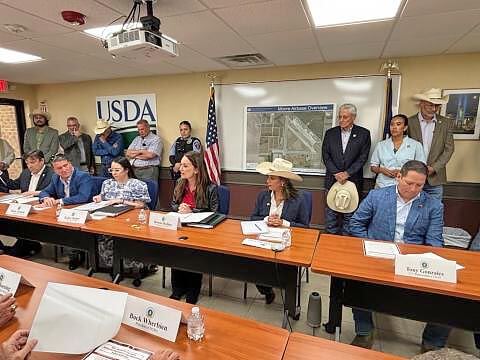
U.S. Secretary of Agriculture Brooke L. Rollins this morning launched an $8.5 million sterile New World screwworm (NWS) fly dispersal facility at Moore Air Base. Image courtesy of USDA
Texas Border Business
U.S. Department of Agriculture (USDA)
Edinburg, Texas – U.S. Secretary of Agriculture Brooke L. Rollins this morning launched an $8.5 million sterile New World screwworm (NWS) fly dispersal facility in South Texas and announced a sweeping five-pronged plan to enhance USDA’s already robust ability to detect, control, and eliminate this pest. These urgent actions are necessary to finish the fight against NWS and protect the United States.
Secretary Rollins and Congresswoman Del La Cruz during the announcement at Moore Air Base. Image courtesy of USDA
NWS is a devastating pest that causes serious and often deadly damage to livestock, wildlife, pets, and in rare cases, humans. While NWS has been eradicated from the United States for decades, recent detections in Mexico as far north as Oaxaca and Veracruz, about 700 miles away from the U.S. border, led to the immediate suspension of live cattle, horse, and bison imports through U.S. ports of entry along the southern border on May 11, 2025.
“The United States has defeated NWS before and we will do it again,” said Secretary Rollins. “We do not take lightly the threat NWS poses to our livestock industry, our economy, and our food supply chain. The United States government will use all resources at its disposal to push back NWS, and today’s announcement of a domestic strategy to bolster our border defenses is just the beginning. We have the proven tools, strong domestic and international partnerships, and the grit needed to win this battle.”
Following the dispersal facility groundbreaking at Moore Air Base, Secretary Rollins will meet with APHIS’s cattle fever tick riders along the Rio Grande River. The Secretary will see firsthand the critical role tick riders provide for identifying wildlife and preventing the spread of wild disease. In the event NWS advances northward into the U.S., these tick riders will play a crucial role in spotting and combatting this pest.
Key Facets of USDA’s Five-Pronged Plan (PDF, 434 KB) to Address New World Screwworm
1. Stop the Pest from Spreading in Mexico and Ensure We Are Full Partners in Eradication
USDA’s recent $21 million expenditure went toward renovating an existing fruit fly production facility in Metapa, Mexico, which will provide an additional 60-100 million sterile flies a week to stop the spread, on top of the over 100 million already produced in Panama. This will result in at least 160 million flies per week.
Over the last two weeks, USDA conducted a robust, in-person audit of Mexico’s animal health controls and will maintain close continual monitoring of these aspects moving forward and will make continuous improvements. These in-person visits have allowed a unique opportunity for APHIS to see first-hand the challenges and opportunities in Mexico toward combating NWS.
USDA is working closely with Mexico to improve its surveillance and detection of NWS, which includes but is not limited to regularly providing traps, lures, and technical expertise to Mexico.
2. Protect the U.S. Border at All Costs
USDA will support Mexico’s strategic trapping along our shared border and ensure we receive regular reporting as an early warning intervention.
USDA will escalate communications and public outreach along the U.S.-Mexico border to create a “barrier zone of vigilance” and boost as close to real time as possible awareness of this pest.
APHIS cattle fever tick riders in collaboration with U.S. Customs & Border Protection and with state partners will intercept and treat stray and illegally introduced livestock.
3. Maximize Our Readiness
USDA will partner with state animal health officials to update and finalize emergency management plans and support federal, state, and local responders in training on and practicing for a potential response.
USDA will ensure we have sufficient NWS treatments and will work to remove any federal regulatory hurdles for their use.
4. Take the Fight to the Screwworm
Because sterile NWS flies are one of the most important and proven tools we have for eradicating the pest, USDA will immediately begin building a sterile insect dispersal facility at Moore Air Base, set to be completed in 2025. This facility will have the capability to disperse sterile flies in Northern Mexico.
USDA is exploring all options to eradicate NWS, which includes potential expenditures in new technologies, new science, including possible plans to move forward with the design process of a domestic sterile fly production facility to compliment the new dispersal facility at Moore Air Base which has also been identified as the proposed location. The facility could boost domestic sterile fly production by up to 300 million flies per week and could complement current production that already exists in Panama and Mexico.
5. Innovate Our Way to Eradication
USDA is pursuing innovative research to improve sterile insect technology, exploring development of better traps and lures, exploring next generation NWS treatments, and assessing the potential use and practicality of additional strains or genetically modified versions of the pest as well as e-beam and other radiation technology for the production of sterile flies.
USDA will strengthen partnerships with land-grant universities in border states such as Texas, Arizona and New Mexico to facilitate local training, trap deployment, surveillance validation, and stakeholder outreach as an initial manner.
Additionally, to solicit input from stakeholders and to best inform the finalization of future plans, USDA will hold four public listening sessions to get feedback on the following topics: sterile fly production technology, eradication tools and technologies aside from sterile fly production, the benefits and barriers including timelines and costs of enhanced domestic vs international sterile fly production, and other innovative ideas. The Department of Agriculture has and remains committed to working in close coordination with our federal, state, local and private sector partners to defeat this pest once and for all.
“Texas is on the front lines of the threat posed by the New World Screwworm. Proactive measures like this dispersal facility are a critical step to ensure our state and nation are prepared to respond swiftly and effectively to this challenge. We are grateful for the Trump Administration and Secretary Rollins’ continued support of Texas in safeguarding the economic vitality of our farming and ranching communities. We will continue to work with our federal partners to eliminate this threat,” said Governor Greg Abbott.
“If we do not take action now, the New World Screwworm will devastate Texas livestock and wildlife. Thank you, Secretary Rollins, for swiftly accepting my proposal to establish this critical facility in Hidalgo County. I am committed to working alongside the Administration to put Texas farmers and ranchers first and safeguard our agriculture industry,” said Representative Monica De La Cruz.
“Today’s policy changes represent a huge step forward to eradicating the screwworm and protecting American livestock— especially the opening of a U.S.-based eradication facility in South Texas. This facility has been one of my top priorities in Congress. From introducing the STOP Screwworms Act to leading funding efforts through my seat on the House Appropriations Committee, I am determined to do everything possible to eliminate this deadly parasite. Thank you, Secretary Rollins, for your partnership and commitment to deliver for our farmers and ranchers in Texas and across the nation,” said Representative Tony Gonzales.
“The return of the New World Screwworm is a glaring potential threat to South Texas ranchers, wildlife, and communities as a whole. If it reaches our country, this pest could wreak havoc on our economy and food supply chain. It must be eradicated. I look forward to working with USDA and other partners on innovative solutions right here at Moore Air Base to ensure the safety of our agricultural industry and South Texans’ wellbeing,” saidRepresentative Vicente Gonzalez.
“The New World screwworm poses a serious threat to our cattle, economy, and food supply, but with Secretary Rollins’ leadership and USDA’s new 5-Prong Strategy, we’re taking aggressive action to stop it and protect America’s farmers and ranchers. As the Representative for the largest cattle-feeding district, I am committed to working closely with the Secretary to ensure we have every necessary tool to safeguard our livestock producers and feeders and their way of life,” said Representative Ronny Jackson.
“I’m proud to partner with decisive leaders such as USDA Secretary Rollins and our Texas congressional delegation in combating the New World Screwworm. This is a significant threat, and it’s critical we stay ahead of it. Texas has historically been at the forefront of American agriculture, and we are prepared to assist Secretary Rollins and the USDA in protecting our livestock, economy, and food supply. I look forward to implementing a robust, effective plan to protect Texas agriculture from this dangerous pest,” said Commissioner of Agriculture Sid Miller.
“Curbing the spread of the destructive New World screwworm is critical to protecting the Texas agriculture and livestock industry, and this new sterile fly distribution facility in Edinburg is a significant step in the right direction,” said Senator John Cornyn. “I will continue to work alongside Secretary Rollins and my colleagues in Congress to halt the spread of New World screwworm and increase our sterile fly production capacity through my STOP Screwworms Act.”
“The only way to protect the American cattle herd from the devastating threat of New World screwworm is by having a sufficient supply of sterile flies to push this pest away from our border,” said National Cattlemen’s Beef Association President Buck Wehrbein, a Nebraska cattleman. “To accomplish that, we need a sterile fly production facility of our own in the United States. Moore Air Base was previously part of our nation’s screwworm eradication effort in the 1960s and now this base will be the cornerstone of our renewed fight against this parasite. NCBA, and state affiliate partners including the Texas and Southwestern Cattle Raisers Association and Texas Cattle Feeders Association, have been pushing for a facility like this since the start of the year. We appreciate Secretary Rollins’ continued work to protect American agriculture from the New World screwworm. It’s an honor to join her in Texas for this important event.”
“Texas Farm Bureau applauds U.S. Secretary of Agriculture Brooke Rollins for advancing the construction of a sterile insect production and distribution facility at Moore Air Base. This investment is a critical step in protecting Texas livestock, wildlife and our food supply from the devastating threat of the New World screwworm (NWS). As the screwworm threat has moved north from Panama into Mexico, Texas Farm Bureau made the establishment of a domestic sterile insect facility one of our highest priorities. A robust, science-based defense, anchored by a U.S.-based facility, is essential to combatting this destructive pest. We’re grateful to the Congressional leaders who have championed this effort and to USDA for its commitment to proactive, long-term solutions. We look forward to continued collaboration to ensure our producers, rural communities and consumers are protected from this threat,” said Texas Farm Bureau President Russell Boening.
“We commend Secretary Rollins for prioritizing efforts to combat New World Screwworm by establishing sterile fly dispersal and production facilities in South Texas which will significantly enhance our capabilities to contain the screwworm in Southern Mexico,” said Texas Cattle Feeders Association chairman-elect Laphe LaRoe. “These additional resources, combined with robust implementation of surveillance, sampling, reporting and enhanced treatment protocols provide a strong foundation for the U.S. to continue fighting the screwworm fly where it is today and ensure continued confidence in cattle and beef trade between the U.S. and Mexico.”
“Today’s announcement is pivotal in protecting the U.S. cattle industry. Sterile flies are the only known way to stop the reproduction and continued expansion of New World screwworm, and it’s assuring to see Secretary Rollins follow through her early commitments to increasing production of sterile flies domestically,” said Texas & Southwestern Cattle Raisers Association First Vice President Stephen Diebel.
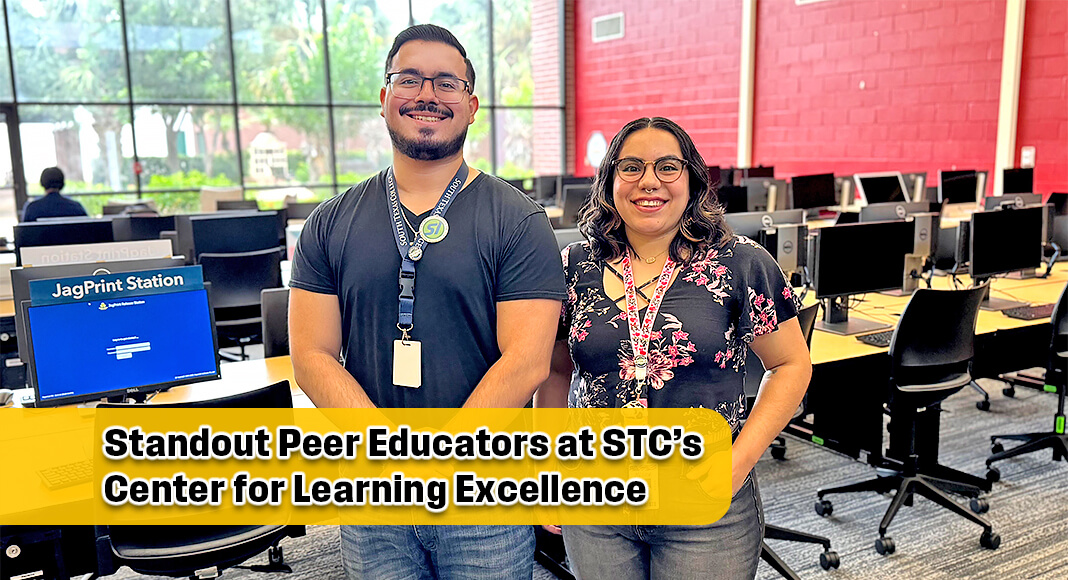
What began as tutoring roles at South Texas College has evolved into two powerful leadership journeys that have earned them national recognition. Emily Jimenez and Julisses Longoria talk about their approach to mentorship that enabled them to serve as keynote speakers at the 4C Virtual Tutor Conference. 4C is an organization dedicated to improving learning support practices. STC image
Texas Border Business
By Joey Gomez
McALLEN, Texas – As standout peer educators at South Texas College’s Center for Learning Excellence (CLE), Emily Jimenez and Julisses Longoria agree on a simple, but powerful message: Excellence is a pursuit rather than a destination.
The message is catching on. What began as tutoring roles at STC has evolved into two powerful leadership journeys that have earned them national recognition.
In 2024, Jimenez and Longoria were both invited to serve as keynote speakers at the 4C Virtual Tutor Conference. 4C is an organization dedicated to improving learning support practices.
In a rare honor typically reserved for staff or faculty, their presentation “Rising Toward Excellence,” drew praise from tutoring professionals across the country.
Together, Jimenez, who is a Learning Excellence Mentor at CLE Supplemental Instruction (SI), and Longoria, who is an SI Leader with CLE, reflect on their mission to turn setbacks into strength by sharing their stories of resilience and leadership.
“We just strive to be the best versions of ourselves, and we want to share how we got to where we are,” Jimenez said.
Longoria agreed. “It’s not about the end goal. The small victories along the way are the ones we should be proud of,” he said.
Both mentors are certified at Level 2 by the College Reading and Learning Association (CRLA).
CRLA’s International Tutor Training Program Certification (ITTPC) offers three levels of certification, which reflect the depth of the training the tutor receives.
Jimenez and Longoria say they play essential roles not only in tutoring students but also onboarding and mentoring new hires within CLE.
Jimenez has worked at STC for more than five years but only recently stepped into an official mentor role.
Before college, she taught high school color guard students – an experience that shaped her teaching style.
Now pursuing a Teaching degree after switching from Nursing, Jimenez tutors in Anatomy and Physiology, and said she prefers to lead with openness and vulnerability.
“Even as a high school color guard instructor, I had to find creative ways to make students enjoy learning,” Jimenez said. “But what is true, whether I’m working with high school students or college students is that the message stays the same. I tell them ‘I’ve been there.’ I struggled too. When they see me being honest, it helps them feel safe to learn and make mistakes.”
Longoria said his educational journey began thousands of miles away from STC.
Originally from Brownsville, he spent his early years living in towns across the Rio Grande Valley and even a brief stay in Alaska. But it was a family move to Canada after seventh grade that changed his academic perspective.
Always a straight A student in the Valley, Longoria said he struggled when he moved away and still struggles to understand why.
“School came easy to me in the Valley,” he said. “But once I moved to Canada, I started getting 50s and 60s. That really shook my confidence. Maybe it was the isolation, or maybe I was shy, and I had no support system, but I had to work to pick myself up academically.”
Longoria said the experience taught him a valuable lesson – community matters. When he returned to Texas for college, he made a bold choice.
“I told myself, ‘You’re going to be an extrovert now. You’re going to ask questions. You’re going to reach out to people.’ And that is exactly what I did,” Longoria said.
When he began working at STC as a tutor and later an SI leader, he said he peppered coworkers with questions – sometimes incessantly.
“It’s how I learn – through questioning and comparing approaches,” he said. “I built my own teaching style that way.”
Years later, Longoria is now a recent graduate of STC’s Bachelor of Applied Science in Organizational Leadership (BASOL). Completing the program, Longoria summed up his educational journey in a simple sentence: Being a teacher is being a leader.
“I want to build my leadership skills so I could be the kind of teacher students really connect with,” he said.
These days, Jimenez and Longoria work hard to make sure students don’t face the same struggles they once did. Their advice for new students is clear.
Whether mentoring peers or speaking on a national stage, both say that excellence doesn’t come from perfection – it comes from perseverance.
“It’s all about building trust,” Jimenez said. “Students want to feel safe. When they see that we care that we’re honest and that we have struggled too – that’s when the real learning happens.”
For more information on STC’s Center for Learning Excellence and the services offered, visit www.southtexascollege.edu/cle/.