
















Texas Border Business




By Roberto Hugo González / Texas Border Business
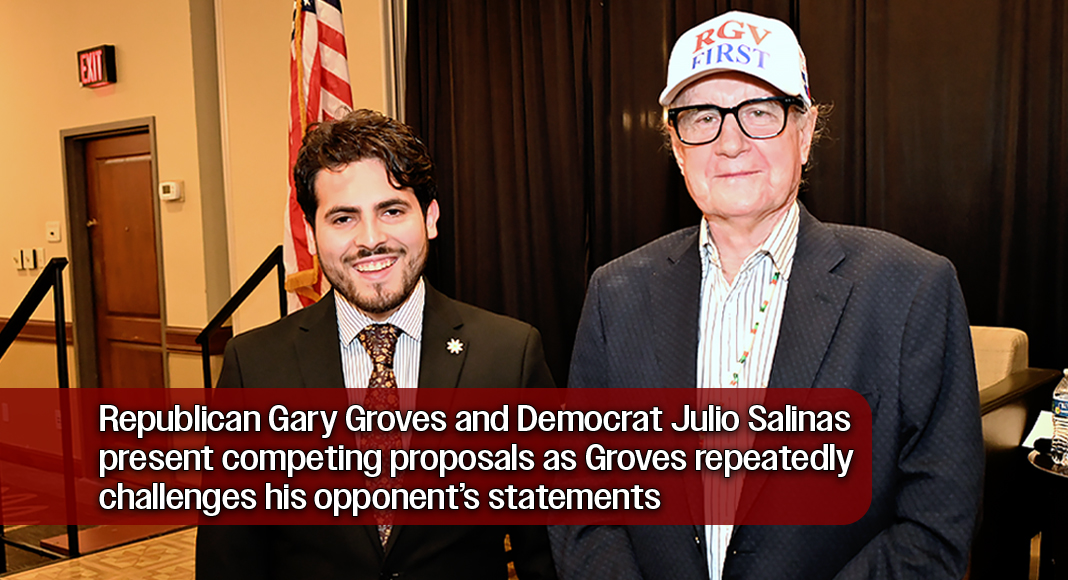
McALLEN, Texas — Republican Gary Groves and Democrat Julio Salinas, candidates for Texas House District 41, presented differing approaches to property taxes, education, healthcare and infrastructure during a forum organized by the McAllen Citizens League.
The discussion, moderated by Carlos Sanchez, also featured several exchanges in which Groves interrupted the progression of questions to challenge statements made by Salinas.



Both candidates identified affordability as a leading concern for Rio Grande Valley residents but disagreed over how state government should address rising costs.
Groves supported proposals to eliminate school property taxes on homes and limit annual property appraisal increases to 3%. He also advocated a 30% discount on automobile insurance for qualifying drivers.
Salinas favored property tax relief through homestead exemptions and criticized proposals to eliminate property taxes, arguing that replacing the revenue could require substantially higher sales taxes.
Groves challenged that characterization, saying his approach would be implemented over time and that changes would require voter approval.
The disagreement continued during a discussion of education funding.
Salinas opposed the Texas Education Freedom Accounts program, which received an initial $1 billion allocation. He argued that public schools require greater investment before additional money goes toward private education.
Groves supported the program, saying parents should have more choices in how they educate their children.
Before addressing the education question, Groves returned to Salinas’ earlier property tax comments.
“He doesn’t understand the plan. Apparently, he hasn’t read it,” Groves said.
Another correction came during the water infrastructure discussion.
Groves challenged Salinas’ claims about rising property taxes under Gov. Greg Abbott, arguing that local governments, not the governor, set local property tax increases.
The candidates also disagreed over transportation.
Salinas proposed expanding freight and passenger rail connections, including a high-speed passenger route linking Monterrey, the Rio Grande Valley and San Antonio.
Groves questioned the proposal’s financial practicality, citing California’s high-speed rail project as an example of potentially wasteful spending.
He returned to that criticism before answering a subsequent healthcare question.
On healthcare, Salinas supported Medicaid expansion and prescription drug price limits. Groves advocated reviewing healthcare costs through discussions with hospitals, insurers and other providers.
Their differences extended to artificial intelligence and data centers.
Groves supported data center development with government oversight. Salinas called for greater local control and proposed using revenue associated with artificial intelligence development to benefit residents.
Despite their disagreements, both candidates supported workforce training and improvements to regional infrastructure.
In closing, Salinas emphasized his legislative experience and proposed policy changes, while Groves stressed his business background and willingness to work with state leaders.
Both pledged to keep in touch with constituents, including residents who disagree with their positions.