
















Texas Border Business




Texas Border Business
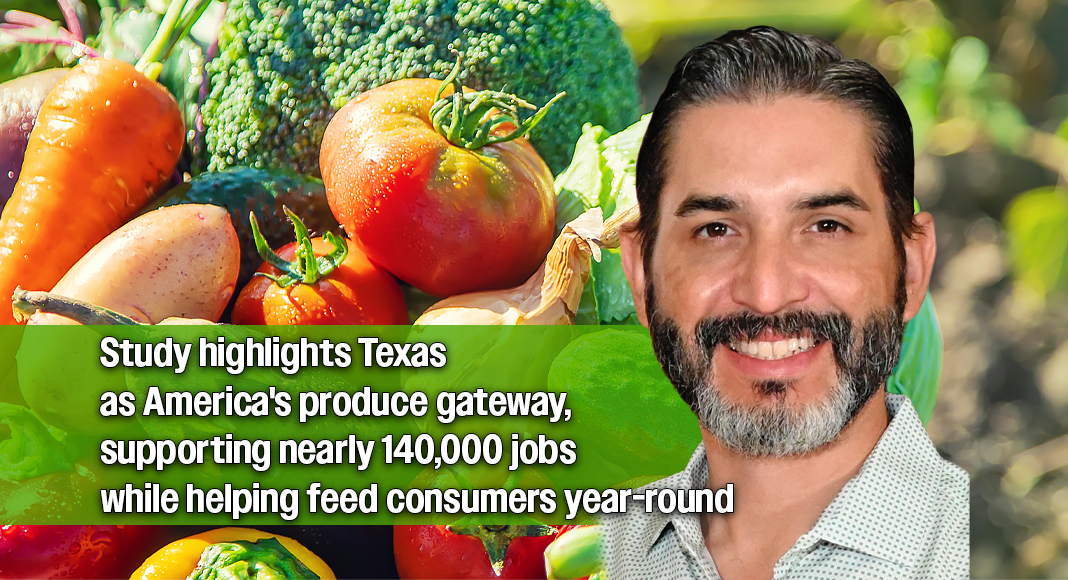
MISSION, Texas — “Texas is America’s produce gateway,” said Dante Galeazzi, President and CEO of the Texas International Produce Association (TIPA). “Every shipment that crosses our border creates value far beyond the produce itself. It supports truck drivers, warehouse employees, customs brokers, wholesalers, retailers, grocery stores, restaurants, and thousands of American workers who keep fresh food moving from our ports of entry to dinner tables across the country.”
A new study by the Texas A&M University Center for North American Studies found that fresh produce imported from Mexico through Texas generated $26 billion in economic activity during 2025 while supporting nearly 140,000 American jobs. By 2033, researchers project that impact will grow to $34.4 billion and support 144,611 jobs across Texas and the United States.




Feeding Americans Starts in Texas
In 2025, Texas handled more than 13.7 billion pounds of fresh fruits and vegetables imported from Mexico—approximately 57% of all fresh produce entering the United States from Mexico. That’s enough fresh produce to provide roughly 40 pounds for every American.
Those shipments were valued at $11.8 billion. The Pharr Port of Entry alone handled more than 8.9 billion pounds of fresh produce, making it the busiest produce bridge in the United States.
The study projects that by 2033, Texas will handle approximately 18.6 billion pounds of fresh produce imported from Mexico annually—a 36.2% increase over current volumes—representing 58.2% of all U.S. fresh produce imports from Mexico.
Steady Supply Helps Protect Consumers
At a time when families continue to feel pressure at the supermarket checkout, fresh produce has avoided some of the sharp price increases seen in other grocery categories. USDA data show that average food-at-home prices rose 2.3% in 2025, while fresh vegetable prices declined 0.4%. Fresh fruit prices also increased at a comparatively modest pace during much of the year.
A dependable North American supply is part of that story. Production from Mexico augments U.S. growing seasons, fills weather-related and seasonal gaps, and gives retailers a broader, more predictable supply of fresh fruits and vegetables. That consistency allows growers, importers, distributors, and supermarkets to plan purchases and promotions with greater confidence, helping reduce sudden shortages and the price swings consumers can see at the cash register.
An Investment in American Jobs
Across the four southwestern border states, fresh produce imported from Mexico generated $39.5 billion in U.S. economic activity during 2025. By 2033, that impact is projected to exceed $51.5 billion, supporting more than 216,000 American jobs.
Every shipment crossing the border creates additional economic activity long after it enters the United States, supporting American businesses that transport, store, inspect, market, distribute, and sell fresh produce to consumers nationwide.
USMCA Provides the Foundation
“Consumers are the ultimate beneficiaries of this partnership,” Galeazzi said. “Mexico doesn’t replace American agriculture—it complements it. Our domestic growers remain the backbone of our food system, while Mexican production helps fill seasonal gaps and supplies products that many consumers have come to expect year-round. Together, they provide American families with more choices, greater availability, and a dependable supply of fresh fruits and vegetables.”
While the study specifically examines fresh produce imported from Mexico, it demonstrates the value created under the framework established by the United States-Mexico-Canada Agreement (USMCA).
“The USMCA provides the certainty that allows businesses to invest in ports of entry, cold storage, warehouses, transportation networks, and distribution facilities,” Galeazzi said. “When produce moves efficiently across our border, American workers, American businesses, and American consumers all benefit.”