






Home Blog Page 517

OpEd: Recovering from Historic Storms in the RGV

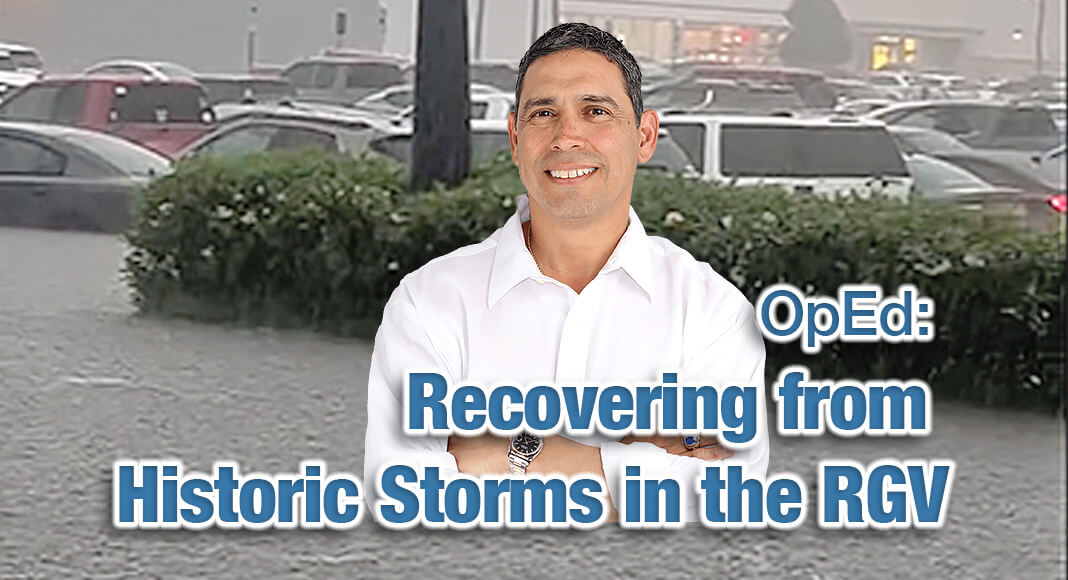
The Rio Grande Valley is still reeling from historic storms that hit our region two weeks ago, leaving in its wake a devastating loss of four lives and untold property damages that could surpass 100 million dollars. Courtesy image. Bgd: Facebook

By David L. Fuentes

Commissioner – Hidalgo County Precinct 1

The Rio Grande Valley is still reeling from historic storms that hit our region two weeks ago, leaving in its wake a devastating loss of four lives and untold property damages that could surpass 100 million dollars. As I write this, some communities are still underwater. This historic flooding is a grim reminder that now, more than ever, we need to keep up our efforts locally, and at the state and federal level, to continue improving our drainage infrastructure. 

While flooding is not new in our region, the storms we just experienced were unique in that over 20 inches of rain fell in some areas. No matter if we had the best drainage system in the world, our system would not be able to handle that much rain in such a short time span. While we cannot control the weather or how much rainfall we get in a single storm event, we are not just standing by idly. I know firsthand that our legislators and public officials are working diligently to address our flooding issues. 

Hidalgo voters approved a $188 million bond in 2018 and another $195 million bond in 2023. In total, we’ve made close to $400,000,000 in bond investments since 2018. These monies have allowed us to work on drainage projects such as improvements to the Main Drain, ditch expansions and regional detention facilities to assist with mitigation. Just last spring, the Hidalgo County Drainage District No. 1, also completed the pilot project for the first of its kind Delta Region Water Reclamation Project, (Delta Project for short) which would capture water from daily drainage runoff water and turn it into a new water source for potable drinking water. This project also acts to mitigate flood risk through a network of proposed sister detention ponds. This is a project that will not only address floodwaters but provide a new source of potable water supply. This project is shovel ready and I wish we could have captured all of that storm water two weeks ago. These are all real projects that are making a tangible difference, but we continue to face challenges to see these projects to the finish line.  

Recently, I personally traveled to our state capitol in Austin to advocate for increased funding for flood infrastructure projects in Hidalgo County. On April 7th, just a little over a week after our region was ravaged by the floods, I testified before the Senate Committee on Water, Agriculture and Rural Affairs, in support of S.B. 1967 by Senator Juan “Chuy” Hinojosa. Just a couple of days later, on April 9th, I testified before the House Natural Resources Committee in support of H.B. 3915 by Rep. Armando “Mando” Martinez. These bills would amend the eligibility criteria for projects under the Flood Infrastructure Fund (FIF) Program, allowing the Delta Project to qualify for funding. The FIF fund was created by the 86th Texas Legislature and approved by voters in 2019 to provide financial assistance for flood mitigation projects, but we have not been able to apply for funding for the Delta Project under the current rules. Both bills continue to wind their way through the legislative process. I will continue to staunchly advocate for these until they make it to the Governor’s desk. 

Also, just this past week, the Texas Water Development Board (TWDB) approved the latest FIF prioritization lists for the State Fiscal Year 2024-2025 funding cycle. Several local projects from both Hidalgo and Cameron County made the list. Local officials, including some who have been displaced from their own homes by the recent flooding, offered heartfelt testimony in support of these projects. The next step is for the eligible entities to complete and submit full applications for funding consideration. I strongly encourage residents to voice their support for these projects with the TWDB. 

All the improvements we make, whether they’re in Hidalgo County, Willacy County, or Cameron County, benefit everyone. In Willacy County, we’ve partnered with the Willacy County Drainage District No. 1 to help them complete a project that will help mitigate flooding in Sebastian. Also, any improvements that Cameron County makes will also benefit the entire region. We all share the same drainage system, so any improvements we make will help all of us. 

Since I was elected as commissioner, I have worked hard to make a difference in the quality of life for our residents and will continue to do so. Flooding is one of the most critical issues we are facing as a community, and now, more than ever, we must continue to work diligently to come up with realistic solutions.  

STC Assists Student, Flood Victim to Get Her Back on Her Feet

You may not know Lexi Avionne by name, but chances are you have seen her on social media and the news in a trending video, which became a national symbol of the flash flood that recently ravaged the Rio Grande Valley. The single mom of two is a current Psychology student and work-study employee at South Texas College whose lifeline was that car, getting her to and from school and work, as she attempts to make ends meet and create a better life for herself and her girls. Images courtesy of STC

By Amanda Sotelo

You may not know Lexi Avionne by name, but chances are you have seen her on social media and the news in a trending video, which became a national symbol of the flash flood that recently ravaged the Rio Grande Valley.

The video, taken by onlookers, shows Avionne sitting on the roof of her car as it floated in high waters and then being rescued by a passing semi-truck driver.

The single mom of two is a current Psychology student and work-study employee at South Texas College whose lifeline was that car, getting her to and from school and work, as she attempts to make ends meet and create a better life for herself and her girls, 2 and 3.  

“I lost my car, everything inside, including my laptop and hotspot, which was borrowed from the college, my notes, my books, all soaked and gone,” she said. “It could have been worse, it could have been my life, but I’m glad I’m still here for my girls and to tell my story.”

And because she is here to tell her story, STC has been able to help Avionne with financial assistance and resources, that alleviate her struggles exacerbated by the storm that dropped more than 18 inches of water across the Rio Grande Valley.

She was on her way home from her work-study job at STC when her car was swept away into the water.

“I waited at the college as long as I could. They were discouraging us from leaving, but the water on campus had seemed to subside, so I thought it was safe. I needed to get home to my babies,” said Avionne. “I got on the expressway, no problem, but because I needed gas, I had to exit several times, but I never made it to a gas station. My final exit was in Alamo, I was almost home, when I got swept away.”

She not only lost precious items that day, but getting home to her children was no easy feat. After the truck driver rescued her, she still had to walk through waist-deep water before finally making it home.

“I was soaked, but my daughters didn’t care, they jumped up to give me a hug immediately. I really needed it that day,” she said. “And since then, their hugs and the outpouring of support I’ve received from STC and my community, has given me a new outlook and has made this challenging moment more bearable.”

She said this was a dark day for her, but after darkness there is light.

“STC, and the many people that have come forward to help me have been my light,” she said. “I’ve received overwhelming support from so many during this difficult time, as I work to replace my car and all my school equipment and supplies, I lost that day. I’ve kept going because people have shown me that I’m not alone.”

STC, immediately after the flood, created a form for students like Avionne, faculty and staff to complete if they were facing hardships and needed assistance.

For Avionne, her financial assistance from STC, totaling a little more than $2,000, will be put toward a new car, but she was also helped to fill out applications for utility assistance and child care. Her instructors and work-study supervisor at the STC Cooper Center have been flexible with her schedule, she was connected with STC’s counseling office to help with her anxiety brought on by this close call and she was given gift cards for food delivery services since she has no transportation.

“I’ve been relying on friends to get to school and work and to pick up my daughters. I’m so grateful for the help, but I don’t want to burden anyone, so I’m hoping I can collect enough money through my GoFundMe started by a local a radio station, and other assistance I’ve received to get a new car soon,” said Avionne.

Tempted to drop out in the wake of the flood, Avionne said that’s not even a choice anymore, especially after the help STC has provided. She said more than ever, she feels like STC is home.

I’ve been anxious to tell my story because as my video went viral online, negative comments began to flood in. I grew embarrassed to even ask for help,” she said. “But many have shown me, that there is nothing to be embarrassed about. It was a bad situation, and I was lucky to have been helped and led to a safe place. I’m so grateful to Jose (truck driver) for not ignoring me that day. He didn’t have to help, but he did.”

To prove that helping her isn’t for nothing, she wants to continue her education. She earned her General Educational Development (GED) diploma from STC so she could go on and graduate with an associate degree, move on to a bachelor’s degree and keep going until she gets a doctorate degree. Her goal is to become a neuropsychiatrist. 

“There is a lesson in everything that happens, and this has taught me I need to keep going. One day I hope to help others the way I’m being helped right now. I want to pay it back. The only way to do that is to get my education,” she said.

For now, Avionne will continue pushing forward, will hopefully find a car she can afford soon, will keep up with her school work and as a former dancer, will soon be found on stage dancing in the upcoming STC Theatre and Dance production – “Transcendence.”

Key Victories for American Energy Infrastructure

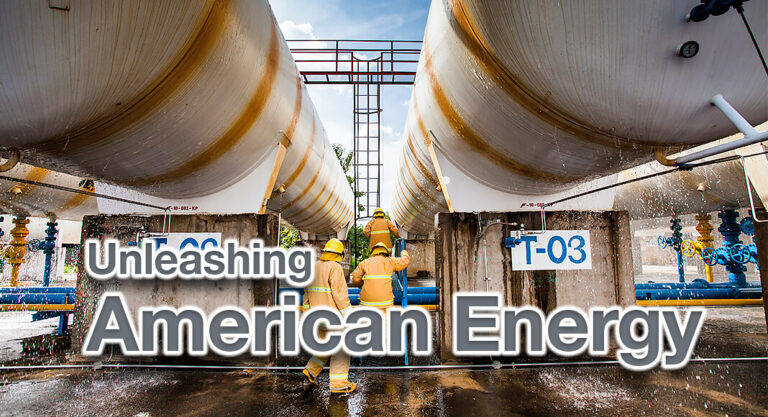
 Unleashing American Energy was one of President Donald J. Trump’s first actions, and it includes infrastructure like pipelines and oil and gas export facilities. Recently, the Justice Department’s Environment and Natural Resources Division (ENRD) secured four wins in court that underpin the intentions of the president’s executive order. Image for illustration purposes
 Unleashing American Energy was one of President Donald J. Trump’s first actions, and it includes infrastructure like pipelines and oil and gas export facilities. Recently, the Justice Department’s Environment and Natural Resources Division (ENRD) secured four wins in court that underpin the intentions of the president’s executive order. Image for illustration purposes

U.S. Department of Justice

WASHINGTON, DC – Unleashing American Energy was one of President Donald J. Trump’s first actions, and it includes infrastructure like pipelines and oil and gas export facilities. Recently, the Justice Department’s Environment and Natural Resources Division (ENRD) secured four wins in court that underpin the intentions of the president’s executive order.

The Dakota Access Pipeline crosses Lake Oahe in North Dakota. The U.S. Army Corps of Engineers is currently preparing a supplemental environmental impact statement which the District Court for the District of Columbia ordered for the pipeline’s easement. Last year, the Corps was sued again to shut down the pipeline while they work on that statement, but ENRD last month was granted its motion to dismiss that lawsuit.

In the Sixth Circuit Court of Appeals, a Tennessee pipeline company was essentially allowed to go ahead and build a pipeline to deliver natural gas to the Tennessee Valley Authority for a new gas power plant. The court denied a petition for review of the Corp’s permit to the company and upheld its reliance on Tennessee’s certification of the project under the Clean Water Act’s Section 401.

The Fifth Circuit Court of Appeals issued a published decision affirming the Corps decision to issue a permit for a proposed expansion of an oil-export facility in Texas. The court held that the Corps thoroughly analyzed the effects of issuing the permit and properly assessed the project’s scope.

The D.C. Circuit Court of Appeals denied plaintiffs’ petition for review of a Department of Energy (DOE) action to authorize exporting liquefied natural gas from a proposed terminal on the Kenai Peninsula in Alaska. The gas is to come from Alaska’s north slope and would be transported to the terminal via a proposed pipeline across the state. The Federal Energy Regulatory Commission had previously authorized where the project’s facilities would be, and DOE authorized and reaffirmed exporting the gas. This development will help unleash Alaska’s extraordinary resource potential, in keeping with the administration’s directive.

Updated April 17, 2025

Lower Rio Grande: One of America’s Most Endangered Rivers® of 2025

The lower portion of the nation’s third longest river and a critical source of drinking water for over two million people along the U.S.— Mexico border, has been named #5 on American Rivers’ 2025 list of America’s Most Endangered Rivers®.  Courtesy logo. Bgd for illustration purposes
The lower portion of the nation’s third longest river and a critical source of drinking water for over two million people along the U.S.— Mexico border, has been named #5 on American Rivers’ 2025 list of America’s Most Endangered Rivers®. Courtesy logo. Bgd for illustration purposes

Washington D.C. —  The lower portion of the nation’s third longest river and a critical source of drinking water for over two million people along the U.S.— Mexico border, has been named #5 on American Rivers’ 2025 list of America’s Most Endangered Rivers®. The river faces growing threats from water scarcity, poor water management, outdated infrastructure, and insufficient federal investment in its long-term health. 

The Lower Rio Grande, stretching from Del Rio to the Gulf, supplies 100% of the drinking water for dozens of cities on both sides of the border and supports rural and urban communities, farms, native wildlife, and cultural traditions. There is also growing momentum amongst border communities to reconnect with the Rio Grande. Despite this, it remains one of the least-funded and most overlooked major river basins in the United States. Flows have been reduced by more than 30% in recent decades, according to the latest International Boundary and Water Commission (IBWC) data. Today, less than one-fifth of the river’s flows reach the Gulf.

“A river that sustains richly diverse communities, an invaluable agricultural economy and important wildlife habitat is disappearing before our eyes,” said Matt Rice, Southwest regional director for American Rivers.

Extreme heat, prolonged drought, and growing demand continue to put unsustainable pressure on the river and its two primary international reservoirs, Amistad and Falcon. 

“The Lower Rio Grande is in crisis, and it’s time the federal government treated it as such,” said Martin Castro, Watershed Science Director at the Rio Grande International Study Center (RGISC). “We need funding for water security, conservation, and dam repairs — and we need it now. This river is our lifeline.”

In Eagle Pass, Texas, the state’s border security initiative has led to residents feeling like their access to the Rio Grande has been unjustly restricted. ​

“A river cannot speak for itself — that’s why it needs us,” said Jessie Fuentes, an Eagle Pass resident and member of the Eagle Pass Border Coalition. “The Rio Grande is a sacred source of life, connecting our land, wildlife, and communities. If we don’t protect it now, the damage may be irreversible.”

American Rivers and our partners at the Rio Grande International Study Center are calling on Texas lawmakers to support federal appropriations for:

  • Implementation of Minute 331, the new U.S.-Mexico agreement that created a long-awaited Binational Environmental Working Group
  • Restoration of river flows and water quality
  • Critical repairs to Amistad Dam, which safeguards drinking water supplies and regional infrastructure

“We have a chance to shift the narrative and secure the future of this river,” said Tricia Cortez, Executive Director of RGISC. “It’s time to invest in our communities and in a thriving Rio Grande for generations to come.”

“This river has long been neglected, but we have a chance to reimagine it as a symbol of binational cooperation and human flourishing,” said Rick Archer, Founding Principal Overland Partners Architects. “Through the Binational River Conservation Project, we’re addressing urgent environmental challenges while creating a shared public space that restores the river’s natural and cultural significance.” 

“We welcome the call for greater attention and investment to conserve the Rio Grande. The economic, commercial, population and cultural growth along the river, coupled with the ongoing drought in the watershed, is placing unprecedented strain on the primary water source for South Texas border communities,” said John Beckham, Managing Director of the North American Development Bank (NADBank).

Learn more about American Rivers’ America’s Most Endangered Rivers 2025, including other rivers and the selection process.  

###

American Rivers is a national conservation organization working to make every river clean and healthy for people and wildlife. We combine evidence-based solutions with enduring partnerships to safeguard the 3.5 million miles of rivers and streams that are essential to our nation’s clean drinking water, extraordinary wildlife, and strength of our communities. For more than 50 years, our staff, supporters, and partners have been driven by a common belief: Life Depends on Rivers. AmericanRivers.org

Founded in 1994, the Rio Grande International Study Center (RGISC) is an environmental advocacy group whose mission is to protect and preserve our only source of drinking water, the Rio Grande, and our regional environment for present lives and future generations. Our focus areas include water security, river restoration, air quality, habitat protection, community engagement, and climate justice. We seek to protect our South Texas region from the impacts of climate change by restoring nature and natural systems. Since our founding 30 years ago, RGISC has unapologetically worked to bring impacted voices to the decision-making table using science, cultural organizing, and creative actions.

Information source: RGISC

Pavement Work Planned on Several RGV State Highways thru April 28th

0
Road crews are seal coating several highways throughout the 8 counties in the TxDOT Pharr District. Image for illustration purposes

PHARR – Road crews are seal coating several highways throughout the 8 counties in the TxDOT Pharr District.

Seal coating is the process of applying a sealant to an existing asphalt surface to waterproof, prevent raveling, improve resistance, or delineate driving resistance. The preventative maintenance extends the lifespan of the road.

Drivers will encounter lane closures and possible delays on the following roadways, between 7:00 am. and 7:00 pm, on the scheduled dates provided.

All work schedules are tentative and subject to change, depending on weather conditions.

Seal coating operations will continue through the end of May. Updates will be provided weekly on other upcoming road work.

South Texas College’s 2023 Américo Paredes Book Award Recipient

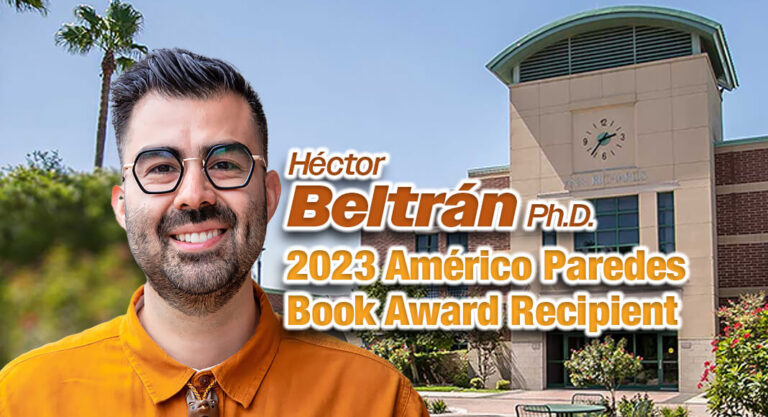
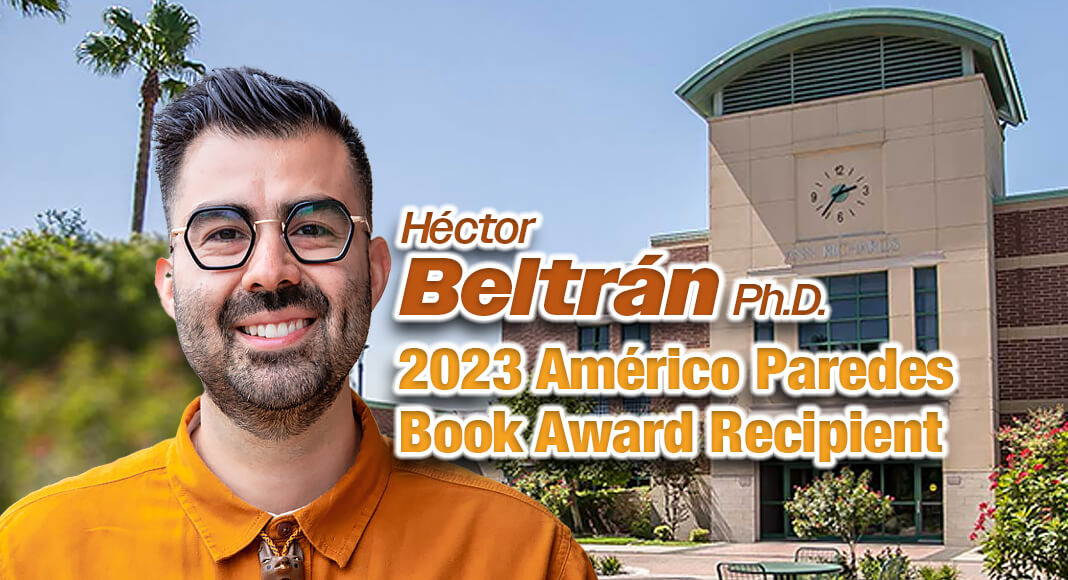
South Texas College Center for Mexican American Studies has named Héctor Beltrán Ph.D., author of Code Work: Hacking Across the US-Mexico Techno-Borderlands, the winner of the 2023 Américo Paredes Book Award. STC image

By Veronica Salinas

South Texas College Center for Mexican American Studies has named Héctor Beltrán Ph.D., author of Code Work: Hacking Across the US-Mexico Techno-Borderlands, the winner of the 2023 Américo Paredes Book Award. 

Américo Paredes, a Brownsville native is regarded as one of the foremost Mexican American scholars of the 20th century and was a leading scholar in folklore. Paredes contributed significantly to the formation of various intellectual trends and in particular to the scholarship on “native” folklorists and anthropologists.

South Texas College History Instructor Trinidad Gonzales said the award was established not only to honor the enduring legacy of Américo Paredes, a pioneering figure in Latino literature and cultural studies, but also to celebrate and recognize the important contributions of Latino scholars in academia.

“The book award was created to honor him and to celebrate Latino scholarship,” Gonzales said.

Beltrán’s book was nominated by various academic presses around the country and has won multiple awards including: Winner of the Labor Tech Book Award, Winner of the Association of Latina/o and Latinx Anthropologists Book Award, Honorable Mention for the Arthur J. Rubel Book Prize and now, the Américo Paredes Book Award.

The book is part of the Princeton Studies in Culture and Technology series at Princeton University. The goal of the series is to showcase the best work in the field of anthropological inquiry and demonstrate the relevance of anthropology to emerging forms of digital culture.

Beltrán is Associate Professor of Anthropology at Massachusetts Institute of Technology (MIT), where he teaches “Cultures of Computing,” “Hacking from the South,” and “Latin American Migrations.” 

In this book, Beltrán examines the political economy of knowledge, work and manifestations of hacking between the US and Mexico.

He draws on his computer science background as he develops theoretical frameworks that examine the technical aspects of computing along with issues of race, ethnicity, class, gender and nation. 

“It’s an absolute honor to receive an award recognizing Américo Paredes’ legacy,” said Beltrán. “His methodological frameworks for approaching ethnographic work in the US-México border have served as an inspiration ever since I was introduced to his work in graduate school. I can only hope Code Work continues his vision for border thinking as an epistemological intervention but also as a way of life.”

Gonzales said this award represents the first time a college or institution has formally recognized interdisciplinary scholarship focused on Latino studies.

“The reason we do this is so the community and students we serve can be familiar with the scholarship that is presently being created related to their experiences,” Gonzales said.

Over $8 Million In Meth Seized at Pharr International Bridge

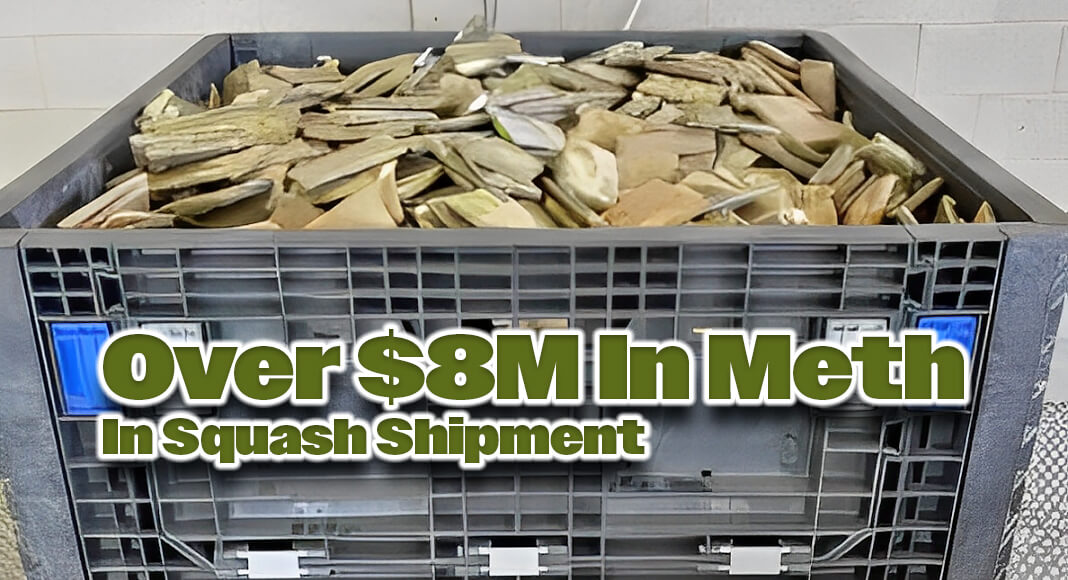
Packages containing 1,002 pounds of methamphetamine seized by CBP officers at Pharr International Bridge. USCBP image

PHARR, Texas — U.S. Customs and Border Protection, Office of Field Operations officers at the Pharr International Bridge cargo facility intercepted $8,900,000 in alleged methamphetamine concealed within a shipment manifested as chayote, also known as vegetable pear, a green, pear-shaped squash native to Mexico.

“Our CBP officers continue to take down load after load of harmful narcotics, illustrating the tireless work of securing our border and safeguarding our communities,” said Port Director Carlos Rodriguez, Hidalgo/Pharr/Anzalduas Port of Entry.

On April 13, CBP officers assigned to the Pharr International Bridge cargo facility encountered a tractor trailer making entry from Mexico. A CBP officer referred the vehicle for further inspection, which included utilizing nonintrusive inspection equipment and a canine team that ultimately led to the discovery of alleged methamphetamine. Officers spent most of their day removing 3,770 packages–with a combined weight of 1,002 pounds (454.5 kg)–concealed within the shipment of chayote.

CBP OFO seized the narcotics and vehicle. Homeland Security Investigations special agents initiated a criminal investigation.

Governor Abbott Applauds Historic School Choice Vote in Texas House

“For the first time in Texas history, our state has passed a universal school choice bill out of both chambers in the Texas Legislature,” said Governor Abbott. Image for illustration purposes

AUSTIN – Governor Greg Abbott applauded the Texas House of Representatives for making Texas history by passing Senate Bill 2, the state’s universal school choice program.

“For the first time in Texas history, our state has passed a universal school choice bill out of both chambers in the Texas Legislature,” said Governor Abbott. “This is an extraordinary victory for the thousands of parents who have advocated for more choices when it comes to the education of their children. Texas could not have accomplished this without the hard work and unwavering support from Lieutenant Governor Dan Patrick, Speaker Dustin Burrows, Chairman Brandon Creighton, and Chairman Brad Buckley. I applaud the legislators who took a stand with the overwhelming majority of Texans who support school choice. When it reaches my desk, I will swiftly sign this bill into law, creating the largest day-one school choice program in the nation and putting Texas on a pathway to becoming the best state in America for educating our kids.”   

IRS Reportedly Plans to Rescind Harvard’s Tax-Exempt Status During Political and Congressional Scrutiny

CNN reported on Wednesday, citing two sources familiar with the matter, that the U.S. Internal Revenue Service plans to rescind Harvard University's tax-exempt status.  Image Source: David Adam Kess, CC BY-SA 4.0 , via Wikimedia Commons. Logo: Public Domain via Wikimedia Commons
CNN reported on Wednesday, citing two sources familiar with the matter, that the U.S. Internal Revenue Service plans to rescind Harvard University’s tax-exempt status. Image Source: David Adam Kess, CC BY-SA 4.0 , via Wikimedia Commons. Logo: Public Domain via Wikimedia Commons

CNN reported on Wednesday, citing two sources familiar with the matter, that the U.S. Internal Revenue Service plans to rescind Harvard University’s tax-exempt status.

CNN added that a final decision on rescinding the university’s tax exemption is expected soon.

The report comes a day after President Donald Trump threatened to strip the university of its tax-exempt status and said Harvard should apologize after rejecting unlawful demands to overhaul academic programs or lose federal grants.

From another source, the House Ways and Means Committee, led by Chairman Jason Smith, has also questioned whether elite universities like Harvard are fulfilling their educational purposes, especially in light of concerns about antisemitism on campus. The committee has requested detailed information from several universities regarding their actions to protect Jewish students and their sources of foreign funding. 

Jim and Kathy Collins Named 2025 Border Texans of the Year at Historic McAllen Event

Jim and Kathy Collins. Image by Roberto Hugo González

By Roberto Hugo González

McAllen, Texas – In a ceremony steeped in legacy, culture, and community spirit, Jim and Kathy Collins were named the 2025 Border Texans of the Year in a decisive moment that marked a continuation and evolution of one of South Texas’s most cherished traditions. The announcement came during a special event at the McAllen Convention Center, where civic leaders, honorees, and community members gathered to celebrate the history and future of the Border Texan of the Year Gala—this time, officially merging with the culturally vibrant MXLAN festival.

John David Franz opened the event by honoring the tradition’s origins. “Thirty-six years ago, this idea came up in the small community of Hidalgo,” Franz recalled, invoking the names of the local visionaries who founded the tradition in 1989. “It’s come a long way… This event has recognized exceptional leadership in education, healthcare, infrastructure, economic development, community growth, and more.”

The merger of two powerful cultural platforms—The Border Texan of the Year Gala and MXLAN—was framed as a generational bridge, as McAllen City Commissioner Pepe Cabeza de Vaca emphasized. “It’s an exciting day, not only for McAllen but for the entire Rio Grande Valley,” he said. “We all witnessed the union of two powerful cultural events. One steeped in tradition, the other igniting the spirit of a new generation.”

Cabeza de Vaca explained that the fusion of these two events represents more than logistical convenience—it symbolizes unity and forward momentum. “Together, the Border Texan Gala and MXLAN create a platform that spans generations,” he said. “One celebrates those who laid the foundation. The other invites us to nurture the leaders of tomorrow. Tradition and innovation are not separate—they are stronger together.”

The tone was equally celebratory and reflective as McAllen City Manager Isaac Tawil took the stage. “This year, the Collins… we have come so far,” he said. “We have achieved what many thought was unachievable for our region. Because of visionaries like Jim and Kathy, we continue to grow, not just to thrive, but to break boundaries.”

Dr. Guy Bailey, the 2019 Border Texan of the Year, was honored to announce the 2025 recipients. His words painted a picture of two individuals who represent the very best of South Texas leadership. “Jim and Kathy represent everything this honor stands for,” Bailey said. “Their work has strengthened our communities through business leadership, transformative civic partnerships, and deeply personal acts of generosity.”

Bailey described Jim Collins as a driving force in economic development and infrastructure advancement, consistently reminding others that “we’re stronger together than apart.” Kathy, he noted, has been equally powerful in the realm of community service, “supporting causes that enrich lives, inspire creativity, and expand opportunities for women, children, and families.”

Then came the honorees’ voices—humble, grateful, and deeply rooted in the values that define the Rio Grande Valley.

“On behalf of Kathy and myself,” Jim Collins began, “we want to say how incredibly honored and humbled we are. This moment means the world to us.” He reflected on his journey, acknowledging not only his family—five children and fifteen grandchildren—but also the many business and civic partners who have supported their shared vision. “This recognition isn’t just for the two of us. It reflects the many people, organizations, and partnerships that have shaped and shared our journey.”

Jim highlighted that this honor goes beyond accolades. “To be named Border Texans of the Year is a tremendous honor because it is rooted in something bigger. It’s about lifting each other up so that we can all thrive together.”

Kathy Collins took the stage with equal sincerity and a deep sense of purpose. “This year is so special,” she said. “Not only are we returning to celebrate the legacy of this award that was first started in 1989, but we’re doing it as part of MXLAN—a festival that shows the spirit, culture, and pride of South Texas.”

She expressed gratitude for the event’s philanthropic component. “Jim and I wish to thank the Board of Texan Committee for allowing the gala night’s proceeds to be used for several great causes,” she said, listing organizations such as the McAllen Performing Arts, Benny Cook Cancer Foundation, Quinta Mazatlan, South Texas College Foundation, and UTRGV Foundation.

“To our family, friends, and colleagues—thank you for always standing beside us. To the Rio Grande Valley people, thank you for letting us be a part of something even larger,” she concluded. “We are truly honored.”

As the event wound down, Franz reminded guests of the date for the upcoming gala: May 8th at the McAllen Convention Center. With tables and sponsorship packages now available, he encouraged community members to participate in a night that promises to blend tradition, innovation, and heartfelt celebration.

The legacy of the Border Texan of the Year lives on—not just in its past honorees, but in the lives and futures they continue to shape. Jim and Kathy Collins, in both word and action, represent the spirit of the Rio Grande Valley: service-oriented, future-focused, and deeply human.