U.S. Customs and Border Protection today announced the seizure of nearly 72 grams of heroin mixed with fentanyl and 96 grams of THC vape oil from a U.S. citizen at the Galveston Cruise Port following a cruise to Mexico. Image for illustration purposes
Texas Border Business
GALVESTON, Texas – U.S. Customs and Border Protection today announced the seizure of nearly 72 grams of heroin mixed with fentanyl and 96 grams of THC vape oil from a U.S. citizen at the Galveston Cruise Port following a cruise to Mexico. The individual was arrested and referred to local authorities for prosecution.
On Sunday, April 20th, CBP Galveston performed a baggage exam and found several vape pens with marijuana THC and several prescription pill bottles of which two contained a powdery substance. Drug tests were performed and were found to be positive for both fentanyl and heroin.
“Fentanyl is a weapon of mass destruction in this country and CBP works every day to keep Americans safe from dangerous and deadly drugs,” said Acting CBP Area Port Director John Landry. “This is a significant priority for CBP and our law enforcement partners. Thanks to the vigilance of our brave and dedicated CBP officers, we continue to intercept these deadly substances at our ports of entry before they can do damage in our local communities.”
Fentanyl is one of the most deadly and destructive drugs we’ve ever seen in the United States. One kilogram of fentanyl can kill as many as 500,000 people. While used in hospitals to treat severe pain, illicit fentanyl is manufactured in clandestine foreign labs and smuggled into the United States primarily through Mexico and sold on the street illegally. Fentanyl is often mixed in with other illicit drugs to increase the potency of the drug, sold as powders and nasal sprays, and increasingly pressed into pills made to look like legitimate prescription opioids. Because there is no official oversight or quality control, these counterfeit pills often contain lethal doses of fentanyl.
It is possible for someone to take a pill without knowing it contains fentanyl. It is also possible to take a pill knowing it contains fentanyl, but with no way of knowing if it contains a lethal dose.
According to the CDC, synthetic opioids (like fentanyl) are the primary driver of overdose deaths in the United States. Unless a drug is prescribed by a licensed medical professional and dispensed by a legitimate pharmacy, you can’t know if it’s fake or legitimate. And without laboratory testing, there’s no way to know the amount of fentanyl in an individual pill or how much may have been added to another drug. This is especially dangerous because of fentanyl’s potency, which can be as little as 1-2 milligrams.
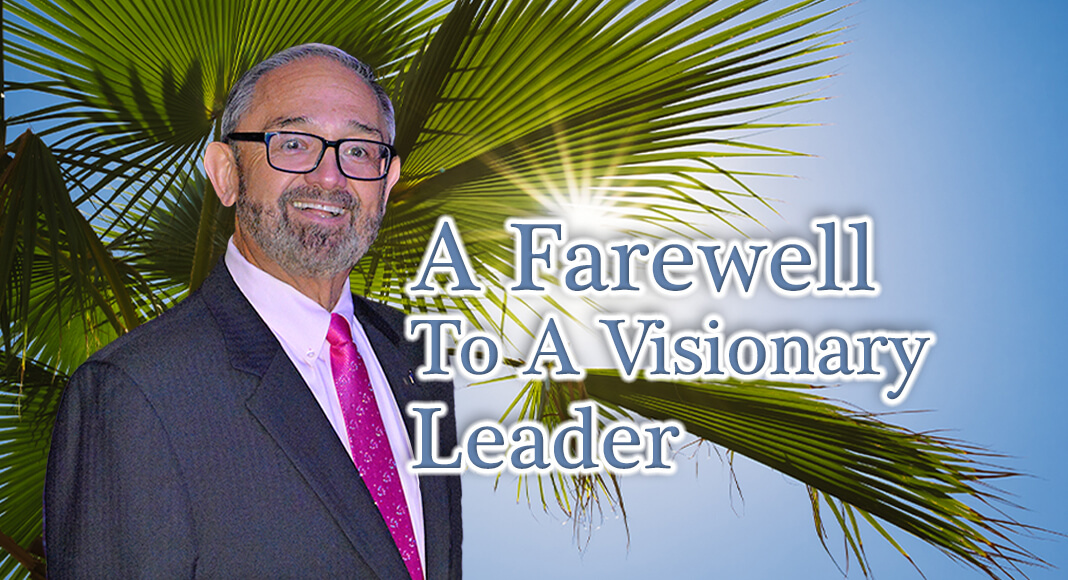
On Monday, April 21, 2025, a Celebration of Life was held for Joe Vera, who passed away on April 16 of this year. The event took place at the McAllen Performing Arts Center, where hundreds of friends and family gathered to honor and remember a beloved, kind, and talented man. Vera’s Celebration of Life included a heartfelt eulogy, a Rosary, and a touching Farewell Parade at Oval Park.
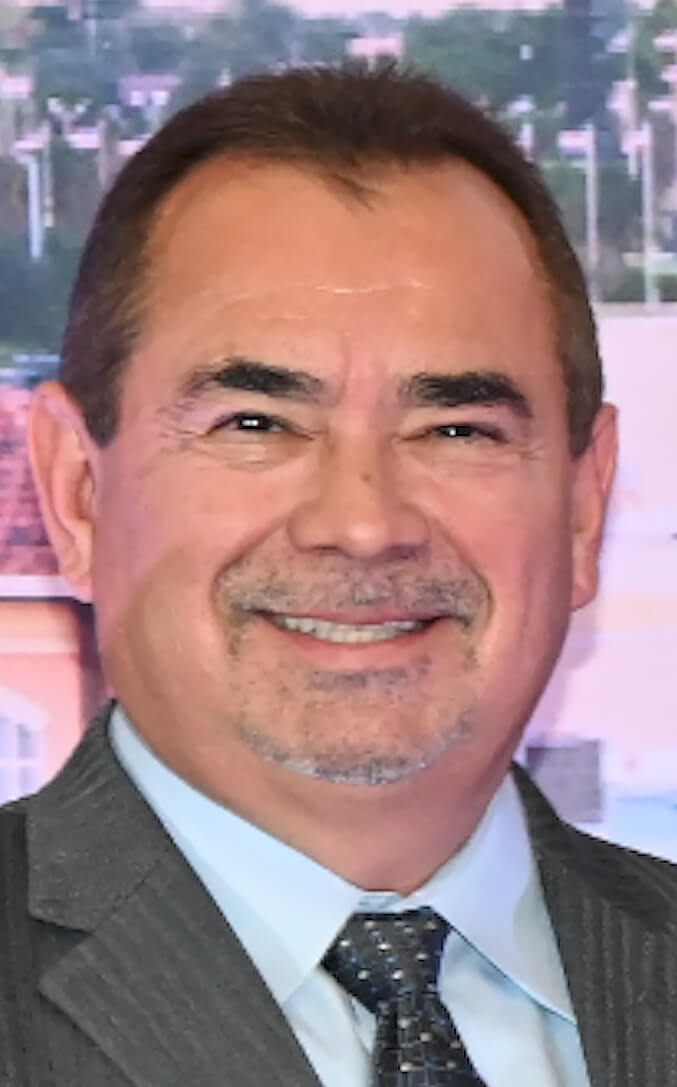
Roy Rodriguez. Photo: Roberto H. Gonzalez
Roy Rodriguez, former McAllen City Manager, shared a moving remembrance, reflecting on Joe’s spiritual life and lasting influence. Roy began, “Good afternoon, everyone. John 14 reads, Let not your hearts be troubled. Then Jesus further tells us, I go to prepare a place for you, and if I go and prepare a place for you, I will come again and receive you myself that I’m there. You may also be. I want to thank Vera’s beautiful family for allowing me to say a few words. When I was first asked to speak here today, the first thing that came to mind was, God, help me get through it. But with Joe’s help, I will.”
Roy spoke of Joe’s unmatched creativity and perfectionism: “He had a knack for coming up with ideas that seemed unachievable and yet achieved them all. There was nothing Joe couldn’t do, and when there was, he’d ask me to do it. But then, just like Joe would do, he would tell me, Why are you doing it that way? That’s not gonna work. Let me do it.”
He shared personal and humorous anecdotes about Joe’s professional style and unwavering faith: “Joe was also a very spiritual man. As many of you know, he was an altar server in his young life. In part, I truly believe that was one of the things that brought us together because he knew that my life revolved around my faith, just like his.”
Reflecting on Joe’s legacy and his contributions to the city, Roy concluded with a passage Joe displayed on his desk, “The credit belongs to the man who is actually in the arena…who strives valiantly, who errs…who at the worst, if he fails, at least fails while daring greatly…”
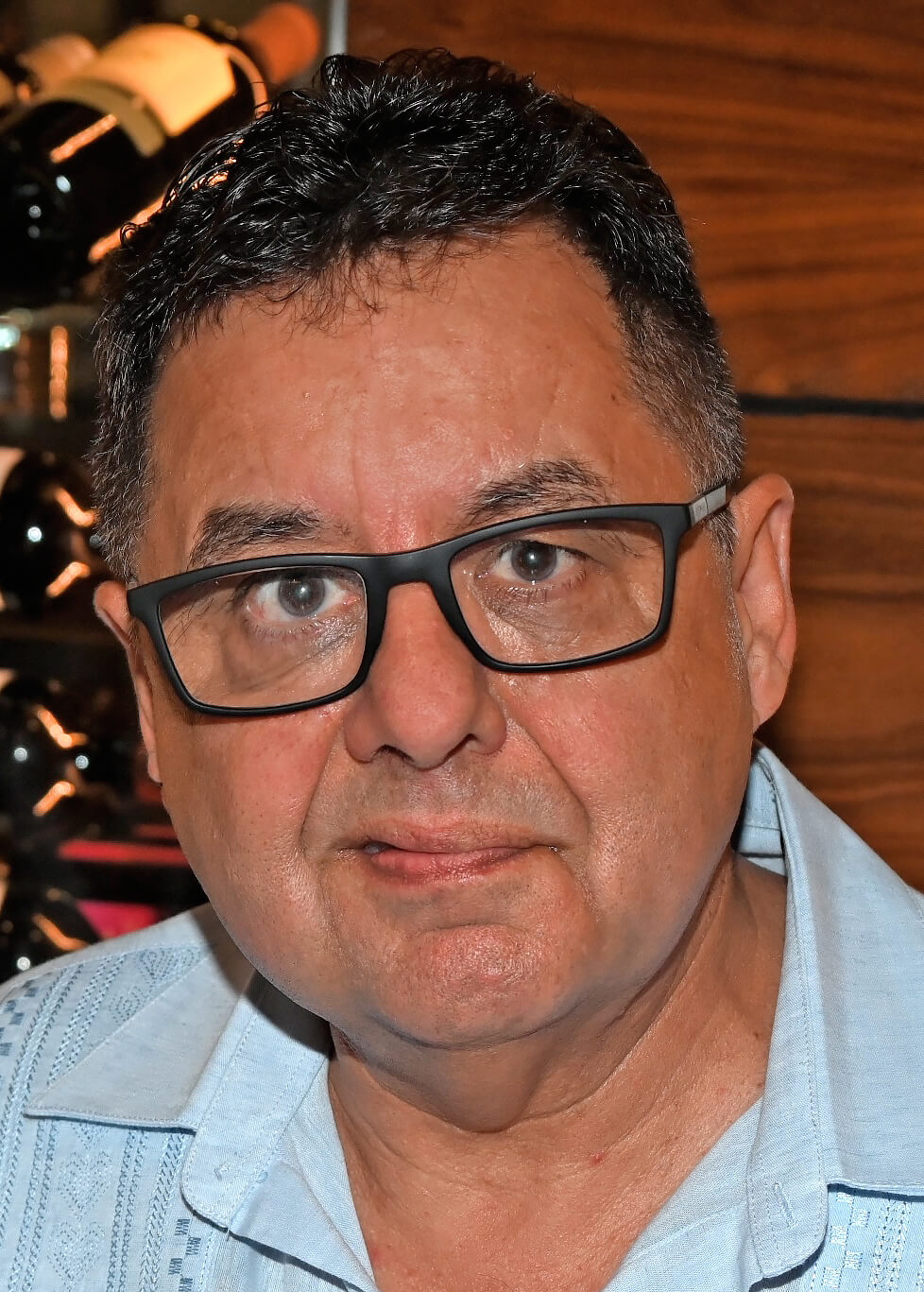
John David Franz. Photo: Roberto H. Gonzalez
John David Franz, former mayor of Hidalgo, Texas, followed with heartfelt words. “Good afternoon. We’ve all heard some version of you never really appreciate someone until you’ve walked in their shoes, and then they are gone. And in this case, it hits home. Never imagined that I’d be here this day, this afternoon, talking to people about Joe Vera. Just never dreamed it.” He extended his condolences to Alma, Tricia, Homer, Jo Ann Vera Watts, Linda Casas, and the entire Vera family.
Franz spoke warmly about Joe’s loving devotion to his wife Alma, his children, and his grandchildren: “He deeply loved his wife Alma… It was evident to those who knew the couple that their union was special… Joe loved Alma.” He added, “He was so proud of those kids… Ryan and Reena… especially Ryan, who shared the same birthday with Joe.”
He highlighted Joe’s extensive community contributions in Hidalgo, such as founding Border Fest, helping build Sacred Heart Catholic Church, and conceiving transformative civic projects, including the Dodge Arena. “He was a visionary, and he made it his mission to put Hidalgo on the map for positive reasons.”
Franz also shared touching memories of Joe’s resilience, humility, and dedication to public service. “Joe never lived in Hidalgo, but he sure cared for every part of it and every person in it just like if he had lived there all his life.”
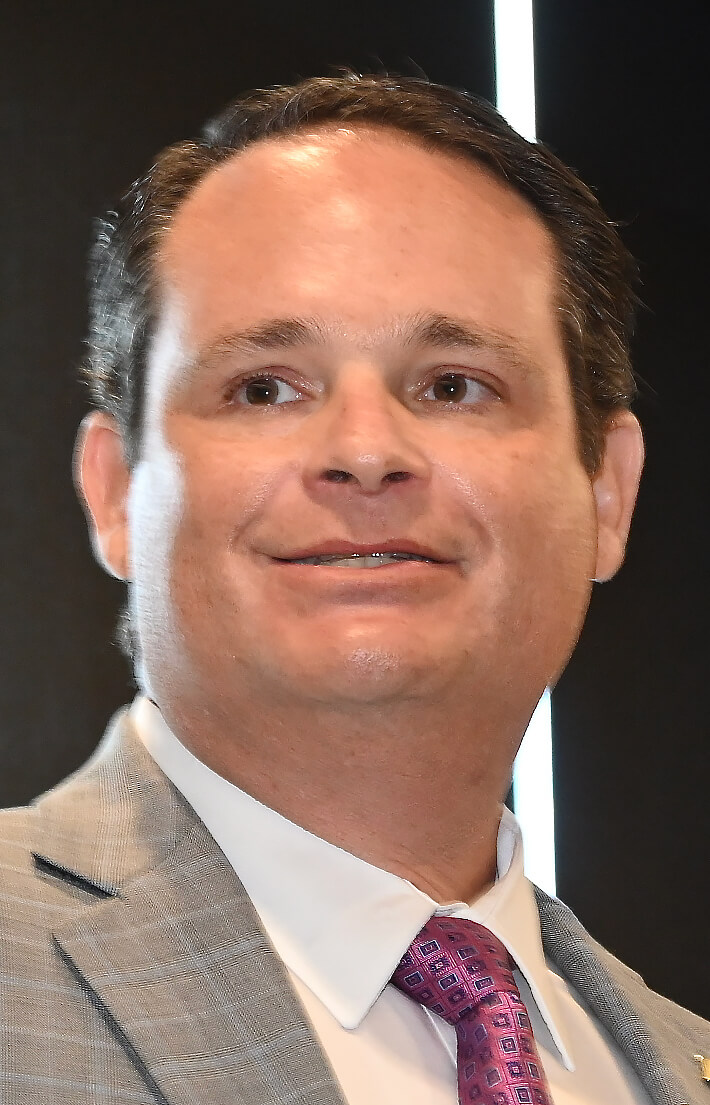
Isaac Tawil. Photo: Roberto H. Gonzalez
Isaac Tawil, McAllen City Manager, read a letter from the International Festivals & Events Association (IFEA) Asia:
“Joe Vera lived a life of integrity, dedication, and warmth. He was a role model to all of us, always putting others before himself… His contributions to the festival industry were remarkable… He played a key role in building a bridge between Korea and the great state of Texas… Though we can no longer see him, his spirit lives in our hearts.”
Monica De La Cruz. Photo: Roberto H. Gonzalez
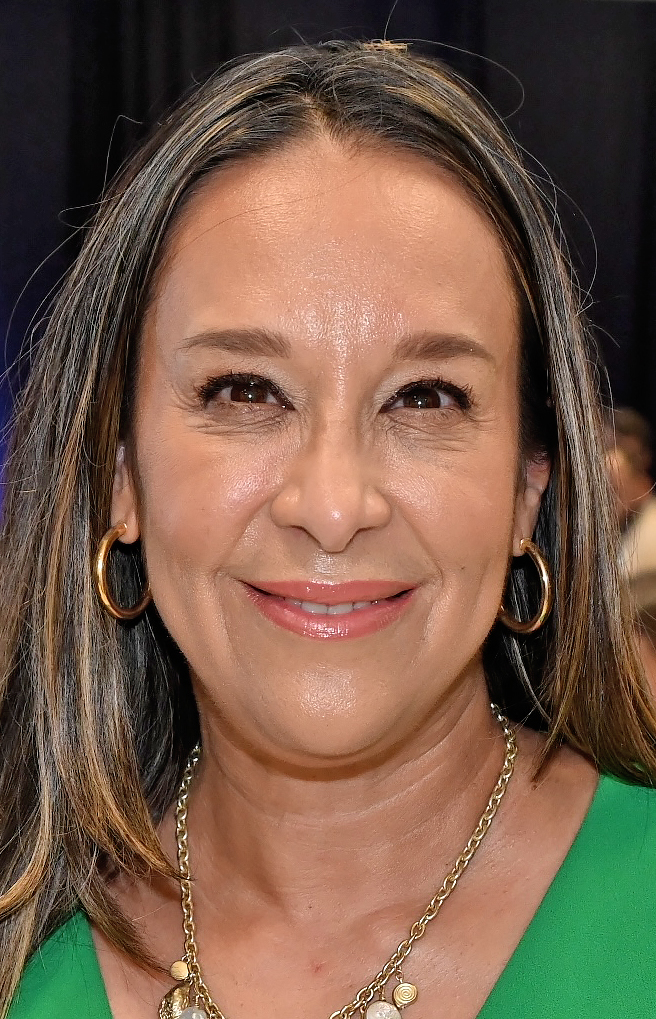
Following this, U.S. Congresswoman Monica De La Cruz presented a U.S. flag flown over the Capitol in Joe’s honor to his family. “Today I have the privilege to give this flag… flown in Washington, D.C. in his honor and the certificate… in thanks and Thanksgiving for the time he spent with us here in McAllen, Texas.”
Mr. Tawil then offered his remarks:
“I met Joe for the first time 26 years ago… he treated me that day with the utmost professionalism and courtesy… I never dreamed I would have the honor and privilege to work for and with Joe years later.”
Tawil spoke of Joe’s vision and legacy, “Joe’s vision wasn’t about reality, it was about possibilities… Joe lived by the principle to leave it better than you found it.” Tawil honored Joe’s mantra, “We’re all in the same boat,” using it as a recurring theme to illustrate Joe’s inclusive spirit and leadership style.
He recalled Joe’s favorite sayings like, “If they pay you a nickel, give ’em a quarter,” and “Go big or go home.” He admiringly reflected, “Joe was never too bashful to elevate those who deserve recognition into the spotlight, always satisfied to relish in the joy of accomplishment in the background.”
Tawil concluded, “Joe was officially recognized on the world stage… One of Joe’s proudest moments came in 2025 as he assumed his place as the World Board Chair of the International Festivals and Events Association. His arrival there marked the accomplishments of his life’s dream for us—the greatest gift he could give us: world recognition.”
As the formal tributes concluded, attendees were asked to remain seated for the Rosary. A moment of spiritual reflection began as family and friends came together in reverent prayer to honor Joe Vera’s life and soul.
President Biden never had the authority to forgive student loans across the board, as the Supreme Court held in 2023. But for political gain, he dangled the carrot of loan forgiveness in front of young voters, among other things by keeping in place a temporary Covid-era deferment program. Image: Public Domain. Bgd for illustration purposes
President Biden never had the authority to forgive student loans across the board, as the Supreme Court held in 2023. But for political gain, he dangled the carrot of loan forgiveness in front of young voters, among other things by keeping in place a temporary Covid-era deferment program. Thus the Education Department allowed students to rack up a massive debt that is now long past due.
Between 2021 and 2024, federal student-loan debt increased by more than $60 billion a year, while the department manipulated repayment plans and forgiveness policies until only 38% of the student-loan portfolio was in repayment. This is unsustainable for both students and taxpayers.
I am announcing the end of this dishonest and irresponsible policy. We will conform the department’s repayment options to federal court decisions and end the Biden-era practice of zero-interest, zero-accountability forbearances that are pushing borrowers into loan delinquency and default. On May 5, we will begin the process of moving roughly 1.8 million borrowers into repayment plans and restart collections of loans in default. Borrowers who don’t make payments on time will see their credit scores go down, and in some cases their wages automatically garnished.
Why? Not because we want to be unkind to student borrowers. Borrowing money and failing to pay it back isn’t a victimless offense. Debt doesn’t go away; it gets transferred to others. If borrowers don’t pay their debts to the government, taxpayers do.
Student loans must always be paid back because they are unlike other types of consumer loans. If a borrower stops paying a mortgage or a car payment, he will go into foreclosure or find his car repossessed. Student loans have no collateral. It is impossible to repossess a college degree. That’s why they are very rarely discharged even in bankruptcy.
That’s the hard truth for borrowers. But I have another hard truth for the institutions that made empty promises to students while pocketing their loan dollars.
Colleges and universities call themselves nonprofits, but for years they have profited massively off the federal subsidy of loans, hiking tuition and piling up multibillion-dollar endowments while students graduate six figures in the red. A widely cited 2015 study found that for every dollar of increased federal caps on subsidized loans, colleges raised tuition by 60 cents.
Many of the degree-granting programs that qualify for student loans are worthless on the job market, but colleges continue to accept students to these programs and encourage them to borrow to pay for them. Accountability is a two-way street. As we push to hold student borrowers to account, we will also push colleges to be responsible and transparent.
If you are a student borrower with a federal loan balance and haven’t been making payments, you must restart payments now. Our Federal Student Aid office is providing every form of assistance we legally can to ensure that a monthly payment can fit into your budget. We recently extended the FSA call-center operations with weekend hours to ensure that your individual questions can be answered. We are updating the loan simulator to help calculate your easiest repayment plan. We also provide an advanced AI assistant, Aidan, to help pinpoint your best financial strategy.
As we plan for the department’s future, we won’t leave the loan portfolio in disarray. We are committed to ensuring that borrowers are paying back their loans, that they are fully supported in doing so, and that colleges can’t create such a massive liability for students and their families, jeopardizing their ability to achieve the American dream.
22-year-old Yadhira Berenice Rodriguez and 18-year-old Ruby Zapata, both of Edinburg were arrested fir the theft. Courtesy images. Bgd for illustration purposes
Texas Border Business
On Sunday, April 20, 2025, at approximately 7:20 a.m., Edinburg Police responded to the 2400 block of Moonlight Lane in reference to a stolen vehicle. The victim reported that her 2024 black Jeep Gladiator had been stolen from its designated parking space. She became aware of the theft after receiving a call from her sister inquiring about the vehicle’s whereabouts. Upon checking, she realized it was missing. The victim also noted several missed calls from the Progreso Port of Entry and the Pharr Police Department. Using her vehicle’s mobile app, she was able to track the Jeep’s location to the Progreso Port of Entry.
An Edinburg Police officer made contact with a U.S. Customs and Border Protection Supervisor, who advised that the Mexican military had alerted them about a Jeep Gladiator that had crossed into Mexico and was believed to be stolen. The vehicle was stopped as it re-entered the United States at approximately 4:55 a.m., and two female occupants were detained.
The suspects were identified as 22-year-old Yadhira Berenice Rodriguez and 18-year-old Ruby Zapata, both of Edinburg. The victim’s vehicle app showed the Jeep was started at 2:55 a.m. and crossed into Mexico at 4:08 a.m. before being intercepted upon its return.
Edinburg Police provided the victim with a courtesy transport to the Port of Entry, where she recovered her vehicle. Rodriguez and Zapata were placed under arrest and transported to the Edinburg Police Department. Both now face charges of Auto Theft.
This case was solved swiftly through collaboration between Edinburg Police Investigators and the Hidalgo County Sheriff’s Combined Auto Theft Task Force.
“We’re incredibly thankful to our partners at the Hidalgo County Sheriff’s Combined Auto Theft Task Force for their outstanding collaboration on this case,” said Edinburg Police Chief Jaime Ayala. “Because of their teamwork and quick communication with federal agencies, we were able to recover the stolen vehicle and take two suspects into custody within hours.”
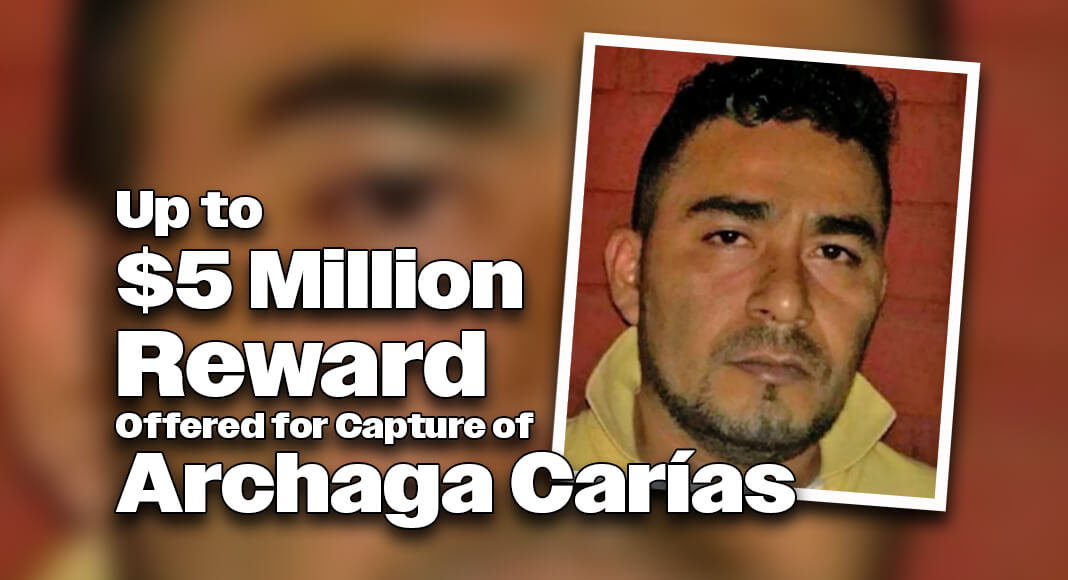
U.S. Foreign Terrorist Organization MS-13 leader Yulan Andony Archaga Carías, also known as “Alexander Mendoza” and “Porky,” 43, is the highest-ranking member of MS-13, a U.S.-designated Foreign Terrorist Organization (FTO). Image: Public Domain via Wikimedia Commons
Texas Border Business
U.S. Department of Justice
U.S. Foreign Terrorist Organization MS-13 leader Yulan Andony Archaga Carías, also known as “Alexander Mendoza” and “Porky,” 43, is the highest-ranking member of MS-13, a U.S.-designated Foreign Terrorist Organization (FTO), in Honduras and was previously charged in 2021 in a superseding indictment in the Southern District of New York with racketeering, narcotics trafficking, and firearms offenses. Archaga Carías, a Honduran national, was subsequently placed on the FBI’s 10 Most Wanted Fugitives List, the DEA’s Most Wanted Fugitives List, and U.S. Immigration and Customs Enforcement Homeland Security Investigations (ICE HSI)’s Most Wanted Fugitives List. The Department of State’s Bureau of International Narcotics and Law Enforcement Affairs is offering a reward under the Transnational Organized Crime Rewards Program (TOCRP) of up to $5 million for information leading to his arrest and/or conviction in any country.
“This terrorist leader can no longer be allowed to live free as MS-13’s evil devastates communities in America and throughout the western hemisphere,” said Attorney General Pamela Bondi. “If you can contribute information leading to his arrest – come forward now.”
Archaga Carías remains at large. If you have information, please contact the FBI by email at archaga-carias_tips@fbi.gov, or via WhatsApp at +1-832-267-1688. If you are outside the United States, you may also contact the nearest U.S. Embassy or Consulate. If you are in the United States, you may also contact the local FBI, DEA, or HSI office in your city. Only tips sent to U.S. Government will be considered for reward.
“Dismantling and ultimately eliminating MS-13 continues to be one of the FBI’s highest priorities, and we’re not stopping until that mission is complete,” said FBI Director Kash Patel. “Alongside our dedicated law enforcement partners, the FBI will find Archaga Carías — a terrorist whose reign of terror at the helm of MS-13 is coming to an end.”
“With MS-13 now officially designated as a Foreign Terrorist Organization, the rules have changed — and so has the mission,” said DEA Acting Administrator Derek Maltz. “Archaga Carías isn’t just a fugitive — he’s a foreign terrorist waging war on innocent Americans through murder, trafficking, and terror. Let me be clear: under this Administration, we will dismantle MS-13 piece by piece—and anyone protecting him will fall with him. A $5 million is on the table. Turn him in. End this threat.”
A co-defendant, David Campbell, aka “Viejo Dan” and “Don David,” a Honduran national, is currently in custody in the United States facing the charges contained in the superseding indictment. In addition to Archaga Carías and Campbell, the superseding indictment charges three other MS-13 leaders, Juan Carlos Portillo Santos also known as “Juancy;” Victor Eduardo Morales Zelaya also known as “Cuervo;” and Jorge Alberto Velasquez Paz also known as “Chacarron,” with racketeering, narcotics trafficking, and firearms offenses. Portillo Santos, a Honduran national, is in custody in Honduras serving a lengthy prison sentence. Morales Zelaya and Velasquez Paz, both Honduran nationals, remain at large. The case is assigned to U.S. District Court Judge Gregory H. Woods for the Southern District of New York.
“MS-13 remains one of the most dangerous criminal organizations in the world, and the recent designation of MS-13 as a Foreign Terrorist Organization underscores this reality,” said Acting U.S. Attorney Matthew Podolsky for the Southern District of New York. “This Office, working closely with our law enforcement partners, will continue to investigate, prosecute and track down MS-13’s leadership, no matter where in the world they may be hiding.”
As alleged in the superseding indictment previously unsealed in Manhattan federal court, Mara Salvatrucha, commonly known as MS-13 is a transnational criminal and foreign terrorist organization that engages in acts of violence, including murders, kidnapping, and assaults, extortion, and large-scale drug importation and distribution throughout Central America and the United States. Archaga Carías is the highest-ranking member of MS-13 in Honduras. As the leader and highest-ranking member of MS-13 in Honduras, Archaga Carías is in charge of, among other things, the gang’s drug trafficking operations, ordering and coordinating acts of violence, including numerous murders, and the laundering of drug proceeds. MS-13’s drug trafficking operations led by Archaga Carías include the processing, receiving, transporting, and distributing of multi-ton loads of cocaine shipped through Honduras and into the United States.
“President Trump has been very clear — we will not allow criminal groups and their members like Porky to threaten Americans,” said Senior Bureau Official F. Cartwright Weiland of the Department of State’s Bureau of International Narcotics and Law Enforcement Affairs. “We will work with our international partners to find these criminals wherever they may be hiding.”
Archaga Carías and other MS-13 members and associates acting at his direction also provided protection to drug trafficking organizations (DTOs) engaged in transporting multi-ton loads of cocaine through Honduras and destined for the United States. Archaga Carías contracted out members of MS-13 as “Sicarios,” or hit men, to DTOs for payment. Members of MS-13 committed numerous murders for hire for DTOs trafficking cocaine through Honduras to the United States. Archaga Carías and MS-13 also supplied DTOs with firearms, including machineguns, that were received from El Salvador, Nicaragua, and elsewhere. Archaga Carías also ordered multiple murders of rival gang members and drug trafficking competitors in Honduras, as well as other members of MS-13 whom Archaga Carías believed had been disloyal to the gang.
Campbell was one of the principal suppliers of cocaine and weapons, including machineguns, to MS-13. As an associate of MS-13 and close confidant of Archaga Carías, Campbell planned and coordinated retaliatory acts of violence with Archaga Carías, and assisted MS-13 and Archaga Carías in establishing businesses to launder the gang’s drug proceeds. Campbell and MS-13 used businesses they owned or controlled to launder drug proceeds, including through banks in the United States.
Morales Zelaya was a national leader of MS-13 in Honduras and a close associate of Archaga Carías. Morales Zelaya coordinated the gang’s drug trafficking business, acts of violence (including murders) against rivals, and the movement of proceeds from the gang’s illicit activities.
Portillo Santos was a high-ranking member of MS-13 in Honduras who reported to Morales Zelaya. Portillo Santos was responsible for leading MS-13 in one of the largest sectors in Honduras, which included the distribution and movement of large shipments of cocaine, acts of violence (including murders and kidnappings) of rival gang members, and contract murders carried out against rival drug dealers. Campbell, 58, of Honduras, is currently in Federal Bureau of Prisons (FBOP) custody facing the charges in the superseding indictment. Portillo Santos, 36, of Honduras, is currently in custody in Honduras on local charges. Archaga Carías, 43, and Morales Zelaya, 50, of Honduras, remains at large.
If convicted, Archaga Carías faces a maximum penalty of life in prison and a mandatory minimum penalty of 40 years in prison. The minimum and maximum potential sentences in this case are prescribed by Congress and are provided here for informational purposes only, as any sentencing of the defendants will be determined by a judge.
Joint Task Force Vulcan (JTFV) and the Southern District of New York’s National Security and International Narcotics Unit are handling the case. Assistant U.S. Attorney David J. Robles and Special Assistant U.S. Attorney Christopher Eason, and Trial Attorney Jacob Warren of the National Security Division’s Counterterrorism Section are in charge of the prosecution.
This case was brought by JTFV, which was created in 2019 to destroy MS-13 and now expanded to target Tren de Aragua and is comprised of U.S. Attorney’s Offices across the country, including the Southern District of New York; Eastern District of New York; the District of New Jersey; the Northern District of Ohio; the District of Utah; the District of Massachusetts; the Eastern District of Texas; the Southern District of Florida; the Eastern District of Virginia; the Southern District of California; the District of Nevada; the District of Alaska; and the District of Columbia, as well as the Department of Justice’s National Security Division and the Criminal Division. Additionally, the FBI; DEA; HSI; the Bureau of Alcohol, Tobacco, Firearms and Explosives; the U.S. Marshals Service; and the FBOP have been essential law enforcement partners and spearheaded JTFV’s investigations.
This case is part of Operation Take Back America and an Organized Crime Drug Enforcement Task Force (OCDETF) operation. Operation Take Back America is a nationwide initiative that marshals the full resources of the Department of Justice to repel the invasion of illegal aliens, achieve the total elimination of cartels and transnational criminal organizations, and protect our communities from the perpetrators of violent crime. Additional information about the OCDETF Program can be found at https://www.justice.gov/OCDETF.
The charges contained in the superseding indictment are merely accusations. All defendants are presumed innocent unless and until proven guilty beyond a reasonable doubt in a court of law.
This is a proud moment captured as a group of future nurses at Rio Grande Valley College wear white lab coats and traditional nurses’ caps while taking the Nursing Oath—a significant symbol of their dedication to care, compassion, and service. This ceremony marks the beginning of their journey into a profession vital to addressing Texas’s nursing shortage. Courtesy image.
Texas Border Business
By Maria E. Williams, BSN, RN
PHARR, Texas – April 2025 – As the United States grapples with a historic shortage of registered nurses, Rio Grande Valley College has emerged as a leader in the effort to reverse this trend. The college recently announced it has been awarded a grant of $1,088,318.31 for fiscal year 2025 from the Nursing Shortage Reduction Program (NSRP). This significant achievement places the institution at the forefront of workforce development in healthcare.
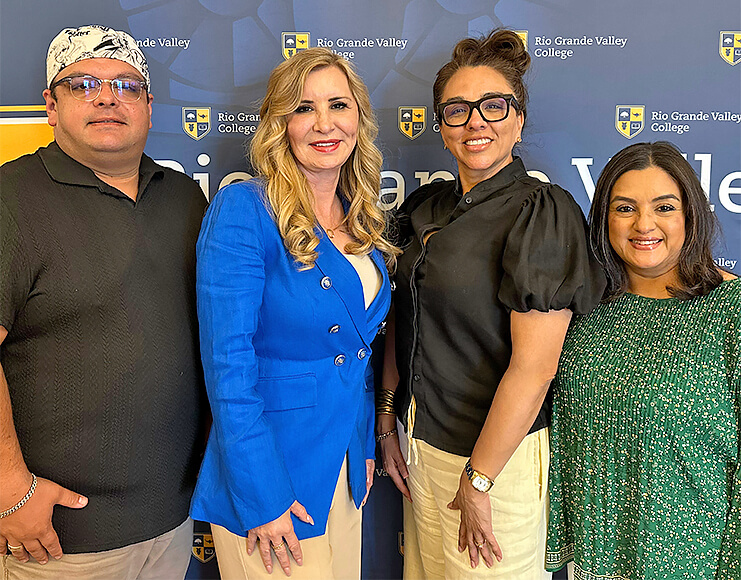
Pictured from Left to Right: Joel Ramos, MSN-ED, RN, CGRN – Director of the Associate of Applied Science In Nursing Program, Dr. Annabelle Palomo – President and CEO of Rio Grande Valley College, Maria E. Williams, BSN, RN – Executive Director of New Program Development Curriculum & Instruction, and Belinda Ibarra – Director of Compliance. Courtesy photo.Courtesy image
Established by the Texas Legislature in 2001 under Senate Bill 572, the NSRP was designed to address the state’s critical need for more registered nurses by supporting nursing education capacity at higher education institutions. Rio Grande Valley College is one of just 67 Texas colleges and universities selected to receive this crucial funding this year. The college’s selection reflects its dedication to preparing the next generation of healthcare professionals.
The Texas Higher Education Coordinating Board (THECB), which administers the NSRP, plays a vital role in shaping and supporting the state’s higher education strategy. In addition to managing programs like NSRP, THECB is a key partner in aligning educational institutions with Texas’ economic and workforce goals under Building a Talent Strong Texas. Through collaboration with legislators, businesses, and academic leaders, the agency ensures that institutions are equipped to help students succeed in college and transition smoothly into the workforce. Source: THECB – NSRP Program Overview
Courtesy image
Rio Grande Valley College will use the funding to expand its Associate Degree nursing program, allowing for the enrollment of more students and improving training opportunities to meet the needs of Texas communities better. With demand for registered nurses continuing to outpace supply—due partly to an aging population, high levels of workforce burnout, and limited access to nursing education—such initiatives are more critical than ever.
Importantly, this grant will also support the recruitment and development of new nurse educators—a critical and often overlooked area in healthcare education. There is currently a significant shortage of qualified nurse educators both in our region and nationwide. This shortage limits the number of students nursing programs can admit and train. By allocating part of the funding toward attracting, training, and supporting nurse educators, Rio Grande Valley College will help close this gap and ensure a steady pipeline of nursing faculty to educate future generations.
“Nurse Educators play a vital role in shaping the next generation of nurses and ensuring the long-term sustainability of our healthcare workforce,” said Joel Ramos, MSN-ED, RN, CGRN Director of Nursing – ADN Program at Rio Grande Valley College. “This grant not only allows us to expand our student capacity, but also strengthens the very foundation of nursing education.”
Courtesy image
“We are thrilled to receive this award and are grateful for the support that will allow us to continue our work in training the next generation of nurses,” said Dr. Annabelle Palomo, President and CEO of Rio Grande Valley College. “The nursing shortage in Texas is a critical issue; this funding helps us contribute to a healthier future for our communities.”
Rio Grande Valley College will coordinate with THECB to finalize budget plans and enter into a formal agreement as part of the grant implementation process. Once finalized, the college will receive half the awarded funds upfront, enabling immediate investment in faculty, infrastructure, and student support services to accommodate program expansion.
This grant comes as the national nursing workforce faces one of its most severe crises in recent history. The U.S. currently projects a shortfall of more than 78,000 full-time registered nurses this year, with some estimates placing the deficit as high as 450,000—representing up to 20% of the workforce. Contributing factors include a rapidly aging population, educational bottlenecks preventing schools from admitting more qualified students, and persistent workplace challenges such as burnout and mental health strain.
With the support of NSRP funding, Rio Grande Valley College is uniquely positioned to help address these issues locally and across the state. Its commitment to quality nursing education supports aspiring healthcare workers and strengthens the fabric of the communities it serves.
Learn more about the 67 grantees below. In the FY25 NSRP grant cycle, 67 institutions were awarded a total of $22,851,546.32.
Courtesy image
About Rio Grande Valley College: Rio Grande Valley College is committed to delivering high-quality education to students in the region, with a strong emphasis on healthcare and nursing programs. The college strives to meet workforce demands and promote community health by preparing future healthcare professionals to serve the Valley and beyond.
Maria E. Williams, BSN, RN, is the Rio Grande Valley College Executive Director of New Program DevelopmentCurriculum & Instruction.
17-year-old Angel Lopez, of Edinburg, and Daniel Reyna also of Edinburg were arrested. Courtesy images. Bgd for illustration purposes
Texas Border Business
On Sunday, April 20, 2025, at approximately 3:42 a.m., Edinburg Police units responded to the area of Hill Country Drive and Pin Oak Street in reference to suspicious individuals jumping a fence and running toward Bicentennial Park. An officer arrived and began checking the area when he observed two subjects in the park matching the description. As he turned his police unit around, one of the individuals fled the scene. The officer made contact with 18-year-old Daniel Reyna of Edinburg. Following a brief interview, the officer placed Reyna under arrest for Possession of a Controlled Substance (Xanax).
Around the same time, a call for service was received regarding a vehicle burglary in the area. Officers contacted the victim and obtained information that led them to believe Daniel Reyna was a suspect in the burglary.
At 7:23 a.m., Edinburg Dispatch received another report of a vehicle burglary, this time in the 1000 block of Hill Country Drive. The victim reported that a handgun and approximately $2,000 in cash were stolen from the vehicle.
Edinburg Police Investigators teamed up with the Hidalgo County Sheriff’s Combined Auto Theft Task Force to quickly solve these cases.
Through investigation, investigators identified the second suspect as 17-year-old Angel Lopez, also of Edinburg. Investigators obtained Lopez’s address and set up surveillance. They were informed that Lopez and his mother were at church and were provided a description of their vehicle. The vehicle was later located near McColl Road and University Drive, and a traffic stop was conducted. Officers and investigators made contact with Lopez’s mother, who advised that he was at home with his brother at an apartment located on the 1800 block of W. Samano. Investigators were able to take Lopez into custody without incident. A consent to search was granted by Lopez’s mother, and the stolen handgun was recovered inside the apartment.
Both Reyna and Lopez will face charges of Burglary of a Vehicle and Theft of a Firearm. Reyna will also face an additional charge for Possession of a Controlled Substance.
Texas Parks and Wildlife Department (TPWD) finalized the purchase of 1,100 acres in Lampasas and Burnet Counties, completing the second phase of an acquisition to create a new state park. Courtesy image
Texas Border Business
AUSTIN – Texas Parks and Wildlife Department (TPWD) finalized the purchase of 1,100 acres in Lampasas and Burnet Counties, completing the second phase of an acquisition to create a new state park.
The property is located across the river from Colorado Bend State Park and includes 1.5 miles of Yancey Creek, limestone bluffs and several natural springs. Combined with the recent acquisition of 2,020 acres in Burnet County, the new state park will comprise more than 3,000 acres.
TPWD purchased the 1,100-acre property using a combination of a one-time funding appropriation and funds from sporting goods sales taxes. The new state park will be developed through the Centennial Parks Conservation Fund, a $1 billion fund overwhelmingly approved by voters in 2023 to create a dedicated funding stream for acquiring and developing state parks.
“It’s great to see phase two of the acquisition process come to fruition with the purchase of this 1,100-acre property,” said Jeff Hildebrand, Chairman of the Texas Parks and Wildlife Commission. “This property, combined with the previously purchased 2,020-acre tract near the current Colorado Bend State Park, will offer an exciting new state park experience for Texans.”
These two latest acquisitions, along with others made by TPWD in recent months, further the goal of expanding public access to Texas’ natural spaces in more corners of the state. The completion of this two-phase purchase joined other notable purchases adding 3,703 acres at Enchanted Rock State Natural Area along with the purchase of the 500-acre Lake Colorado City State Park, among others.
“I’d like to thank our incredible team for their hard work in not only acquiring these properties, but also the recent additions at Enchanted Rock and the purchase of Lake Colorado City State Park,” TPWD Executive Director David Yoskowitz said. “The voters of Texas also deserve a huge thank you for saying ‘yes’ to the Centennial Parks Conservation Fund, which will make the development of this park possible.”
When notified of available properties, TPWD conducts a due diligence review to determine the property’s feasibility as a state park. In this case, TPWD determined the property’s outstanding natural and recreational features made this property an excellent candidate.
“I’m excited for the addition of the second piece of this property in what will become a new 3,000-plus acre Texas State Park,” said Rodney Franklin, director of Texas State Parks. “This acquisition will give visitors access to the Colorado River, a beautiful creek and the diverse landscapes that are featured across the property. We look forward to generations of Texans enjoying the scenic views of the unique post oak woodland and outdoor adventures awaiting on this property. “
The new property is approximately ten miles upstream from Lake Buchanan and its acquisition will create additional recreational opportunities, habitat protection and the conservation of natural springs.
Now that the sale is complete, TPWD will develop a plan with input from the public to determine recreational opportunities for the property. This plan may take many months to complete, but TPWD will communicate upcoming milestones, including a potential opening date.
The Justice Department, together with the Drug Enforcement Administration (DEA) and Department of Health and Human Services Office of Inspector General (HHS-OIG), today announced a $300 million settlement with Walgreens Boots Alliance, Walgreen Co., and various subsidiaries (collectively, Walgreens. Image: time anchor from Las Vegas, Nevada, U.S.A., CC BY 2.0 https://creativecommons.org/licenses/by/2.0, via Wikimedia Commons
Texas Border Business
U.S. Department of Justice
The Justice Department, together with the Drug Enforcement Administration (DEA) and Department of Health and Human Services Office of Inspector General (HHS-OIG), today announced a $300 million settlement with Walgreens Boots Alliance, Walgreen Co., and various subsidiaries (collectively, Walgreens) to resolve allegations that the national chain pharmacy illegally filled millions of invalid prescriptions for opioids and other controlled substances in violation of the Controlled Substances Act (CSA) and then sought payment for many of those invalid prescriptions by Medicare and other federal health care programs in violation of the False Claims Act (FCA). The settlement amount is based on Walgreens’s ability to pay. Walgreens will owe the United States an additional $50 million if the company is sold, merged, or transferred prior to fiscal year 2032.
The government’s complaint, filed on Jan. 16 and amended April 18 in the U.S. District Court for the Northern District of Illinois, alleges that from approximately August 2012 through March 1, 2023, Walgreens, one of the nation’s largest pharmacy chains, knowingly filled millions of unlawful controlled substance prescriptions. These unlawful prescriptions included prescriptions for excessive quantities of opioids, opioid prescriptions filled significantly early, and prescriptions for the especially dangerous and abused combination of three drugs known as a “trinity.” Walgreens pharmacists allegedly filled these prescriptions despite clear red flags indicating a high likelihood that the prescriptions were invalid because they lacked a legitimate medical purpose or were not issued in the usual course of professional practice.
The complaint further alleges that Walgreens pressured its pharmacists to fill prescriptions quickly and without taking the time needed to confirm that each prescription was lawful. Walgreens’s compliance officials also allegedly ignored substantial evidence that its stores were dispensing unlawful prescriptions and even intentionally deprived its own pharmacists of crucial information, including by refusing to share internal data regarding prescribers with pharmacists and preventing pharmacists from warning one another about certain problematic prescribers.
In light of Friday’s settlement, the United States has moved to dismiss its complaint. Walgreens will also move to dismiss a related declaratory judgment action filed in U.S. District Court for the Eastern District of Texas.
“Pharmacies have a legal responsibility to prescribe controlled substances in a safe and professional manner, not dispense dangerous drugs just for profit,” said Attorney General Pamela Bondi. “This Department of Justice is committed to ending the opioid crisis and holding bad actors accountable for their failure to protect patients from addiction.”
“This settlement resolves allegations that, for years, Walgreens failed to meet its obligations when dispensing dangerous opioids and other drugs,” said Deputy Assistant Attorney General Michael Granston of the Justice Department’s Civil Division. “We will continue to hold accountable those entities and individuals whose actions contributed to the opioid crisis, whether through illegal prescribing, marketing, dispensing or distributing activities.”
“Importantly, Walgreens’s agreements with the DEA and HHS-OIG provide swift relief in the form of monitoring and claims review that will improve Walgreens’s practices immediately,” said U.S. Attorney Andrew S. Boutros for the Northern District of Illinois. “Our office will continue to work with our law enforcement partners to ensure that opioids are properly dispensed and that taxpayer funds are only spent on legitimate pharmacy claims.”
“This landmark civil settlement is the largest Controlled Substances Act resolution in our district’s history and once again confirms the high priority our office has placed upon confronting those responsible for the opioid crisis here,” said U.S. Attorney Gregory W. Kehoe for the Middle District of Florida. “We are grateful for the energy and collaborative spirit brought to this effort by our colleagues in the DEA, the Department of Justice Civil Frauds Section and Consumer Protection Branch, and the United States Attorneys’ Offices for the Northern District of Illinois, District of Maryland, Eastern District of New York, and Eastern District of Virginia.”
“With the power to dispense potentially harmful substances comes the responsibility to ensure that every prescription is legitimate before it is filled,” said U.S. Attorney Kelly O. Hayes for the District of Maryland. “When pharmacies fail that responsibility, this office will work with others across the country to hold accountable those who put patients and communities at risk.”
“This settlement holds Walgreens accountable for failing to comply with its critical responsibility to prevent the diversion of opioids and other controlled substances,” said U.S. Attorney John J. Durham for the Eastern District of New York. “The settlement also underscores our office’s continued commitment to ensure that all persons and businesses that fill controlled-substance prescriptions adhere to the requirements of the Controlled Substances Act that are designed to prevent highly addictive medications from being used for illegitimate purposes.”
“Strict compliance with the law is essential to safeguarding the public, who rely on carefully considered and limited prescriptions for their health and wellbeing,” said U.S. Attorney Erik S. Siebert for the Eastern District of Virginia. “Those companies and individuals authorized to provide controlled substances have a professional responsibility to ensure that the prescriptions they fill are within the course of professional practice and regulations. Medically unnecessary prescriptions are a cost ultimately borne by the taxpayers and consumers. As we continue to address the opioid crisis here in Virginia and across the nation, we are determined to ensure pharmacies and pharmacists operate within the law.”
In addition to the monetary payments announced today, Walgreens has entered into agreements with DEA and HHS-OIG to address its future obligations in dispensing controlled substances. Walgreens and DEA entered into a memorandum of agreement that requires the company to implement and maintain certain compliance measures for the next seven years. Walgreens must maintain policies and procedures requiring pharmacists to confirm the validity of controlled substance prescriptions prior to dispensing controlled substances, provide annual training to pharmacy employees regarding their legal obligations relating to controlled substances, verify that pharmacy staffing is sufficient to enable pharmacy employees to comply with those legal obligations, and maintain a system for blocking prescriptions from prescribers whom Walgreens becomes aware are writing illegitimate controlled substance prescriptions. Walgreens has also entered into a five-year Corporate Integrity Agreement with HHS-OIG, which further requires Walgreens to establish and maintain a compliance program that includes written policies and procedures, training, board oversight, and periodic reporting to HHS-OIG related to Walgreens’s dispensing of controlled substances.
“Pharmacies have an obligation to ensure that every prescription for highly addictive controlled substances is legitimate and issued responsibly in compliance with the Controlled Substances Act,” said DEA Acting Administrator Derek Maltz. “When one of the nation’s largest pharmacies fails at this obligation, they jeopardize the health and safety of their customers and place the American public in danger. The DEA remains committed to protecting all Americans from unscrupulous practices that prioritize profit over patient safety.”
“Pharmacies that neglect their legal duties and their critical role in delivering safe and appropriate medications to enrollees of federal health care programs, and instead exploit these programs for market advantage, squander taxpayer dollars and put patient safety at risk,” said Acting Inspector General Juliet T. Hodgkins of HHS-OIG. “HHS-OIG and our law enforcement partners will use every tool in our arsenal to prevent these outcomes. This settlement and corporate integrity agreement reflect HHS-OIG’s commitment to ensuring compliance, correcting failures in oversight, and protecting the foundation of federally-funded health care.”
“In the midst of the opioid crisis that has plagued our nation, we rely on pharmacies to prevent not facilitate the unlawful distribution of these potentially harmful substances,” said Norbert E. Vint, Deputy Inspector General Performing the Duties of the Inspector General at OPM OIG. “We applaud our investigative staff, law enforcement partners, and partners at the Department of Justice for their hard work and unwavering commitment to protecting patients from harm.”
The civil settlement resolves four cases brought under the qui tam, or whistleblower, provisions of the FCA by former Walgreens employees. The FCA authorizes whistleblowers to sue on behalf of the United States and receive a share of any recovery. It also permits the United States to intervene and take over such lawsuits, as it did here. The relators will receive a 17.25% share of the government’s FCA recovery in this matter.
The United States’ pursuit of this matter underscores the government’s commitment to combating health care fraud. One of the most powerful tools in this effort is the False Claims Act. Tips and complaints from all sources about potential fraud, waste, abuse, and mismanagement can be reported to HHS-OIG, at 800-HHS-TIPS (800-447-8477).
The DEA, HHS-OIG, Defense Criminal Investigative Service, Defense Health Agency (DHA), Office of Personnel Management (OPM), Department of Labor (DOL) Office of Inspector General, Department of Veterans Affairs (VA), Office of Inspector General, FBI Chicago Field Office, and the U.S. Attorneys’ Offices for the District of Colorado, Southern District of California, Eastern District of California, Northern District of California, Eastern District of Washington, Southern District of Alabama, Southern District of Illinois, Central District of Illinois, District of Arizona, Western District of Texas, Northern District of Texas, District of Puerto Rico, and Eastern District of Louisiana provided substantial assistance in the investigation.
The United States is represented in this matter by attorneys from the Justice Department’s Civil Division Consumer Protection Branch (Assistant Director Amy DeLine and Trial Attorney Nicole Frazer) and Commercial Litigation Branch, Fraud Section (Assistant Director Natalie Waites and Trial Attorney Joshua Barron), as well as from the U.S. Attorneys’ Offices for the Northern District of Illinois (Assistant U.S. Attorney Valerie R. Raedy), Middle District of Florida (Chief of the Civil Division Randy Harwell and Assistant U.S. Attorney Carolyn Tapie), District of Maryland (Chief of the Civil Division Thomas Corcoran), Eastern District of New York (Assistant U.S. Attorney Elliot M. Schachner) and Eastern District of Virginia (Assistant U.S. Attorney John Beerbower). Fraud Section senior financial analyst Karen Sharp provided support for the matter.
The claims asserted against defendants are allegations only and there has been no determination of liability.
For information about the federal agencies involved in this investigation and their work to combat the opioid crisis and federal healthcare fraud, visit:
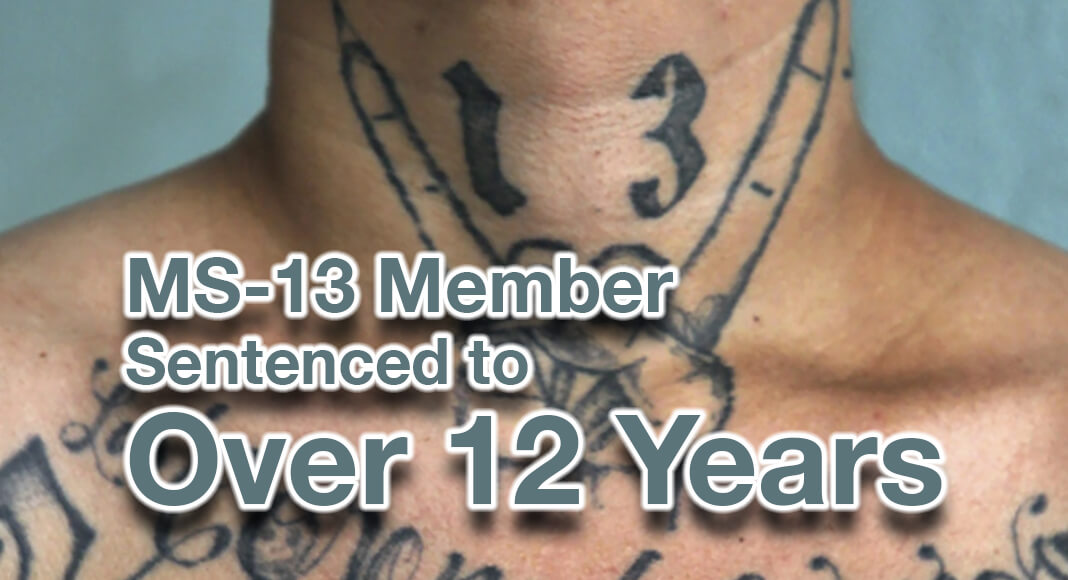
An MS-13 member and Honduran national, illegally in the United States, was sentenced today to 147 months in prison for kidnapping, retaliating against a federal witness, and unlawful possession of a firearm. Image: public domain
Texas Border Business
U.S. Department of Justice
An MS-13 member and Honduran national, illegally in the United States, was sentenced today to 147 months in prison for kidnapping, retaliating against a federal witness, and unlawful possession of a firearm.
According to court documents and statements made in court, on Nov. 5, 2023, Bayron Wuifredo Santos-Recarte, 27, of Honduras, together with other associates of La Mara Salvatrucha 13, better known as MS-13, kidnapped a former federal witness at gunpoint in the parking lot of a laundromat in Nashville, Tennessee. The witness was kidnapped because, eight months prior, he had testified during a federal racketeering trial against MS-13 members. Specifically, the witness testified that MS-13 members tried to shoot and murder him on two occasions over a drug dispute.
During the kidnapping, the victim was held in a truck for hours while being assaulted with a firearm, hammer, and machete. While Santos-Recarte and others assaulted the witness, they also questioned him about why he testified against MS-13 and threatened him with death. After the victim was finally able to escape and call for help, he was treated at a local hospital for serious injuries, which included fractured bones, internal bleeding, and an injury to his kidney.
“The defendant, an MS-13 member, kidnapped a former federal witness and tortured him with a machete, hammer, and gun. This violence and obstruction of the American legal system is core MS-13 conduct and exemplifies why MS-13 has been designated a foreign terrorist organization,” said Matthew R. Galeotti, Head of the Justice Department’s Criminal Division. “The Department remains focused on eliminating this organization. There is more to come. Thank you to the prosecutors, ATF, and our local law enforcement partners for their relentless pursuit of justice.”
“We will do whatever it takes to protect witnesses from harm,” said Acting U.S. Attorney Robert E. McGuire for the Middle District of Tennessee. “If a witness is retaliated against, our office will bring the full might of federal law enforcement to bear on holding those responsible accountable for their crimes.”
“On numerous occasions, individuals are silenced from ‘speaking out’ due to threats, intimidation, or the risks of serious harm,” said Acting Special Agent in Charge Jason Stankiewicz of the Nashville Field Division of the Bureau of Alcohol, Tobacco, Firearms and Explosives (ATF). “In this case, the victim/witness was kidnapped, terrorized, and physically assaulted by relentless, gang-affiliated criminals. Witness intimidation is a serious federal offense and anyone who retaliates against a government witness will be held fully accountable under the law. ATF remains committed to working alongside our state, local, and federal law enforcement partners to reduce violent crime and diminish the presence and influence of these dangerous and deadly criminal organizations in the communities that we serve.”
When identified as one of the kidnappers and confronted by law enforcement, Santos-Recarte admitted driving the truck used in the kidnapping and knowing that the witness testified against MS-13 members during a trial. Santos-Recarte also admitted helping others force the witness into the truck at gunpoint and being present while others assaulted the victim. When federal agents arrested Santos-Recarte, he was in possession of an assault rifle.
In December 2024, Santos-Recarte pleaded guilty to kidnapping, retaliation against a federal witness, unlawful possession of a firearm by an illegal alien, and conspiracy charges. After he serves his sentence, he will be deported from the United States.
The Bureau of Alcohol, Tobacco, Explosives, and Firearms investigated the case with assistance from the Metro Nashville Police Department.
Trial Attorneys Matthew Hoff and Christopher Matthews of the Criminal Division’s Violent Crime and Racketeering Section and Assistant U.S. Attorney Ahmed Safeeullah of the United States Attorney’s Office for the Middle District of Tennessee prosecuted the case.