













Texas Border Business



By Texas Border Business
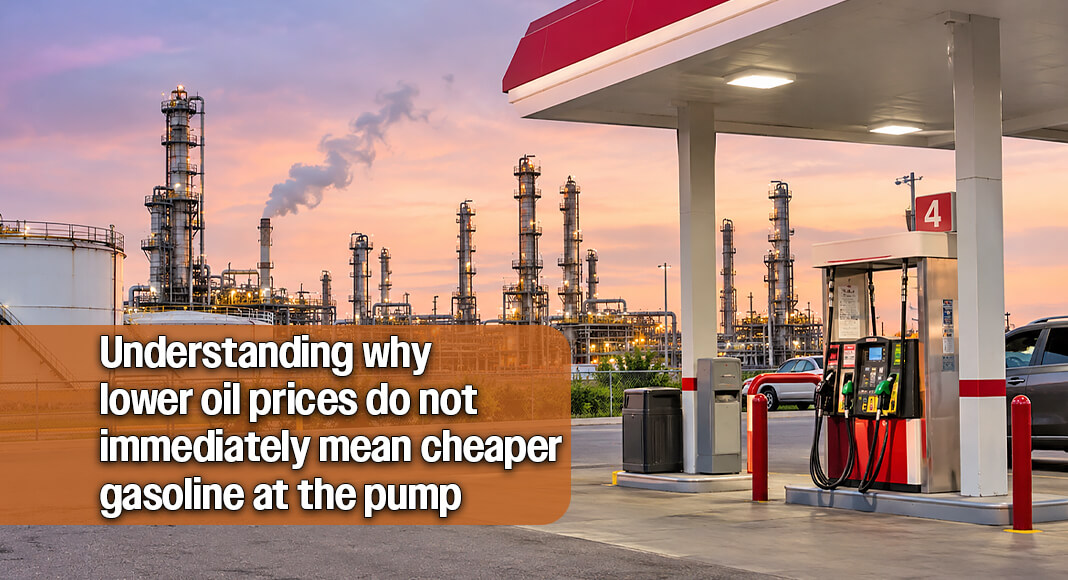
When oil prices drop, drivers expect gasoline prices to fall just as quickly. However, pump prices usually take longer to come down. This is because of how gasoline is produced, transported, and sold.
Oil prices fell Tuesday, continuing losses from the previous day. West Texas Intermediate, a major type of U.S. crude oil, traded near $85 per barrel. Brent crude, an international oil benchmark, was priced around $90.

Oil prices were near their lowest levels in 10 weeks. Reduced tensions involving Iran helped ease concerns about possible interruptions to oil supplies.
Gasoline prices also declined, but more slowly. According to AAA, the national average for regular gasoline dropped to $3.98 per gallon Tuesday, compared with $4.15 a week earlier. That represents a savings of 17 cents per gallon.
For someone filling a 15-gallon tank, the difference saves about $2.55.
But why doesn’t gasoline become cheaper immediately when oil prices fall?
First, crude oil cannot go directly into a vehicle. It must be transported to a refinery, where it is processed into gasoline and other fuels.
The gasoline then travels through pipelines, trucks, and storage facilities before reaching gas stations.
This process takes time. Gasoline sold today may have been produced from oil purchased when prices were higher. Lower crude oil prices can take approximately two weeks to affect pump prices, although the timing varies.
Another important factor is that crude oil represents only part of what drivers pay.
According to the U.S. Energy Information Administration, gasoline prices include four major costs: crude oil, refining, transportation and retail expenses, and taxes.
Even when crude oil falls, refineries must still pay operating expenses. Transportation companies and gas stations also have costs, including fuel, electricity, wages, and equipment.
Federal and state gasoline taxes generally remain unchanged when oil prices fall.
Refining costs can also keep gasoline prices elevated. Refineries earn money by processing crude oil into gasoline and other products. When profit margins rise, gasoline prices may stay high despite cheaper oil.
Another interesting reason prices sometimes seem unfair is how quickly stations react.
When wholesale gasoline prices increase, gas stations often raise prices quickly. However, when wholesale prices decrease, stations may lower prices more slowly.
Economists call this pattern “rockets and feathers.” Prices rise quickly like rockets but fall slowly like feathers.
An analysis of federal energy data from 2015 through 2025 found that gasoline price increases reached consumers faster than decreases. The differences generally evened out after approximately four weeks.
For drivers, the lesson is simple. Falling oil prices are encouraging, but cheaper gasoline does not arrive overnight.Lower oil prices can eventually mean savings at the pump, but refining, transportation, taxes