
















Texas Border Business




By Pentagon News and Defense Intelligence Agency Public Affairs | US DOW
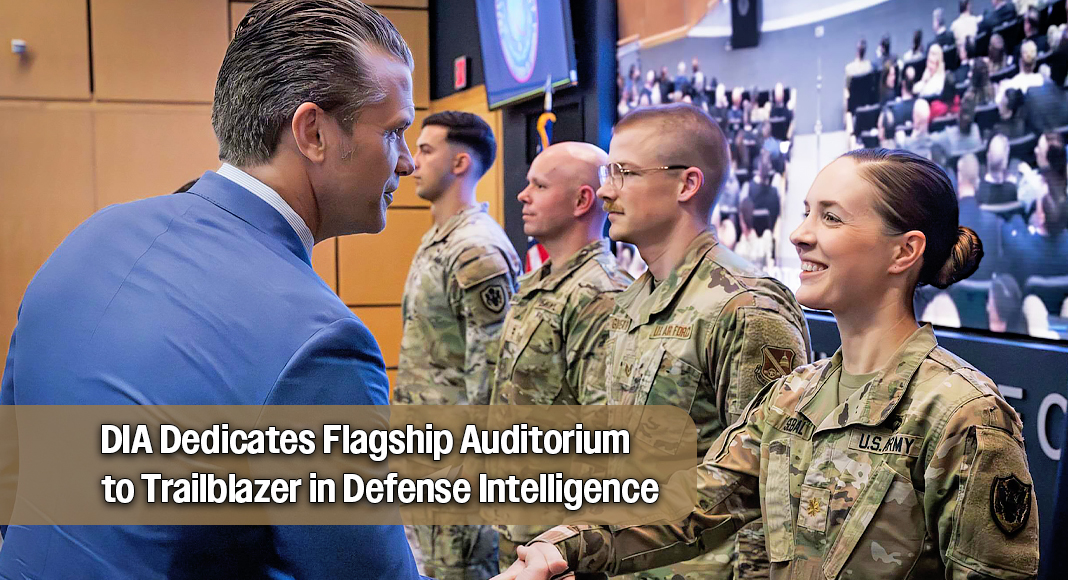
Secretary of War Pete Hegseth met recently with intelligence community professionals at Defense Intelligence Agency headquarters at Joint Base Anacostia-Bolling in Washington, to thank them for their work and to honor one of the earliest members of the intelligence community, Army Lt. Col. Thomas Knowlton.
Within the headquarters, the agency renamed Clapper Leadership Hall to Thomas Knowlton Leadership Hall.




“Thomas Knowlton was a warrior in the Continental Army and the father of American intelligence,” Hegseth said. “It was Gen. George Washington, our first commander in chief and the nation’s first true spymaster, who commissioned Knowlton in 1776 to form our military’s first dedicated intelligence gathering unit. Washington understood that victory is won not just by steel and shot, but by secrecy, by deception and by foresight. He knew that accuracy and timely intelligence are the bedrock of strategic dominance.”
It was after a spree of debilitating defeats as a result of intelligence failures in early battles of the Revolutionary War that Washington recognized the Continental Army’s need for an elite group whose sole objective was intelligence and reconnaissance.
With that realization, Washington selected Knowlton as commander of the Continental Army’s first intelligence unit, which would come to be known as Knowlton’s Rangers.
Washington chose Knowlton as the unit’s commander because of his experience as a scout in the French and Indian Wars and his leadership at the battles of Breed’s Hill and Long Island.
Consisting of 130 men and 20 officers, the unit was charged with conducting reconnaissance, carrying out raids against British facilities and other dangerous covert missions.
Knowlton was killed in September 1776, while leading his men at the Battle of Harlem Heights. His contributions, and the creation of Knowlton’s Rangers, are regarded as the birth of military intelligence.
Hegseth told the leaders that in the same way that Knowlton provided Washington with the intelligence needed to defeat the British during the American Revolution, today’s intelligence community ensures that America’s military has the intelligence it needs to make decisions every day.
“I cannot do my job without the immense, tireless and often unheralded efforts that you put in every single day,” he said. “The work done in these halls and behind these walls, across the globe by the defense intelligence community is the cornerstone … of our national defense.”
During his visit, the secretary also provided coins to several military personnel and discussed with leaders how departmentwide transformation efforts, including restoring the warrior ethos, rebuilding the military and reestablishing deterrence, affect the defense intelligence community.