















Texas Border Business




By Roberto Hugo González | Texas Border Business
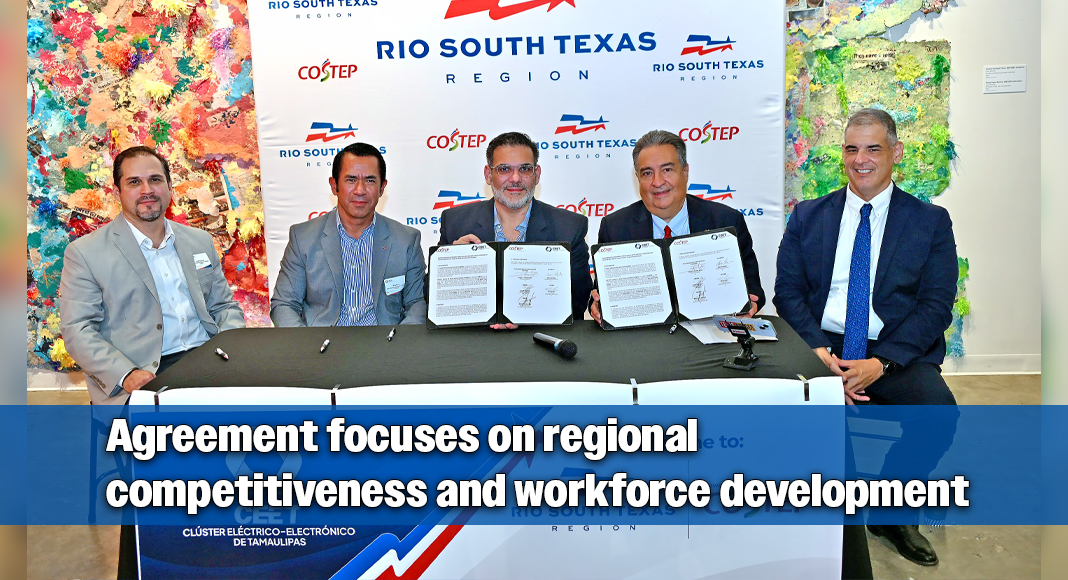
McALLEN, Texas — COSTEP, the Council for South Texas Economic Progress and the Clúster Eléctrico-Electrónico de Tamaulipas signed a memorandum of understanding (MOU) on July 24 at the International Museum of Art & Science, establishing a partnership to strengthen manufacturing, workforce development and economic collaboration across Rio South Texas and northern Tamaulipas.
The agreement was signed by COSTEP Chief Executive Officer Adam Gonzalez, Rick Carrera, Director of Economic Development and Clúster Eléctrico-Electrónico de Tamaulipas President Sergio Arturo Treviño Ayala, Secretary Walter Rico Murta and Treasurer Sergio Antonio Ruiz Leal.




Gonzalez said the MOU represents a commitment to connect businesses, educational institutions, economic development organizations and communities throughout the binational region.
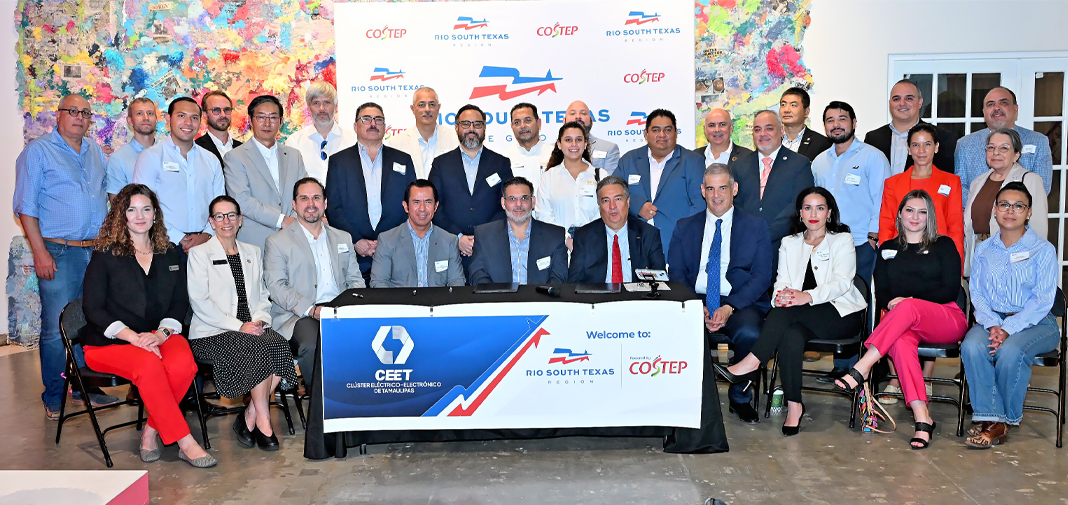
“This MOU is much more than the signing of a piece of paper,” Gonzalez said. “It represents a meaningful commitment to collaboration—not only with the Electronics Cluster of Tamaulipas, but with all of northern Tamaulipas, the interior of Mexico, and partners around the world.”
According to Gonzalez, COSTEP’s industrial database identifies 316 manufacturing companies across Rio South Texas and northern Tamaulipas, including 104 in the electrical and electronics sector. He said those companies supply components, products, and services to 95 companies worldwide.
“These numbers not only show the relevance of this sector in our region but also show the collaboration and the opportunities of investment and development that this provides for Tamaulipas and the Rio South Texas region,” Gonzalez said.
Treviño said the cluster was created to unite companies around a common vision of regional growth and stronger business relationships.
“Our goal is to bring together leaders from the private sector who share a common vision of helping the region grow and strengthening relationships among companies,” Treviño said. “This team will focus on building connections and turning ideas into reality.”
Cluster representatives said the organization includes more than 100 electrical and electronics companies in Tamaulipas and promotes collaboration, workforce training, innovation, digitalization and supplier development. They identified workforce availability and stronger business connections as two of the industry’s principal challenges.
“One of the challenges we face is that connections among businesses are not always as strong as they should be,” a cluster representative said. “Too often, companies work independently instead of leveraging the strengths of the entire sector.”
Rick Carrera, COSTEP’s director of economic development, presented the region’s competitive assets, including its industrial base, international bridges, rail connections, airports and the Port of Brownsville. He said COSTEP markets Rio South Texas as a regional economy rather than individual communities to better compete for industrial investment.
“When I go out and promote, I’m promoting a region of 1.5 million people, if not even more once you include Tamaulipas,” Carrera said.
Carrera said the regional industrial database helps manufacturers identify nearby suppliers and encourages more local sourcing. He also invited companies in Rio South Texas to consider joining the Tamaulipas cluster.
The meeting also brought together representatives from The University of Texas Rio Grande Valley and a Swedish additive manufacturing delegation to discuss research, workforce training and future collaboration opportunities.
Gonzalez said COSTEP’s mission is to build partnerships that strengthen manufacturing on both sides of the border and retain regional talent.
“What benefits northern Tamaulipas benefits the Rio South Texas region, and what benefits the Rio South Texas region benefits northern Tamaulipas,” Gonzalez said.
Treviño said the partnership reflects a shared commitment to growing the region rather than individual organizations.
“It’s easy to get to this agreement because we are looking at the region, not only looking for one side or one company,” Treviño said. “It’s for the region, the people, the teams, the families and how to grow this area.”
The organizations said the MOU is intended to strengthen cross-border collaboration and create new opportunities for manufacturers, suppliers, educational institutions and economic development partners throughout the region.
See related story: