“Freed from the stranglehold of over-regulation, Texas is where global brand leaders thrive and jobs for hardworking Texans grow,” said Governor Abbott. Image for illustration purposes
Texas Border Business
AUSTIN – Governor Greg Abbott issued the following statement following ExxonMobil’s announcement that they are redomiciling in Texas:
“Freed from the stranglehold of over-regulation, Texas is where global brand leaders thrive and jobs for hardworking Texans grow,” said Governor Abbott. “I thank ExxonMobil for their decision to redomicile in Texas and for their long-standing partnership with our state. With this decision, Texas will further dominate the corporate landscape and ensure our economic growth reaches new heights.”
“Over the past several years, Texas has made a noticeable effort to embrace the business community,” said ExxonMobil CEO and Chairman Darren Woods. “In doing so, it has created a policy and regulatory environment that can allow the company to maximize shareholder value. Aligning our legal home with our operating home, in a state that understands our business and has a stake in the company’s success, is important.”
ExxonMobil’s decision to shift its legal domicile reflects the strength of Texas and its predictable corporate laws and modern, business‑focused legal system. ExxonMobil, a Fortune 500 and Global 500 company, has deep Texas roots dating back to 1911 and is headquartered in Spring, Texas.
Singer and congressional candidate Bobby Pulido spoke to supporters March 9, 2026, during a Texas Together Democratic rally at the former El Cine Rey Theater.
Pulido described the race as difficult, saying the congressional district had been drawn to favor Republicans.
“This has been a very tough race because from the beginning we wanted this campaign to be powered by the people,” Pulido said. “They drew this district to favor Republicans. In fact, my district is the most conservatively drawn district in South Texas.”
Pulido said his campaign strategy included visiting counties where Democratic Party organizations are limited or absent.
“When they drew this district the way they did, I knew that if we were going to win, we had to show up everywhere—even in counties up north that don’t even have a Democratic Party,” Pulido said. “But it’s true. Even so, we showed up in every single county, and we talked with voters everywhere we went.”
Pulido said many of the voters his campaign encountered identified as Republicans.
“A lot of the voters we spoke to were Republicans. Now, I’m a proud Democrat—don’t get me wrong,” Pulido said.
He said Democratic candidates must communicate with voters who have supported Republican candidates.
“What I want to tell you is this: we have to learn how to talk to the people we need to bring over,” Pulido said. “Because in my district, the only way we win is by earning the votes of people who may have voted for Trump—but who are willing to vote for me.”
Pulido also said political divisions have been intensified by online platforms.
“The truth is, we’ve been pitted against each other,” Pulido said. “These algorithms feed that anger. They push us to hate the other side, and they push the other side to hate us.”
He urged supporters not to alienate voters who previously supported other candidates.
“I want to say this clearly: people who voted for Trump are not my enemies,” Pulido said. “Just like anyone else, you have a place in this campaign too.”
Pulido said organizing and grassroots work would be key to the campaign’s success.
“That shows the power of the people. We have power—we just have to recognize it and organize,” Pulido said.
He encouraged volunteers to continue working across communities ahead of the November election.
“Let’s win with love, with passion, and with a strong voice,” Pulido said. “And if we all do our part, you’ll see the results in November.”
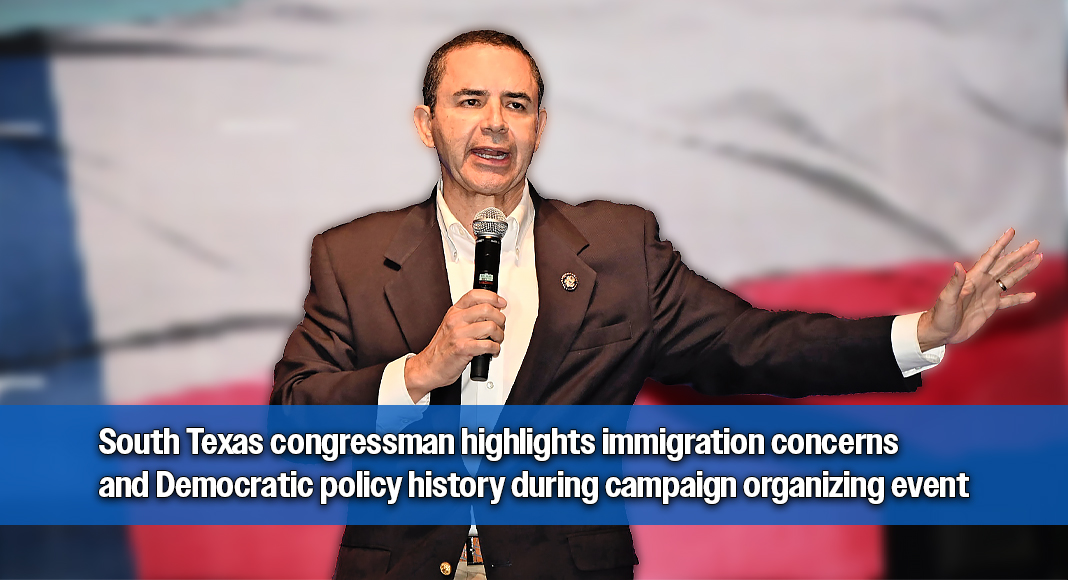
Congressman Henry Cuellar. Image Texas Border Business
Texas Border Business
By Roberto Hugo González / Texas Border Business
Congressman Henry Cuellar addressed immigration enforcement and political organizing during remarks on March 9, 2026, at a Texas Together Democratic rally held at the former El Cine Rey Theater.
The event brought together volunteers, candidates, and organizers working with Texas Together, a statewide coordinated Democratic campaign effort focused on electing Democrats across the ballot in the November elections.
Cuellar said he supports deporting criminals but criticized immigration enforcement actions that targeted workers in South Texas.
“A promise was made that criminals would be deported. I don’t have a problem with that—I believe criminals should be deported,” Cuellar said. “But when enforcement started targeting workers, many of our South Texas builders and workers were affected.”
According to Cuellar, local business owners and workers traveled to Washington to raise concerns.
“They came to Washington. We sat down with some Republicans, and I insisted that we address the issue,” he said. “And you know what? Ask them—the ICE raids stopped here in our area.”
Cuellar thanked those who spoke out publicly about the issue, including singer and congressional candidate Bobby Pulido.
“I want to thank everyone who worked together to make that happen. We got it done,” Cuellar said. “And I especially want to thank Bobby Pulido. Bobby spoke up when it mattered, and I appreciate that. Because when he speaks up, South Texas wins.”
During his remarks, Cuellar also asked attendees to consider the political history of major social programs in the United States.
“Is South Texas ready to lead the state of Texas again?” Cuellar said. “People often ask me, does it matter whether you’re a Democrat or a Republican? Well, let’s look at history.”
Cuellar said Democrats were responsible for several major federal programs.
“Who created Social Security? It was Democrats who created Social Security to make sure our seniors had security and support,” he said. “Who created Medicare? Again, it was Democrats who created Medicare so Americans could have access to affordable healthcare.”
He also referenced civil rights legislation and the Affordable Care Act.
“Who passed the Civil Rights Act so that we could guarantee civil rights in the United States? It was Democrats who led that effort,” Cuellar said. “More recently, who created the Affordable Care Act to expand healthcare coverage? It was the Democrats. And yes, we lost 55 Democratic seats after that vote, but it was the right thing to do to make healthcare more affordable for Americans.”
Cuellar also discussed higher education development in South Texas.
“In the 1990s, we didn’t have the Ph.D. programs, the master’s programs, or the universities that we have today,” he said. “The border region was treated very differently. Most of the advanced programs were located in places like San Antonio, not here for our students.”
“In the 1990s, we created the South Texas Initiative to bring funding and opportunities to this region,” Cuellar said. “Leaders from across the area—Corpus Christi and other communities—came together and voted to make it happen.”
The rally was part of organizing efforts ahead of the November elections, where Democrats are working to mobilize volunteers and voters across Texas.
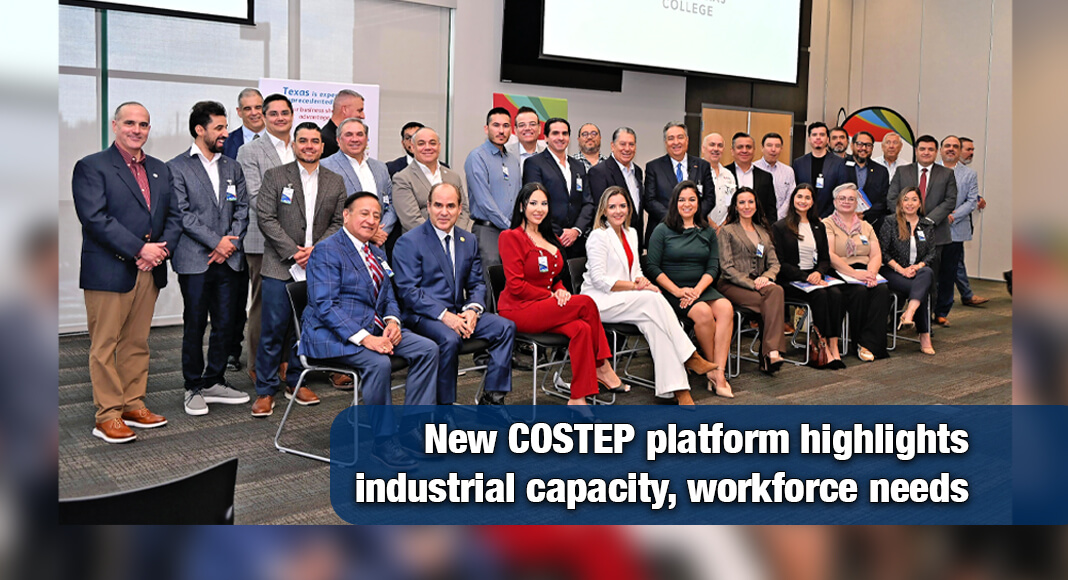
Regional leaders, educators, and economic development professionals attend an Industrial Intelligence Briefing hosted by Council for South Texas Economic Progress at the Student Services Building “U” of South Texas College in McAllen on March 4, 2026, where participants gathered to learn about the newly introduced Industrial Data System designed to map manufacturing capacity and industry sectors across the Rio South Texas and North Tamaulipas region. Image Texas Border Business
Texa Border Business
By Roberto Hugo González / Texas Border Business
McALLEN, Texas – Regional leaders gathered March 4 at the Student Services Building “U” at South Texas College for an Industrial Intelligence Briefing hosted by COSTEP, the Council for South Texas Economic Progress, where officials introduced a new data platform designed to better understand and promote the manufacturing strength of Rio South Texas and the North Tamaulipas region.
The briefing featured a presentation by Adam Gonzalez, President and CEO of COSTEP, who unveiled the organization’s new Industrial Data System — a centralized platform that compiles information on manufacturing companies, industrial sectors, and regional supply chains.
“Today we’re introducing a system that allows us to better understand and communicate the strength of our regional manufacturing base,” Gonzalez said. “This Industrial Data System brings together critical information about the companies operating in our region, the processes they perform, and the industries they serve.”
According to Gonzalez, the system will provide a clearer view of the region’s industrial ecosystem and help economic development organizations, policymakers, and business leaders make more informed decisions.
“Once it is available on the COSTEP website, stakeholders will be able to search the data by city, by multiple cities, and by manufacturing capabilities,” Gonzalez said. “Our goal is to make this information open, accessible, and useful so communities and industry leaders can better interpret the data and support future growth.”
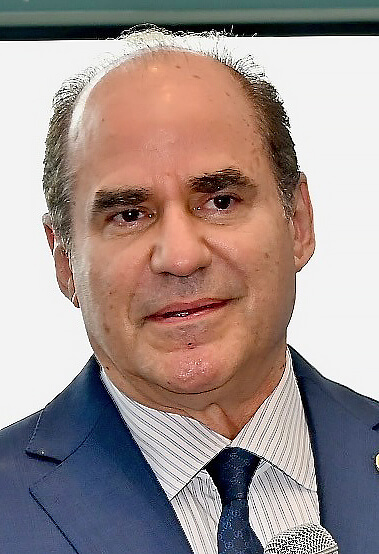
Ricardo Solis. Image Texas Border Business
“South Texas is one of the most strategically positioned regions in North America, and we are seeing that reality unfold every day,” said Ricardo Solis, Ph.D., President of South Texas College. “From Boca Chica to Laredo, our region is experiencing significant growth driven by international trade, advanced manufacturing, and economic development.”
Solis said the data presented during the briefing highlights both the region’s expansion and the workforce needs accompanying that growth.
“The data being presented today highlights not only the scale of that growth, but also the skills and workforce demand that come with it,” Solis said. “At South Texas College, our mission is to ensure our students and communities are prepared with the education and training needed to meet these opportunities.”
The Industrial Data System represents a major effort by COSTEP to strengthen economic intelligence across the Rio South Texas Region and the North Tamaulipas manufacturing corridor. The platform compiles data on manufacturing companies, productive sectors, and the geographic distribution of industry across the binational region.
Regional leaders, educators, economic development officials, and industry representatives gather at the Student Services Building “U” at South Texas College in McAllen on March 4, 2026, during a briefing hosted by Council for South Texas Economic Progress where the organization introduced its new Industrial Data System designed to map manufacturing capacity, industry sectors, and workforce needs across the Rio South Texas and North Tamaulipas region. Image Texas Border Business
During the presentation, Gonzalez explained that the system provides insights into key manufacturing activities by productive sector, industrial sector distribution by city, and manufacturing companies by industry classification.
Major sectors captured in the system include electrical and electronics manufacturing, metalworking and tooling, plastics and injection molding, packaging, medical devices, and other advanced manufacturing industries.
By mapping these sectors across cities in Rio South Texas and manufacturing hubs in North Tamaulipas, the platform illustrates the interconnected industrial ecosystem supporting cross-border supply chains and North American manufacturing.
A booklet titled “Industrial Data System – Manufacturing Companies / Empresas Manufactureras” developed by the Council for South Texas Economic Progress outlines manufacturing activity across the Rio South Texas Region and North Tamaulipas as part of the organization’s initiative to strengthen regional industrial intelligence. Image Texas Border Business
COSTEP plans to upload the Industrial Data System to its website, making it accessible to regional stakeholders. The organization will also coordinate with local economic development corporations and trade zones to provide secure login credentials for expanded access to the platform.
COSTEP will work with local EDCs and municipal partners to ensure the system reflects the region’s full manufacturing footprint and to identify companies that may not yet be included.
The Industrial Data System will be updated at least once a year to track changes in industrial activity, new investments, and the results of regional business attraction efforts.
Beyond mapping the manufacturing landscape, COSTEP is preparing a comprehensive economic impact report on the region’s manufacturing sector. Gonzalez said the report, expected within the next 30 to 45 days, will analyze manufacturing’s economic contributions and provide regional comparisons.
COSTEP is also working with higher education institutions to better align workforce training with industry needs by gathering information on manufacturing-related courses and programs to identify workforce gaps.
That information will eventually be integrated into the Industrial Data System, linking manufacturing demand with education and workforce development resources across the region.
Regional leaders say the initiative highlights the growing importance of collaboration among economic development organizations, educational institutions, and industry as Rio South Texas continues to expand as a key manufacturing and logistics corridor along the U.S.-Mexico border.
By consolidating regional manufacturing intelligence into a single platform, COSTEP officials believe the Industrial Data System will help communities, businesses, and policymakers better understand the region’s industrial strengths and coordinate strategies that support long-term economic growth.
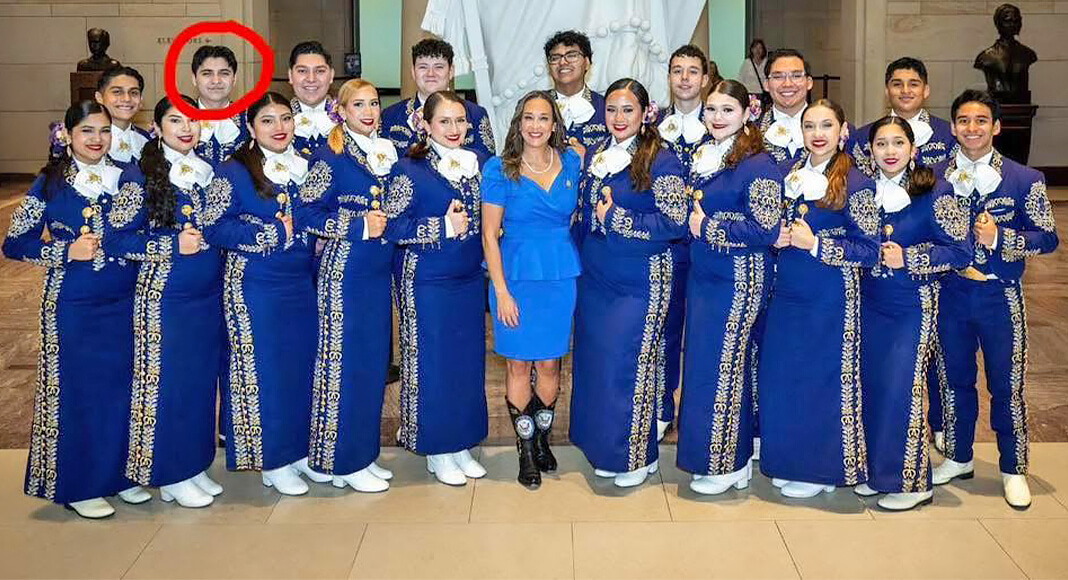
Antonio Yesayahu Gámez-Cuéllar, 18, stands with U.S. Rep. Monica De La Cruz shortly after his release from the El Valle Detention Facility in Raymondville, Texas, on March 9, 2026. Gámez-Cuéllar, a McAllen High School senior and first-chair trumpet in the Texas All-State Mariachi ensemble, had been detained by U.S. Immigration and Customs Enforcement during a scheduled immigration check-in before lawmakers intervened and the family was released while their asylum case continues. Photo courtesy of Congresswoman Monica De La Cruz.
Texas Border Business
By Roberto Hugo González / Texas Border Business
Raymondville, Texas – A McAllen, Texas, family connected to the McAllen High School Mariachi Oro program was released from immigration detention on March 9, 2026, after members of Congress from both parties contacted federal authorities about the case.
The family, identified as the Gámez-Cuéllar family, includes parents Luis Antonio Gámez and Emma Guadalupe Cuéllar and their children Antonio Yesayahu Gámez-Cuéllar, 18; Caleb Gámez-Cuéllar, 14; and Joshua Gámez-Cuéllar, 12. The family lives in McAllen, Texas.
Image: From Melissa Torres FB
Antonio Gámez-Cuéllar is a senior at McAllen High School and first-chair trumpet in the Texas All-State Mariachi ensemble. He and his younger siblings are members of the school’s Mariachi Oro program, a nationally recognized student mariachi ensemble that has performed at venues including the White House and Carnegie Hall.
On June 10, 2025, U.S. Rep. Monica De La Cruz hosted the Mariachi Oro students in Washington. De La Cruz wrote on Facebook that day, “I had the honor of hosting the talented McAllen High School Mariachi Oro today in DC! Wow! What a performance! They brought me to tears!” The performance took place at the Rayburn House Office Building. U.S. Rep. Joaquin Castro also participated in the event.
Joaquin Castro. Image Facebook
According to reports about the immigration case, the Gámez-Cuéllar family migrated to the Rio Grande Valley in 2023 after leaving San Luis Potosí, Mexico. They entered the United States through the CBP One asylum appointment system and began pursuing an asylum claim while living in McAllen.
Their immigration case required them to attend periodic check-ins with federal authorities while the asylum process continued.
On Feb. 25, 2026, the family attended a scheduled appointment with immigration officials. During the appointment, agents from U.S. Immigration and Customs Enforcement took the family into custody. ICE operates under the U.S. Department of Homeland Security, while the earlier CBP One entry system is administered by U.S. Customs and Border Protection.
Monica de la Cruz and Mariachi Oro in Washington DC. Image: Facebook
Family members and advocates said the detention occurred even though the family had complied with immigration reporting requirements while awaiting their asylum proceedings.
After the detention, family members were separated into two different immigration facilities in South Texas.
Antonio Gámez-Cuéllar, who is 18, was held at the El Valle Detention Facility in Raymondville, Texas, an adult immigration detention center.
His parents and two younger brothers were held at the South Texas Family Residential Center in Dilley, Texas, a large federal family detention facility that houses migrant parents and children.
The detention became widely known on March 7 and March 8, when relatives and community members publicized the case. Supporters held demonstrations outside the Raymondville detention facility, drawing attention to the fact that two members of the Mariachi Oro program were unable to participate in school activities and competitions.
Several lawmakers publicly questioned the detention. Members of Congress contacted immigration authorities and asked federal agencies to review the case.
Among those involved were De La Cruz, a Republican who represents Texas’ 15th Congressional District, and Castro, a Democrat representing Texas’ 20th District. U.S. Rep. Vicente Gonzalez was also among the lawmakers who raised concerns.
Lawmakers said the family was seeking asylum and that no criminal charges had been reported in connection with the case.
Between March 8 and March 9, members of Congress contacted officials at ICE and the Department of Homeland Security and visited detention facilities as part of efforts to secure the family’s release.
On March 9, Antonio Gámez-Cuéllar was released from the Raymondville detention facility. His parents and younger brothers were released from the Dilley family detention center the same day.
Lawmakers confirmed the release after visiting the facility.
The Gámez-Cuéllar family was held under civil immigration detention, which is used during immigration enforcement and court proceedings rather than criminal prosecution.
Their asylum case remains pending in immigration court.
The case received national attention because the detention occurred during a routine immigration appointment and involved student musicians from a high-profile school mariachi program. Community protests, media coverage, and statements from members of Congress drew scrutiny to the detention.
As of March 9, all five family members had been released from immigration detention while their immigration case continued.
A 24-year-old Mexican national has been sentenced for his role in bringing illegal aliens into the United States resulting in death. Image for illustration purposes
Texas Border Business
U.S. Attorney’s Office, Southern District of Texas
LAREDO, Texas – A 24-year-old Mexican national has been sentenced for his role in bringing illegal aliens into the United States resulting in death.
U.S. District Judge Diana Saldana has now ordered Hernandez-Alcudia to serve 70 months in federal prison. Not a U.S. citizen, he is expected to face removal proceedings following his imprisonment. In handing down the sentence, the court noted Hernandez-Alcudia made the deliberate decision to leave the victim behind, resulting in his death.
The investigation revealed Hernandez-Alcudia had been involved in human smuggling for at least three months as a guide.
On Aug. 1, 2025, authorities apprehended four illegal aliens walking through the brush near El Cenizo. Hernandez-Alcudia had assisted them in crossing the Rio Grande by raft earlier that day and then continued guiding them through the brush.
According to the aliens, the group ran out of water approximately five hours earlier. When one-member became ill, Hernandez-Alcudia instructed him to sit and rest but continued leading the others, abandoning him in the brush.
When law enforcement approached, Hernandez-Alcudia ordered the group to flee and ran in the opposite direction to avoid apprehension.
Authorities later located the deceased man, who was identified as a 37-year-old Mexican national that had died as a result of heat stroke. Records show temperatures ranged from 93 to 106 degrees during the time the group traveled through the brush.
Hernandez-Alcudia admitted taking orders from an individual linked to Cartel del Noreste. He further acknowledged being paid to smuggle illegal aliens across the Rio Grande and guide them through the brush.
He will remain in custody pending transfer to a Federal Bureau of Prisons facility to be determined in the near future.
Immigration and Customs Enforcement – Homeland Security Investigations
and Border Patrol conducted the investigation. Assistant U.S. Attorney Jennifer L. Day prosecuted the case.
This arrest is part of the Homeland Security Task Force initiative established by Executive Order 14159, Protecting the American People Against Invasion. The HSTF is a whole-of-government partnership dedicated to eliminating criminal cartels, foreign gangs, transnational criminal organizations and human smuggling and trafficking rings operating in the United States and abroad. Through historic interagency collaboration, the HSTF directs the full might of U.S. law enforcement towards identifying, investigating and prosecuting the full spectrum of crimes these organizations commit, which have long fueled violence and instability within our borders. In performing this work, the HSTF places special emphasis on investigating and prosecuting those engaged in child trafficking or other crimes involving children. The HSTF further utilizes all available tools to prosecute and remove the most violent criminal aliens from the United States. HSTF South Texas comprises agents and officers from ICE-HSI; FBI; Drug Enforcement Administration; Bureau of Alcohol, Tobacco, Firearms and Explosives; U.S. Marshals Service; U.S. Postal Inspection Service; Department of Transportation/IRS; Interpol/Department of State and the Naval Criminal Investigative Service with the U.S. Attorney’s Office for the Southern District of Texas leading the prosecution.
The investigation and charges are supported and prosecuted by Joint Task Force Alpha, the Department’s lead effort in combating high-impact human smuggling and trafficking that cartels and Transnational Criminal Organizations commit. A highly successful partnership between the departments of Justice and Homeland Security, JTFA investigates and prosecutes human smuggling and trafficking and related immigration crimes that impact public safety and border security. JTFA’s mission is to target the leaders and organizers of cartels and TCOs involved in human smuggling and trafficking throughout the Americas. The Attorney General has elevated and expanded JTFA to target the most prolific and dangerous human smuggling and trafficking groups operating not only in Mexico and the Northern Triangle countries of Guatemala, El Salvador and Honduras, but also in Canada, the Caribbean and maritime border, and elsewhere. Led by the Criminal Division’s Human Rights and Special Prosecutions Section and supported by the Money Laundering, Narcotics and Forfeiture Section, Office of International Affairs and Office of Enforcement Operations, among others, JTFA has dedicated Assistant U.S. Attorney detailees from the Southern District of Texas, Western District of Texas; Southern District of California; Southern District of Florida; Northern District of New York; and Districts of Arizona, New Mexico and Vermont. JTFA also partners with other U.S. Attorney’s Offices throughout the country and supports high-priority cases in any district. All JTFA cases rely on substantial law enforcement resources from DHS, including ICE-HSI and Customs and Border Protection, Border Patrol and Office of Field Operations as well as FBI and other law enforcement agencies. To date, JTFA’s work has resulted in more than 440 domestic and international arrests of leaders, organizers and significant facilitators of alien smuggling and/or trafficking; more than 390 U.S. convictions; more than 330 significant jail sentences imposed, and forfeitures of substantial assets.
Attorney General Ken Paxton secured a major legal victory after a federal court struck down a Biden-era rule that threatened to reduce the availability of affordable housing by imposing costly green energy requirements for new home construction. Image for illustration purposes
Texas Border Business
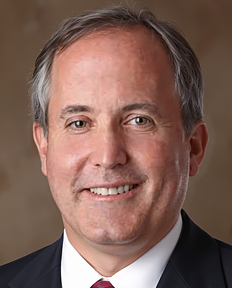
Texas Attorney General Ken Paxton. Image: X
AUSTIN – Attorney General Ken Paxton secured a major legal victory after a federal court struck down a Biden-era rule that threatened to reduce the availability of affordable housing by imposing costly green energy requirements for new home construction.
The lawsuit was brought by a coalition of 15 states and the National Association of Home Builders, which relied on Attorney General Paxton to argue the case in the U.S. District Court for the Eastern District of Texas.
In 2024, the U.S. Department of Housing and Urban Development (“HUD”) and the U.S. Department of Agriculture (“USDA”) issued a rule requiring that new homes be built with certain federal housing financing to comply with significantly stricter energy-efficiency building codes. The rule would have applied to housing financed through programs such as FHA-insured mortgages, USDA rural housing loans, and various federally assisted housing initiatives. These mandates required builders to install stronger insulation, higher-efficiency windows, tighter building envelopes, upgraded heating and cooling systems, and other costly requirements that would have increased construction costs and made affordable housing harder to build.
Attorney General Paxton successfully argued that the rule violated federal law because it would reduce the availability of affordable housing. Federal law allows adoption of new energy standards only if they do not negatively affect the availability or affordability of housing. The court also ruled that HUD and USDA lacked the statutory authority to impose the updated standards in 2024. As a result of the ruling, the woke 2024 energy standard has been vacated and is no longer in effect.
“The Corrupt Biden Administration’s radical policies were reducing the availability of affordable homes and making it harder for Americans to achieve the dream of homeownership,” said Attorney General Paxton. “This ruling is a major victory for homebuyers, builders, and families and helps protect access to affordable housing.”
H-E-B will kick off the 13th annual H-E-B Quest for Texas Best, a competition created to find the best Texas-made products. Submissions for the competition will be accepted from March 11 through April 22. Image courtesy of HEB
Texas Border Business
H-E-B will kick off the 13th annual H-E-B Quest for Texas Best, a competition created to find the best Texas-made products. Submissions for the competition will be accepted from March 11 through April 22. Qualified participants will compete for a combined $100,000 in cash prizes and the opportunity to feature their product on H-E-B shelves across the state.
H-E-B’s Business Development Managers will select the top applicants who will present their products before a panel of judges selected by H-E-B this October in San Antonio. The panel of judges will determine the top four winning products and award $50,000 to the Grand Prize winner, the title of “Texas Best,” and placement on store shelves; $25,000 to the first-place winner; $15,000 to the second-place winner; and $10,000 to the third-place winner.
H-E-B has discovered more than 1,000 unique products throughout the Lone Star State over the last decade – from cookies, coffees to empanadas, pickles, and pho, to salsas, spices, and everything in between. Non-food submissions have included everything from beauty items, toys, home goods, and household necessities, to gardening supplies, coolers, and more. Over the years, H-E-B has reviewed over 7,000 samples of the most creative Texas-made products and awarded nearly $3 million in prize money complemented by marketing, mentoring, and supplemental support.
“We look forward to connecting with Texas-based innovators each year and providing exciting opportunities through this competition,” said James Harris, Sr. Director of Diversity & Inclusion and Supplier Diversity for H-E-B. “I can’t wait to see what products are brought to the table this year. After 12 years of the H-E-B Quest for Texas Best the creativity and ingenuity of Texans still inspire me.”
To prepare for Quest, participants will have the opportunity to visit with H-E-B Sourcing leaders about information sessionsMarch 18, April 8, April 15, and April 21. Registration is required. To register for an informational meeting, review competition details, and learn more about the two-minute video requirement, please visit
The City of Alamo invites members of the media and the public to attend a special double ribbon cutting ceremony celebrating the official opening of the Alaniz-Villagomez All-Inclusive Park and the City’s second National Fitness Campaign Fitness Court. Image for illustration purposes.
Texas Border Business
ALAMO, Texas – The City of Alamo invites members of the media and the public to attend a special double ribbon cutting ceremony celebrating the official opening of the Alaniz-Villagomez All-Inclusive Park and the City’s second National Fitness Campaign Fitness Court.
Originally announced during the January 16, 2025 groundbreaking ceremony, the over $2 million Alaniz-Villagomez All-Inclusive Park project represents a major investment in inclusive recreation, health, and community wellness in eastern Hidalgo County. The first Fitness Court was installed at Lions Park. This new Fitness Court at Alaniz-Villagomez further expands free, accessible outdoor fitness opportunities for residents of all ages and abilities.
This ceremony will celebrate:
• The official opening of the Alaniz-Villagomez All-Inclusive Park • The debut of Alamo’s second National Fitness Campaign Fitness Court • Continued expansion of accessible recreation in the City of Alamo
City officials, community partners, and residents will gather to celebrate this milestone project, which features an all-inclusive playground, walking trail, sports courts, fitness amenities, and additional enhancements designed to promote health, wellness, and accessibility for the entire Rio Grande Valley.
As the City of Alamo continues moving forward, we proudly recognize the importance of diversity and remain committed to creating spaces where every individual, regardless of age or ability, feels welcomed, represented, and valued.
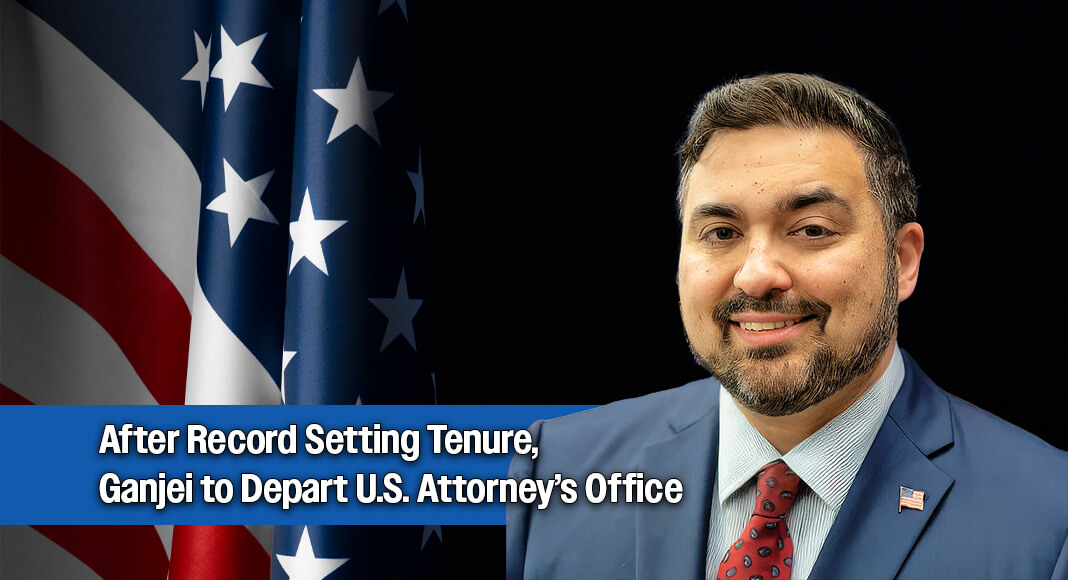
U.S. Attorney Nicholas J. Ganjei has announced he will resign as chief law enforcement officer for the Southern District of Texas effective upon his appointment to the federal bench. Image: Public domain via wikimedia Commons. Bgd fo illustration purposes
Texas Border Business
U.S. Attorney’s Office, Southern District of Texas
HOUSTON – U.S. Attorney Nicholas J. Ganjei has announced he will resign as chief law enforcement officer for the Southern District of Texas effective upon his appointment to the federal bench.
“The American people provided our office with a mandate to secure the border, annihilate the drug trade, and crack down on violent crime in their communities—and every day the men and women of SDTX work tirelessly to deliver on that commitment. In the past year we’ve accomplished more than we ever thought possible, but there’s still no time to rest,” said Ganjei. “Ensuring that the Southern District of Texas is a safe place to live, work, and raise a family is more than just a job, it’s a promise we’ve made to our fellow citizens. In meeting this challenge, I could not have asked for greater colleagues, greater law enforcement partners, or greater support from our Southern District communities. Although I will now be hanging up my spurs as an advocate, I look forward to serving the American people in a new capacity.”
Ganjei was responsible for prosecuting and defending the interests of the United States in one of the largest districts in the country, with the Southern District of Texas stretching across 43 counties, covering 44,000 square miles, and having over nine million residents. Ganjei oversaw nearly 400 employees, including over 200 Assistant U.S. Attorneys, spread across the district’s seven offices.
Since Ganjei’s appointment in January 2025, the Southern District of Texas has prioritized border security and immigration enforcement, the aggressive prosecution of violent crime, and the dismantling of transnational criminal organizations, particularly narcoterrorists.
During his tenure, SDTX prided itself on being both aggressive and nimble, filing over 10,000 indictments and nearly 18,000 criminal complaints, while maintaining a 96 percent conviction rate. To date in fiscal year 2026, SDTX is projected to file more cases than any other district nationwide.
In 2025, SDTX delivered a record number of southern border-related enforcement actions, with over 14,000 individuals charged in cases related to immigration and smuggling, assaults on officers, firearms offenses, violent crimes, narcotics trafficking, and other matters. To date in 2026, over 2000 additional persons have already been charged in similar actions. The number of illegal crossings and encounters have plummeted to their lowest level in more than half a century.
The Southern District of Texas’s Civil Division also played a major role in the office’s efforts to secure the border, working to obtain parcels of land and easements to facilitate border wall construction, as well as handling over 1300 habeas corpus petitions brought by illegal aliens seeking immediate release from custody.
On the criminal side of border security, the Southern District secured the extradition of three Guatemalan nationals on charges arising from a fatal human smuggling event in Chiapas, Mexico in 2021. This event, in which a tractor-trailer, packed with at least 160 people, crashed, resulted in the death of more than 50 people, including unaccompanied children, and injured over 100 more. The smugglers, now in federal court in Laredo, face a potential life sentence.
Under Ganjei, the Southern District of Texas has been a national leader in the prosecution of narcoterrorist gangs and cartels. In December of 2025, SDTX charged four alleged members of Tren de Aragua (“TdA”) with material support of a terrorist organization and cocaine distribution. Two of the men charged—Yohan Jose Romero and Juan Gabriel Rivas Nunez—are believed to be two of the top three leaders of TdA. In Galveston, eight high-level Mara Salvatrucha (“MS-13”) gang members pleaded guilty to racketeering activity, including murder, extortion, and drug trafficking, and are now facing prison terms of 35-50 years. In Operation Liquid Death, the Southern District of Texas indicted a father and son on charges of conspiring to materially support a Mexican cartel and money laundering based on the duo’s alleged illegal importation of tens of millions of dollars of stolen oil.
The Southern District has also been tireless in its pursuit of U.S.-based criminal organizations and has adopted a more aggressive posture toward the use of federal racketeering (RICO) charges, which carry a maximum penalty of life imprisonment. In Houston, SDTX brought racketeering, murder, firearms, and drug trafficking charges against 20 suspected members and associates of the “Free Money” gang, a group accused of committing numerous high-profile violent crimes, including a brazen June 2022 daytime shootout in a shopping center parking lot. Also in 2025, the Southern District of Texas indicted 14 members of the Katy-based “Welcome to Hell” chapter of the Bandidos Outlaw Motorcycle Gang on 22 counts of racketeering, assault, and murder stemming from, in part, a violent turf war with a rival motorcycle gang.
Under Ganjei’s leadership, SDTX also launched several innovative, “first of its kind” initiatives to address to address longstanding and persistent criminal threats. One such program was Operation Lighthouse, an effort to combat sexual assault of rideshare passengers. The initiative leverages federal resources and sentencing laws to secure more meaningful penalties against perpetrators, bring justice to victims, and ultimately promote a greater sense of safety within the ridesharing community.
Another initiative, Operation Pick-Off, targets criminal illegal aliens who are currently serving terms of probation following convictions for state crimes, such as murder, drug offenses, human smuggling, fraud, burglary, assault, and other crimes. The multiagency effort, launched in August 2025 in the Rio Grande Valley, will remain an ongoing enforcement priority for the Southern District.
In one quality-of-life initiative, Operation Double Down, the Southern District targeted and shut down 30 illegal gaming rooms in greater Houston, which operated openly and attracted drug dealing, prostitution and other blight. The operation, believed to be one of the largest in the Southern District’s history, resulted in the indictment of 16 defendants and the seizure of over $16 million in currency, accounts, and assets.
During Ganjei’s tenure, the Southern District of Texas also took a more aggressive approach to the threat posed by Chinese-backed espionage against the United States. The Southern District indicted Xu Zewei, an alleged China state-sponsored hacker, for his suspected involvement in U.S. computer intrusions, including that of U.S.-based universities and researchers conducting COVID-19 vaccine, treatment, and testing research. Zewei was later arrested in Italy at the United States’ request. More recently, in Operation Gatekeeper, SDTX indicted three individuals for their alleged role in the illegal smuggling of $160 million of critical AI technology destined for the PRC.
Finally, the Southern District collected a total of $148,149,674.47 in combined criminal, civil, and asset forfeiture actions in calendar year 2025. Across all criminal matters, SDTX collected $21,572,847.34 in restitution for crime victims and recovered an additional $85,932,764.13 through civil enforcement actions for the American taxpayer. Working with partner agencies and divisions, the Southern District also collected $40,644,063 through asset forfeiture. Forfeited assets deposited into the Department of Justice’s Asset Forfeiture Fund are used to restore funds to crime victims and for a variety of law enforcement purposes.
Then-Acting Attorney General James McHenry named Ganjei as U.S. Attorney for the Southern District of Texas Jan. 29, 2025. Ganjei later received the unanimous vote of the district judges in May 2025, re-appointing him to continue his service to the district.
Ganjei is a longtime federal prosecutor who previously served as Acting U.S. Attorney and First Assistant U.S. Attorney for the Eastern District of Texas.
Ganjei joined the Department of Justice in 2008 as an Assistant U.S. Attorney on the U.S.–Mexico border. As an AUSA, Ganjei prosecuted organized crime, immigration, narcotics, and human trafficking cases, as well as fraud, public corruption and white collar matters.
Before joining the Department, Ganjei clerked for the Honorable Richard Allen Griffin of the Sixth Circuit Court of Appeals and for then-U.S. District Judge Ralph R. Erickson, who has since been elevated to the Eighth Circuit Court of Appeals. Ganjei has also taught on the subjects of civil, criminal, and constitutional law at both the collegiate and law school levels.
Immediately prior to his service with the Southern District of Texas, Ganjei was Chief Counsel to U.S. Senator Ted Cruz and the Senate Judiciary Committee’s Subcommittee on the Constitution, where he oversaw all legal matters related to criminal justice, border security, judicial nominations, antitrust, intellectual property, and religious liberty.
On Nov. 12, 2025, President Trump nominated Ganjei to serve as a United States district court judge for the Southern District of Texas. The United States Senate confirmed Ganjei on Feb. 3, 2026. Ganjei is now set to begin his tenure as a judge in the Houston Division of the Southern District.
Upon Ganjei’s departure, management responsibilities will be handed off to John G.E. Marck, who presently serves as the office’s First Assistant U.S. Attorney.