The American Red Cross Texas Gulf Coast Region recommends ensuring a safe spring break by planning ahead, staying aware of surroundings, and focusing on water safety and secure accommodation. Image for illustration purposes
Texas Border Business
AMERICAN RED CROSS – The American Red Cross Texas Gulf Coast Region recommends ensuring a safe spring break by planning ahead, staying aware of surroundings, and focusing on water safety and secure accommodation. Key tips include swimming with a buddy, checking for smoke alarms in rentals, staying hydrated, using sunscreen, and avoiding impaired driving.
Water Safety & Swimming
Active Supervision: Always keep children within arm’s reach in or near water and designate a “water watcher” to monitor the pool.
Swim with a Buddy: Never swim alone.
Lessons: Ensure everyone knows how to swim; consider Red Cross swim lessons.
Life Jackets: Have young or inexperienced swimmers wear a U.S. Coast Guard-approved life jacket.
Travel & Accommodation Safety
Accommodation Check: Upon arrival at a hotel or rental, check that smoke alarms and carbon monoxide detectors are functional.
Escape Routes: Know two ways out of your room and the location of fire extinguishers.
Situational Awareness: Stay aware of your surroundings, especially in unfamiliar areas.
Information Sharing: Let loved ones know your itinerary, including where you are staying and who you are with.
Health & General Safety
Sun & Hydration: Protect against sunburn with sunscreen and prevent dehydration.
Emergency Apps: Download the Red Cross Emergency App for real-time weather alerts and safety information.
Safe Transportation: Always use seat belts and never drink and drive.
Travel Documents: Keep physical and electronic copies of important document
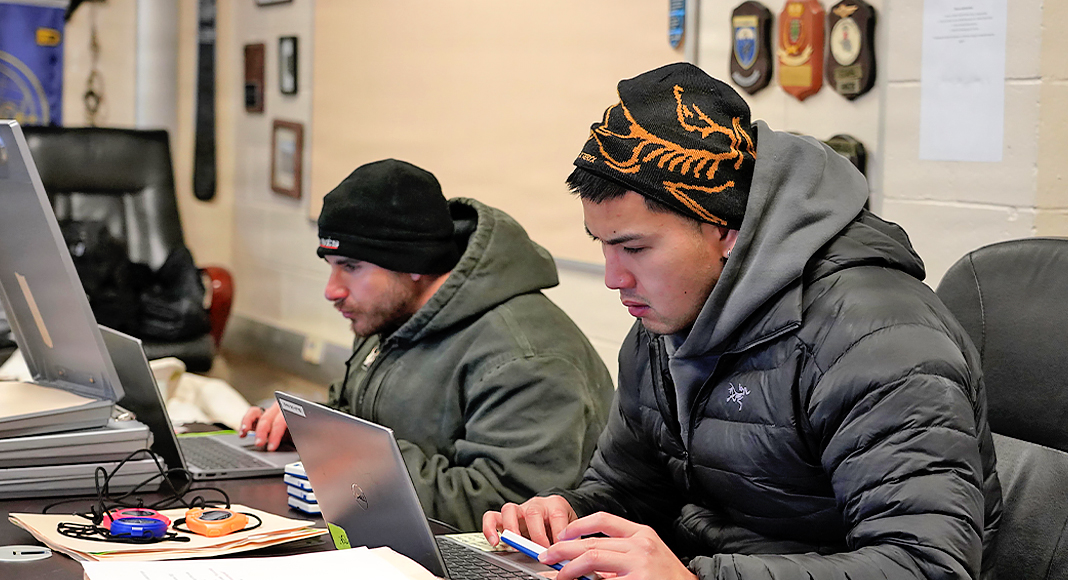
Military medical students enrolled in the Marine Corps Mountain Warfare Center’s mountain medicine course participate in the Naval Health Research Center’s cold-water immersion study in the Sierra Nevada, Feb. 23, 2026. The students endured 34-degree water and below-freezing air temperatures while their instructors observed. Photo credit: Matthew Reyes, Navy via US DOW
Texas Border Business
By Matthew Reyes, Naval Health Research Center / US DOW
The first plunge into icy water is a shock to the system. For a warfighter operating in extreme cold weather environments, a fall into near-freezing seas isn’t a mishap; it’s a life-or-death battle that is won or lost in the first few minutes.
This research mission took Naval Health Research Center scientists to the Marine Corps Mountain Warfare Training Center in Bridgeport, California, where they spent six days doing research in the harsh Sierra Nevada winter. Working in air temperatures hovering at 19 degrees and with water temperatures at 34 degrees, the team focused on equipping U.S. warfighters with practical survival skills for extreme conditions.
Michael Sarmiento and Tony Duong, exercise physiologists with the Naval Health Research Center’s environmental and thermal physiology team, compile data collected from military medical students after cold-water immersion during a study in the Sierra Nevada, Feb. 23, 2025. Once the data has been compiled, analyzed and charted, it will be used to build preliminary findings about the effects of cold-water shock response, dexterity and core body temperature. Photo Credit: Matthew Reyes, Navy via USDOW
The project, funded by the Office of Naval Research, is directly aimed at improving survival rates during a mass casualty incident at sea, such as a torpedoed ship in arctic waters. Researchers from the center’s environmental and thermal physiology team are investigating cold-environment survival to understand and combat a silent killer known as the “cold shock response,” a leading threat in sudden cold exposure scenarios.
“Most people’s first worry is hypothermia, but in order to actually become hypothermic, you have to survive the cold shock response,” said Rebecca Weller, a research physiologist with the research center. “The initial moments in cold water are often the most dangerous, and how you control your breathing in those moments can determine whether you survive.”
That initial, involuntary gasp for air upon hitting cold water, the rapid and uncontrolled breathing, and the spike in heart rate and blood pressure are all hallmarks of the cold shock response — a series of immediate bodily reactions to sudden cold exposure. This physiological response can quickly lead to aspirating water, cognitive impairment and drowning. Research suggests that this response is the cause of death in up to 60% of accidental cold-water immersions, long before the body’s core temperature begins to drop.
The environmental and thermal physiology team, led by principal investigator Doug Jones, partnered with the warfare training center to conduct a vital study during its cold-weather medicine course. Students, mostly Navy hospital corpsmen, enrolled in the course prepared for the rigors of cold weather operations and also had the opportunity to volunteer as subjects in an experiment designed to find a simple, effective defense against cold shock.
The day before a planned cold-water immersion, study participants underwent baseline testing for stress, anxiety and information recall. They also received specialized training in slow-paced breathing.
The next morning, volunteers were fitted with an array of sophisticated data-collection devices — heart rate straps and core and skin temperature monitors. The most critical piece of equipment, however, was a spirometer, which measures the volume and rate of breathing.
The goal was to see if a simple breathing exercise could override the body’s instinct to panic.
“We are trying to develop a technique and strategy that can limit the stress associated with accidental cold-water immersion,” Jones said.
The research center is currently analyzing data from these tests. Based on a preliminary review of the data, the group trained in slow-paced breathing appears to have demonstrated a lower, more controlled breathing rate during the immersion than the untrained control group. They were actively using the technique to fight the body’s involuntary response.
The team is now analyzing how controlled breathing impacts the cold shock response and operational performance, such as completion of the nine-line task to determine if a patient needs to be evacuated. During the immersion, participants were tasked with performing the test — a standard military procedure that requires clear thinking and precise communication. The ability to perform such a task under the intense physiological stress of cold shock can mean the difference between life and death for a service member.
Ultimately, the findings from this research will provide evidence-based data to validate and refine training protocols across the U.S. military. The ultimate goal is to provide the military with evidence-based tools that can be quickly taught to any service member and integrated into official guidance like the Navy’s Cold Weather Handbook for Surface Ships, to add strategies for surviving the initial moments of cold-water immersion.
“How you control your breathing in those initial moments of cold-water immersion can determine whether you survive it,” Weller emphasized. “By practicing these techniques in a controlled environment, service members may gain the confidence and muscle memory to execute them when it counts.”
These findings will educate a new generation of warfighters — more prepared, more adaptable and more lethal — armed with the knowledge to conquer one of nature’s most unforgiving environments. They are proving that in the face of the cold’s deadly gasp, the most powerful weapon can be a single, controlled breath.
Through a wide range of research, including its cold-water immersion studies, the research center develops strategies that enable the warfighter to overcome the many health and performance-related challenges they face in the course of their duties. This research provides the Navy, Marine Corps and joint forces with the opportunity to develop tools to maintain cognitive function and enhance survivability in the most extreme maritime environments.
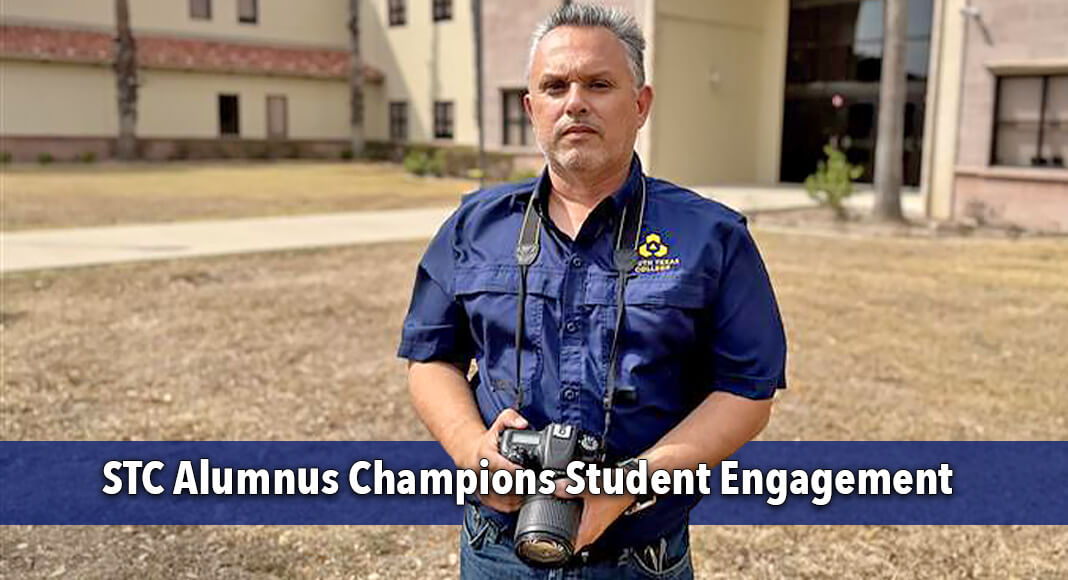
For South Texas College(STC) Mid-Valley Campus Student Activities Specialist Jose Peña, STC has always been more than a workplace, it’s been a second home. STC image
Texas Border Business
By Veronica Salinas
For South Texas College (STC) Mid-Valley Campus Student Activities Specialist Jose Peña, STC has always been more than a workplace, it’s been a second home.
A first-generation college student and U.S. Army veteran, Peña’s journey with STC began in 1998 at the Starr County Campus shortly after serving six years in the military as an X-Ray Technician.
Over the years, Peña has served in multiple roles across several campuses, including the Technology, Health Science Professions and Pecan, where he was promoted to First Year Experience coordinator. STC image
“I didn’t think there was much opportunity for me education-wise after I graduated high school and felt the military was my only way of succeeding,” he said. “When I got out of the Army, I bought a computer for college and was intimidated. I faced my fear because I had no choice and that led me to falling in love with computers. I wanted to know more.”
Determined to succeed, Peña leaned into the support systems available on campus. Afraid of not passing his classes, he frequently visited the Center for Learning Excellence (CLE), so often that he was eventually offered a work-study position.
Peña earned his associate degree in Computer and Information Technologies from STC before transferring to the University of Texas-Pan American (now the University of Texas Rio Grande Valley,) where he completed a bachelor’s degree in Applied Technology in Computer Information Systems Technology.
“What I learned at STC allowed for a smooth transition into university,” he said. “I felt ready. STC laid the foundation for my success. Being in smaller classes made it more personal and allowed me to learn more. The students who transferred with me from STC were some of the best in the class because of what we were taught.”
Shortly after graduation, Peña was hired at STC as a Student Activities Specialist at the Starr County Campus. This was a full circle beginning for someone who once walked campus as a student unsure of his future.
Over the years, Peña has served in multiple roles across several campuses, including the Technology, Health Science Professions and Pecan, where he was promoted to First Year Experience coordinator. He also served as coordinator for Veteran’s Affairs before leaving the college in 2021 to pursue another career opportunity.
In 2025, Peña returned to STC and is now stationed at the Mid-Valley Campus as a student activities specialist
“I feel like I have the coolest job of all,” he said. “I have the opportunity to work with some of the best students.
In his role, Peña oversees new student orientation, student activities and events, Intramural Sports, the campus food pantry and game room. He also serves as an advisor for the Student Government Association (SGA) and supports the Student Leadership Academy, all initiatives designed to foster connection and belonging at STC
“Ever since I was a student, I always felt like STC was my home away from home,” he said. “If it wasn’t for friendly students, faculty and staff who helped me when I looked lost, I wouldn’t be here. Despite being a college with over six campuses, we make everyone feel like they are part of a community.
Research underscores the importance of the work Peña leads. According to a 2025 study, higher student engagement is directly linked to improved college success rates, with highly engaged students up to 38% more likely to graduate. First-time-in-college students involved in four or more activities can see success rates rise to as high as 92–93%.
“We are always getting feedback from students to make each event better than the last,” he said. “When students feel heard and see themselves reflected in campus activities, they’re more likely to get involved and that involvement can make all the difference in their success.”
For Peña, the driving force behind his work goes far beyond a job title. It is rooted in personal experience. Having once been a student searching for direction and support, he understands firsthand how meaningful connection, encouragement and involvement can shape a student’s confidence and future. That perspective fuels his commitment to creating opportunities where students feel seen, supported and empowered to succeed.
“What motivates me to serve students is that when I see a student, I see myself,” he said. “I want to give back and guide students the way people here at STC once guided me.”
Through his journey from student to veteran to campus leader, Peña embodies the power of opportunity, engagement and community.
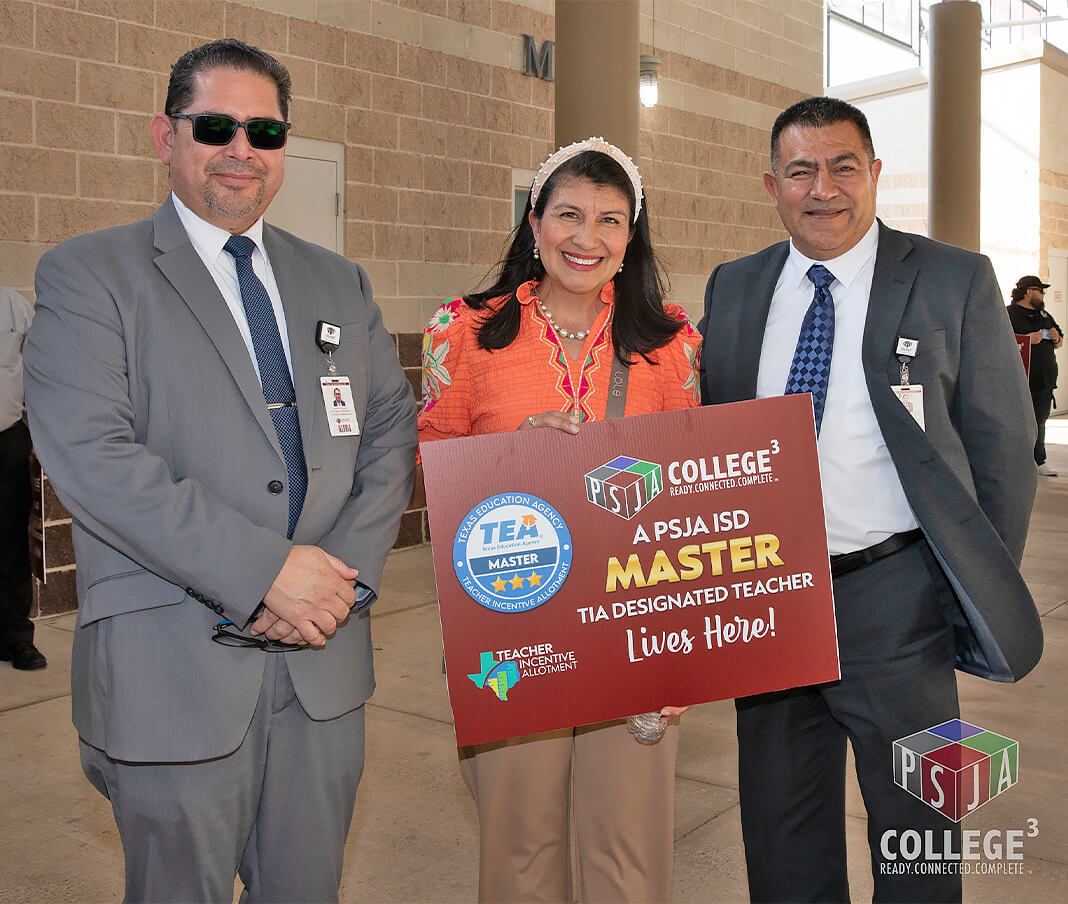
With 82% of PSJA teachers now designated, the district continues to demonstrate its commitment to recognizing and rewarding instructional excellence. Image courtesy of PSJA ISD
Texas Border Business
PHARR, Texas – Pharr-San Juan-Alamo ISD has received official approval from the Texas Education Agency following a comprehensive state validation process for its 2025–2026 Teacher Incentive Allotment designations, based on 2024–2025 school year performance data. With 82% of PSJA teachers now designated, the district continues to demonstrate its commitment to recognizing and rewarding instructional excellence.
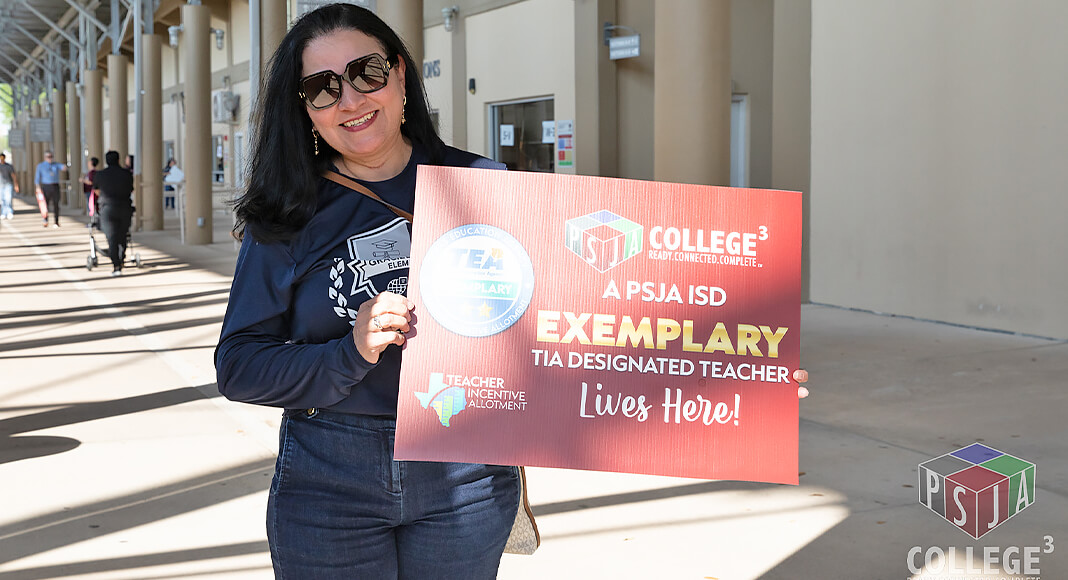
PSJA ISD remains committed to strengthening its local designation system, expanding opportunities for educators to achieve the highest levels of recognition, and ensuring that every student benefits from high quality instruction in every classroom. Image courtesy of PSJA ISD
This continued growth builds upon last year’s milestone, when 72% of PSJA teachers earned a designation. Since the 2022-2023 school year, the Teacher Incentive Allotment has generated nearly $87 million in additional compensation for PSJA ISD educators, directly strengthening the local economy while elevating the teaching profession within the district. The latest round of designations will generate more than $35 million during the current school year, reinforcing competitive educator compensation and providing a meaningful boost to the local economy. Over the next five years, PSJA ISD is projected to generate more than $222 million in total allotment funding, demonstrating the long-term and economic impact to the Rio Grande Valley.
The Teacher Incentive Allotment, established through House Bill 3 during the 86th Texas Legislature, was designed to create a pathway for outstanding educators to earn a six figure salary as a highly effective classroom teacher. Designations fall into three tiers: Recognized, Exemplary, and Master. Allotment amounts vary based on campus socioeconomic level and rural status.
PSJA ISD’s continued success under TIA aligns with the district’s broader academic achievements, including sustained gains in student performance. Image courtesy of PSJA ISD
The latest approval includes 1716 new and higher teacher designations, with over 345 already earning six-figure salaries.
PSJA ISD’s continued success under TIA aligns with the district’s broader academic achievements, including sustained gains in student performance.
“At PSJA ISD, investing in our teachers is investing in our students,” said Superintendent Dr. Alejandro Elias. “The Teacher Incentive Allotment allows us to retain, attract, and reward highly effective educators while ensuring our students continue to receive exceptional instruction. We are proud of our teachers and grateful to our campus leaders, district administration, and School Board of Trustees for their continued support of our PSJA Family.”
Each year, TEA processes new and higher teacher designations a rigorous validation process, including review by Texas Tech University, to ensure accuracy, validity, reliability, and alignment with state performance standards.
“Our priority is ensuring that our local designation system remains accurate, equitable, and aligned with state standards,” said Dr. Rebeca Garza, Assistant Superintendent for Human Resources. “This approval reflects the strength of our internal processes and our commitment to honoring the measurable impact our teachers make every day. We will continue refining our systems to support transparency, consistency, and long-term sustainability.”
TEA is expected to process final designations in late April 2026, at which time individual teachers will be officially notified of their designation status.
PSJA ISD remains committed to strengthening its local designation system, expanding opportunities for educators to achieve the highest levels of recognition, and ensuring that every student benefits from high quality instruction in every classroom.
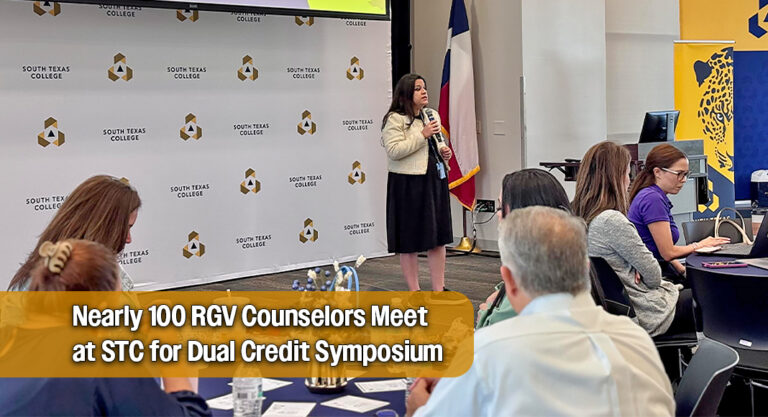
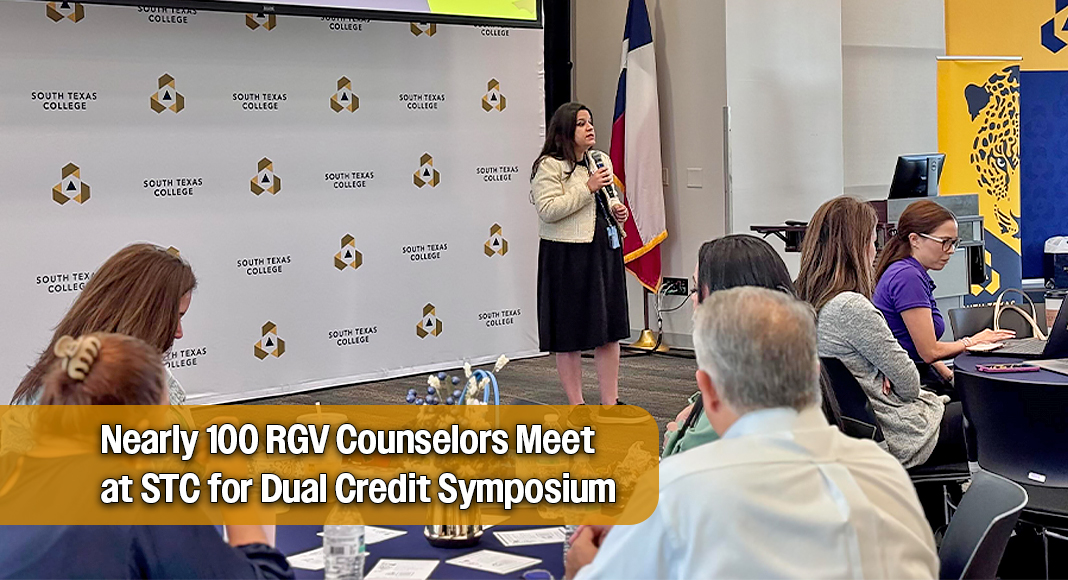
Nearly 100 counselors from South Texas College’s more than 21 dual credit school district partnerships, gathered for the college’s annual Counselor Symposium for updates on dual credit processes, programs and STC student resources. STC image
Texas Border Business
By Amanda Sotelo
Esmeralda Flores, a counselor at Mercedes High School P-TECH, is seeing an increase of students enrolling in dual credit courses within her district, and by attending events like South Texas College’s Dual Credit Programs Counselor Symposium, she and her colleagues can better assist this growing population.
Nearly 100 counselors, like Flores, recently gathered at STC for its annual symposium geared toward high school counselors and focused on updates ranging from a new DualEnroll software and data reporting to instructional plans, including remarks from Valley Promise and STC Foundation representatives.
Valley Promise is STC’s last-dollar initiative that covers remaining tuition after all financial aid has been applied and provides students with a dedicated support coach.
“Through dual credit with STC, our students and their families are saving money, building confidence, opening doors to opportunity and breaking generational cycles,” said Flores. “That is why, attending events like this symposium is vital. It helps us better understand dual credit and allows us to improve how we explain this to our families. STC has been a gamechanger for our district. We love STC, its Valley Promise program, and we always encourage our students to seek an education through this institution.”
Currently, enrollment for STC Dual Credit stands at 13,828 students, with nearly 3,000 students expected to graduate this May with either an associate degree or certificate through a dedicated program pathway within technical or health care fields.
STC Associate Vice President for Dual Credit and School District Partnerships Rebecca De Leon, Ed.D., said the department is very strategic when it comes to selecting the topics covered during the symposium.
“We listen to our counselors. They know what they need explained or clarified, and we shape this event around those recommendations,” she said. “Counselors are the heart of our success. They guide our students, and we want to ensure that they have all the support they need and that everyone is aware of what we offer at STC. We truly appreciate our counselors and their efforts in supporting dual credit and all the opportunities it provides for our students.”
The half-day event also included breakout sessions concentrated on Texas Direct, a statewide initiative that provides students with seamless transfer degree pathways between two and four-year institutions; STC’s Centers for Learning Excellence (CLE) and STC’s Counseling and Student Accessibility Services.
Rio Grande City Grulla ISD’s Preparatory for Early College High School Counselor David Pratt, said annual changes in education are inevitable, so to have resources like STC’s Counselor Symposium readily available, is an invaluable opportunity.
“This event helps us stay abreast of all the changes that are continually happening,” he said. “I personally receive a better understanding of all the updates when they come straight from STC. Nearly every student from our campus is enrolled in at least one dual credit course. Our goal is to invest in our students, challenge them and produce productive members of society. Through dual credit, we’re empowering our students.”
Empowering the RGV is STC’s mission, as explained by STC President Ricardo J. Solis, Ph.D. during the event.
“Our goal at STC is to create a college-going culture, which we’re doing through our nationally-recognized Dual Credit Programs,” said Solis. “The excitement and appreciation exemplified by the counselors at the symposium, reflects the impact we are making together toward creating an accessible and affordable higher education, beginning in high school. The millions of dollars we are saving students, many of whom are first generation, is lifechanging. Education is a powerful equalizer, and we are enhancing programming and services every day to better serve our region. We thank our counselors and school district partners for entrusting us with their students.”
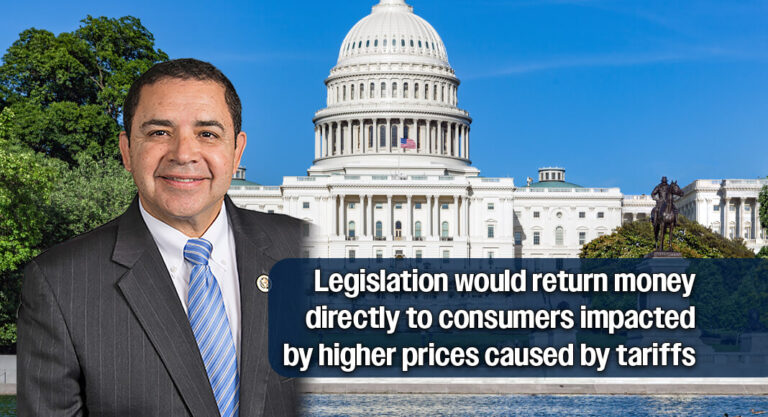
Congressman Henry Cuellar. Image by Texas Border Business. Bgd for illustration purposes
Texas Border Business
Texas Border Business
WASHINGTON — U.S. Rep. Henry Cuellar of Texas introduced legislation in the House of Representatives that would provide direct payments to taxpayers to offset higher consumer costs attributed to tariffs imposed without congressional authorization.
The bill, H.R. 7865, titled the “American Consumer Tariff Rebate Act of 2026,” was introduced on March 9, 2026, during the 119th Congress and referred to the House Committee on Ways and Means. According to the bill text, the legislation would provide a one-time rebate to taxpayers to offset price increases resulting from certain tariffs.
The bill states that “Article I, Section 8 of the Constitution vests exclusively in Congress the authority to lay and collect duties and tariffs.” It further states that duties imposed through presidential action under the International Emergency Economic Powers Act without explicit congressional authorization “resulted in increased consumer prices nationwide.”
Congress cited estimates from the Congressional Budget Office and the Joint Economic Committee indicating that the total consumer costs associated with those tariffs reached approximately $231.35 billion. The bill says Congress has a responsibility “to provide direct restitution to taxpayers for these unlawful cost increases.”
Under the proposal, the U.S. Treasury would distribute a one-time payment to taxpayers based on their most recent federal income tax return. Eligible returns include those of single taxpayers, married couples filing jointly or separately, heads of household, and qualifying surviving spouses.
The legislation places an income limit on the payments. No rebate would be issued to taxpayers reporting adjusted gross income above $400,000. The bill sets a total funding cap of $231.35 billion for all payments.
The Treasury Secretary would determine a base payment amount by dividing the total funding pool among eligible taxpayers using a formula that accounts for filing status. According to the bill, single filers and married taxpayers filing separately would receive 100 percent of the base amount, heads of household would receive 150 percent, and married couples filing jointly or qualifying surviving spouses would receive 200 percent.
The proposal also includes a supplemental payment for families with children. The bill directs the Treasury to provide a “Child Bonus” of $125 for each qualified child claimed on an eligible tax return.
The child payments would be funded using savings generated by excluding high-income taxpayers from the rebate program. The legislation states that payments for the child bonus and the base rebates combined may not exceed the overall cap of $231.35 billion.
The bill defines “covered tariffs” as duties imposed through presidential action under the International Emergency Economic Powers Act that were later determined to lack congressional authorization.
If enacted, the legislation would require the Secretary of the Treasury to administer and distribute the payments to eligible taxpayers based on available tax return data. The measure will now be reviewed by the House Committee on Ways and Means for consideration.
Escalating Global Trade War. Image for illustration purposes
Texas Border Business
Texas Border Business
White House — The Office of the United States Trade Representative has launched Section 301 investigations into the trade practices of 16 economies to determine whether their manufacturing policies are creating excess production that harms U.S. industry.
According to the USTR notice, the investigations focus on what officials call “structural excess capacity and production” in manufacturing sectors. The document says some trading partners have built production capacity beyond domestic and global demand, leading to overproduction, persistent trade surpluses, and idle capacity.
The notice states that this overcapacity “presents a serious challenge to U.S. efforts to re-shore supply chains and provide good-paying jobs for American workers.” It also says unused foreign manufacturing capacity can discourage new production and investment in the United States.
The investigations cover China, the European Union, Singapore, Switzerland, Norway, Indonesia, Malaysia, Cambodia, Thailand, Korea, Vietnam, Taiwan, Bangladesh, Mexico, Japan, and India. USTR says these economies appear to show structural excess capacity through large or persistent trade surpluses or underused production capacity.
According to the notice, government interventions that may contribute to excess production include subsidies, state-controlled enterprises, market barriers, currency practices, and policies that suppress domestic demand. USTR says these measures can keep production growing even when market demand does not support it.
The document states that global manufacturing output reached about $16.6 trillion in 2024, while global manufacturing capacity utilization remained between 75 percent and 75.9 percent, below what it describes as a healthy rate of about 80 percent in many sectors. USTR says that gap shows global supply is outpacing demand.
The notice cites sectors including steel, automobiles, batteries, semiconductors, solar modules, electronics, chemicals, machinery, aluminum, and transportation equipment. It says overcapacity in those industries can produce large trade surpluses and redirect exports to the United States, either directly or through third countries.
USTR also points to trade imbalances as evidence of the problem. The notice says the United States posted automotive trade deficits of $157 billion in 2024 and $128 billion in 2025, and it cites estimates that global steel excess capacity could reach 721 million metric tons by 2027.
China is identified as the largest contributor to global goods surpluses. According to the notice, China’s goods trade surplus exceeded $1.2 trillion in 2025, accounting for nearly 70 percent of global goods trade surpluses. Its bilateral trade surplus with the United States reached $361 billion in 2024.
The document also cites the European Union, saying the euro area posted a goods trade surplus of $451 billion in 2024 and a bilateral trade surplus of $147 billion with the United States. It points to Germany as an example of persistent manufacturing surpluses in sectors such as automobiles, machinery, and chemicals.
Other economies named in the investigation show similar patterns. According to the notice, Vietnam’s trade surplus reached $196 billion in 2025, Taiwan’s goods trade surplus reached $73.3 billion in 2024, and Mexico’s bilateral goods trade surplus with the United States reached $197 billion in 2025, led by the automotive sector.
Under Section 301, the trade representative must determine whether the policies under review are “unreasonable or discriminatory and burden or restrict U.S. commerce.” If so, the administration could impose tariffs or other trade restrictions.
USTR is accepting written comments and requests to testify through April 15, 2026. Public hearings before the interagency Section 301 Committee are scheduled to begin May 5, 2026, at the U.S. International Trade Commission in Washington, D.C. The agency says it will review comments, testimony, and consultations with foreign governments before deciding whether to take action.
“The reason why we’re here is because 150 seniors have demonstrated that they’re either ready to go to college or ready to go straight into a career,” said Governor Abbott. Photo: Office of the Governor
Texas Border Business
LOS FRESNOS — Governor Greg Abbott joined AT&T to distribute laptops to Los Fresnos Consolidated Independent School District (CISD) students.
“The reason why we’re here is because 150 seniors have demonstrated that they’re either ready to go to college or ready to go straight into a career,” said Governor Abbott. “Over the past two years, we’ve invested $7 billion in career and technical education, knowing how important that is for our students, for their future. We are going to be handing out laptops to 150 seniors, seniors who have demonstrated the brand of excellence you are able to achieve here in the state of Texas.”
A Los Fresnos Student receiving a free laptop from Governor Abbott. Photo: Office of The Governor
“We are honored to join Governor Abbott today in Los Fresnos to put 150 computers in the hands of local high school students and celebrate 150 years of communications innovation,” said AT&T South Region President Leslie Ward. “What began with a single phone call in 1876 has become a way of life – and AT&T has been there every step of the way at the forefront of connecting people and businesses. We cannot predict what the next 150 years will bring, but we do know this: whatever comes next, we’ll be the ones connecting you to it.”
“The Los Fresnos CISD Education Foundation is where dreams meet determination,” said Los Fresnos CISD Education Foundation Chair Adan Garcia. “Our vision is a district where every individual’s aspirations are met with unparalleled support, and today’s laptop distribution is a great example of how we can support local students. We appreciate Governor Abbott, AT&T, and Compudopt for their support of Los Fresno students and for the 150 years of innovation that brings us here today.”
Governor Abbott speaking to Los Fresnos Students. Photo: Office of The Governor
The laptops, funded in collaboration between AT&T, Compudopt, and Los Fresnos CISD Education Foundation, were given to graduating seniors in Los Fresnos as a celebration of the 150th anniversary of the first telephone call.
The Governor was joined by Senator Adam Hinojosa, Representative Janie Lopez, Los Fresnos CISD education division Chair Adan Garcia, AT&T Texas division President Leslie Ward, and AT&T South Texas division Vice President Adrian Quintanilla.
U.S. Sens. Ted Cruz (R-Texas) and Jeff Merkley (D-Ore.), members of the Senate Foreign Relations Committee, introducedthe Falun Gong and Victims of Forced Organ Harvesting Protection Act. Image for illustration purposes
Texas Border Business
WASHINGTON, D.C. – U.S. Sens. Ted Cruz (R-Texas) and Jeff Merkley (D-Ore.), members of the Senate Foreign Relations Committee, introduced the Falun Gong and Victims of Forced Organ Harvesting Protection Act. The bill imposes sanctions on those responsible for organ harvesting in China and directs the Secretary of State to report to Congress on the Chinese Communist Party (CCP)’s organ harvesting policies and transplant system.
Sen. Cruz said,“The Chinese Communist Party operates a brutal, state-sponsored organ harvesting industry that targets people for their faith. The CCP has in particular targeted Falun Gong practitioners, committing assaults on religious liberty and fundamental human rights. The United States should hold accountable those who have committed these atrocities, I’m grateful to Senator Merkley for joining me in introducing this critical bipartisan legislation and urge our colleagues to expeditiously advance it.”
Sen. Merkley said, “China’s campaign of repression and human rights abuses continue to have horrific consequences, including reports of forced organ harvesting from vulnerable groups across the PRC. We must stand up for the victims of these crimes, and our bipartisan effort holds the Chinese government accountable for its abuses.”
Falun Gong is a movement founded in the early 1990s by Li Hongzhi in China, which grew rapidly throughout the 1990s.
The CCP outlawed the movement in 1999 and sought to eliminate Falun Gong activity. The CCP has conducted mass arrests and torture of Falun Gong practitioners and detained thousands of practitioners in labor camps, subjecting some to forced organ harvesting. Those harvested organs are used in transplants within China and are trafficked overseas.
This week, U.S. Congressman Henry Cuellar, Ph.D. (TX-28) introduced H.R. 7865, the American Consumer Tariff Rebate Act of 2026, to return money directly to consumers after the Supreme Court ruled the administration’s retaliatory tariffs Unconstitutional. Image for illustration purposes
Texas Border Business
Washington, D.C. – This week, U.S. Congressman Henry Cuellar, Ph.D. (TX-28) introduced H.R. 7865, the American Consumer Tariff Rebate Act of 2026, to return money directly to consumers after the Supreme Court ruled the administration’s retaliatory tariffs Unconstitutional.
“Tariffs function as hidden taxes on families and create uncertainty for businesses,” saidCongressmanCuellar. “When companies pay more to import goods and materials, those added costs are passed on to consumers, driving up prices on groceries, fuel and energy, vehicles and auto parts, building materials, and other everyday household items.”
The American Consumer Tariff Rebate Act of 2026 provides direct payments to help offset those higher costs. Taxpayers with adjusted gross income above $400,000 are excluded from receiving payments, allowing those savings to fund additional support for families, including a $125 payment per qualified child.
Using current IRS return estimates, payments for South Texans would average about:
• Single filers: $1,020
• Head of Household: $1,530
• Married Filing Jointly: $2,040
“My bill is secure, efficient, and focused on those most affected by rising prices,” Dr. Cuellar continued. “I look forward to working in a bipartisan way to advance this provision and deliver meaningful relief to families across South Texas and the country.”