









Home Blog Page 175

U.S. and Partner Forces Compete in Joint Special Operations Sniper Event

A competitor in the 17th annual U.S. Army Special Operations Command International Sniper Competition shoots a rifle at multiple long-distance targets on a range at Fort Bragg, N.C., March 18, 2026. Seventeen teams took part in the competition, where U.S. Army John F. Kennedy Special Warfare Center and School instructors and leadership designed a series of challenges to test the two-person teams' ability to work together while engaging targets at various distances for speed and accuracy in different types of environments. Photo credit: Ken Kassens, Army via US DOW
A competitor in the 17th annual U.S. Army Special Operations Command International Sniper Competition shoots a rifle at multiple long-distance targets on a range at Fort Bragg, N.C., March 18, 2026. Seventeen teams took part in the competition, where U.S. Army John F. Kennedy Special Warfare Center and School instructors and leadership designed a series of challenges to test the two-person teams’ ability to work together while engaging targets at various distances for speed and accuracy in different types of environments. Photo credit: Ken Kassens, Army via US DOW

By Ken Kassens, U.S. Army John F. Kennedy Special Warfare Center and School / US DOW

In a demanding test of precision, endurance and teamwork, 17 elite sniper teams participated in the U.S. Army Special Operations Command International Sniper Competition at Fort Bragg, North Carolina, March 15-19. The U.S. Army John F. Kennedy Special Warfare Center and School hosted the competition, now in its 17th year. Special Forces sniper course instructors and leadership designed the various challenges and served as officials and scorekeepers. 


“This competition represents the pinnacle of the sniper craft,” said Army Col. Simon Powelson, commander of the 2nd Special Warfare Training Group. “We have brought together highly trained teams from across the joint force and partner nations. These competitors are not just here by chance; they are the product of intense and specialized training within their respective units.” 
 
The five-day event included special operations forces representing multiple allied nations with participants drawn from the ranks of Army Special Forces, Army Rangers, Naval Special Warfare Command, Marine Forces Special Operations Command and Coast Guard units. 

Competitors in the 17th annual U.S. Army Special Operations Command International Sniper Competition engage multiple moving targets on a range at Fort Bragg, N.C., March 18, 2026. Photo credit: Ken Kassens, Army via US DOW

Designed to strengthen interoperability and foster esprit de corps among partner forces, the competition featured a series of complex engagements conducted both during the day and under the cover of darkness that pushed competitors to their physical and mental limits. 
 
Throughout the week, sniper teams of two highly trained operators were evaluated across multiple ranges at Fort Bragg. Competitors demonstrated proficiency with sniper rifles, carbines and pistols, engaging at distances of up to 1,200 meters while adapting to constantly changing scenarios. 
 
The opening day set the tone for the grueling challenge ahead. Persistent thunderstorms brought intermittent rain and strong winds, forcing teams to contend with reduced visibility, slick terrain and unpredictable shooting conditions, adding a layer of realism for competitors. 
 
“The weather played a significant role,” said Timothy Gozelski, the sniper course manager. “Our goal with the wind and rain was to make sure the visibility was the same for all the teams.” 
 
In the following days, the weather cleared, but conditions remained poor. Temperatures dropped to 35 degrees, and variable winds swept across the ranges, complicating long-distance shots. 

Competitors in the 17th annual U.S. Army Special Operations Command International Sniper Competition engage multiple targets from a rooftop on a range at Fort Bragg, N.C., March 18, 2026. Photo credit: Ken Kassens, Army via US DOW

Competitors had to calculate wind speed and direction on the fly while maintaining communication and coordination with their teammates. 
 
“Good, clear, concise communication is a must,” said Richard Cuza, a sniper course instructor. “It’s beyond important; it’s crucial.” 
 
Each stage of the competition emphasized not only marksmanship but also teamwork. 
 
Sniper pairs had to locate, range and engage multiple targets in rapid succession, often while maneuvering between firing positions. Communication, trust and synchronization proved just as critical as shooting accuracy. 
 
“Being in sync with your teammate is equal in importance to communication,” Gozelski said. “To be successful, the two have to talk and be on the same page in everything they do.” 
 
Organizers emphasized the competition was more than a test of skill. It brought together international partners and joint force teams in a high-stress training environment. As a result, the event allowed competitors to build relationships, and it improved the joint forces’ ability to operate seamlessly in real-world missions. 
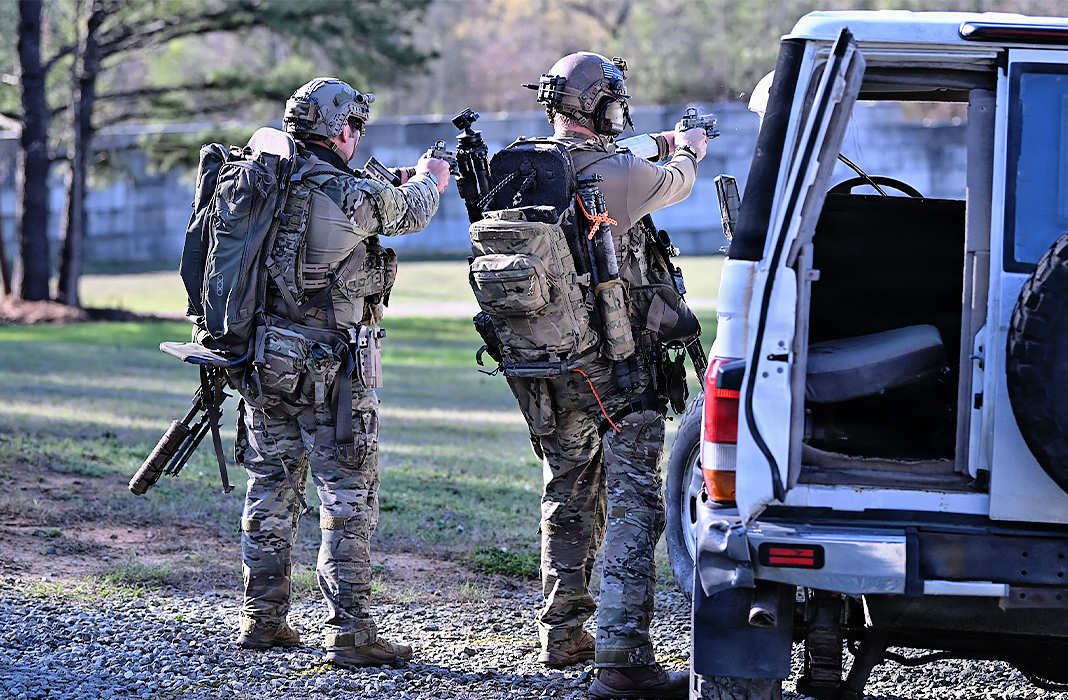
Competitors in the 17th annual U.S. Army Special Operations Command International Sniper Competition fire pistols at targets on a range at Fort Bragg, N.C., March 19, 2026. Phot credit: Ken Kassens, Army via US DOW

 “It’s awesome to have international teams competing,” Gozelski said. “It helps with interoperability and being able to look at each other’s equipment and techniques. It’s not just about competing; it’s about learning some things from our allies and how they operate. All the foreign teams are thrilled to be here. This competition helps us in expanding operational expertise.” 
 
Cuza added that “it was great to have allies and teams from our sister services here. It will help us in working together and that’s important.” 
 
After five days of intense competition, the Army Special Operations Command team emerged as the overall winner, demonstrating consistent performance across all events and conditions. The Army’s 3rd Special Forces Group team finished second. 
 
As the competition concluded, participants departed not only with sharpened skills but with stronger bonds between allied forces and sister services. 
 
“Most importantly, this competition is a powerful vehicle for building esprit de corps among an elite group of warriors who may one day serve alongside each other,” Powelson said.


Officers Intercept $2.2M in Cocaine, Heroin, Fentanyl at at Del Rio Port of Entry

Cocaine, heroin and fentanyl valued at more than $2.2 million. USCBP image

DEL RIO, Texas – U.S. Customs and Border Protection, Office of Field Operations officers at the Del Rio Port of Entry recently seized a potent mixed load of hard narcotics, to include cocaine, heroin and fentanyl valued at more than $2.2 million hidden within a passenger vehicle.

“This triple threat seizure of three powerful hard narcotics reflects the firm resolve of our officers and their tireless dedication to our border security mission,” said Port Director Lilliana Flores, Del Rio Port of Entry. “This load will not reach American streets and will not inflect pain and death on our communities.”

The seizure occurred on March 10 at the Del Rio International Bridge when a CBP officer referred a 2016 GMC Yukon driven by a 32-year-old female U.S. citizen for secondary inspection. Following a canine and nonintrusive inspection system examination, CBP officers discovered packages containing 117.33 pounds of suspected cocaine, 23.14 pounds of suspected heroin, and 11.5 pounds of suspected fentanyl hidden within the vehicle. The narcotics have a combined estimated street value of $2,279,351.

CBP seized the narcotics and vehicle. Homeland Security Investigations special agents arrested the driver and are investigating the seizure.

PSJA Middle School Choirs Recognized with Top UIL Ratings

Pharr-San Juan-Alamo Independent School District (PSJA ISD) middle school choirs preformed at the University of Interscholastic League (UIL) Middle School Choir Concert & Sightreading Evaluations, held March 3-5, 2026, at PSJA Southwest Early College High School. Image for illustration purposes

PHARR, Texas – Pharr-San Juan-Alamo Independent School District (PSJA ISD) middle school choirs preformed at the University of Interscholastic League (UIL) Middle School Choir Concert & Sightreading Evaluations, held March 3-5, 2026, at PSJA Southwest Early College High School. 

Several campuses earned UIL honors, including Concert Plaques, Sightreading Plaques, and Sweepstakes Trophies. 
 

  • Austin Middle School JV Treble Choir – Sightreading Plaques 
  • Escalante Middle School Varsity Treble Choir – Concert Plaque 
  • Kennedy Middle School JV Tenor/Bass Choir – Sweepstakes Trophy 
  • Kennedy Middle School Varsity Treble Choir – Sightreading Plaque 
  • LBJ Middle School Varsity Treble Choir – Sweepstakes Trophy 
  • Vela Middle School Varsity Treble Choir – Sweepstakes Trophy 
  • Yzaguirre Middle School Varsity Treble Choir – Sweepstakes Trophy
  •  Yzaguirre Middle School JV Treble Choir – Concert Plaque 

Texas Woman Receives 25-Year Sentence for Role in Child Exploitation Conspiracy

A Texas woman was sentenced Friday to 25 years in prison and 20 years of supervised release for conspiring with another person to sexually abuse a child outside the United States. Image for illustration purposes

U.S. Department of Justice

A Texas woman was sentenced Friday to 25 years in prison and 20 years of supervised release for conspiring with another person to sexually abuse a child outside the United States.

The FBI’s Child Exploitation Operational Unit investigated the case. Valuable assistance was provided by the FBI’s law enforcement attaché office in Mexico City and the Washington Field Office.

Acting Deputy Chief Kyle P. Reynolds of the Justice Department’s Child Exploitation and Obscenity Section (CEOS) and Assistant U.S. Attorney Reema Sood of the District of Maryland prosecuted the case.

This case was brought as part of Project Safe Childhood, a nationwide initiative to combat the growing epidemic of child sexual exploitation and abuse launched in May 2006 by the Department of Justice. Led by U.S. Attorneys’ Offices and CEOS, Project Safe Childhood marshals federal, state and local resources to better locate, apprehend and prosecute individuals who exploit children via the Internet, as well as to identify and rescue victims. For more information about Project Safe Childhood, please visit www.justice.gov/psc.

Updated March 23, 2026

PSJA ISD Shines at UIL Film Festival with Two State 2nd-Place Awards

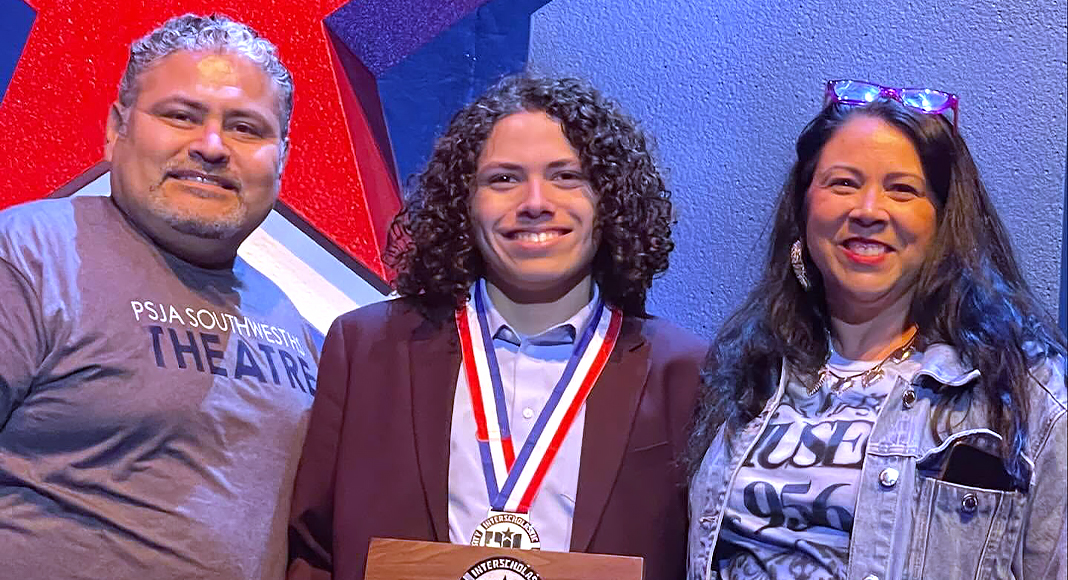
Pharr-San Juan-Alamo ISD theatre students captured two 2nd Place state finishes and multiple additional honors at the UIL State Film Festival, held recently at the Austin ISD Performing Arts Center. Image courtesy of PSJA ISD

AUSTIN – Pharr-San Juan-Alamo ISD theatre students captured two 2nd Place state finishes and multiple additional honors at the UIL State Film Festival, held recently at the Austin ISD Performing Arts Center. Competing in the highly competitive 5A division against 24 films statewide, PSJA ISD students demonstrated exceptional skill in filmmaking, animation, and documentary storytelling.

Image courtesy of PSJA ISD

Leading the achievements was El Museo 956 from PSJA Southwest Early College High School, which earned 2nd Place in 5A along with a UIL State Plaque and individual Silver Medals. Also securing 2nd Place in 5A Digital Animation was Your Reality from PSJA North Early College High School, earning a UIL State Plaque and individual Silver Medals. 

“These outstanding accomplishments reflect the creativity, discipline, and commitment of our students and directors,” said PSJA Superintendent Dr. Elias. “Earning two 2nd Place finishes at the state level in such a competitive division speaks to the strength of our fine arts programs and our mission to provide students with meaningful opportunities that prepare them for college, careers, and beyond.” 

Additional state recognitions included: 

Image courtesy off PSJA ISD
  • Vampires Will Never Hurt You – PSJA North Early College High School – 5th Place, 5A Traditional Animation, UIL State Plaque and individual State Medals 
  • Stories We Tell: Saving the San Juan Hotel – PSJA North Early College High School – 5th Place, 5A Documentary, UIL State Plaque and individual State Medals 

These accomplishments reflect the strength of PSJA ISD’s theatre and film programs and the district’s commitment to providing students with rigorous, real-world creative opportunities. 

Congratulations to the student filmmakers and their directors for representing PSJA ISD with excellence at the state level. 

Mexico Advances Interoceanic Corridor as Strategic Trade Route

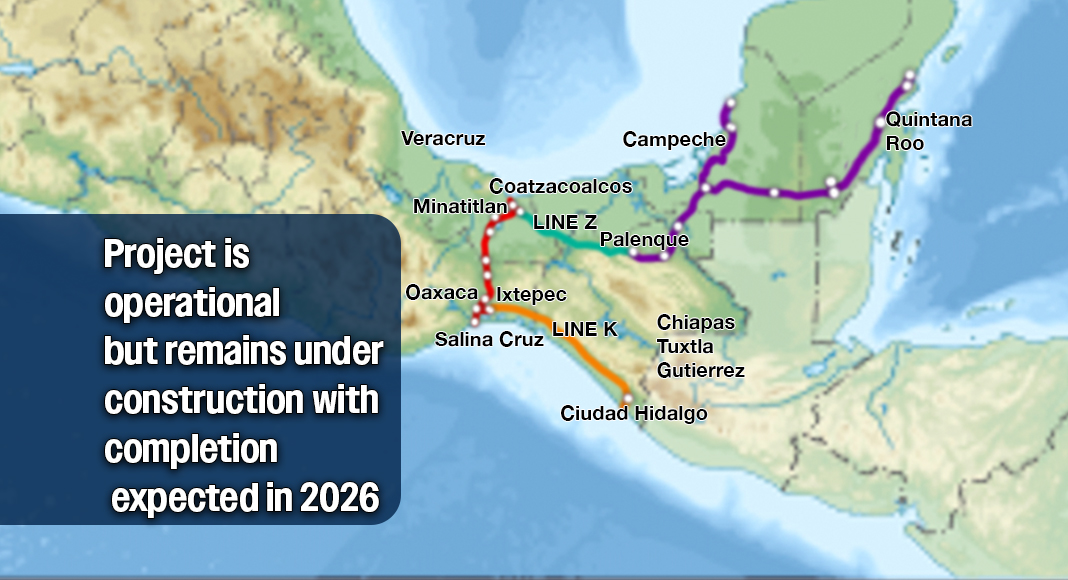
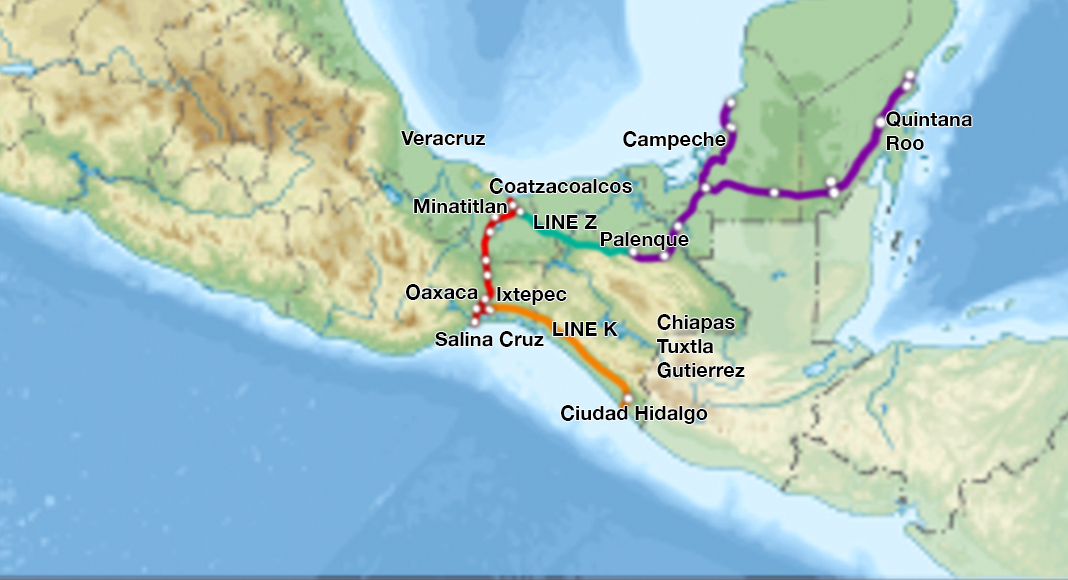
Interoceanic Corridor of the Isthmus of Tehuantepec connecting Salina Cruz (Pacific Ocean) to Coatzacoalcos (Gulf of Mexico) across southern Mexico. The 303-kilometer multimodal trade route—featuring rail (Line Z and Line K), ports, and industrial hubs—is partially operational as of 2023–2025, with full completion and expanded capacity expected by mid-2026. Texas Border Business Graphic for illustration purposes

Texas Border Business

The Interoceanic Corridor of the Isthmus of Tehuantepec is a major infrastructure project led by the Mexican government to connect the Pacific Ocean at Salina Cruz with the Gulf of Mexico at Coatzacoalcos through a rail and logistics network spanning approximately 303 kilometers. The initiative is designed to facilitate cargo movement across southern Mexico as an alternative to maritime routes such as the Panama Canal.

The project includes modernized railway lines, port expansions, industrial parks, and customs and logistics infrastructure. It was launched in 2019 under the administration of former President Andrés Manuel López Obrador to promote economic development in southern Mexico and strengthen the country’s role in global trade.

Interoceanic Corridor of the Isthmus of Tehuantepec. Texas Border Business Graphic for illustration purposes

According to publicly available project information, the corridor is already partially operational. Freight service along the main rail line, known as Line Z, began in August 2023, followed by passenger service in September 2023. Cargo shipments are currently moving across the isthmus, and additional rail segments have been inaugurated or tested between 2024 and 2025.

Despite these advances, the project is not yet complete. Key components remain under construction, including sections of the rail network such as Line K, which is reported to be approximately 87 percent complete and expected to be finished by mid-2026. Port upgrades, particularly at Salina Cruz, are ongoing, and the development of industrial parks and logistics hubs is ongoing.

The corridor is intended to function as a multimodal system integrating rail, ports, and industrial activity. Full operational capacity depends on the completion of these interconnected components.

Mexican officials have emphasized the project’s strategic importance, noting its potential to serve as a faster alternative to traditional maritime routes and to strengthen trade flows, including those tied to nearshoring trends in North America. The corridor is also positioned as a tool to drive economic growth in a region that has historically lagged behind other parts of the country.

At the same time, the project remains in a consolidation phase, as analysts describe it. Ongoing construction, operational adjustments, and infrastructure integration continue to shape its development. Reports of incidents, including a 2025 train derailment, have also raised concerns about safety and oversight as the system expands.

Current timelines from government and industry sources indicate that full completion of the Interoceanic Corridor is expected around mid-2026. Until then, it continues to operate at a reduced capacity while construction and development proceed.

Laredo Leaders Outline Federal Priorities After Washington Visit

Congressman Henry Cuellar (TX-28) addresses Laredo Mayor Dr. Victor D. Treviño and local leaders during a press conference at Laredo City Hall on March 13, 2026, outlining priorities following the city’s delegation visit to Washington, D.C. Courtesy image

Texas Border Business

On March 13, 2026, Congressman Henry Cuellar joined Laredo Mayor Dr. Victor D. Treviño for a press conference at City Hall to discuss the city’s priorities following a recent delegation visit to Washington, D.C.

During the trip, local leaders met with federal agencies and members of Congress and participated in the annual Laredo Day. Officials said they highlighted priorities that support Laredo’s long-term growth, including workforce development programs that prepare residents for careers in logistics, manufacturing, and technology.

Leaders also emphasized environmental infrastructure and water security initiatives, including the Chacon Creek restoration project, as well as expanded healthcare partnerships and capital investments intended to strengthen the community.

The delegation discussed strengthening binational connectivity through projects such as the expansion of the Colombia-Solidarity Bridge. Transportation investments were also highlighted, including the IH-35/Uniroyal/Reuthinger interchange and other mobility improvements to relieve congestion along key trade corridors.

Cuellar noted that as the nation’s leading land port of entry, Laredo moves approximately $1.7 billion in goods every day, accentuating its role in American trade and supply chains. He said he has worked to strengthen border infrastructure and keep commerce moving, including securing reforms to the presidential permitting process to help advance the World Trade Bridge expansion.

“Laredo’s priorities are America’s priorities,” Cuellar said. He added that he will continue working with city leaders and federal partners to ensure South Texas remains a focus in Washington.

Texas DPS Welcomes 122 New Troopers 

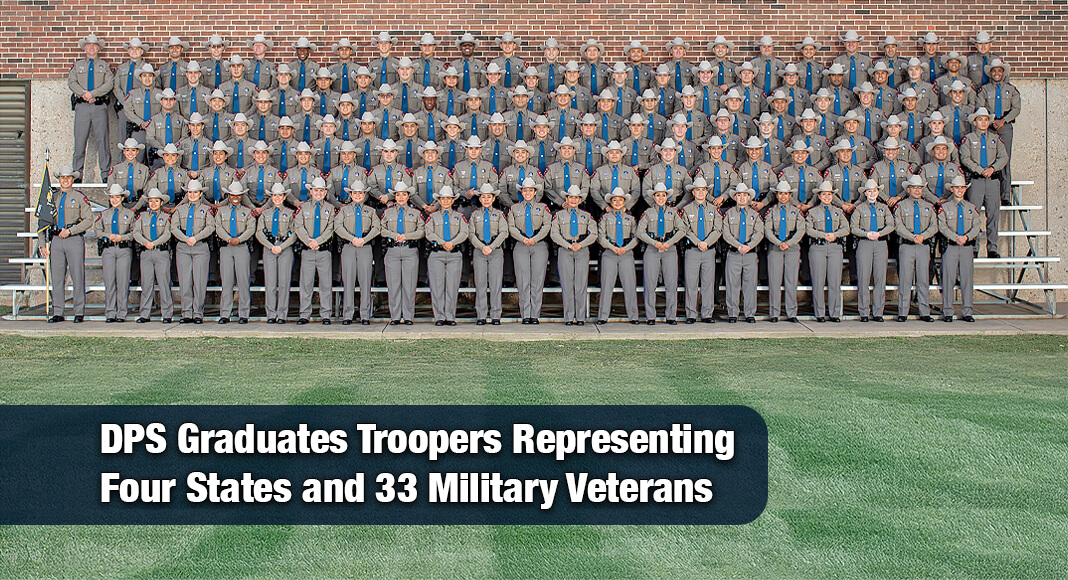
The Texas Department of Public Safety (DPS) welcomed 122 new Texas Highway Patrol Troopers from Recruit Class C-2025 during a graduation ceremony at Austin Ridge Bible Church. Image for illustration purposes
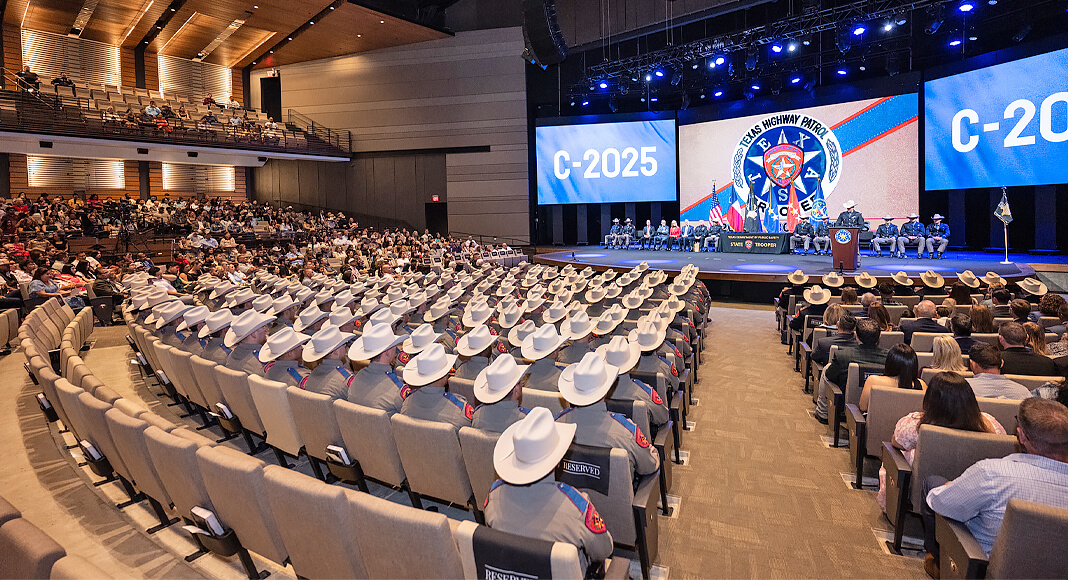
The Texas Department of Public Safety (DPS) welcomed 122 new Texas Highway Patrol Troopers from Recruit Class C-2025 during a graduation ceremony at Austin Ridge Bible Church. Photo: Texas DPS

AUSTIN – The Texas Department of Public Safety (DPS) welcomed 122 new Texas Highway Patrol Troopers from Recruit Class C-2025 during a graduation ceremony at Austin Ridge Bible Church. This is the department’s 180th graduating class.

Houston Police Chief J. Noe Diaz, who is a proud member of DPS Recruit Class A-1996, was the keynote speaker. Chief Diaz served in the Texas Highway Patrol, Narcotics Division and was a Texas Ranger during his time with the department. He spoke to the graduating class about his experience working at DPS and how it shaped his career in law enforcement. 

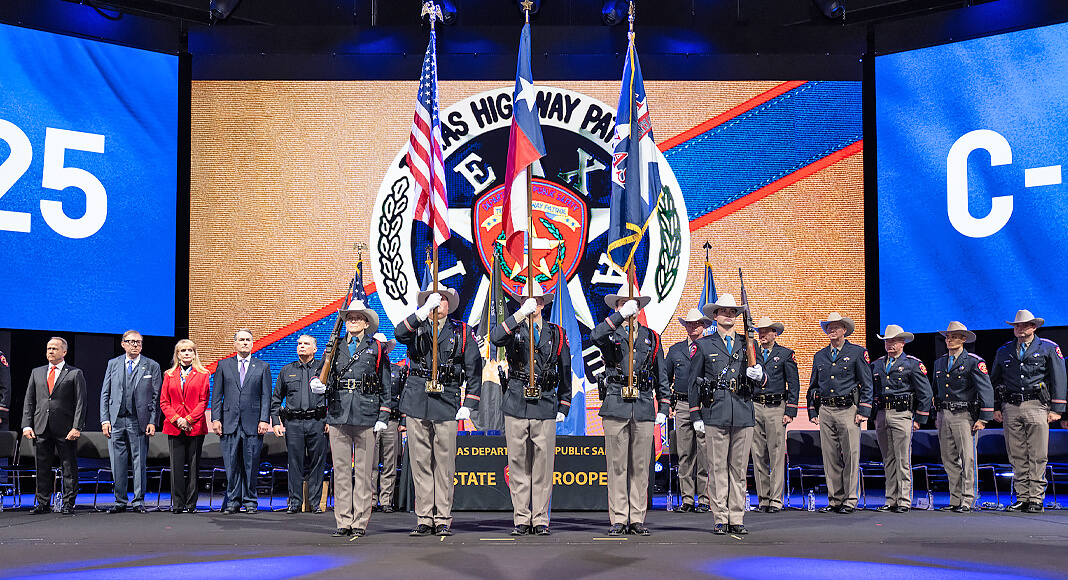
Texas DPS Honor Guard at the graduation ceremony. Photo: Texas DPS

“I’ve walked the road you’re about to take,” said Chief Diaz. “The miles will be long, but the honor of serving Texas will make every one of them worth it.”

Also in attendance were members of the Public Safety Commission, including Chairman Steven P. Mach and Commissioners Nelda Luce Blair, Dan Hord, III, Larry B. Long and Steven H. Stodghill. DPS Colonel Freeman F. Martin, Lt. Colonel Jason Taylor, Lt. Colonel Walt Goodson and other DPS leadership were also present to congratulate Class C-2025 and officially welcome them to DPS. 

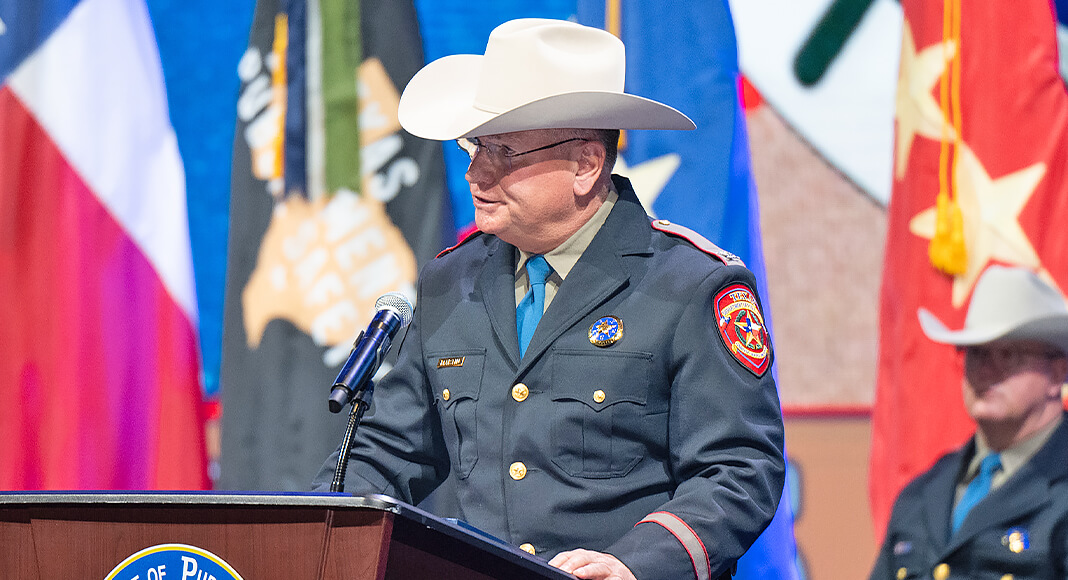
Texas DPS Chief speaking to the graduating class. Photo: Texas DPS

“Class C-2025 is the most skilled, best prepared class of recruits the Texas Department of Public Safety has ever turned out,” said DPS Colonel Freeman F. Martin. “We are incredibly proud to have each of these 122 men and women sitting here today, ready to head out to duty stations across the state of Texas and get to work protecting the communities and people that need them most.”  

1,685 people applied for spots in Class C-2025. Of those, 136 began the 30-week Training Academy on Aug. 24, 2025, and just 122 met all requirements to become Texas Highway Patrol Troopers.

About the DPS Training Academy

During the 30-week in-resident Training Academy, Recruits receive more than 1,204 hours of instruction. The comprehensive training is taught by experts on various topics, including criminal and traffic law enforcement, crash investigation, crisis intervention, use of force, criminal investigations, communications, cultural diversity, fitness and wellness and emergency medical assistance.

Recruits also receive components of the Tactical Emergency Casualty Care training to include trauma assessment, bleeding control and treatment of shock. The training prepares them to work as a Highway Patrol Trooper anywhere in the state, including in remote areas and extreme terrains.

Texas Highway Patrol Troopers from Recruit Class C-2025. Photo: Texas DPS

Recruits conclude their rigorous training with the Field Training Exercise (FTX) – a culmination of scenarios and training events that simulate a potential day in the life of a Highway Patrol Trooper. Utilizing the skills and knowledge obtained throughout the Training Academy, Recruits participate in approximately 25 scenarios ranging from vehicle pursuits to compliant driver traffic stops. 

Earlier this week, Class C-2025 participated in the traditional Legacy Run. The five-mile run departed early Wednesday morning from DPS headquarters and ended at the Texas State Capitol. DPS first implemented the run, which was originally an eight-mile route, in 2008 to mark the completion of the Training Academy. DPS Recruits are accompanied by their instructors, members of DPS leadership and oftentimes DPS retirees. 

Here are some other class highlights:

• 99 males, 23 females

• Ages ranging from 21 to 51

• 33 military veterans (Army, Navy, Marines, Air Force)

• 68 speak more than one language

• Graduates from four other states (Arkansas, California, New Mexico and Virginia)

The newly commissioned Troopers will report to their duty stations across Texas on April 12. 

You can view today’s graduation ceremony on the DPS YouTube page.

Information source: Texas DPS

From Master Electrician to City Leader

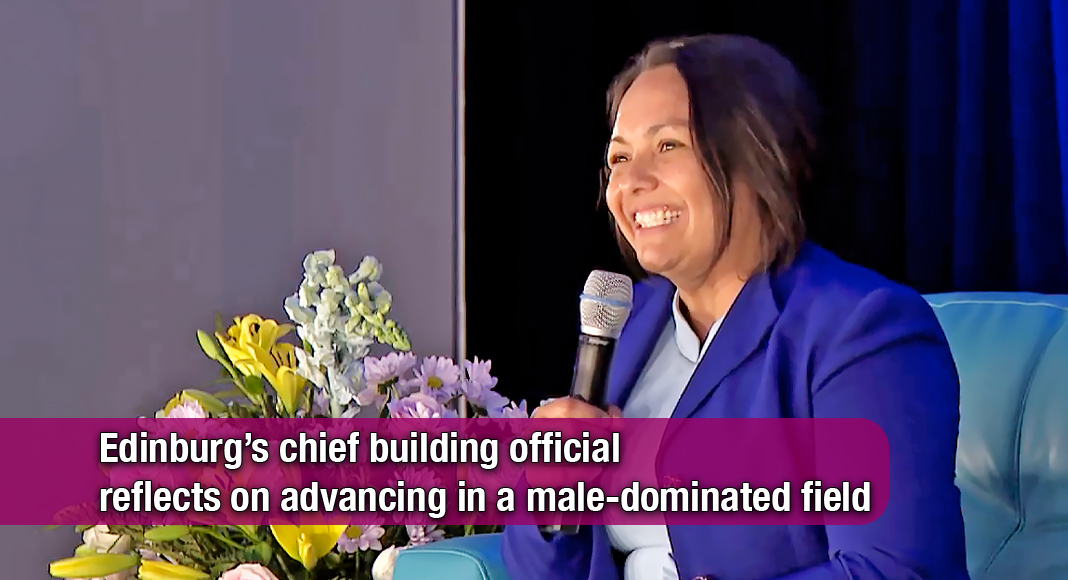
Natalia Velázquez. Courtesy image

Natalia Velázquez’s journey from working alongside her father as a young electrician to becoming the City of Edinburg’s Chief Building Official reflects persistence, technical expertise, and leadership in a field long dominated by men. At the “Women Leading with Purpose” luncheon, Velázquez shared how determination, preparation, and resilience helped her advance from the trades to one of the most respected positions in regional building safety. Her story reveals how setbacks, certifications, and mentorship can shape a career that opens doors for others. Please share this article. Read this Premium article for FREE by subscribing for FREE.

Natalia Velazquez Rising from Electrician to Building Safety Leader

By Roberto Hugo González / Texas Border Business

Natalia Velazquez told City of Edinburg employees that persistence, preparation, and patience helped her build a career in construction and building safety, a field where women have historically been underrepresented. Velazquez shared her experiences during the City of Edinburg Human Resources Department’s “Women Leading with Purpose” luncheon on March 9, 2026, where she participated in a panel discussion with other regional leaders.

Velazquez currently serves as the City of Edinburg’s chief building official, the first woman to hold the position. During the event, the moderator noted that her career includes several regional milestones, including becoming the Rio Grande Valley’s first female Master Electrician and later earning the Master Code Professional certification. The designation places her among the top code professionals worldwide.

Velazquez said her path into the construction trades began early. She explained that she started working with her father as a young person and learned the electrical trade through hands-on experience. “I started as an electrician at a very early age,” Velazquez said. She later became a licensed electrician and eventually owned her own company before continuing into inspection and building safety work.

Working in a male-dominated profession brought challenges and skepticism, she said, but those experiences pushed her to strengthen her expertise. “Pushback has always been something that encouraged me to continue,” Velazquez said. She explained that preparation and technical knowledge helped her address criticism or doubts about her role. “Preparing for those codes and being an expert… knowing that you’re confident with the literature that you’re preparing with,” she said, allowed her to respond to questions or disagreements about regulations and safety standards.

Velazquez said she built her reputation through observation, field experience, and continuous learning. While technical training and written codes are essential, she emphasized that daily work in construction environments also provides valuable knowledge. “The theory is one thing, the experience in the field is another one,” she said.

Her career later led her into public service with the City of Edinburg. Velazquez explained that when she first arrived, the city did not yet have a dedicated building safety department. Building safety responsibilities were handled through planning and zoning and code enforcement divisions. She said she saw an opportunity to develop a more specialized department focused on construction oversight.

Velazquez said the proposal initially faced resistance, particularly due to budget constraints and competing priorities. “There was a lot of pushback,” she said. Despite the challenges, she continued presenting the idea and refining her proposals. “Every budget I would present with a different presentation, but at the end of the day it was the same presentation,” she said, explaining that persistence and data helped support her case.

In 2022, the City of Edinburg established the building safety department. Velazquez said the department now includes a team of 20 staff members focused on inspections, certifications, and construction oversight. She described the team as a key part of her leadership approach and said she encourages employees to pursue professional certifications. “If I did it, you can too,” she said, explaining that certifications help employees develop expertise and advance in their careers.

Velázquez also spoke about the personal responsibilities that come with leadership positions. She said the role requires constant availability and attention to the needs of employees, contractors, and residents. That level of commitment can be demanding, she acknowledged, but she believes the work is worthwhile. “There are a lot of sacrifices when you take on the role of leadership,” she said.

Family support, she added, has been essential in balancing professional responsibilities with life at home. Velazquez said her husband and children have supported her career as she took on more demanding roles and responsibilities within the city.

Throughout the discussion, Velazquez framed obstacles as opportunities for growth. She said that hearing “no” repeatedly forced her to refine ideas and think creatively about solutions. “Setbacks are a blessing,” she said, explaining that challenges often encourage new approaches and stronger preparation.

In her closing advice to the audience, Velázquez encouraged patience and perseverance. She said progress sometimes requires waiting for the right moment and continuing to work toward long-term goals. “There’s always a perfect timing for everything,” she said, adding that determination and patience help people recognize opportunities when they appear.

Her remarks presented technical expertise and steady persistence as key elements of leadership. Through her career in electrical work, code enforcement, and building safety administration, Velazquez described a professional path defined by preparation, resilience, and a commitment to building opportunities for others in the field. Please share this article

See related stories:

Veronica Gonzales on Leadership, Public Service, and Opportunity

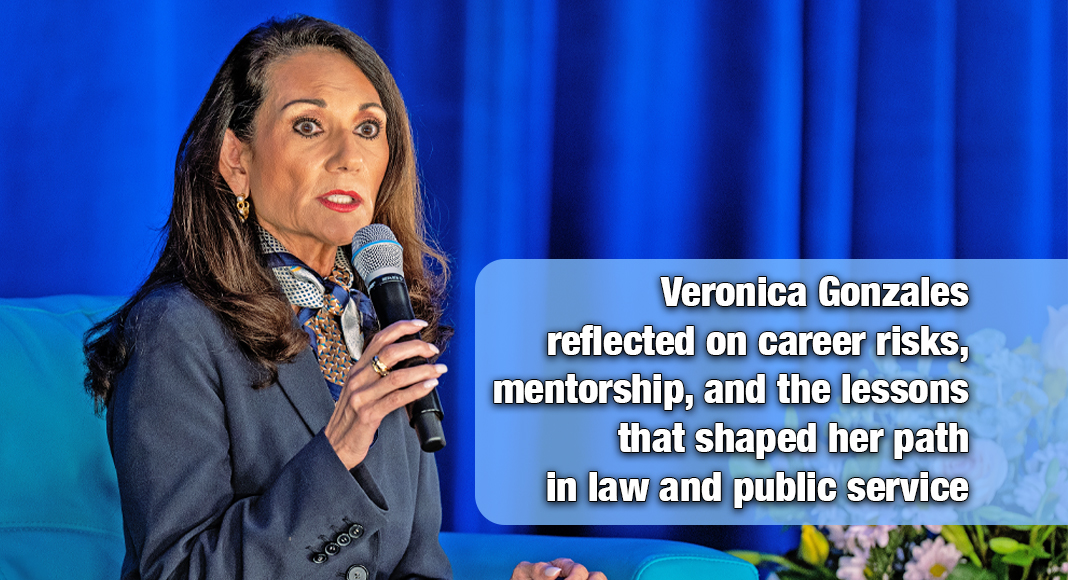
Verónica Gonzales. Courtesy image

Attorney, former Texas State Representative, and higher education leader Veronica Gonzales built her career by stepping into opportunities that required courage, preparation, and a commitment to public service. Speaking at the City of Edinburg’s “Women Leading with Purpose” luncheon, Gonzales reflected on the decisions that shaped her journey from first-generation college student to attorney, legislator, and university leader. Her story highlights resilience, mentorship, and the willingness to step beyond comfort to create lasting impact in law, government, and education. Please share this article. Read this Premium article for FREE by subscribing for FREE.

Veronica Gonzales on Leadership, Self-Doubt, and Stepping Beyond Comfort

By Roberto Hugo González / Texas Border Business

Attorney Veronica Gonzales told City of Edinburg employees that leadership often begins with doubt but grows through preparation, mentorship, and the willingness to step outside familiar roles. Gonzales shared those reflections during the “Women Leading with Purpose” luncheon hosted by the City of Edinburg Human Resources Department on March 9, 2026, where she participated in a panel discussion alongside other regional leaders.

Gonzales described her career as shaped by moments when she chose to pursue opportunities despite uncertainty. “I think we’ve all suffered from self-doubt at times,” Gonzales said. She explained that doubt is not about a lack of ability but “about just being human,” noting that people often question themselves when entering unfamiliar situations.

She connected that perspective to her own upbringing and early responsibilities. Gonzales said she grew up in San Marcos, Texas, and became a caregiver for her younger brothers after her mother died in a car accident when she was 14 years old. The loss placed her in a leadership role early in life, as she described it. “Did I have doubt? Absolutely,” she said, recalling the responsibility of helping her father raise her brothers.

Education, Gonzales said, became a turning point. She was the first person in her family to attend college, a step her mother strongly encouraged before her death. Gonzales said she often sought reassurance from her father as she pursued major decisions. When she told him she planned to attend college, she said his response was consistent encouragement. “That’s good, Mija, I’m sure you’ll do great,” Gonzales recalled him saying.

After completing college, Gonzales decided to attend law school. She said the experience reinforced her belief that preparation and hard work build confidence. “There’s no substitute for hard work and preparation,” she said. “When you prepare, and you go in knowing the facts, you’re going to have more confidence in your life, and you’re going to doubt yourself less.”

Gonzales eventually moved to the Rio Grande Valley and practiced law for more than two decades at the same law firm. During that time, colleagues encouraged her to run for public office. She said the suggestion initially surprised her. “Why would I do that?” she recalled asking when partners first proposed the idea that she run for state representative.

According to Gonzales, the decision came together quickly because the filing deadline for the race was the same day the suggestion was made. After speaking with supporters who encouraged her to run, she decided to run. “You gain that confidence,” she said of hearing encouragement from others. “Sometimes we don’t see those qualities in ourselves, but somebody else does.”

Gonzales said she borrowed $150,000 to finance her first campaign and felt pressure to succeed because of that commitment. She went on to win the race and later served multiple terms in the Texas House of Representatives. Reflecting on that period, she described the experience as meaningful public service and said it expanded her understanding of leadership and community impact.

After her time in the legislature, Gonzales returned to private practice but later changed direction again. She said that although she had spent more than 20 years at the law firm, she felt drawn back toward community work. When an opportunity opened at the University of Texas Rio Grande Valley, she weighed the risks of leaving a long-standing position.

“I doubted myself again,” Gonzales said. She ultimately decided to accept the new role because previous moments outside her comfort zone had led to positive outcomes. She told the audience that the decision proved worthwhile and that she has spent more than a decade working in higher education, helping support students and community initiatives.

Gonzales also spoke about the difficulty of balancing professional demands with personal life. She said the concept of work-life balance was not commonly discussed earlier in her career. “In my generation, we didn’t even hear the term work-life balance,” she said, explaining that long hours were widely accepted as part of professional advancement.

Still, Gonzales said personal priorities eventually required difficult choices. She described leaving the Texas Legislature partly to restore balance to her life and to focus on her personal relationships. She told the audience that learning to decline responsibilities can be necessary for long-term well-being. “Learning to say no is not a weakness,” she said, adding that people risk burnout if they try to meet every demand placed on them.

Delegation, she said, is another important leadership skill. Gonzales encouraged the audience to trust colleagues with responsibilities rather than attempting to manage everything personally. “Maybe somebody can do it better,” she said, noting that leadership also involves giving others the opportunity to grow.

In closing remarks during the panel discussion, Gonzales emphasized the importance of mentorship and community support among women. She encouraged professionals to build strong networks and share knowledge with younger generations entering the workforce. “Surround yourself with good people and get mentors,” Gonzales said. She added that professionals should also take responsibility for guiding others once they gain experience.

Her advice reflected a theme she returned to throughout the discussion. Gonzales said professional growth rarely happens alone and often depends on relationships that offer encouragement, accountability, and shared experience. “Don’t just take, but give back,” she said, urging women to support one another as they advance in their careers. Please share this article

See related story: