














Texas Border Business




By Roberto Hugo González / Texas Border Business
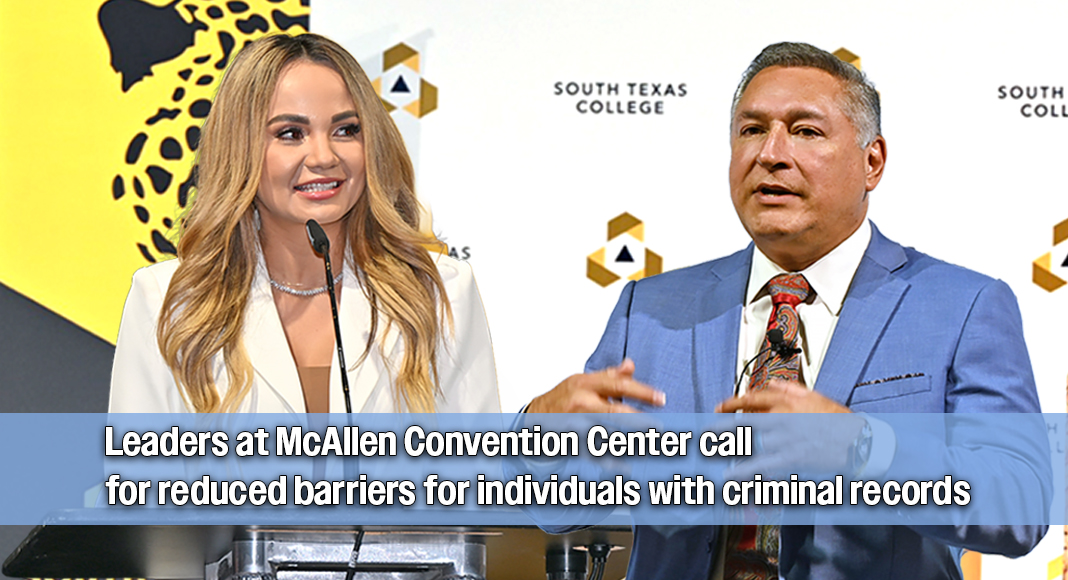
McALLEN, Texas — Community leaders gathered at the McAllen Convention Center Ballroom on April 28, 2026, for the event “Rebuilding Futures, Advancing Second Chances through Policy, Partnership, and Purpose,” aimed at addressing barriers faced by individuals impacted by the justice system and identifying pathways for rehabilitation through education and employment.
The event, hosted by South Texas College and the City of McAllen, brought together policymakers, educators, and advocates to discuss how collaboration can expand second-chance opportunities across the Rio Grande Valley.




Olivia Tamez Gomez, Director of External Affairs at South Texas College, opened the program by sharing a personal account of her brother, who had been impacted by the justice system. She stated that despite completing requirements such as probation and community service, “their criminal record can continue to follow them like the Scarlet Letter.” She added that such records “can stand in the way of employment, housing, education, and the very opportunities that they need to rebuild their lives and move forward.”
Tamez Gomez said her brother, Rene Tamez, was given an opportunity through South Texas College, which helped him move forward. She noted that her brother passed away in 2025 and described how his experience shaped her commitment to the issue. “You would never know any of that if all you saw was his job application and his past arrest,” she said, referring to how criminal records can obscure an individual’s character and contributions.
Javier Villalobos, Mayor of McAllen, also referenced personal experience during his remarks. He said, “I too had a brother that had issues,” and added, “my brother was one of those that could not be rehabilitated. He went in, he went in and again, and he kept on.” Villalobos contrasted that outcome with others he has encountered, stating that some individuals “possibly or maybe never should have been incarcerated.”
Villalobos emphasized that legal and systemic barriers can continue long after a sentence is completed. He stated that individuals with criminal records often face limited employment opportunities, even after gaining education or skills. “When they go and say, ‘Yes, I have been arrested. Yes, I have a felon,’ they’re kind of shut out,” he said. He added that if the goal of incarceration is rehabilitation, “then you should be welcomed back into the community and be afforded an opportunity to provide for yourself, for your family, for your kids.”
Both speakers pointed to the long-term consequences of criminal records and the need for policy changes. Tamez Gomez called for removing barriers that prevent individuals from becoming “productive, contributing members of society.” Villalobos highlighted the importance of reconsidering the duration of felony designations, noting that some offenses carry lifelong consequences regardless of rehabilitation.
The event’s purpose was to promote dialogue and identify solutions related to reentry, workforce integration, and education for justice-impacted individuals. Organizers emphasized that collaboration among government, educational institutions, and community organizations is necessary to create sustainable second-chance pathways.
Throughout the program, speakers emphasized the role of education and employment in reducing reoffending and strengthening communities. The event concluded with a call to continue discussions and develop policies that expand access to opportunities for individuals seeking to rebuild their lives.
See related stories: