











Texas Border Business




By Roberto Hugo González / Texas Border Business
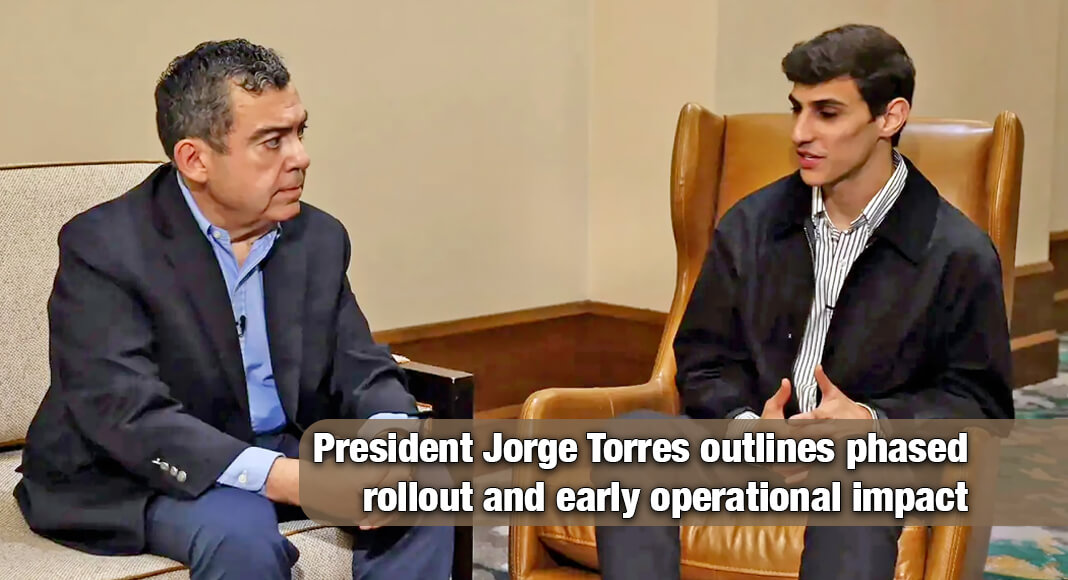
Jorge Torres, President and Licensed Customs Broker at Interlink Trade Services, said his company is integrating artificial intelligence into its operations to address the increasing complexity in the customs industry. In an interview with Omar Abuhashish, Co-Founder & CEO of Reform, based in San Francisco, California, Torres described the move as necessary rather than optional.
“So it is, it is not a matter of if I want it, it’s a matter of when I do it, and we’re doing it right now,” Torres said, referring to the decision to adopt AI.


Interlink Trade Services provides customs brokerage and warehousing services focused on cross-border trade between Mexico and the United States and handles customs clearance at all U.S. ports of entry. Torres said growing regulatory requirements and operational demands led the company to seek automation.
Torres said the company selected Reform after evaluating other vendors that offered less flexible systems. “It was us adapting to them, not them to us,” he said, describing other options as “cookie-cutter” solutions. He said Reform’s platform allowed integration with existing ABI software and gave Interlink control over how automation is deployed.
The company is implementing AI in phases, starting with customs brokerage processes such as entry processing, Importer Security Filing, and Automated Export System filings. Torres said future phases will include accounting, warehousing, and record-keeping functions.
He said the primary benefit has been reducing manual data entry. “Taking away the data entry portion of the transaction allows the team members to provide value-added services, do more auditing, do more analytical work, which can help the customers improve their compliance, save them money, or save them penalties as well,” Torres said.
Torres said results were visible within the first two months of implementation. He said the system is already handling complex transactions that involve FDA requirements and tariff provisions, such as Chapter 98 and Sections 232 and 301.
He outlined a timeline that includes processing all import customers through the system within the first year and achieving full automation across the company within three years.
Torres said the transition requires ongoing involvement from his team. “An AI software or any software is not a magic wand, garbage in, garbage out, so we need to work with it,” he said.